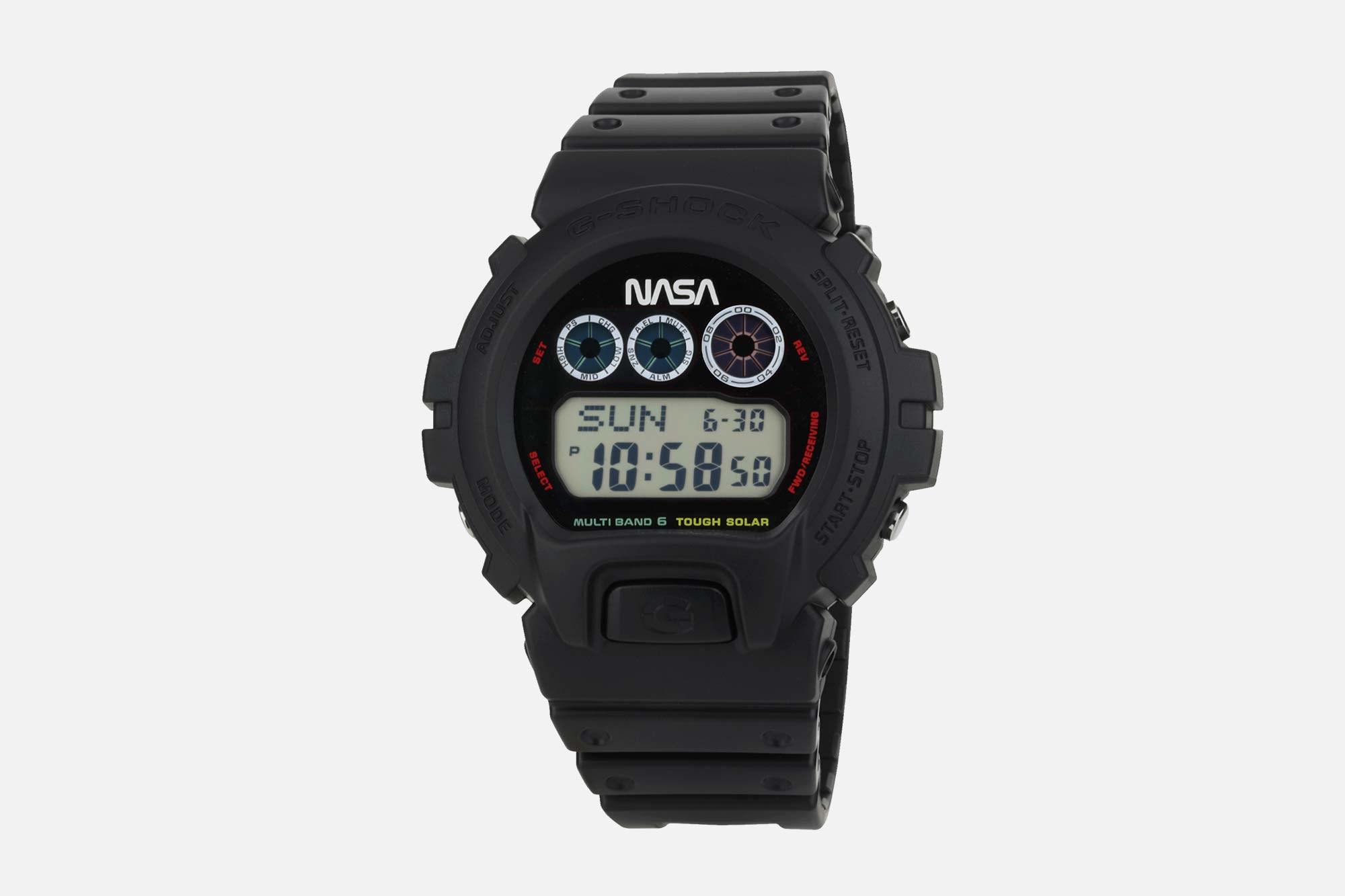
A mechanical wristwatch is acutely vulnerable to shock at the balance pivots: the two tiny pivots (typically 0.07-0.10 mm diameter) on which the balance wheel oscillates. A direct sharp impact, the watch dropped on a tile floor, struck against a doorframe, hit on the wrist during sport, generates instantaneous forces tens or hundreds of times the watch's static weight. Without protection, the impact can shear the pivots clean off, ending the movement's service life. Shock protection is therefore one of the central engineering problems of mechanical wristwatch design, and ISO 1413 is the standard that codifies its testing.
Spring-loaded shock-absorber jewel mounts are the universal solution. Rather than seating the balance pivot jewels rigidly, the upper and lower pivot jewels sit in spring-mounted carriers that allow the entire balance to displace by a fraction of a millimetre under impact, dissipating the energy elastically. When the impact passes the carriers spring back to the original position. Multiple equivalent designs exist: Incabloc (Switzerland, 1934, the most widely used), KIF (Switzerland, 1933, used by Patek Philippe and others), Diashock (Seiko, Japan), Paraflex (Rolex, in-house), Etashock (ETA), and Novodiac (ETA, on lower-grade movements).
"ISO 1413 says nothing magical about a watch. It says the spring-mounted balance jewels work as designed. They have done so since 1934, and a healthy modern movement should pass the test on the bench every day of its service life."- Watchmaker on shock-protection engineering
The ISO 1413 test procedure: the watch is fixed to a calibrated test rig and dropped from 1 metre onto a horizontal hardwood surface (specified species and density to control impact characteristics). The drop is repeated in three case-side orientations (with the crown at 3, 6, and 9 o'clock pointing toward the impact direction) plus one crystal-down orientation. After each impact the rate is measured; the watch must continue running and the rate must stay within ±60 seconds per day of its pre-test rate. The 1 m drop simulates an "average accidental fall from a wrist" rather than catastrophic impact (sledgehammer-class testing is a separate G-shock spec).
The ±60 sec/day after-impact tolerance is wider than COSC chronometer specifications because the goal is functional survival, not maintained chronometer rate. A COSC-certified chronometer that has dropped within ISO 1413 tolerance has typically had its rate shifted by 10-30 seconds; a service to re-set the regulator restores chronometer-grade rate. This is an explicit acknowledgement that shock and chronometer rate are different consumer guarantees: ISO 1413 covers durability; COSC covers precision.
ISO 1413 is met by essentially every Swiss-made consumer watch; the use of Incabloc, KIF, Paraflex, Etashock, Novodiac, or equivalent shock systems has been universal since the 1950s. Casio G-Shock (1983) is a separate engineering tradition: rather than spring-loaded jewel mounts on a mechanical movement, G-Shock suspends the entire quartz module inside an internal shock-absorbing structure, achieving impact tolerance one or two orders of magnitude beyond ISO 1413. Sinn EZM and U-series military watches use diapal escapements + reinforced shock systems that exceed ISO 1413; Sinn publishes its own internal numbers.
The marketing word "shock-resistant" on a watch dial or in advertising is governed by ISO 1413 in jurisdictions that have adopted it (most of Europe, Switzerland, Japan, and via NIST/ANSI in the United States). Without compliance the marketing claim is unsupportable. ISO 1413 was first issued in 1972, revised in 1984 and again in 2016; the 2016 revision added test-method tolerances (impact-energy reproducibility) that earlier versions left to lab interpretation. The standard is a stable industry baseline rather than a moving target.
Comments 1