Watch brandsWatch wikiWatch videosVariousWatch calendarSaved articles
PopularRolexOmegaPatek PhilippeAudemars PiguetTudorGrand SeikoCartierSeikoIWCTAG HeuerBreitlingJaeger-LeCoultreA. Lange & SohneZenith
WristBuzzWatch WikiBalance Wheel
⚙ Movement · The Oscillator

Balance Wheel

The spinning flywheel at the heart of every mechanical watch

Paired with a hairspring, the balance wheel is the mechanical watch's oscillator. It swings back and forth typically 4 or 5 times per second, and each swing releases the escapement to advance the watch by one tick. The wristwatch equivalent of a pendulum.

Typical freq.4 Hz (28,800 vph)
High-beat5 Hz (36,000 vph)
MaterialGlucydur / Gyromax
InertiaVariable by screws or weights
CategoryRegulating organ
WristBuzz Articles145
Balance Wheel

Photo: Hodinkee · Feb 3, 2026

4 HzTypical
5 HzHigh Beat
0.5 HzMarine Chronometer
10 HzExtreme (<a href="/watch-calibers/zenith-el-primero/">El Primero</a> Striking 10ths)
145WristBuzz Articles

The Balance Wheel Story

The balance wheel, paired with a hairspring, is the oscillating mechanism that gives a mechanical watch its sense of time. When the escapement delivers an impulse to the balance, it swings in one direction against the restoring force of the hairspring, stops momentarily, and swings back. Each complete swing releases the escapement to advance the train one tooth. A typical 4 Hz movement beats 28,800 times per hour, or 8 beats per second.

Modern balance wheels are made from Glucydur, a beryllium-copper alloy with extremely low thermal expansion. The wheel is sized and weighted so that its rotational inertia, combined with the hairspring's stiffness, produces the target frequency. Adjustment has two schools: the classical screw balance (adjustable weights on screws threaded into the rim, poising done by adding or removing mass) and the modern free-sprung balance (no regulator; rate adjusted by varying the inertia via Gyromax-style weights, four or eight moveable inertia blocks on the rim, pioneered by Patek Philippe in 1949).

The modern trend is toward free-sprung balances with variable-inertia adjustment: Patek Philippe Gyromax, Rolex Microstella, Omega variable-inertia balance. All remove the conventional regulator arm, which is a point of vibration-induced error. Audemars Piguet, A. Lange & Söhne, and Jaeger-LeCoultre also use free-sprung balances in their higher-end movements.

Beat rates trade off amplitude against accuracy. Lower beats (2.5 or 3 Hz) give wider amplitude and lower wear but greater susceptibility to shock-induced rate changes. Higher beats (5 Hz, rarely 10 Hz) give better shock resistance and more precise chronograph timing, at the cost of higher escapement wear and greater amplitude loss. The Zenith El Primero (1969, 5 Hz) remains the only mass-market 5 Hz chronograph; Breguet's 10-Hz Type XXII (2012) is one of the few consumer 10-Hz watches ever produced.

Notable Balance Wheels

1949 · Patek Philippe
Gyromax
Free-sprung balance

The first free-sprung balance with variable-inertia weights (four or eight inertia blocks on the rim). Patek adopted it in 1949 and has used it in every subsequent in-house movement. The reference free-sprung architecture.

Original Free-Sprung
2000 · Rolex
Microstella Balance
Cal. 4130 / 3135

Rolex free-sprung balance with four small inertia stars ("Microstella") adjustable on the rim. Paired with the blue Parachrom hairspring (2000) and Syloxi silicon (2014). In every Rolex Cal. 4130 Daytona and 3235 family.

Microstella
1969 · Zenith
El Primero 5 Hz Balance
Cal. 3019PHC

The 36,000 vph high-beat balance that has powered the El Primero chronograph continuously since 1969. Still the highest-beat mass-production chronograph balance 56 years later.

5 Hz High Beat
2012 · Breguet
Type XXII 10-Hz Balance
Ref. 3880

One of the few consumer watches ever to run at 10 Hz (72,000 vph). Silicon escapement, specially-tuned balance, 1/20-second chronograph resolution.

10 Hz
2006 · Audemars Piguet
AP Escapement & Balance
Cal. 2897

AP's high-performance free-sprung balance paired with the silicon AP Escapement. Used in AP Escapement Concept pieces. Adjustable inertia via four lockable weights.

Free-Sprung
2017 · Tudor
Nivachron Balance
Cal. <a href="/watch-calibers/tudor-mt5612/">MT5602</a>

Tudor's balance paired with a Nivachron hairspring (developed jointly with the Swatch Group R&D). Antimagnetic, silicon-alternative hairspring tech at a Tudor price point.

Nivachron

Latest Balance Wheel News

SJX Watches
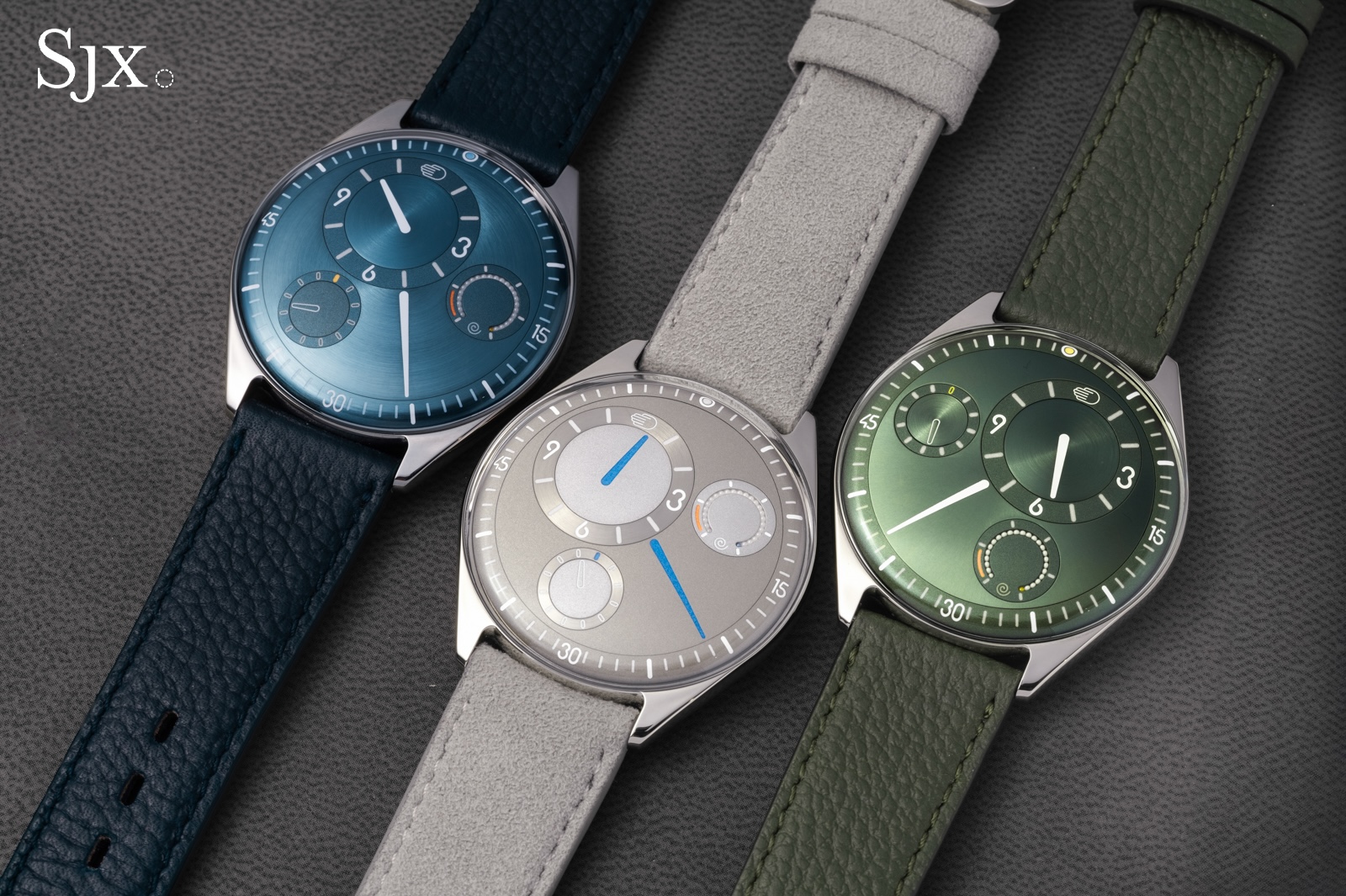
Hands On: Ressence Type 11
4 days ago
SJX Watches
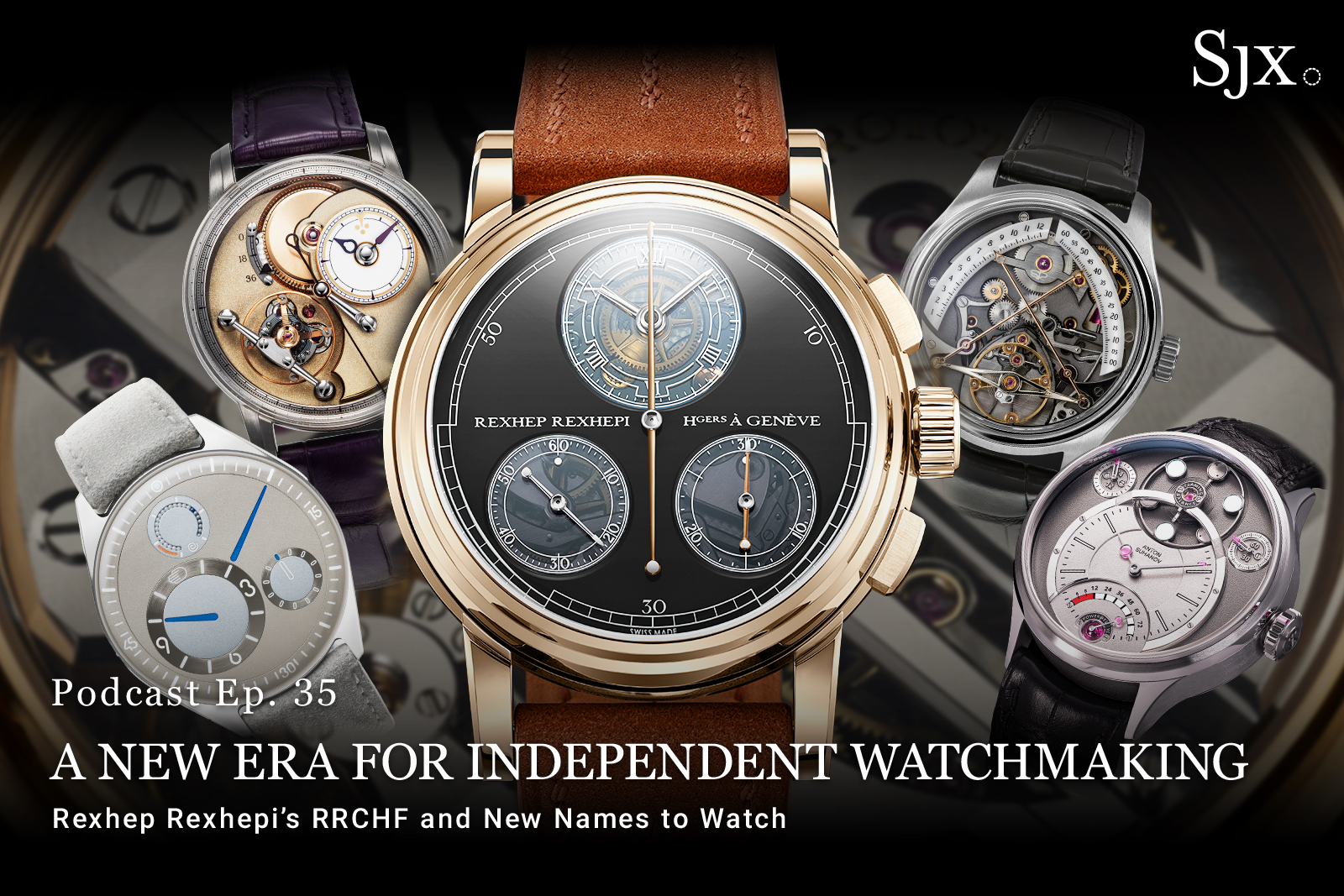
SJX Podcast: A New Era for Independent Watchmaking
Apr 10, 2026
SJX Watches
Anton Suhanov Returns with the Flamingo
Apr 7, 2026
Monochrome
First Look – A Champagne Dial for the Louis Moinet 1816 Chronograph
Apr 3, 2026
Monochrome
Buying Guide – The Joy of the Snap, With 5 of Today’s Finest Retrograde Watches
Mar 22, 2026
SJX Watches
Greubel Forsey Bids Farewell to the Balancier Convexe S²
Mar 17, 2026
Teddy Baldassarre
The Best Skeleton Watches For 2026
Mar 2, 2026
SJX Watches
In-Depth: Understanding Resonance in Watches
Feb 19, 2026
Hodinkee
Introducing: The New Audemars Piguet Royal Oak Openworked "Jumbo" and 37mm Double Balance Wheel Models in Bulk Metallic Glass And Yellow Gold
Feb 3, 2026
Teddy Baldassarre
The 9 Most Accurate Watches for the Precision-Obsessed
Feb 2, 2026
Monochrome
Introducing – Chinese Indie Watchmaker Qian GuoBiao Launches a Split-Seconds Chronograph
Jan 26, 2026
SJX Watches
Finnish Finishing: Kortela Valta Unveils the Toka
Jan 9, 2026
View all 145 articles

Learn More