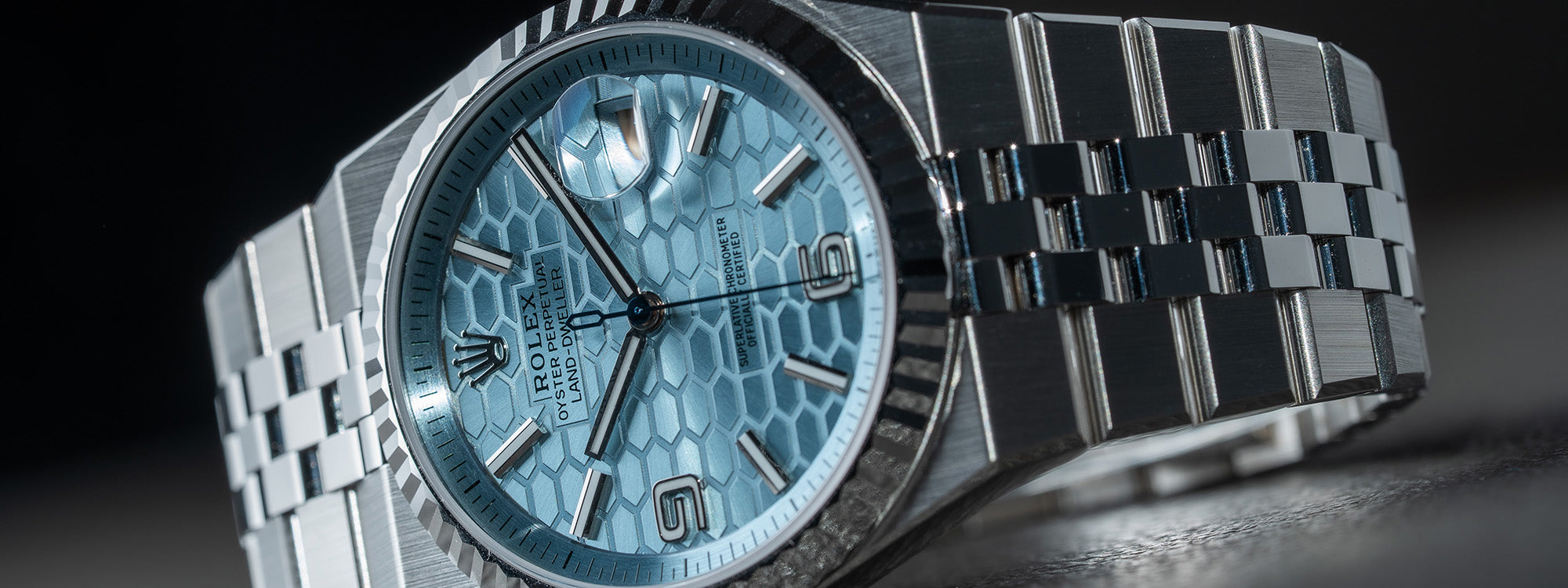
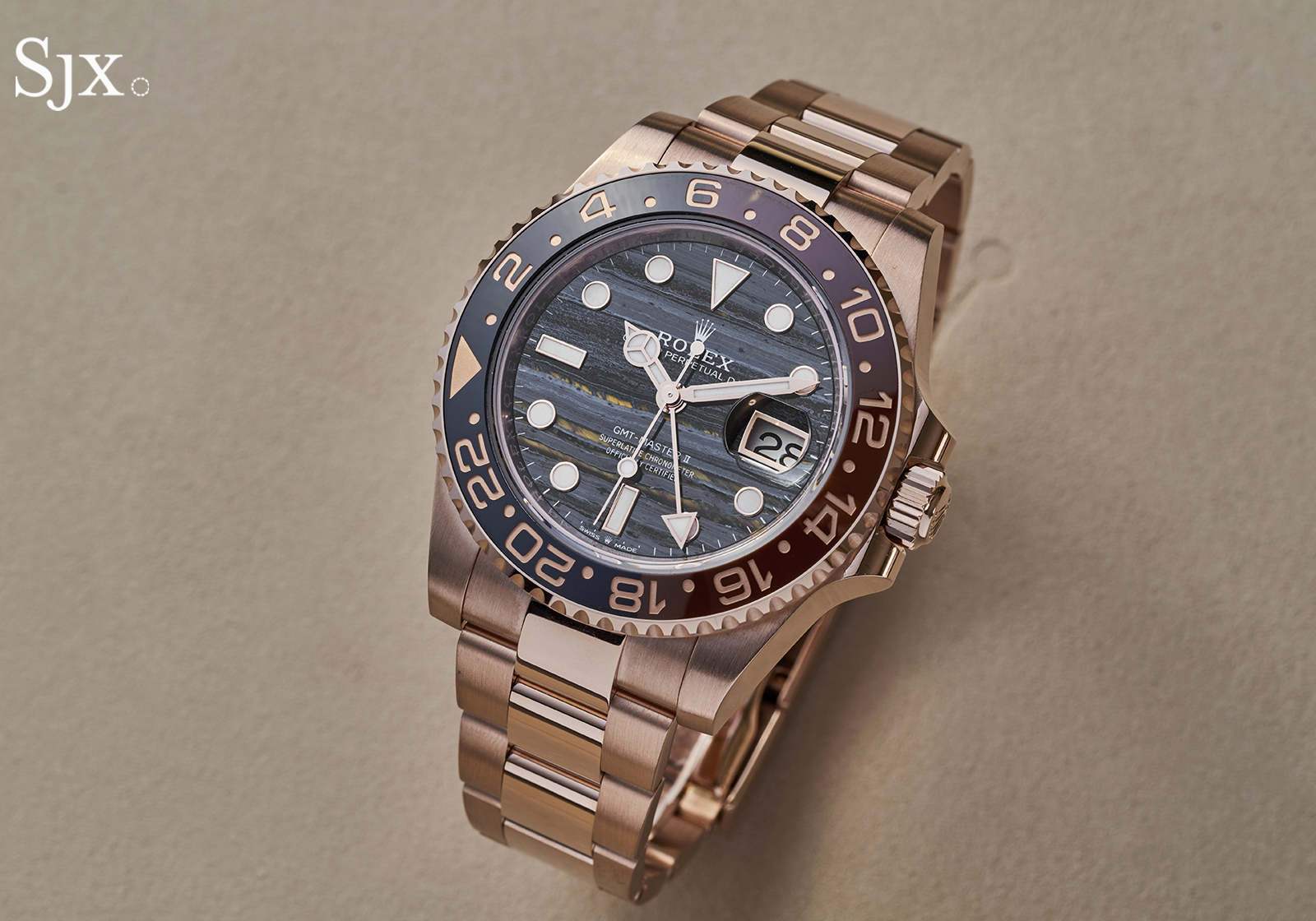
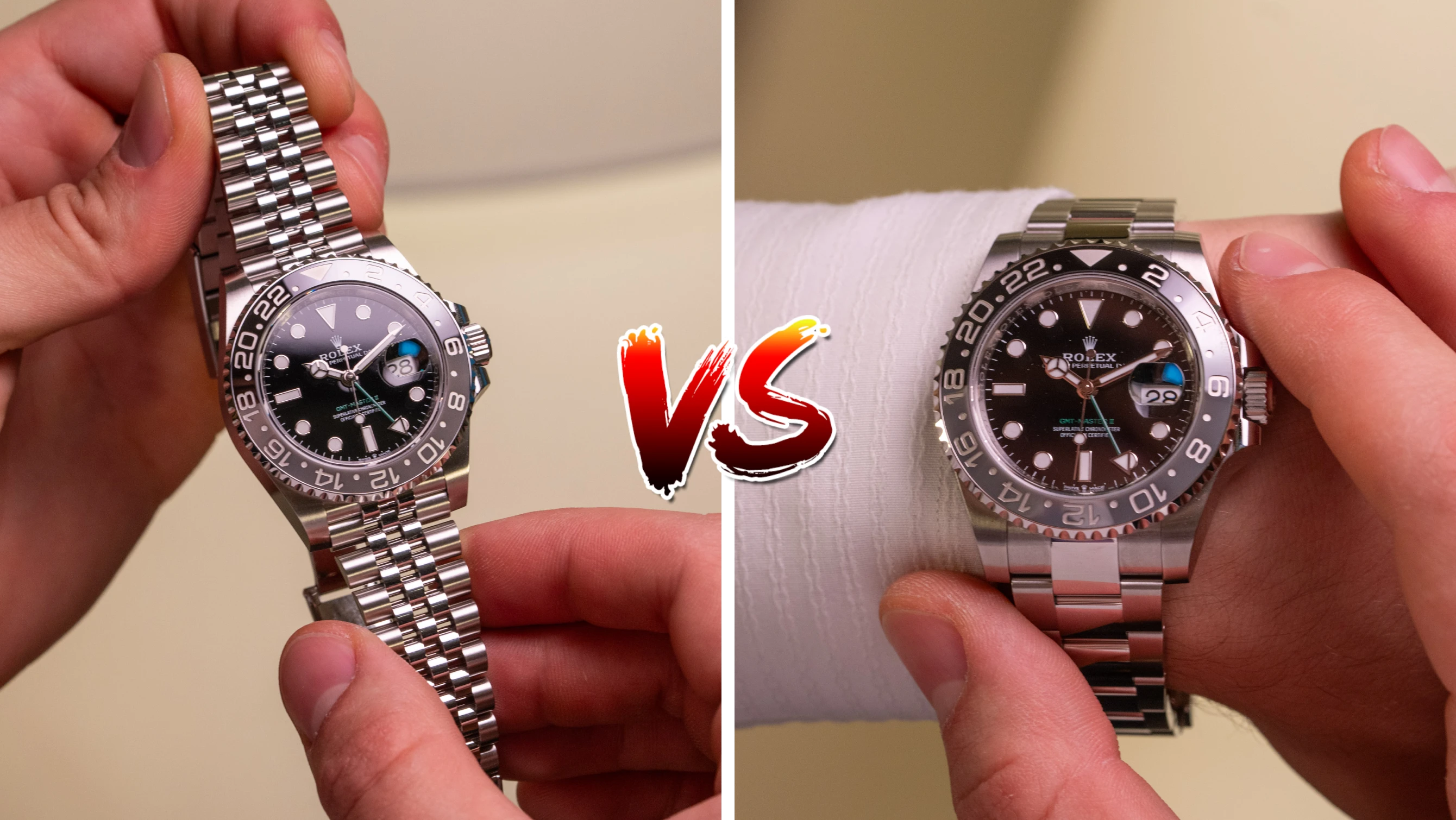
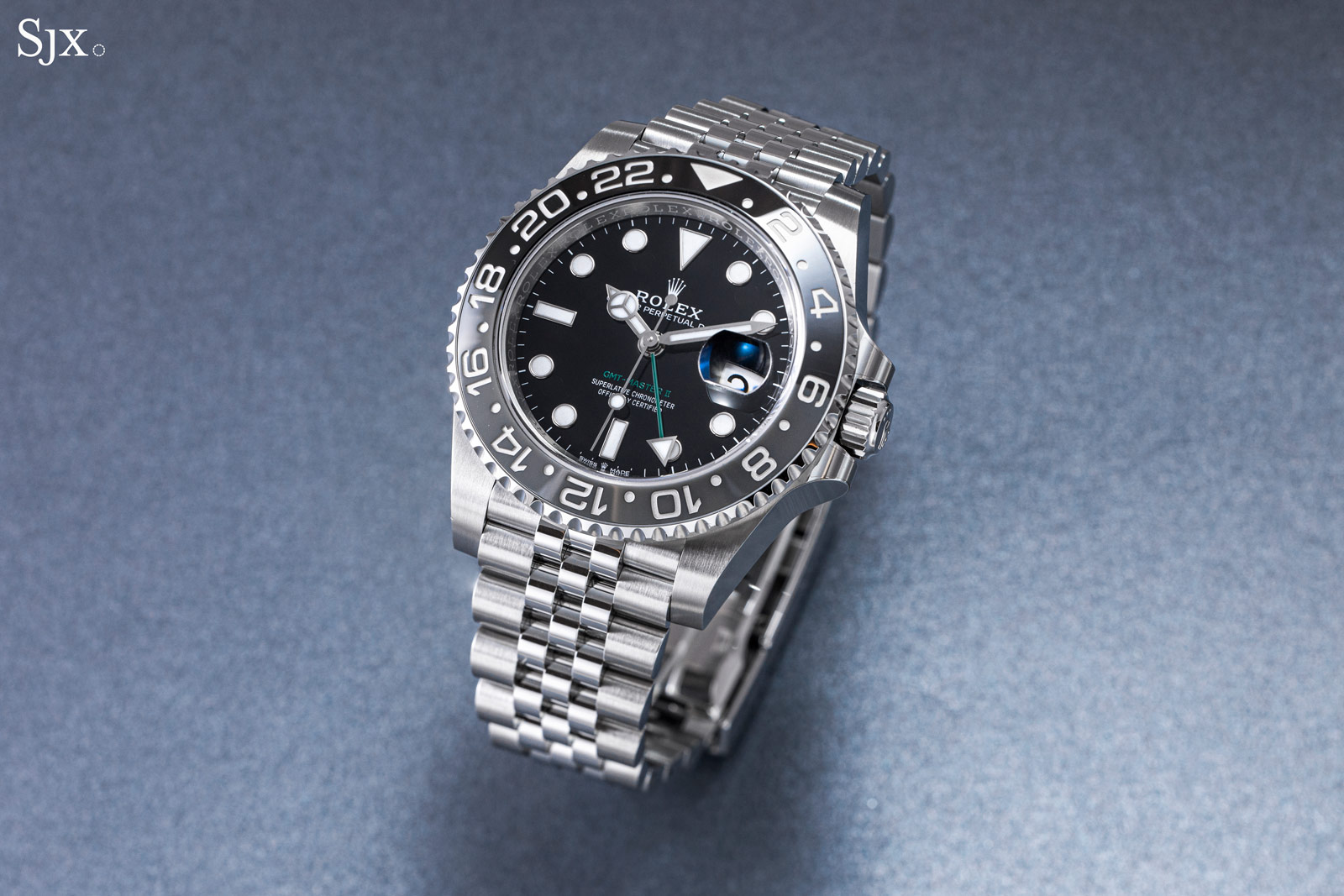
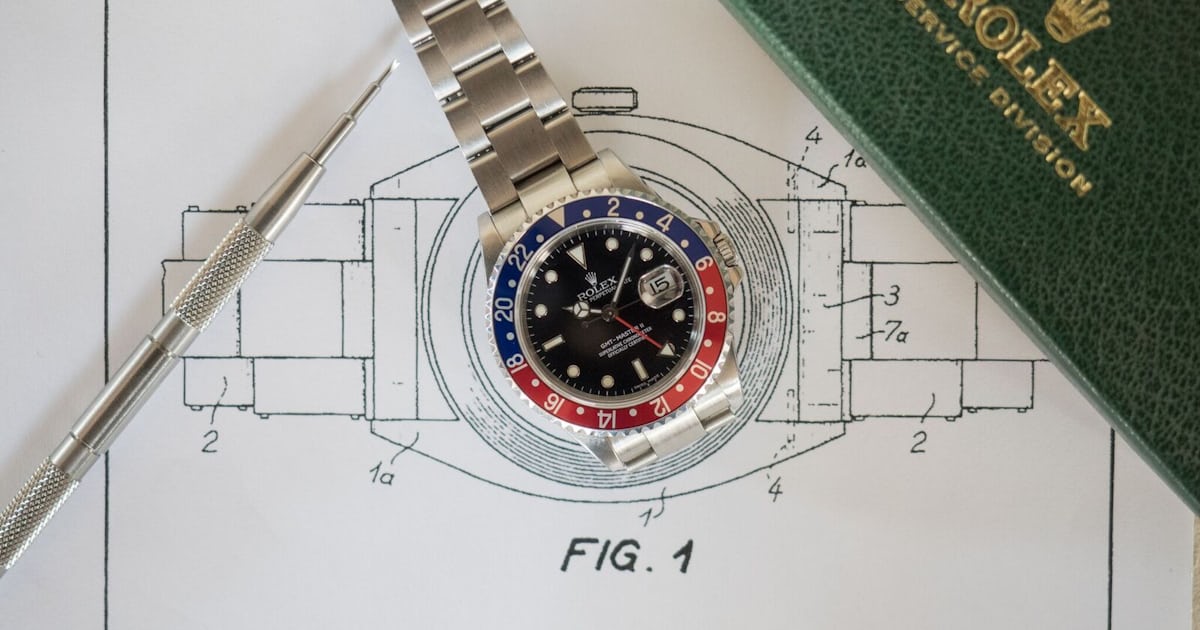
The Oyster bracelet was introduced by Rolex in 1947 as a metal alternative to leather straps on the new Oyster Perpetual line. The architecture was novel for its time: three flat links across the wrist, with the two outer links brushed and the centre link polished (in early variants). Construction was traditional: stamped sheet-metal links riveted together. The bracelet was a sport-watch peer to the existing Jubilee bracelet (1945, dressier 5-link).
Through the 1970s-90s, Rolex Oyster bracelets used folded sheet-metal construction: the links were stamped from sheet steel and folded over, leaving an audible "rattle" when shaken. This was structurally weaker than later designs but cheaper to produce. The famous 'rattle' became part of the vintage Oyster character; collectors specifically prize hollow-link bracelets on vintage Subs and GMTs.
"You don't notice an Oyster bracelet until you take a Rolex off and put a leather strap on. Then you realise the bracelet is half the watch."- Watch collector commentary on the Oyster bracelet
Solid links arrived in 2001 with the Submariner ref. 16610 update; Rolex transitioned the entire sport-watch catalogue to milled solid-link Oyster bracelets through the 2000s. The bracelets became significantly heavier (~150g vs ~80g for hollow-link) and structurally bulletproof. The polished centre link evolved through generations; modern (post-2010) Oyster bracelets typically have brushed centre links on tool watches and polished on dressier variants.
Modern clasps are the second-generation differentiation. Oysterlock: a folding deployant with a safety latch, standard on sport watches. Easylink: 5mm-of-extension micro-adjustment, integrated into the clasp. Glidelock: a toolless 18-20mm extension system on Sea-Dweller and modern Submariner, useful for fitting over a wetsuit. The clasp engineering is the modern innovation; the bracelet architecture itself has barely changed since 1947.


Comments 1