
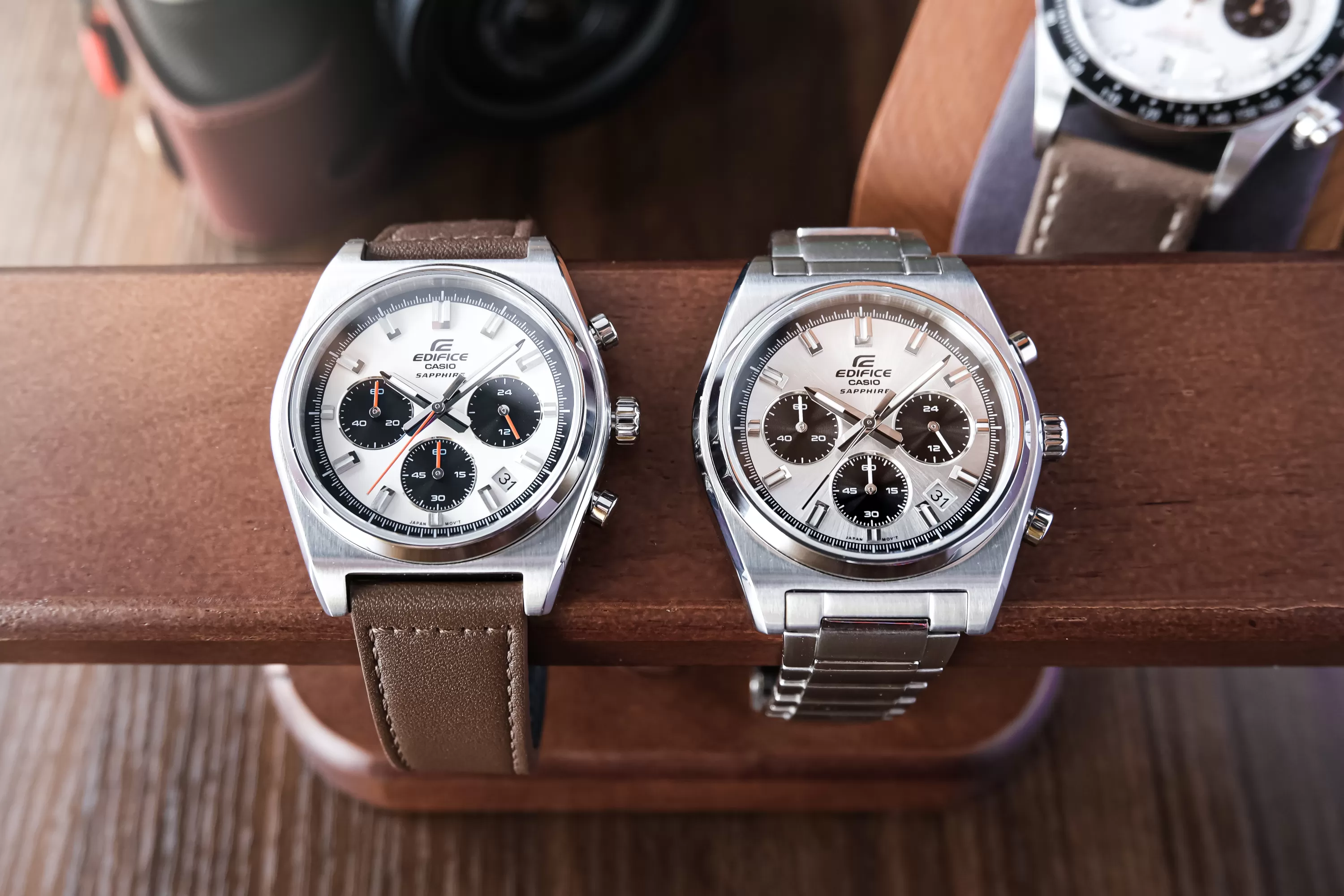
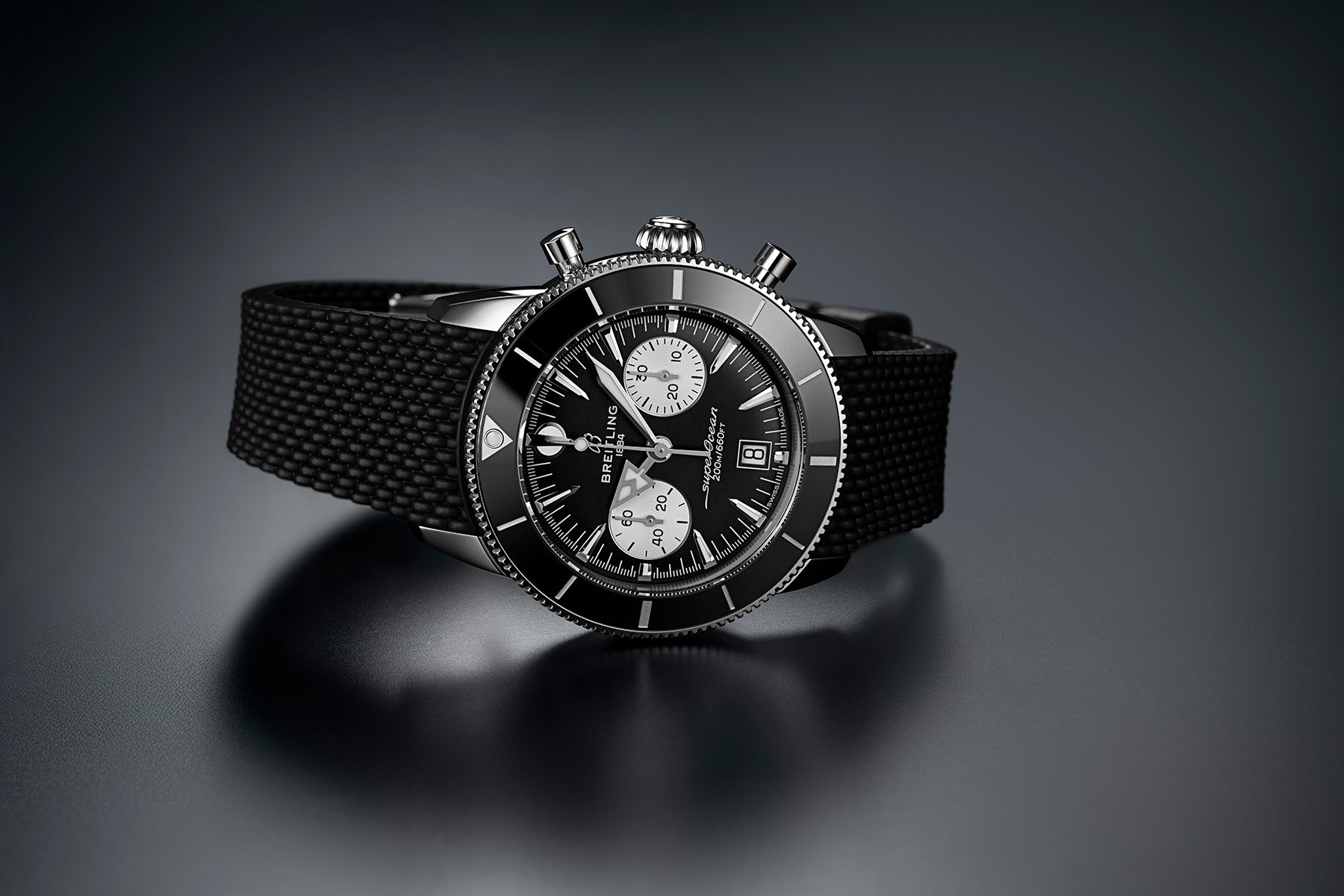
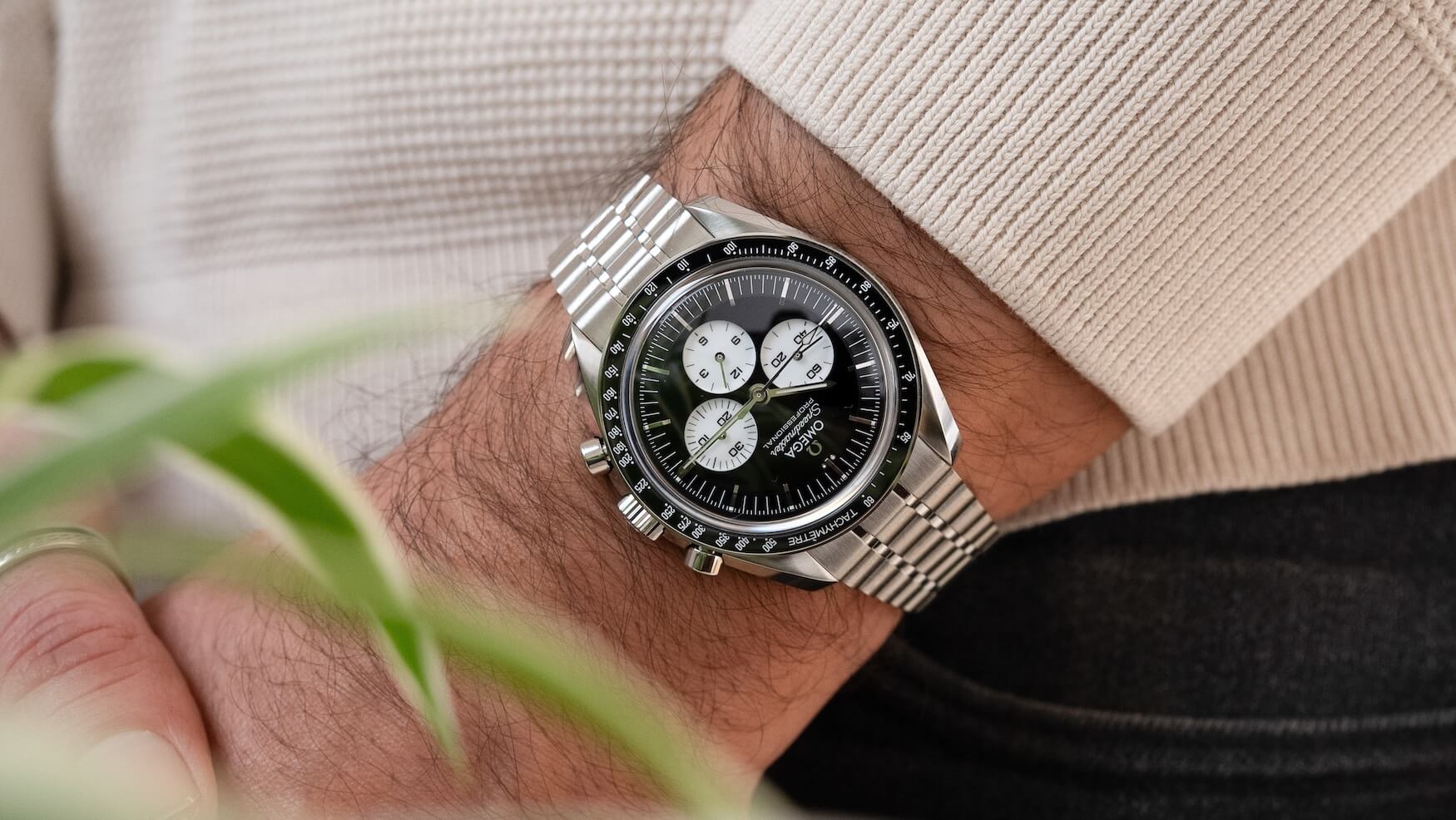
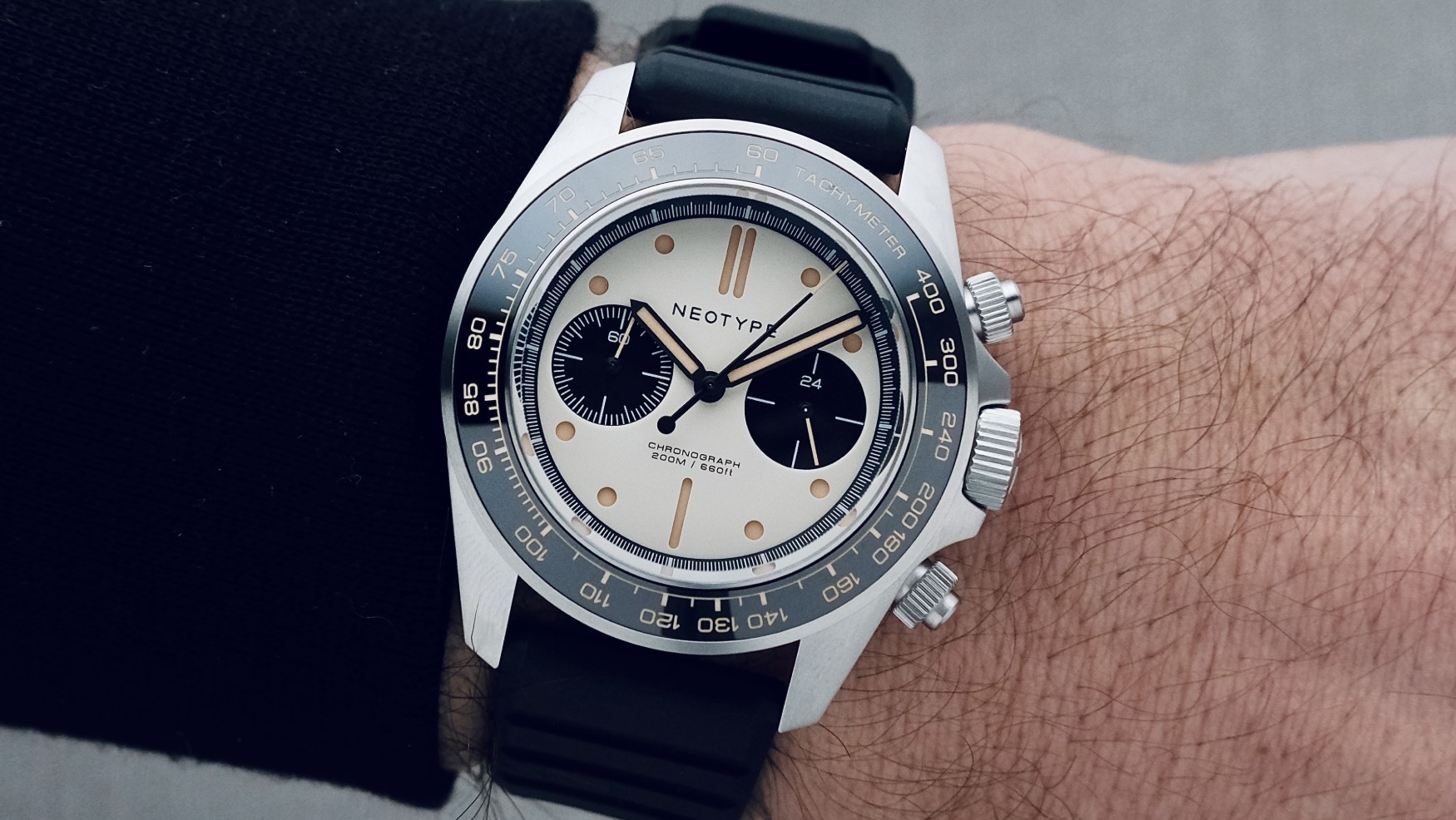
A panda dial is a chronograph dial whose sub-counters are visually contrasting with the main dial colour. The canonical "panda" is a white main dial with two or three black sub-counters; the visual analogy is to the face of a giant panda (white face with black eye patches). A reverse panda inverts the colours: black main dial with white sub-counters. Both formats are purely aesthetic: the colour difference has no functional purpose for reading the chronograph, but the high contrast makes the sub-counters visually pop, and the format has become one of the most-recognised chronograph dial signatures in modern watchmaking.
The format originated in the mid-1960s as part of the broader chronograph design vocabulary. Vintage Omega Speedmaster CK 2998 (1959-1962) had a black dial with white sub-counters (reverse panda by modern definition, though the term wasn't used at the time); the Heuer Carrera ref. 2447 (1963) was available in panda configuration; the Rolex Daytona ref. 6239 (1963-1969) shipped with both standard and contrasting sub-counter dial variants from launch. The famous "Paul Newman" exotic dial on the Daytona 6239 / 6241 / 6262 / 6263 / 6264 / 6265 (~1968-1972) is a classic panda or reverse panda configuration depending on the specific reference.
"A panda dial is the only watch design that costs nothing to produce and adds 200% to the auction price. The white-black contrast is just two paint pots, but it is the difference between a $50,000 Daytona and a $250,000 one."- Aurel Bacs, Phillips Watches Vintage Daytona sale catalogue note
The "panda" / "reverse panda" terminology emerged in collector vocabulary in the 1990s-2000s as the vintage chronograph market matured. Earlier collectors used "two-tone dial" or "white-black" / "black-white" descriptions; the panda terminology is now universal in modern auction-catalogue and dealer language. Phillips Watches, Christie's, and major vintage dealers all use "panda" and "reverse panda" as standard descriptive terms.
In modern watchmaking, the panda dial has become the canonical chronograph reference. Rolex Daytona ref. 116500LN (2016-2023, white dial / black sub-counters) is the modern reference panda; the steel Daytona 126500LN (2023+, white panda or black reverse panda variants) continues the format. Omega Speedmaster Moonwatch reverse panda variants, the Tudor Black Bay Chrono, the Hamilton Intra-Matic, the Longines Heritage Diver, and dozens of other modern chronographs use panda or reverse panda as the standard catalogue option.
Panda configurations are not limited to two-counter chronographs (Speedmaster-style, with sub-counters at 3 and 9). Three-counter chronographs like the Daytona (sub-counters at 3, 6, 9) carry the panda format with all three sub-counters black-on-white or white-on-black. Mono-counter chronographs (just one sub-counter, typically a continuous-running second at 6) can also be panda; Breguet Type XX reissues use this format. Asymmetric panda (e.g. only the running second sub-counter contrasting, the chronograph counters matching the main dial) is rare but exists on selected references.
Auction premium: vintage Daytona references with original panda or reverse panda dials in unrestored condition routinely sell at 2-5× the price of the same reference with a standard non-panda dial. The Paul Newman Daytona (panda configuration, exotic dial, 1968-1972) is the canonical example: a perfect-condition 6239 Paul Newman commands $200,000-$500,000+, vs $30,000-$60,000 for a regular non-panda 6239. The premium is partly the dial rarity (Singer-produced exotic dials were a small minority of total Daytona production), partly the visual signature, and substantially the Newman provenance from the 2017 Phillips sale.





Comments 1