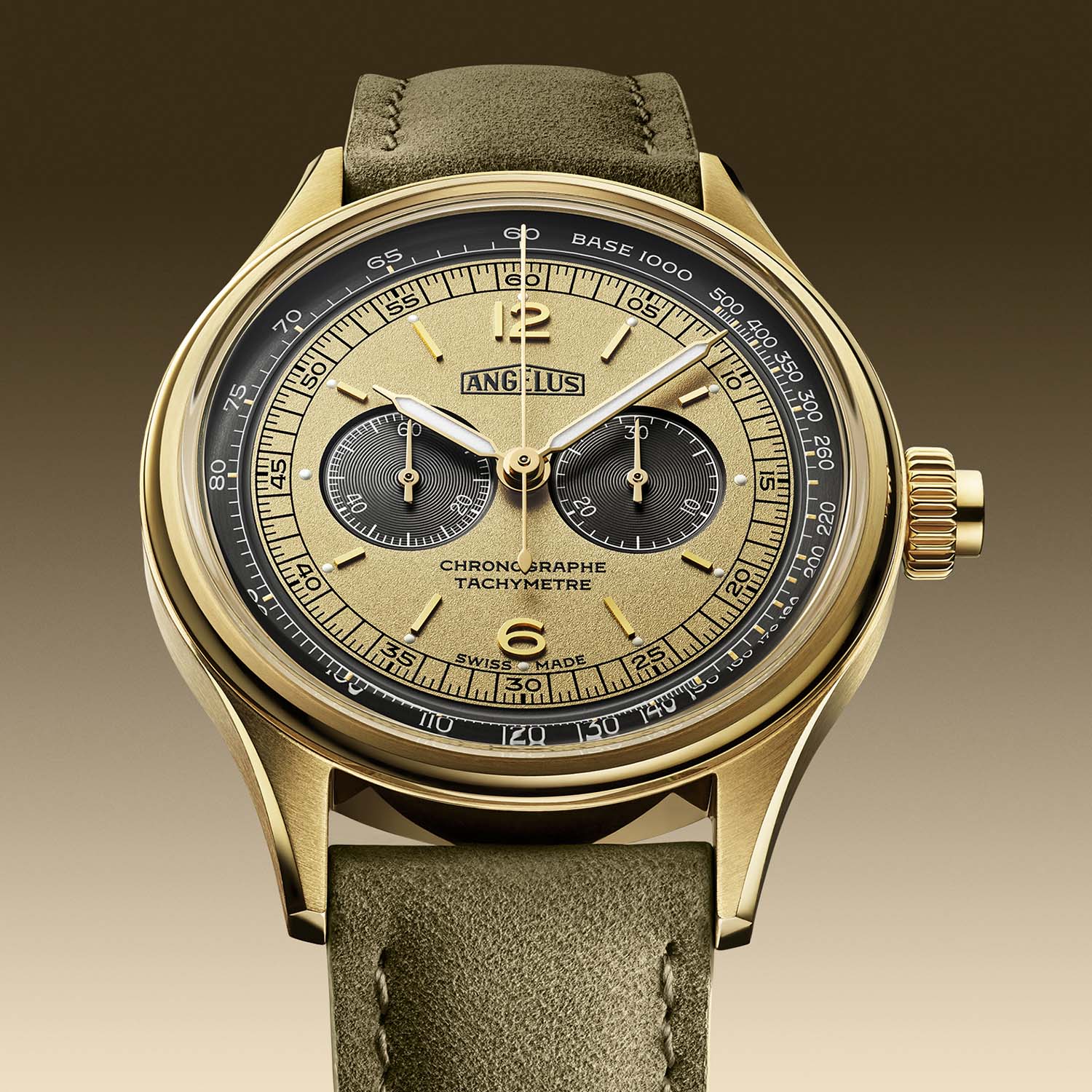
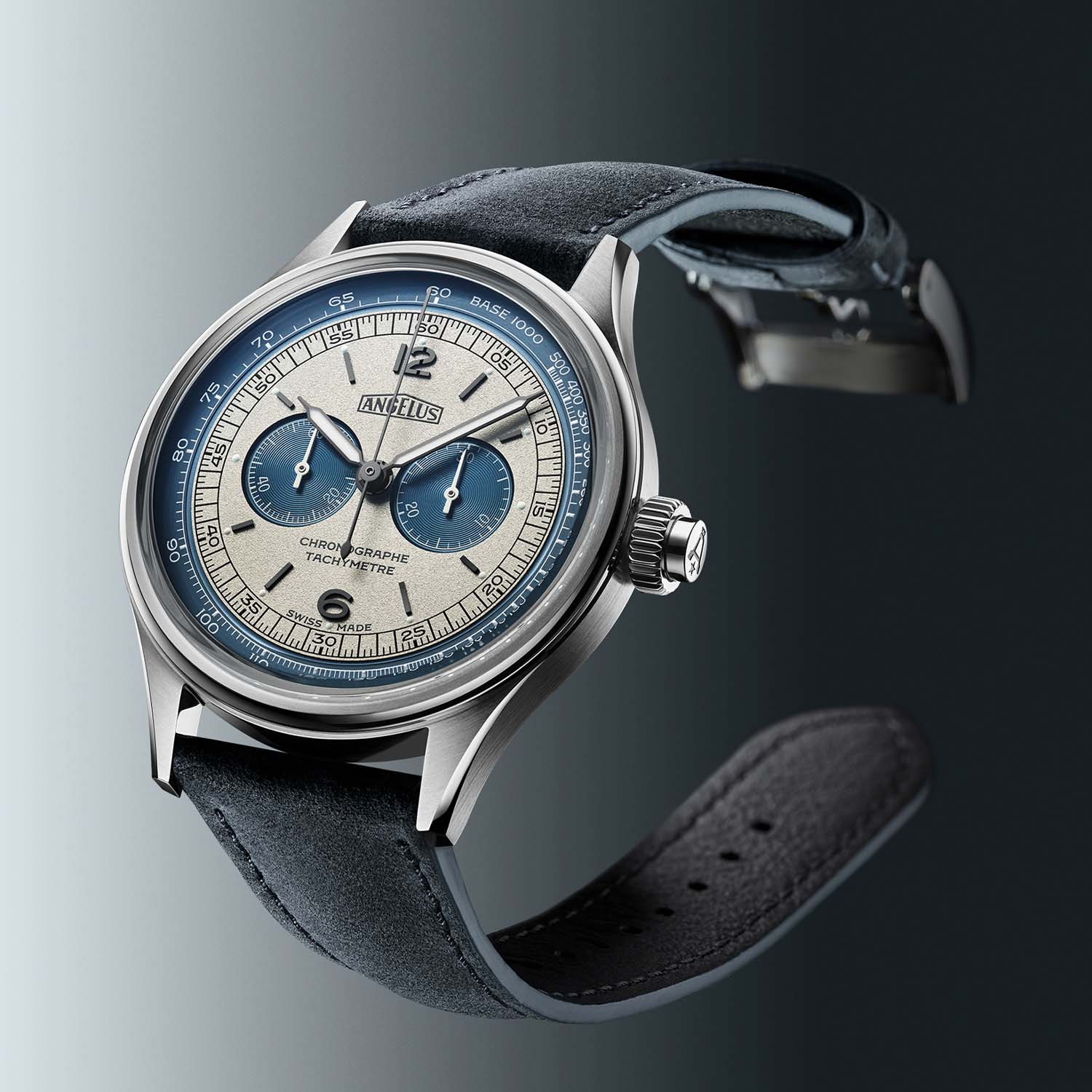
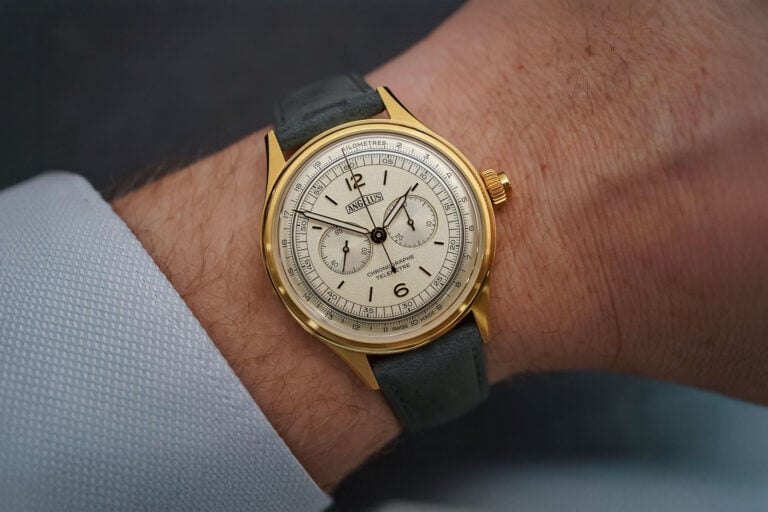
Angelus is back at it. Hot on the heels of the Chronographe Télémètre, which picked up a GPHG award and a fair amount of fan devotion, the brand has now unveiled the Chronographe Tachymètre Monopusher. It's a trio of limited editions built on exactly the same platform as the Télémètre, with one meaningful change: the telemeter scale is gone, replaced by a tachymeter scale designed to measure speed over a known distance.
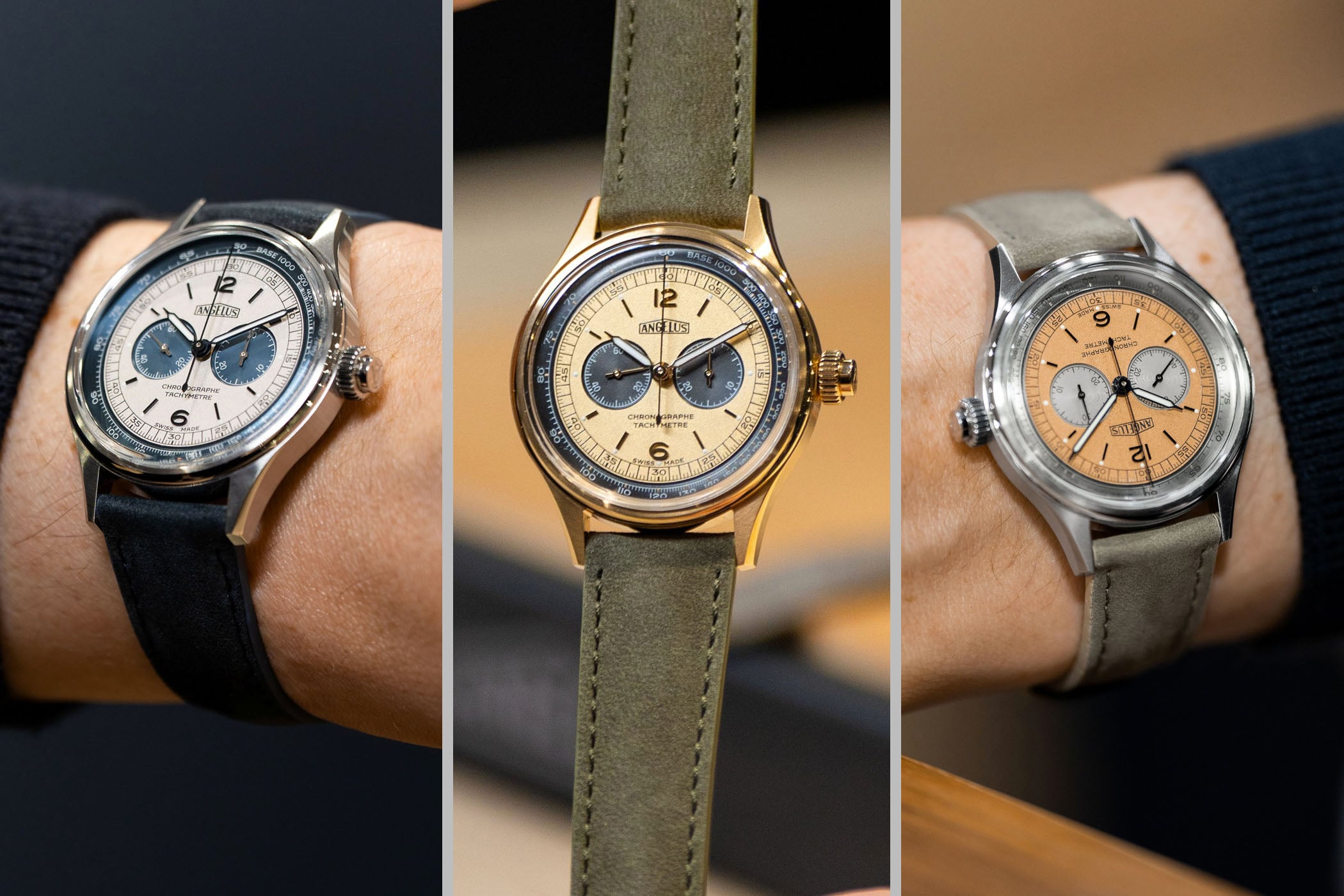
If you're already familiar with the Télémètre, you'll feel right at home here. Same compact case, same hand-wound A5000 calibre, same single-pusher operation. Angelus isn't reinventing anything with this release. It's extending a strong concept, and honestly, that's a perfectly reasonable thing to do.
The tachymeter function is the whole point. You time an event over a fixed distance, and the scale on the dial converts elapsed seconds into a speed readout. It's a classically motorsport-adjacent complication, and it fits naturally into the vintage stopwatch aesthetic Angelus has been mining so successfully.
What Actually Changed
The core architecture stays the same. The A5000 calibre is a hand-wound movement with a column wheel and a single pusher that handles start, stop, and reset in sequence. That monopusher mechanism gives it an older, more deliberate character than a modern two-pusher chronograph. You commit to each function in order. There's no jumping back.
The dial is where the real work happened this time. The telemeter's concentric distance scale has been replaced by a tachymeter scale running around the periphery. It reads differently on the wrist and attracts a slightly different type of buyer, but the overall visual grammar, layered, vintage, instrument-like, remains intact.
The Case and Proportions
Angelus has kept the compact dimensions from the Télémètre. This isn't a modern oversized sports chronograph. The proportions are deliberately restrained, which suits the vintage stopwatch inspiration. The case design references the brand's mid-20th century archival pieces, and it shows. Lugs, crown placement, pusher position, all of it reads as considered rather than copied.
Three references make up the collection, offering different dial and material combinations. Angelus hasn't gone for a single definitive version here. The trio approach means you can pick the one that matches your taste without compromising on the core watch underneath.
Who This Is For
If you bought the Télémètre and loved it, you probably don't need this one unless you're specifically drawn to the tachymeter function over the telemeter. These two complications do very different things. A telemeter measures distance using the speed of sound, typically used for timing lightning or artillery. A tachymeter measures speed. They suit different personalities.
- Buyers who prefer motorsport references over the Télémètre's more esoteric military associations
- Collectors building a matched pair across both Angelus chronograph releases
- Anyone who wanted the Télémètre but held off because the telemeter function felt too niche
- Fans of hand-wound monopusher chronographs who haven't yet pulled the trigger on this platform
- Vintage chronograph enthusiasts priced out of original Angelus pieces from the 1940s and 50s
How It Compares to the Télémètre
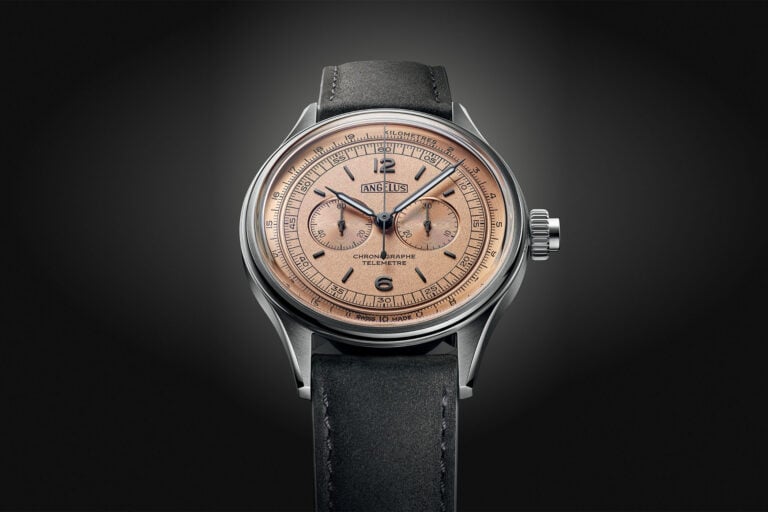
The Télémètre was the proof of concept. It showed that Angelus could take a genuinely obscure archival reference point and build something compelling around it. The GPHG recognition confirmed it wasn't just a nostalgia play. The Tachymètre is a more commercially legible follow-up. Tachymeters are familiar. Anyone who's ever looked at a 1960s racing chronograph understands instinctively what a tachymeter does, even if they've never used one.
That familiarity cuts both ways. The Télémètre had a certain eccentric appeal precisely because the telemeter function is so unusual. The Tachymètre trades some of that oddball charm for broader accessibility. Neither choice is wrong. They're just different bets.
The Angelus Chronographe Tachymètre Monopusher lands as a confident, well-reasoned addition to what's shaping up to be a proper collection. It won't surprise anyone who followed the Télémètre closely, but it doesn't need to. It just needs to be a good watch on its own terms, and from everything we've seen, it is.
Comments
No comments yet, be the first to weigh in.