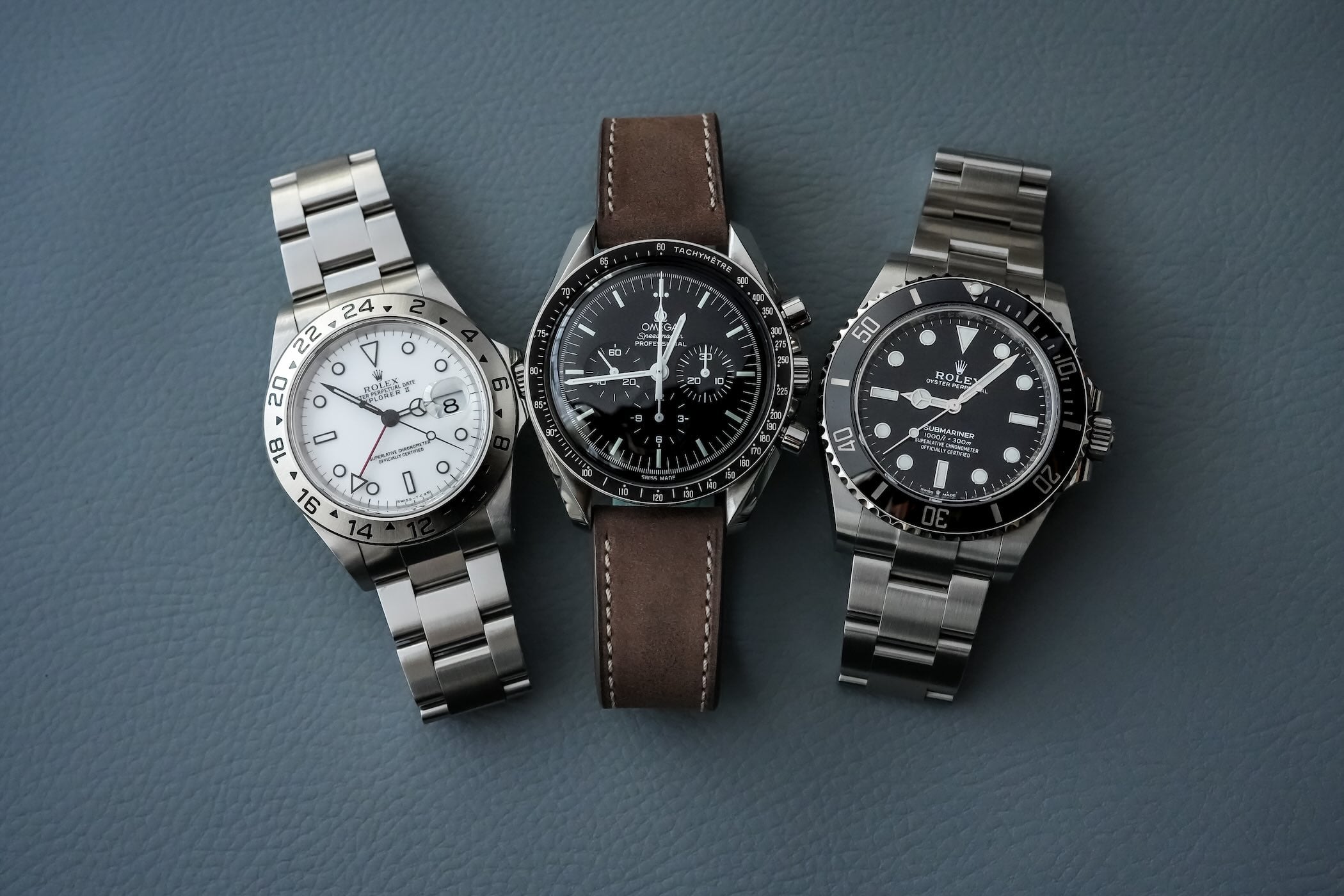
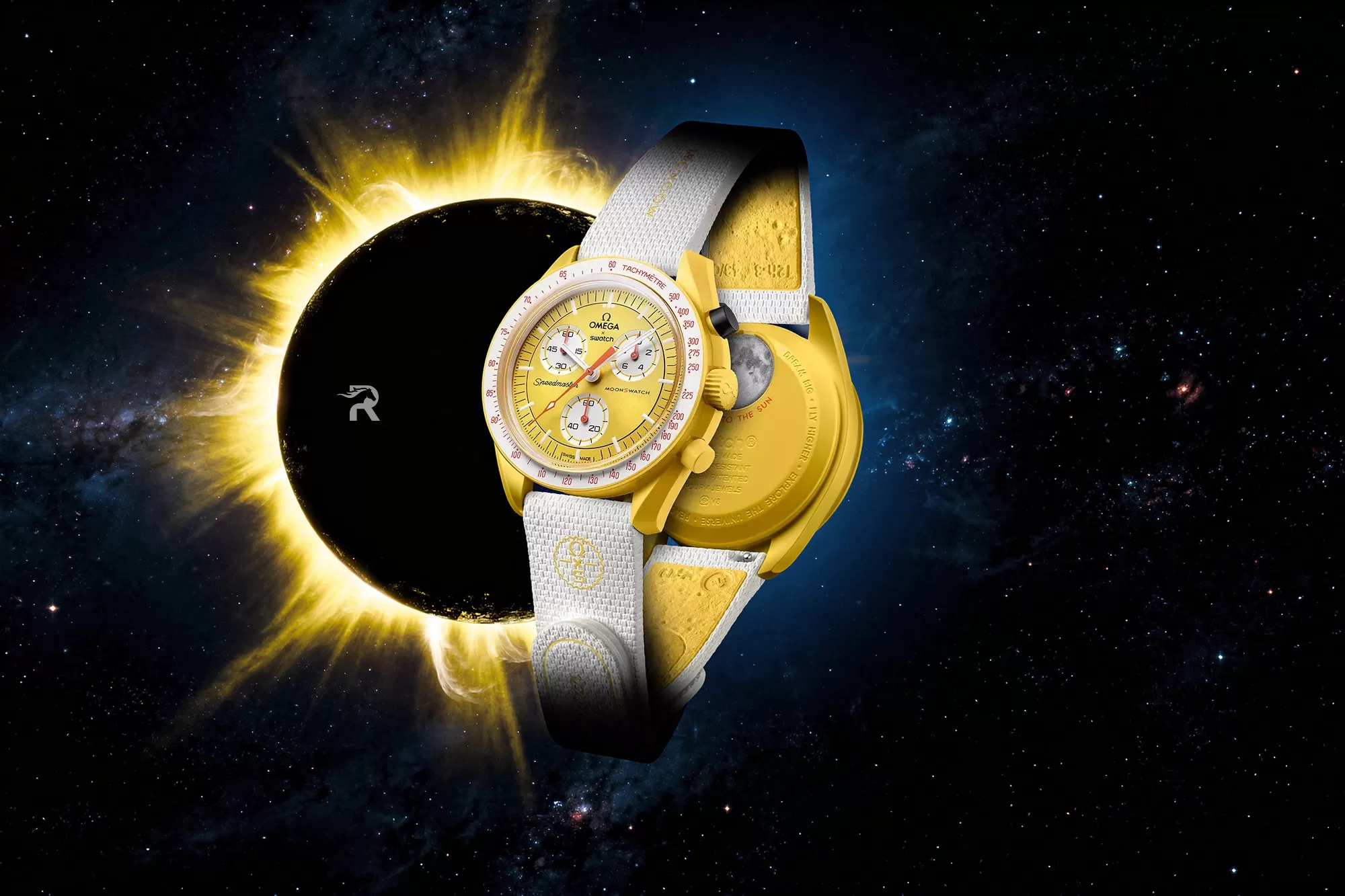
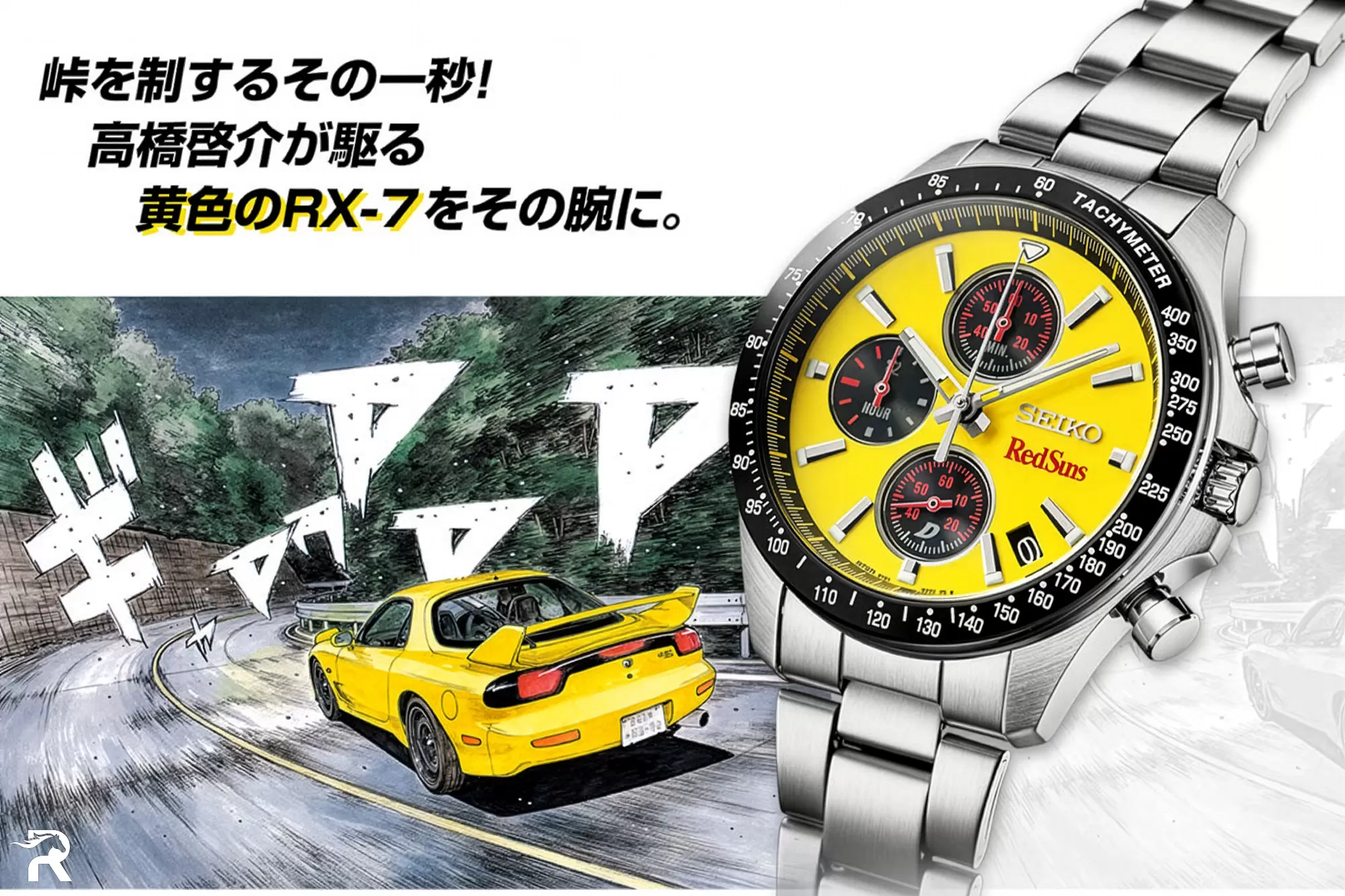
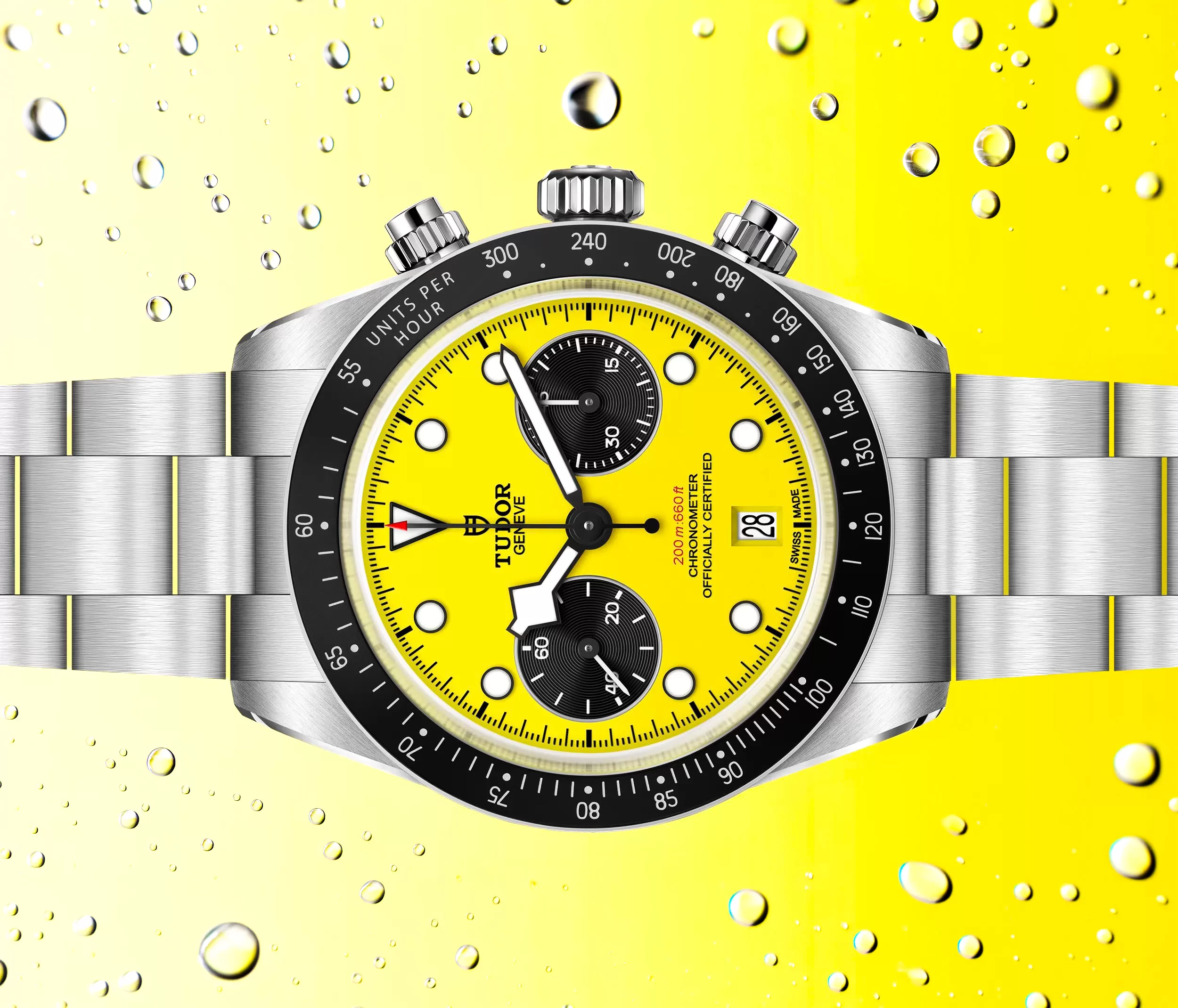
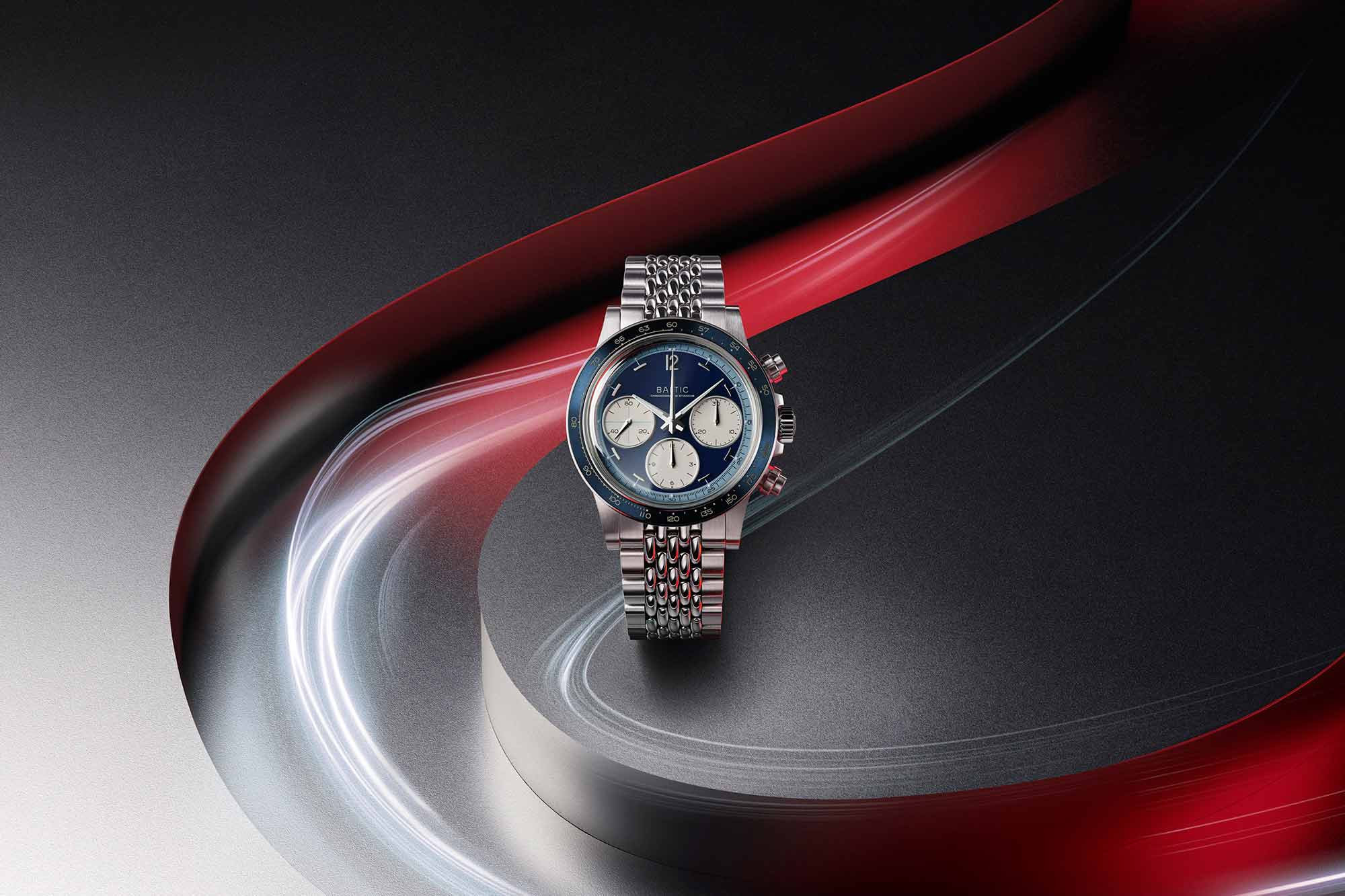
A tachymeter scale (also tachymètre) is a logarithmic scale around the bezel or outer dial of a chronograph watch, designed so that when the chronograph is started at the beginning of a known distance and stopped at the end, the central seconds hand points directly at the average speed for that distance, expressed in units (miles or kilometres) per hour. The scale begins at 60 (one minute = 60 units/hour), goes around the dial through 120 (30 sec = 120/h), 240 (15 sec = 240/h), 400 (9 sec), and tops out around 500 (7.2 sec), beyond which the scale becomes too cramped to read. It is unitless: the same scale works for kilometres and for miles; the answer simply has to be interpreted in the unit of the timed distance.
The mathematics is simple. Speed = distance / time. If the chronograph runs for t seconds over 1 unit of distance, then the speed in units per hour is 3600 / t. The tachymeter scale is just 3600 / t printed at every t-second position on the bezel: at t=60 the scale reads 60; at t=30 it reads 120; at t=15 it reads 240; at t=12 it reads 300. To use it: drive a measured mile (or kilometre), start the chronograph as you cross the start marker, stop it as you cross the end marker, read the scale where the central seconds hand is pointing. That number is your average speed.
"How fast did you go down the straight? Twelve seconds for the kilometre marker. The tachymeter says 300. So you ran an average of 300 km/h. The watch did the maths for you."- Owner's manual instruction, Heuer Carrera 1158CHN, 1969
Tachymeters first appeared on wristwatch chronographs in the 1910s, applied to instrument-style chronographs for early aviation. Pilots used the scale to estimate airspeed by timing themselves over a known ground distance during flight tests; the same procedure was later applied to road and railway speed measurement, race timing, and industrial-process timing. By the 1950s the tachymeter had become standard on motorsport chronographs as automobile racing matured: Heuer, Breitling, Universal Genève, and Omega applied tachymeters to nearly every chronograph they made for the racing market.
The two canonical modern tachymeter watches are the Omega Speedmaster Professional and the Rolex Cosmograph Daytona. The Speedmaster's tachymeter is on a fixed black anodised aluminium bezel (and from 2010, on a black ceramic bezel for the Master Chronometer references); the scale runs from 500 at 7 seconds down to 60 at 60 seconds, and the same bezel layout has been used since the original Speedmaster CK 2915 in 1957. The Rolex Daytona's tachymeter sits on the fixed metal bezel (steel since the 6263 of 1969, gold or platinum on the precious-metal references, ceramic from the 116500LN of 2016 onward); the scale runs from 400 to 60 over the same logarithmic curve.
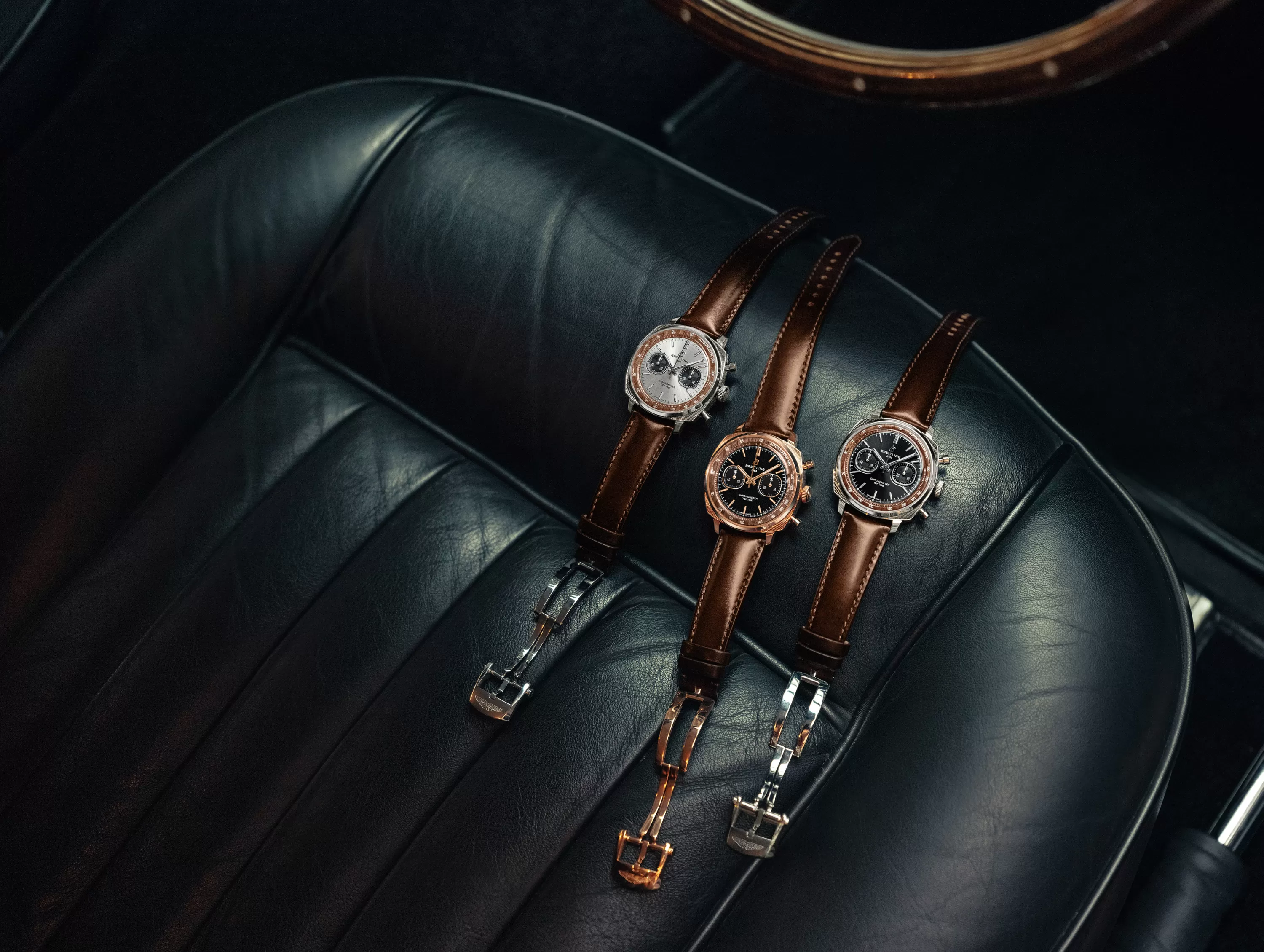
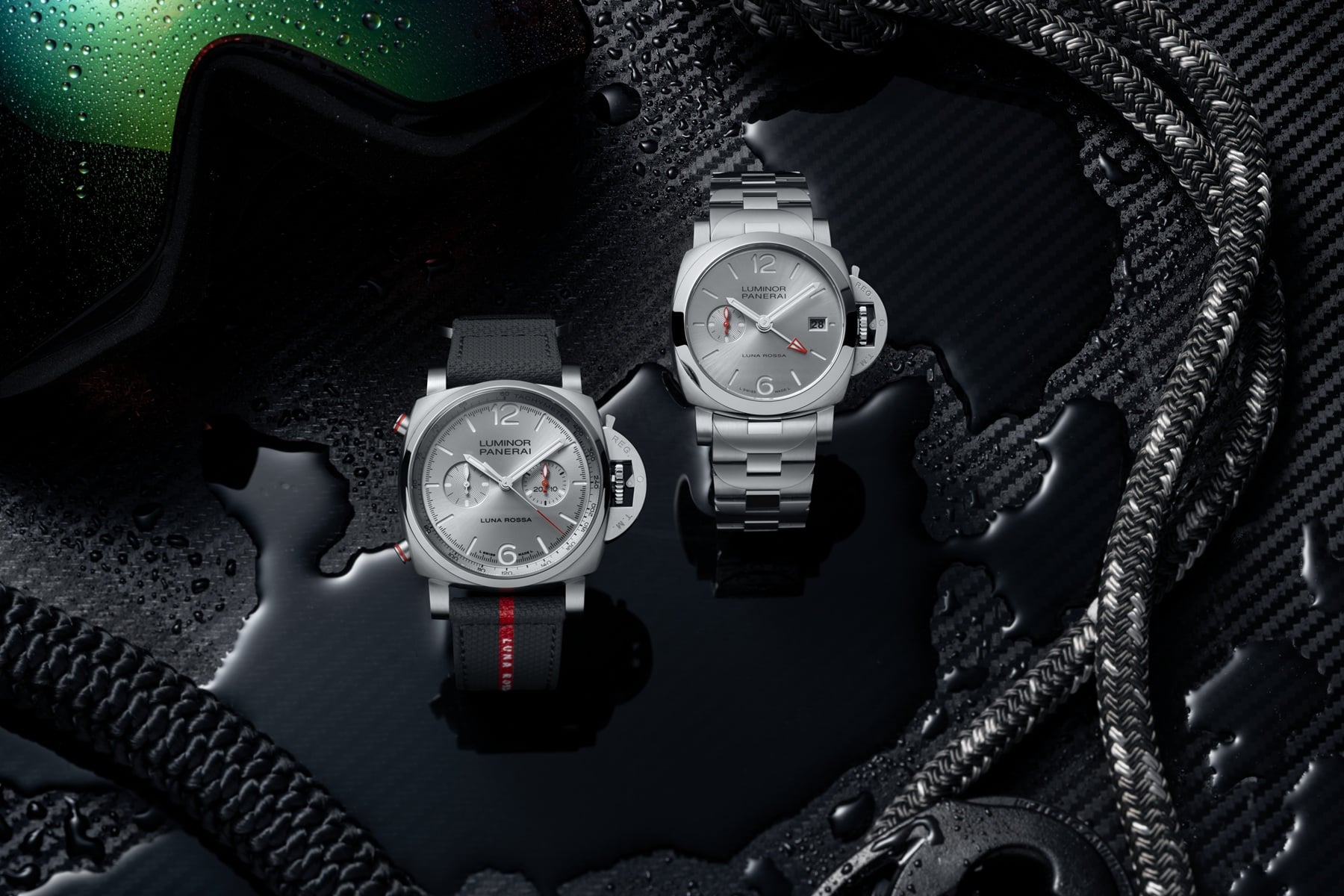
The choice of bezel placement versus outer-dial placement is largely aesthetic. A tachymeter on the bezel (as on the Speedmaster, Daytona, modern Carrera) keeps the dial clean but sets the scale at the periphery, slightly harder to read than a printed track on the dial. A tachymeter printed as an outer ring on the dial (as on early Heuer Carreras, Universal Genève Compax, vintage Speedmaster CK 2915) makes the scale slightly more legible but crowds the dial layout. Both placements are functionally identical; both still appear on modern watches.
In modern wear the tachymeter is almost entirely decorative. Stopwatch-and-distance speed measurement has been replaced by GPS, by car odometers, and by every smartphone since 2008. Of every 1,000 tachymeter watches sold, fewer than perhaps 20 are ever used to measure a real speed. But the scale remains a strong visual signature of "professional chronograph", a visual and tactile reminder of the watch's racing and aviation heritage. On a modern Daytona, Speedmaster, or Carrera, the tachymeter is decorative metalwork as much as it is a measurement tool, but the function is still there if you want to use it.



Comments 1