Origin and Lemania connection
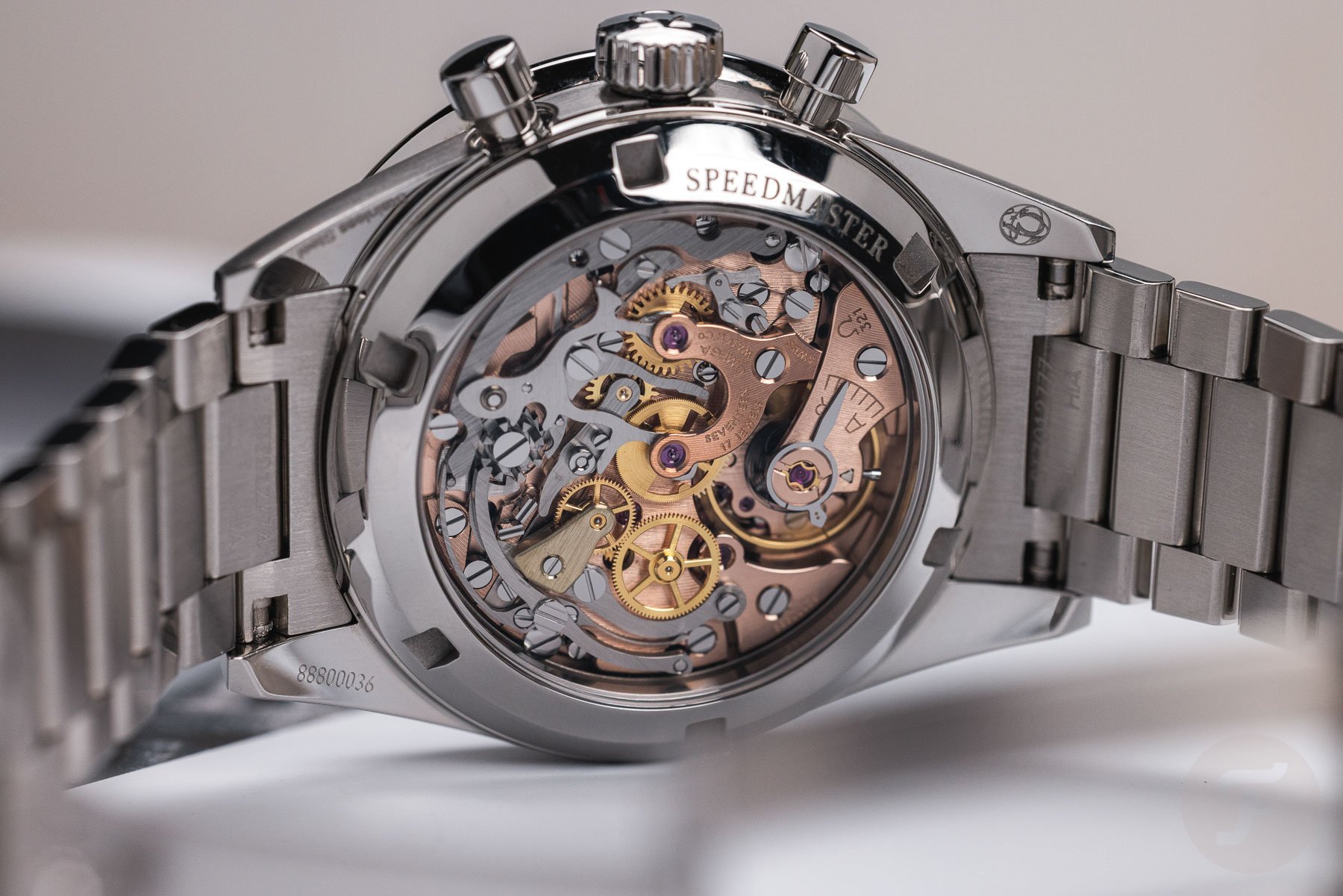
Omega Cal. 321 is the hand-wound column-wheel chronograph caliber designed by Albert Piguet at Lemania in 1942 and brought to market under Lemania's designation CH 27 C12. Omega began branding the same movement as Cal. 321 in 1946; the dimension code stayed (27 mm diameter, 12 lignes) and the architecture stayed (column wheel, lateral clutch, two registers, 18,000 vph). Lemania and Omega were sister companies inside the SSIH holding, which is why the same caliber appears under both names across post-war chronographs.
The Speedmaster era and Apollo 11
The Cal. 321's decisive moment came in 1957, when Omega launched the Speedmaster CK 2915 (broad-arrow hands, "Base 1000" tachymeter bezel, 39 mm) as a motorsport chronograph. The 321 inside that watch was the same hand-wound Piguet design that had been in production for fifteen years. Through the late 1950s and 1960s the Speedmaster cycled through references CK 2998, ST 105.002, ST 105.003, ST 105.012, and ST 145.012, all powered by the 321. In 1965 NASA certified the Speedmaster ST 105.003 for all crewed spaceflights after running it through brutal qualification trials (high-G, vacuum, temperature shock, vibration). On 20 July 1969, Buzz Aldrin wore his ST 105.012 on the lunar surface during Apollo 11; the 321 became the only mechanical caliber ever worn on the Moon.
Replaced by 861, then 1861, then 3861
Lemania replaced the 321 in 1968 with the simpler Cal. 861 (cam-actuated, 21,600 vph, fewer parts, easier to assemble at scale; see Lemania 1873). Omega adopted the change for the Speedmaster Professional, and the 321 left active production. The last factory Speedmaster Pro built on the 321 was the ST 145.012, with serial numbers running into 1968-69. The 861 served from 1968 through 1996, then the rhodium-plated Cal. 1861 from 1996 through 2021, then the modern Master Chronometer Cal. 3861 from 2021.
The 2019 rebirth
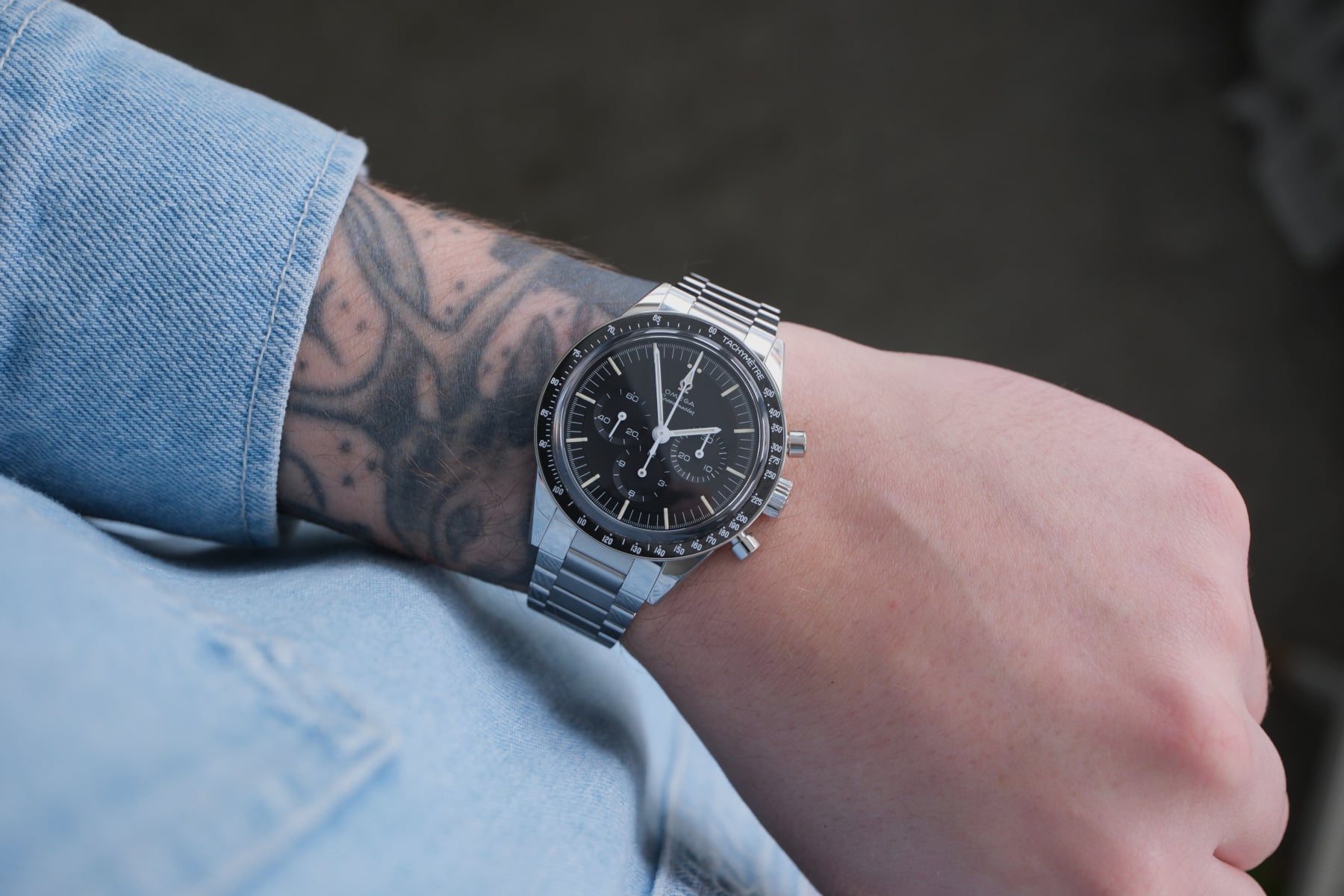
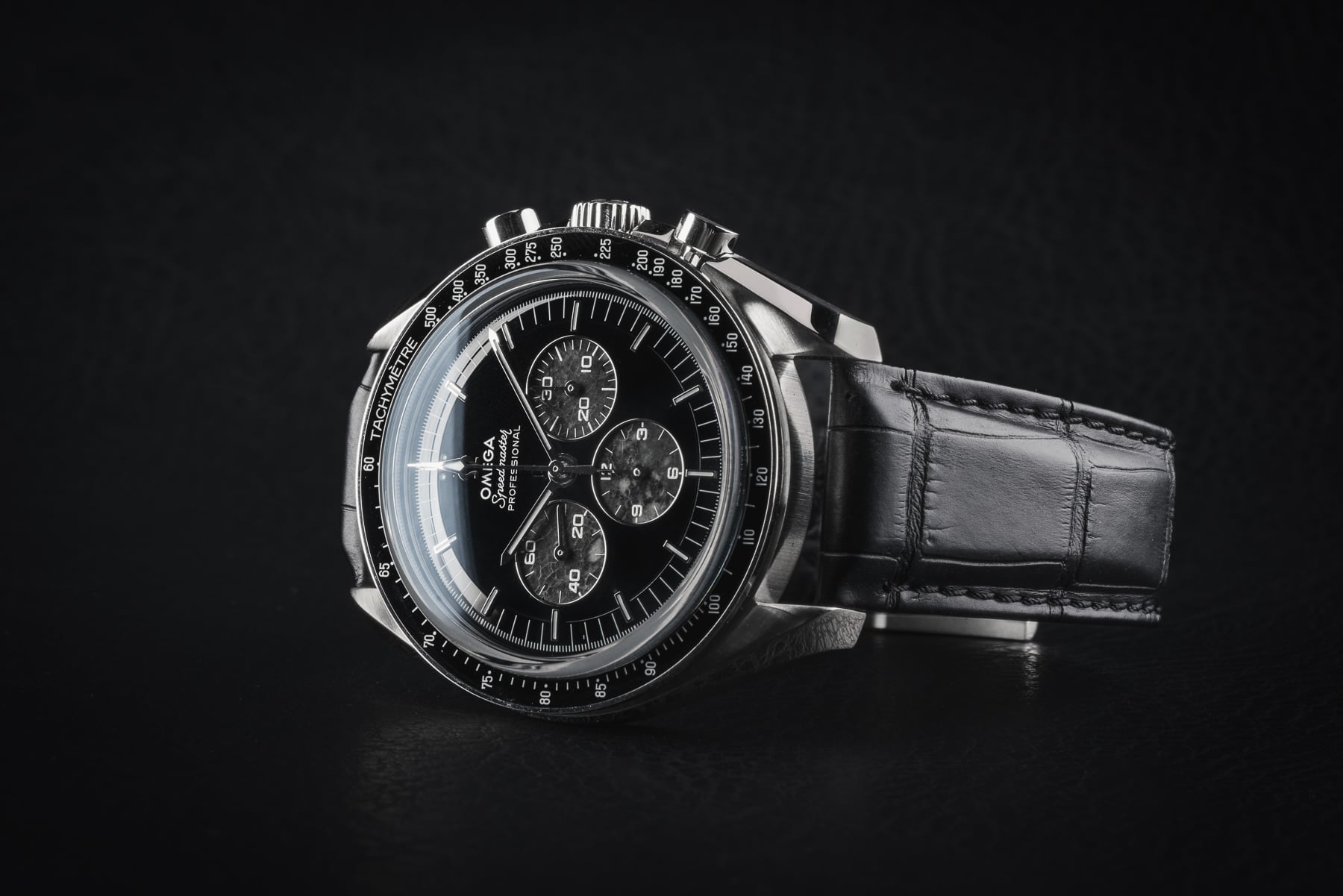
In January 2019 Omega announced the reborn Cal. 321, reverse-engineered from the original Lemania architecture using tomographic scans of an existing Buzz Aldrin-era 321 inside a 1969 Speedmaster owned by Omega. The reborn caliber retains the original column-wheel and lateral-clutch geometry, hand-finished entirely in a dedicated Atelier 321 within Omega's Bienne manufacture. Production is small (low thousands per year, single-watchmaker assembly) and the caliber appears only in selected Speedmaster references: the Speedmaster Apollo 11 50th Anniversary (2019, Moonshine Gold), the Speedmaster Caliber 321 in stainless steel ("Ed White") ref. 311.30.40.30.01.001 (2020), and the Canopus Gold versions through 2024.
Where it sits in the modern catalogue
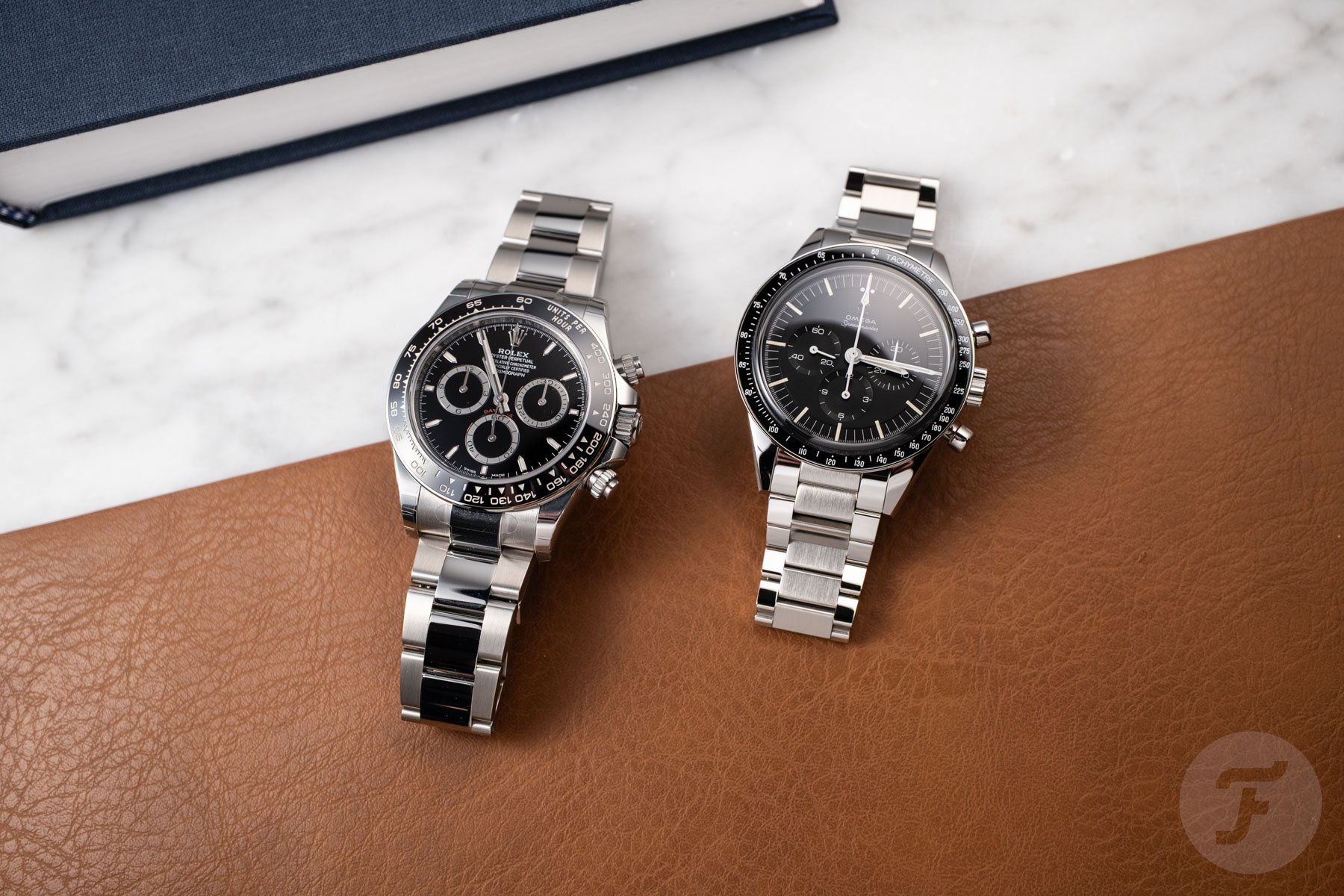
Within the Speedmaster ecosystem the Cal. 321 occupies a specific niche. The standard Moonwatch buyer gets the modern, METAS-certified, Cal. 3861: better accuracy, anti-magnetism, longer service intervals. The collector who wants the column-wheel architecture, the historical caliber-shape continuity, and the connection to Apollo gets the reborn 321 at roughly twice the retail price (CHF 14-16k vs CHF 7-8k for the standard Moonwatch). The reborn 321 remains in production as of writing and is the only column-wheel chronograph caliber Omega currently makes.
Vintage market
For the original 1957-1968 Cal. 321 Speedmasters, the secondary market is mature and active. CK 2915-1 (the original 1957 Speedmaster) trades at six figures in any condition; ST 105.012 (the Apollo-worn reference, 1962-67) at USD 30,000-80,000 depending on condition and provenance; ST 145.012 (the last 321 Pro, 1967-68) at USD 25,000-60,000. Service for vintage Cal. 321 is best done at Omega's vintage department in Bienne or by independent watchmakers with confirmed Cal. 321 experience; original spare parts are scarce.


Comments
No comments yet, be the first to weigh in.