Why hand-wound?
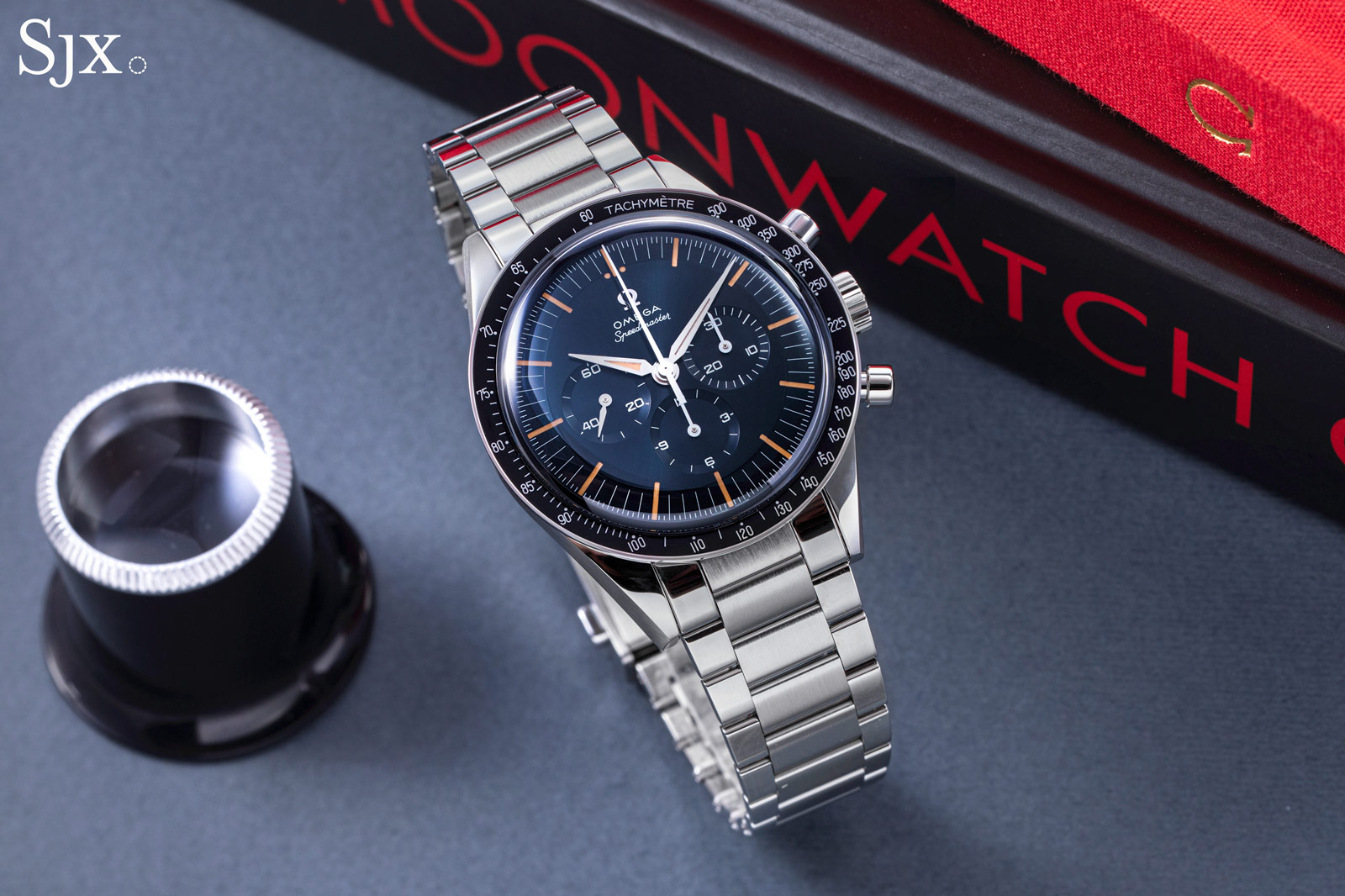
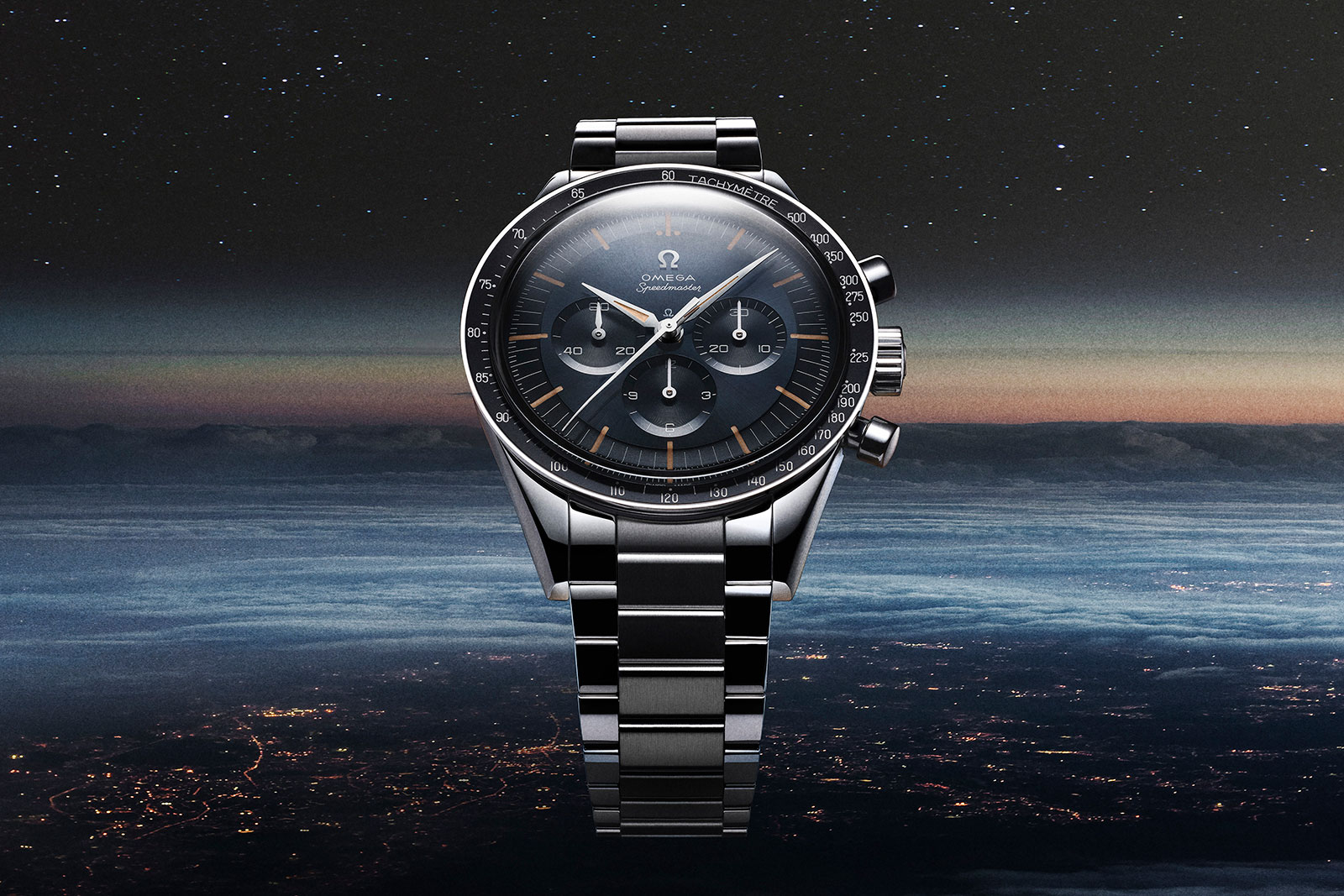
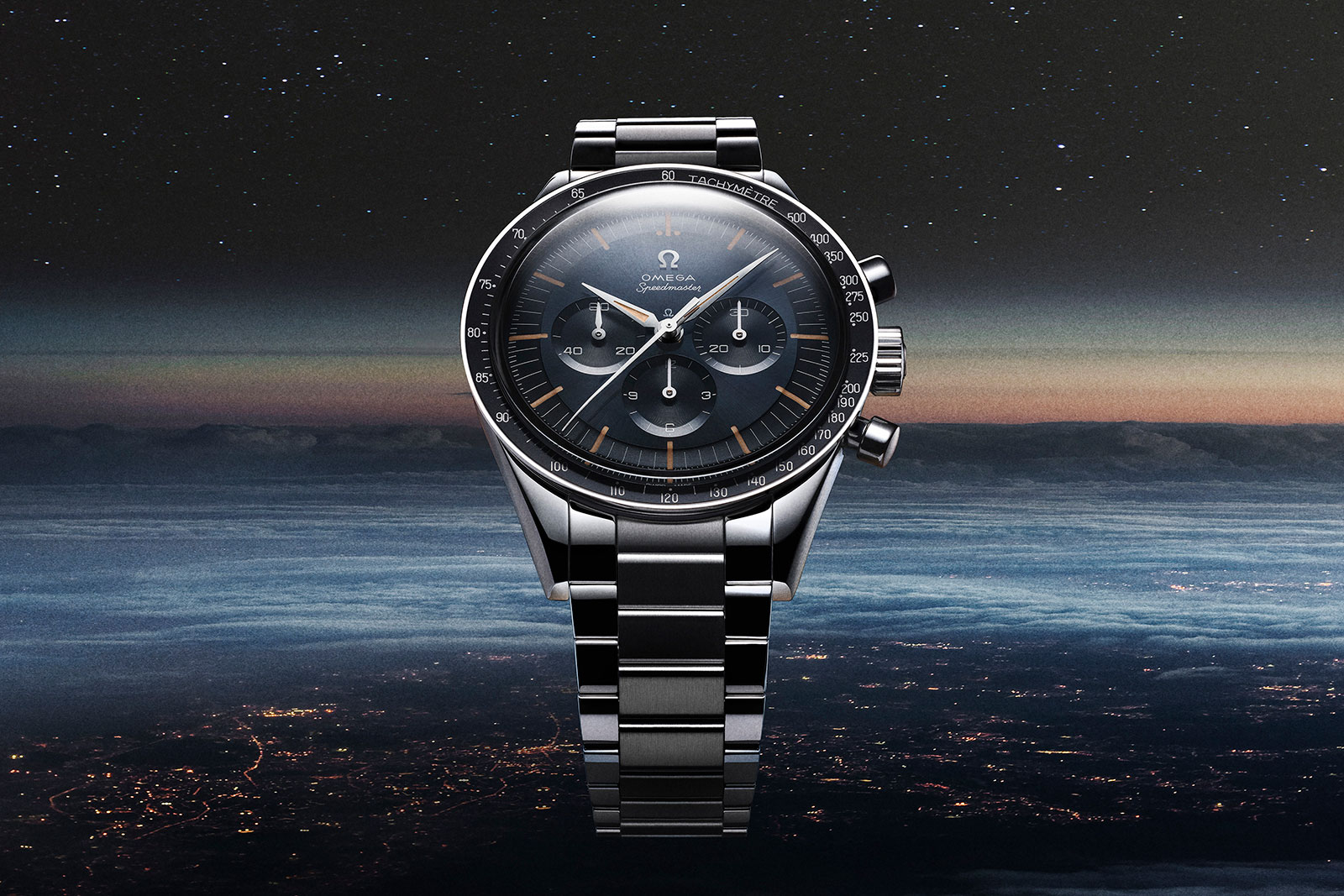
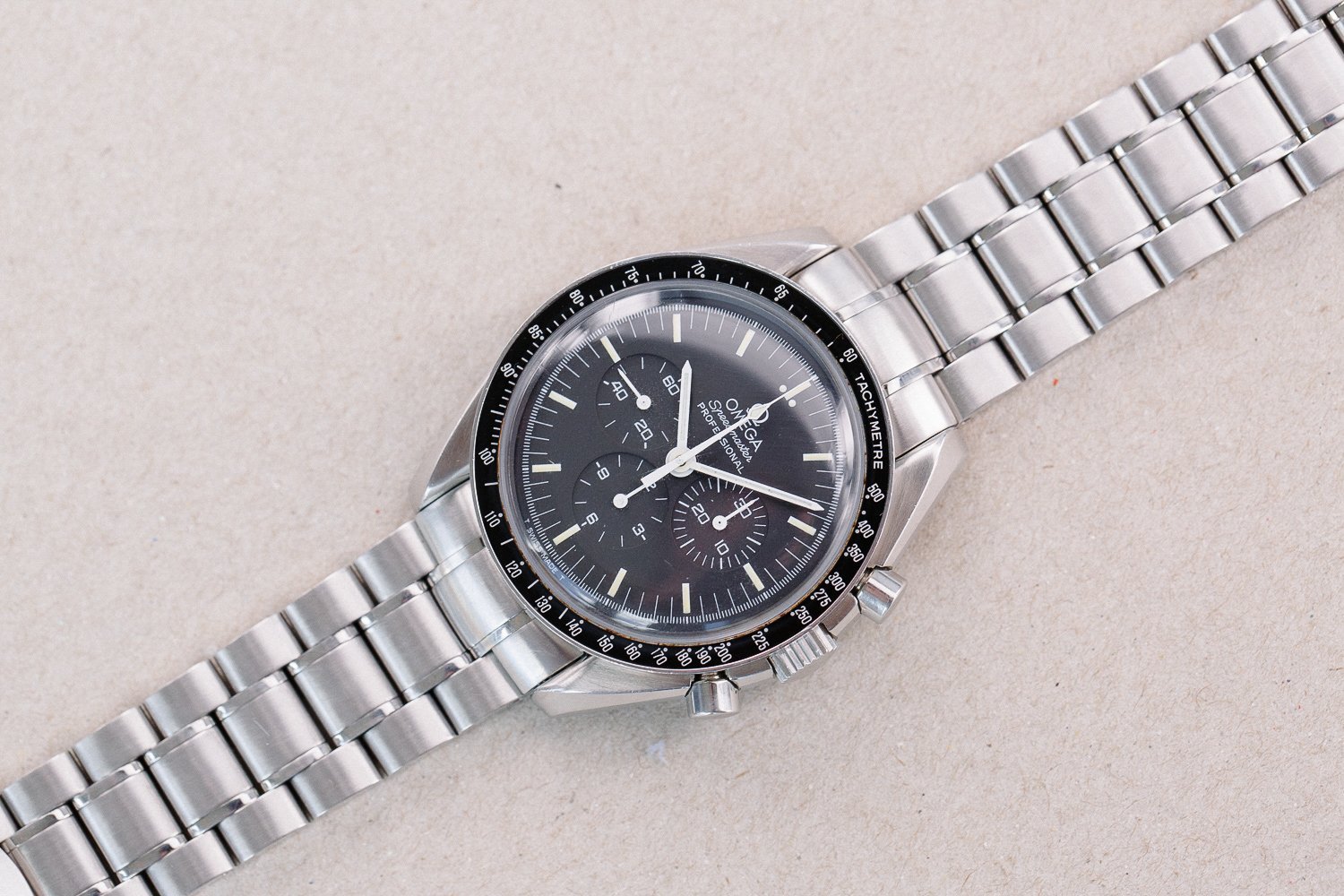
The Speedmaster Moonwatch is the only watch flight-qualified by NASA for all manned space missions, a certification it has held since 1965. The original NASA-tested watches used the Caliber 321 (column-wheel, hand-wound). When Omega updates the Moonwatch, they cannot freely change the architecture; the watch worn on the Moon was hand-wound, so the modern Moonwatch stays hand-wound. The 3861 keeps that constraint while adding 50 years of escapement and material progress. Self-winding Speedmasters do exist (Speedmaster Reduced, Speedmaster Racing, Co-Axial Master Chrono), but the "Moonwatch Professional" designation is hand-wound only, and that is what the 3861 is.
Lineage: 321 → 861 → 1861 → 3861
Cal. 321 (1957-1968): the original column-wheel chronograph, used on the Moon in 1969, manufactured in Bienne and assembled by hand. Around 750,000 made. Cal. 861 (1968-1996): cost-engineered replacement with a cam-actuated chronograph instead of column-wheel, ~3 million made; the workhorse Moonwatch caliber for three decades. Cal. 1861 (1996-2021): minor 861 update with rhodium-plated finishing and modern materials. Cal. 3861 (2021-present): the current generation, with a fundamentally redesigned chronograph and the addition of Master Chronometer spec. The 321 also returned in 2019 as a limited-run "vintage spec" calibre using rebuilt original tooling, but it is reserved for premium-tier Moonwatch references.
What is new in the 3861
Three substantive changes from the 1861. Co-axial escapement: the 3861 brings the co-axial into the Speedmaster line, with a silicon Si14 hairspring and nickel-phosphorus escape parts. The same architecture used in the modern Seamaster and Aqua Terra. METAS Master Chronometer certification: 0/+5 sec/day in case, certified to 15,000 gauss, six-position regulation. The 1861 was just COSC. Refreshed gear train: more efficient power transfer, supporting the 50-hour reserve (1861 was 48 hours). The 3861 is still cam-actuated, not column-wheel, keeping the 1861's pusher feel; visually through a display caseback (where present) it looks similar to the 1861 but with redesigned bridges.
What stays the same
The 3861 is engineered to feel like a Moonwatch, not just to perform like one. Manual wind only (~40 turns to fully wind). Cam-actuated chronograph (not column-wheel; preserves the 1861 pusher feel). 3 Hz / 21,600 vph; deliberately slower than modern 4 Hz movements to keep the audible / visual character of the original. Tachymeter scale on the bezel (purely decorative in 2026 but core to the look). Hesalite (acrylic) crystal on the standard "Sapphire Sandwich" Moonwatch is a separate issue (NASA-tested with hesalite; modern catalogue offers both). The 3861 is the engineering update; the rest of the watch is intentionally archaeological.
Watches it powers
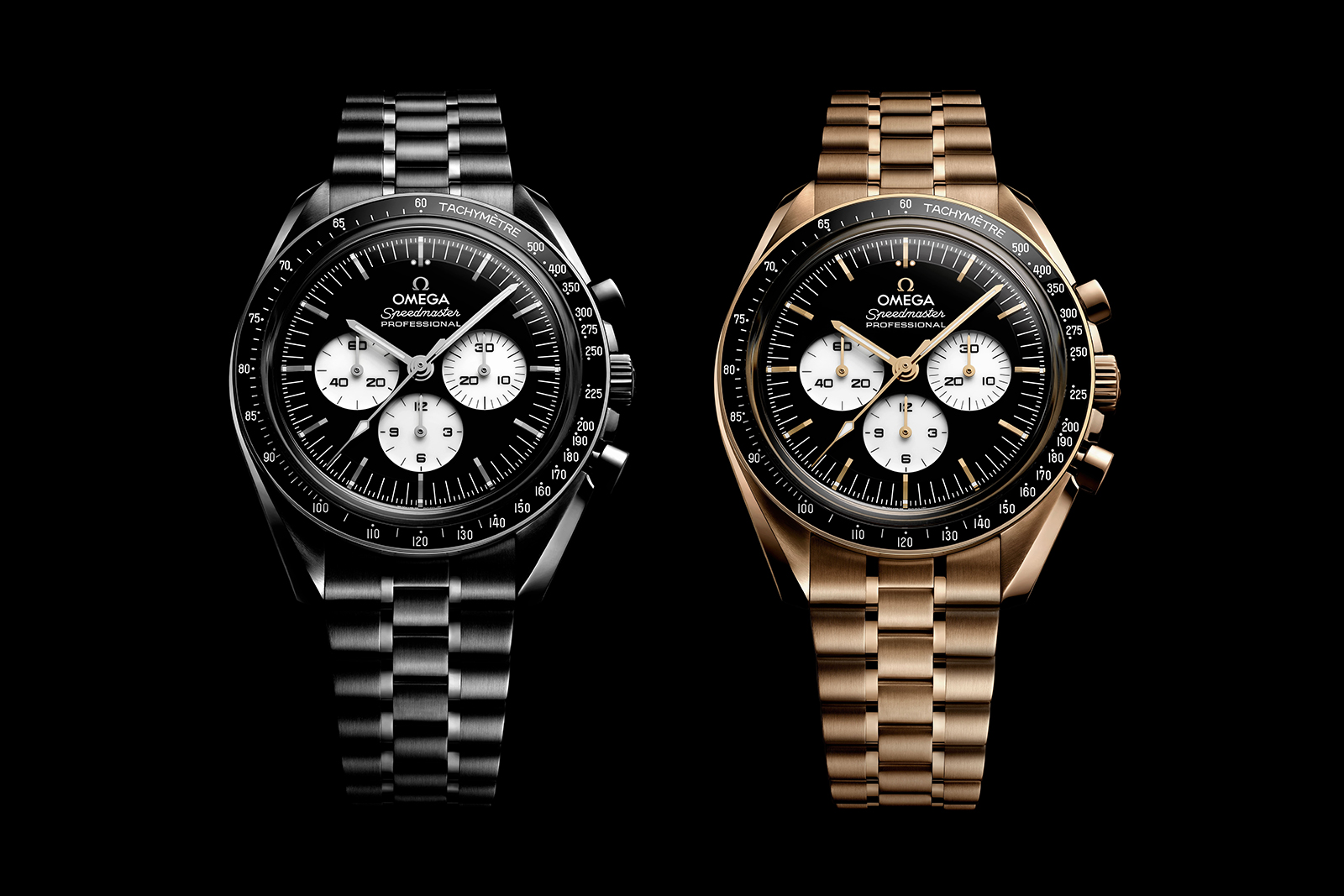
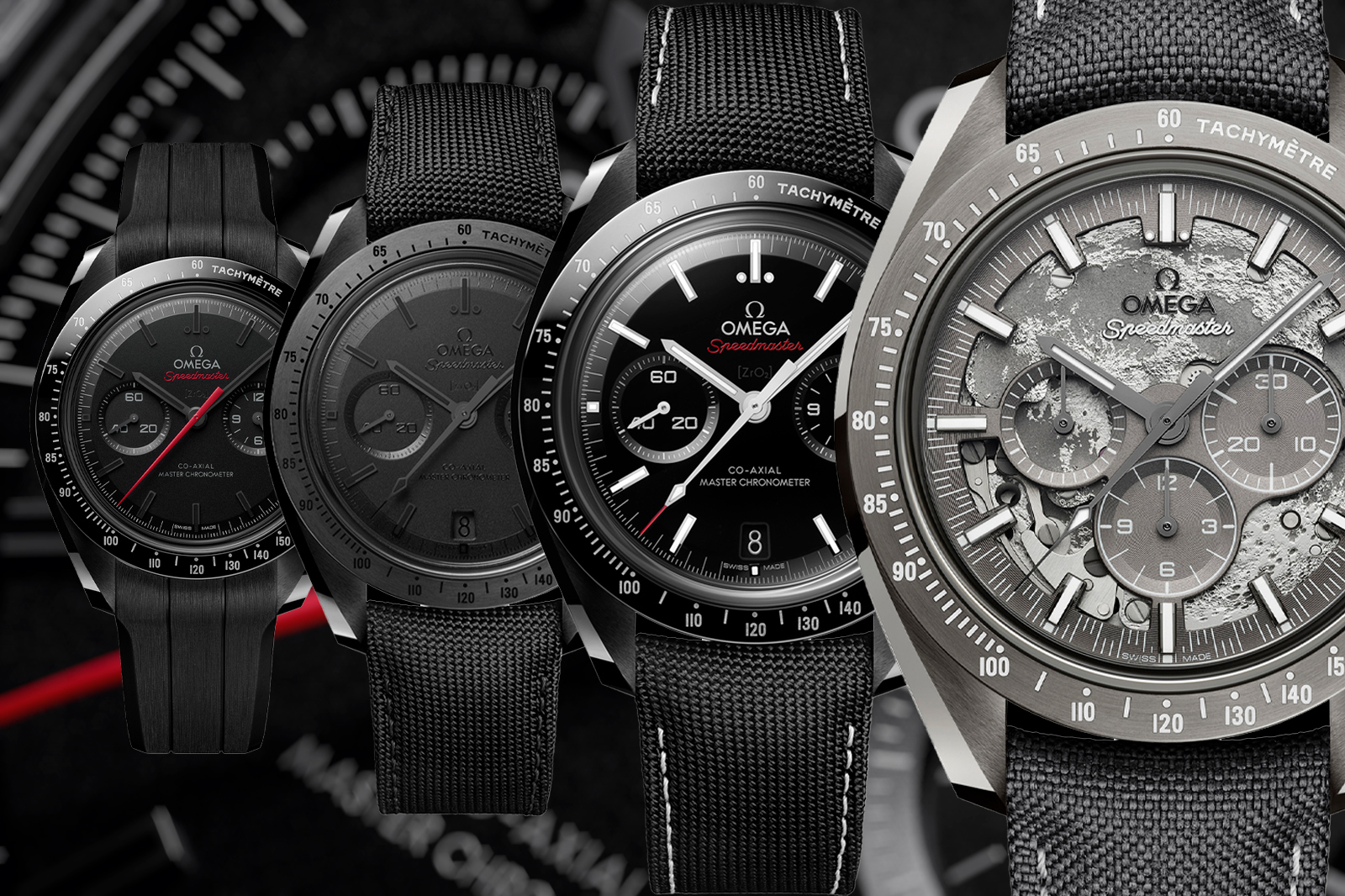
Speedmaster Moonwatch Professional 310.30.42.50.01.001 (hesalite, 2021+), 310.30.42.50.01.002 (sapphire sandwich), 310.32.42.50.04.001 (Apollo 11 50th-anniversary variants), and the various special-edition Moonwatches: Snoopy, Apollo 11, the "Silver Snoopy Award" 50th-anniversary piece. The new 2024 Speedmaster Calibre 3861 in steel, the Moonshine gold variants, and the Apollo 8 (Cal. 1869, a 3861 derivative). The 1861-equipped pre-2021 Moonwatches are still available pre-owned at slight discount; many collectors prefer the older calibre for its closer-to-original feel.
Service notes
Service costs: CHF 600-900 at Omega, CHF 400-600 at qualified independents. The 3861 is new enough that long-term wear data is limited; expected service interval is 8-10 years (in line with Master Co-Axial). The hesalite crystal scratches easily but polishes out with Polywatch in 30 seconds. The pushers and crown gaskets are the most-replaced wear items. Modern Speedmasters with the 3861 are 100m water-resistant, more than enough for any non-diving use; the original 1965 Speedmasters were 50m and the NASA testing was done dry.
Comments
No comments yet, be the first to weigh in.