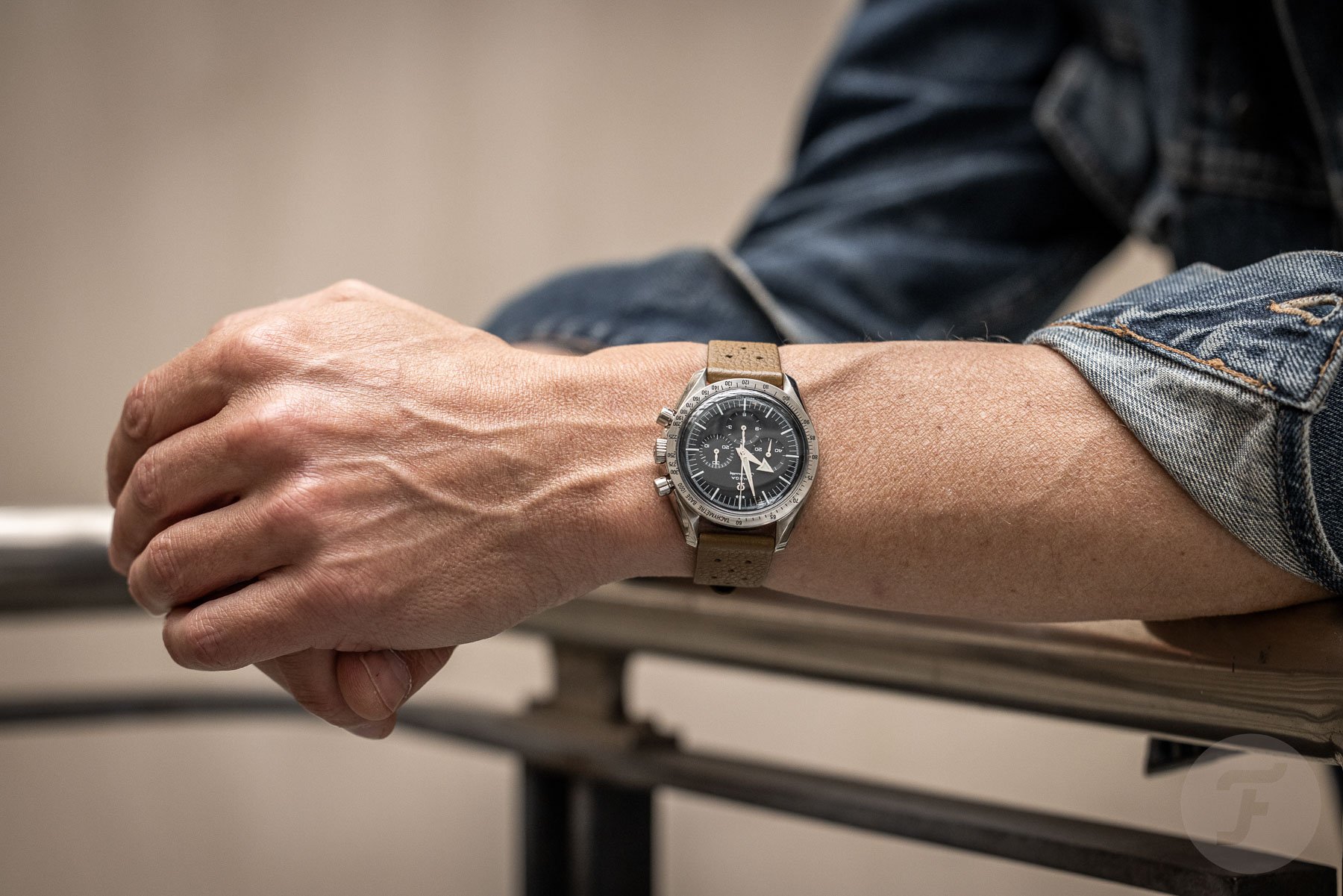
The Omega Speedmaster was introduced in 1957 as part of Omega's Master trilogy (alongside the Seamaster 300 and the Railmaster), and was originally intended as a motorsport chronograph. The first reference, CK2915, was distinguished by its broad-arrow hands, a steel tachymeter bezel (the first wristwatch to put the tachymeter on the bezel rather than the dial), and the hand-wound Calibre 321 column-wheel chronograph movement - itself a tiny Lemania-derived ebauche refined in-house to the highest standards of the period. The watch was marketed to racing drivers and engineers and positioned as a professional tool timepiece rather than a luxury object. At roughly 39mm in diameter it was compact by modern standards but large for its era, and the distinctive twisted-lug silhouette that would come to define the Speedmaster had not yet been introduced.
In 1959 the reference CK2998 replaced the original with Alpha-shaped hands and a new twisted-lug case that remains the defining Speedmaster profile today. The watch was still a niche product - Omega produced roughly 1,500 Speedmasters per year in the early 1960s, against hundreds of thousands of other Omega references - but it had begun to attract a specific kind of customer: pilots, engineers, and the first American astronauts, who were explicitly permitted to wear personally purchased wristwatches during NASA's Mercury and Gemini programmes. In October 1962, astronaut Wally Schirra wore his personally purchased CK2998 aboard the Sigma 7 Mercury mission, the first time a Speedmaster went to space. This caught NASA's attention and set in motion the events that would define the watch's identity forever.
Between 1964 and 1965, NASA procurement officer James Ragan conducted rigorous qualification testing on chronographs purchased anonymously from Houston jewellers. The tests included high temperature (71°C for 48 hours followed by 93°C for 30 minutes), low temperature (-18°C), near-vacuum at 71°C, humidity, a pure oxygen atmosphere, shock (40g in six directions), acceleration (7.25g for five minutes), decompression, high pressure (1.6 atmospheres), vibration, and acoustic noise to 130 decibels. Chronographs from Longines, Rolex, and Wittnauer were submitted alongside the Omega Speedmaster ref 105.003. The competitors failed early: hands fell off, crystals warped, movements stopped. Only the Speedmaster survived every test. On 1 March 1965 the Speedmaster was officially flight-qualified for all manned space missions, a designation it has held continuously ever since.
On 21 July 1969, Buzz Aldrin wore his Speedmaster ref 105.012 on the lunar surface during Apollo 11. Neil Armstrong's was left in the lunar module as a backup after the onboard electronic timer failed, making Aldrin's the first watch worn on the Moon. The piece sat over a bulky pressure-suit sleeve on a long Velcro strap, and together with the moonwalk photographs became one of the most famous wrist images in history. The Speedmaster has since been carried on every manned NASA mission. On Apollo 13, Jack Swigert used his Speedmaster to time the critical 14-second engine burn that brought the crippled spacecraft home after the oxygen-tank explosion - an act for which Omega was awarded the NASA Silver Snoopy Award for exceptional contribution to the success of human spaceflight.
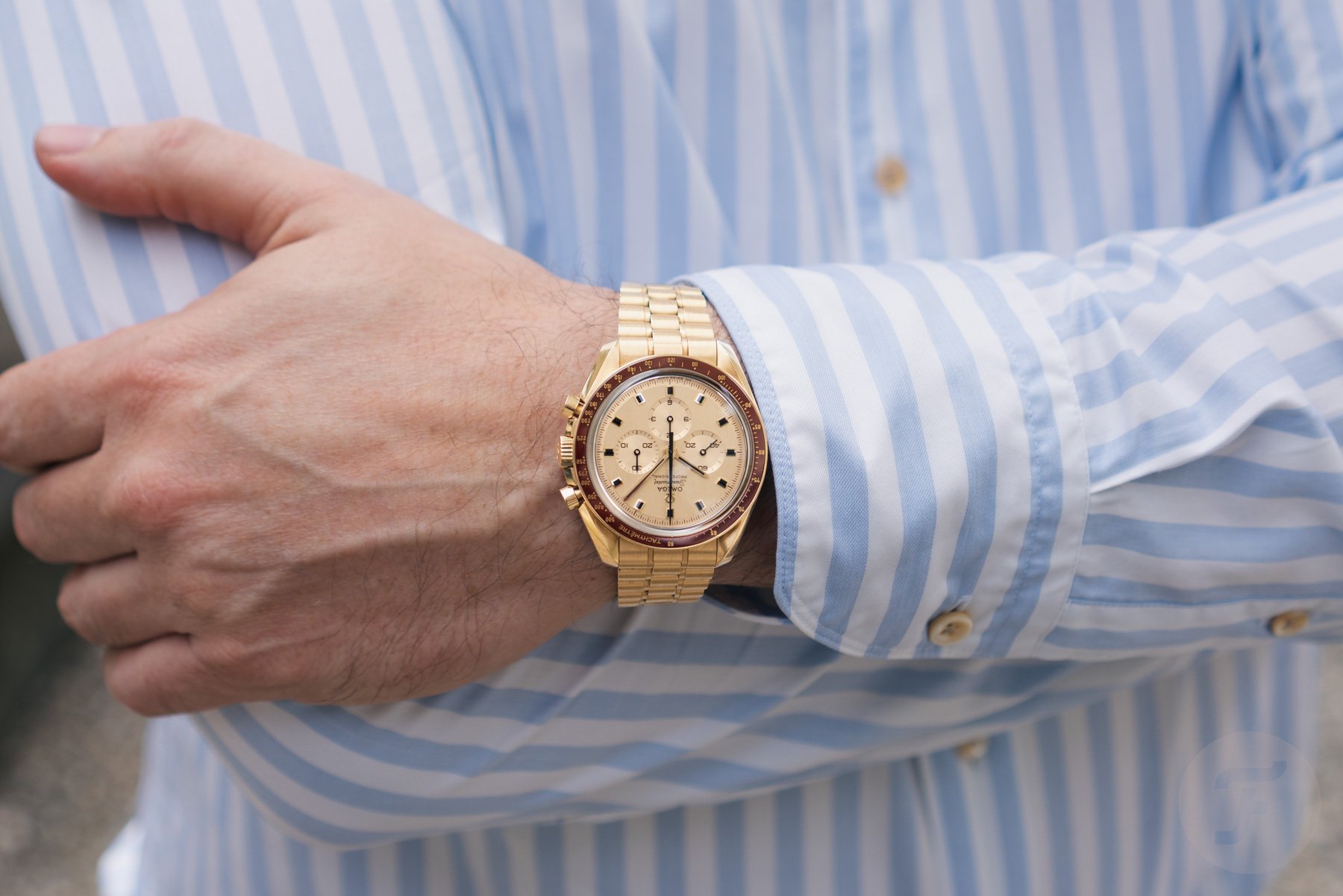
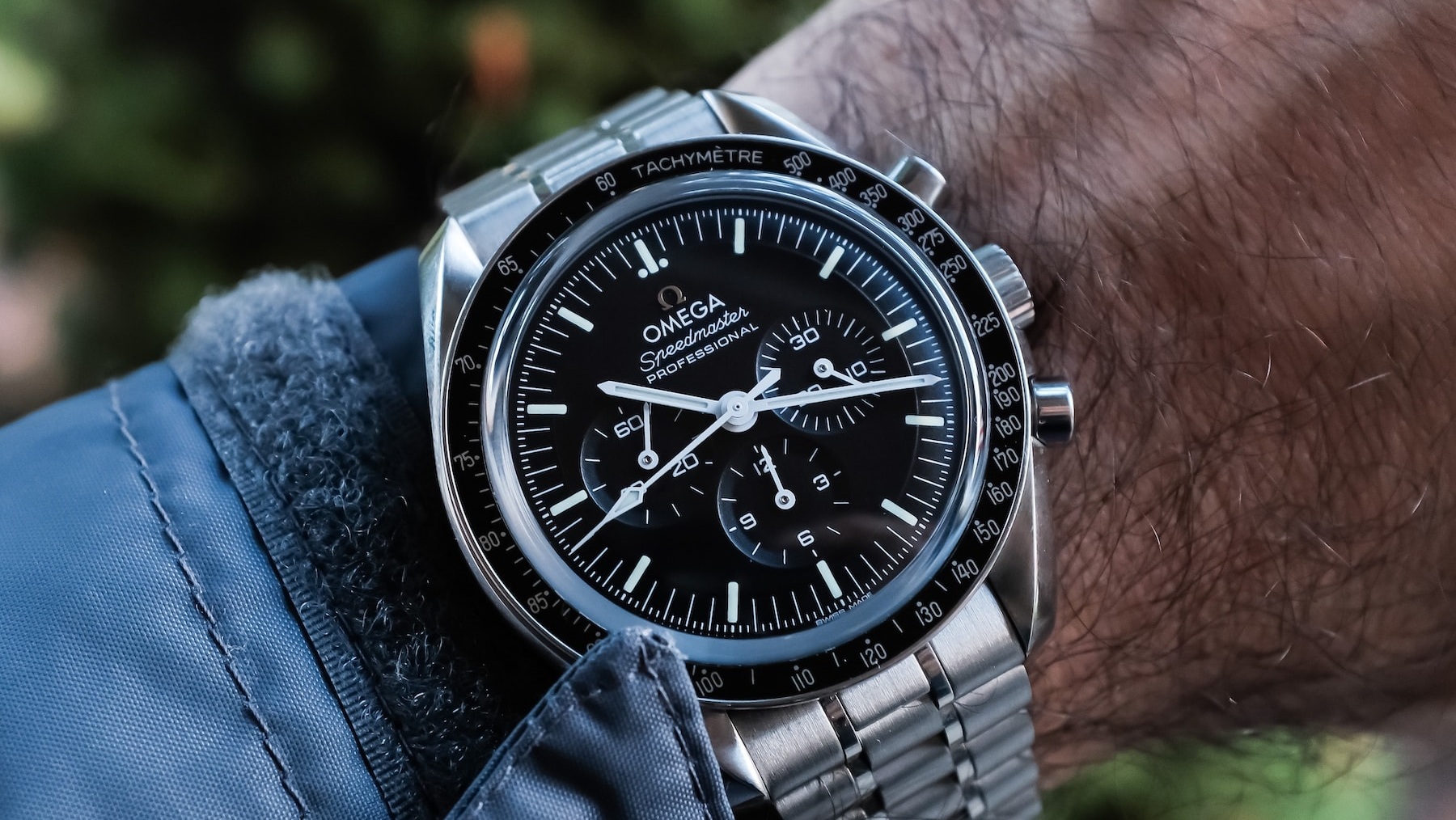
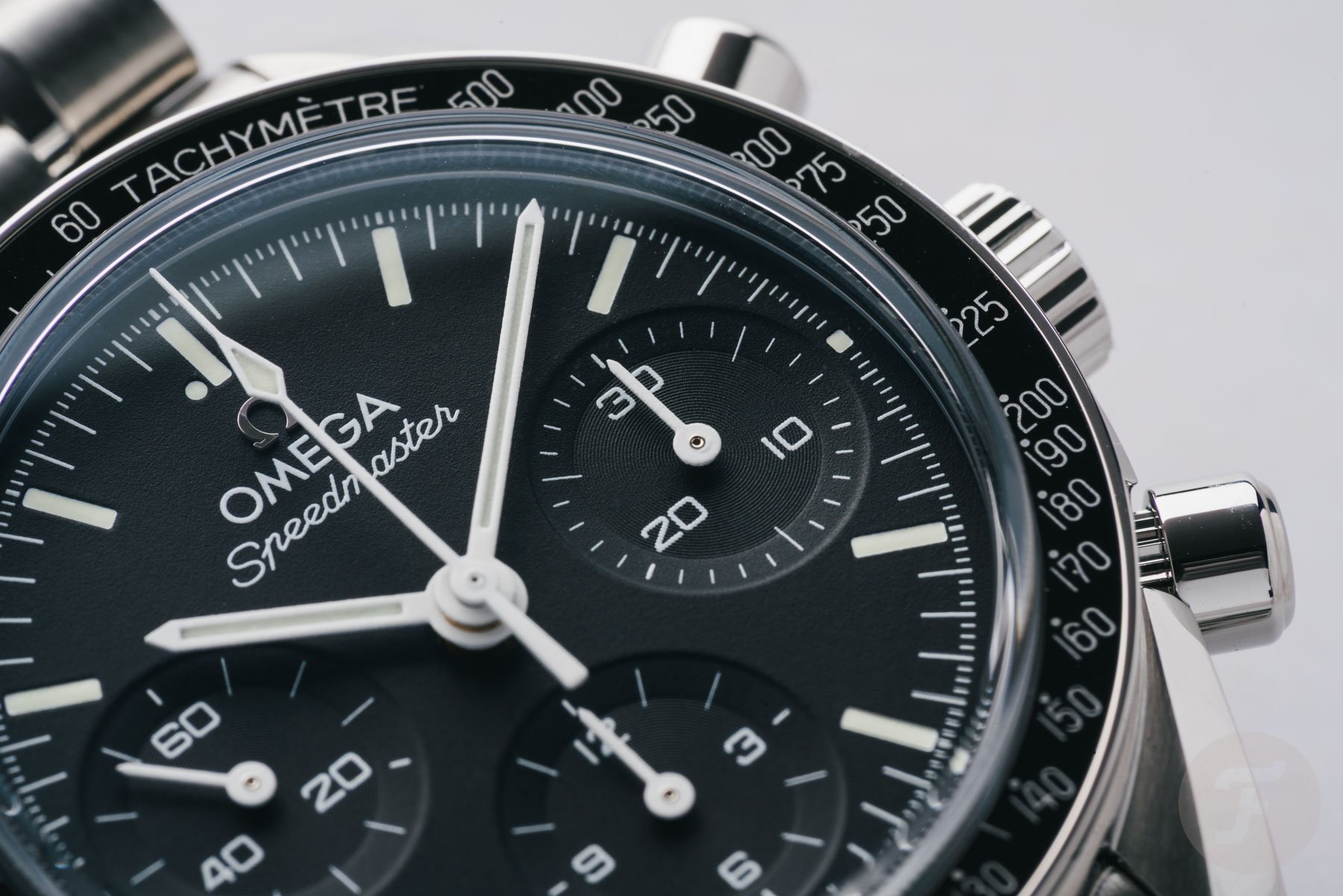
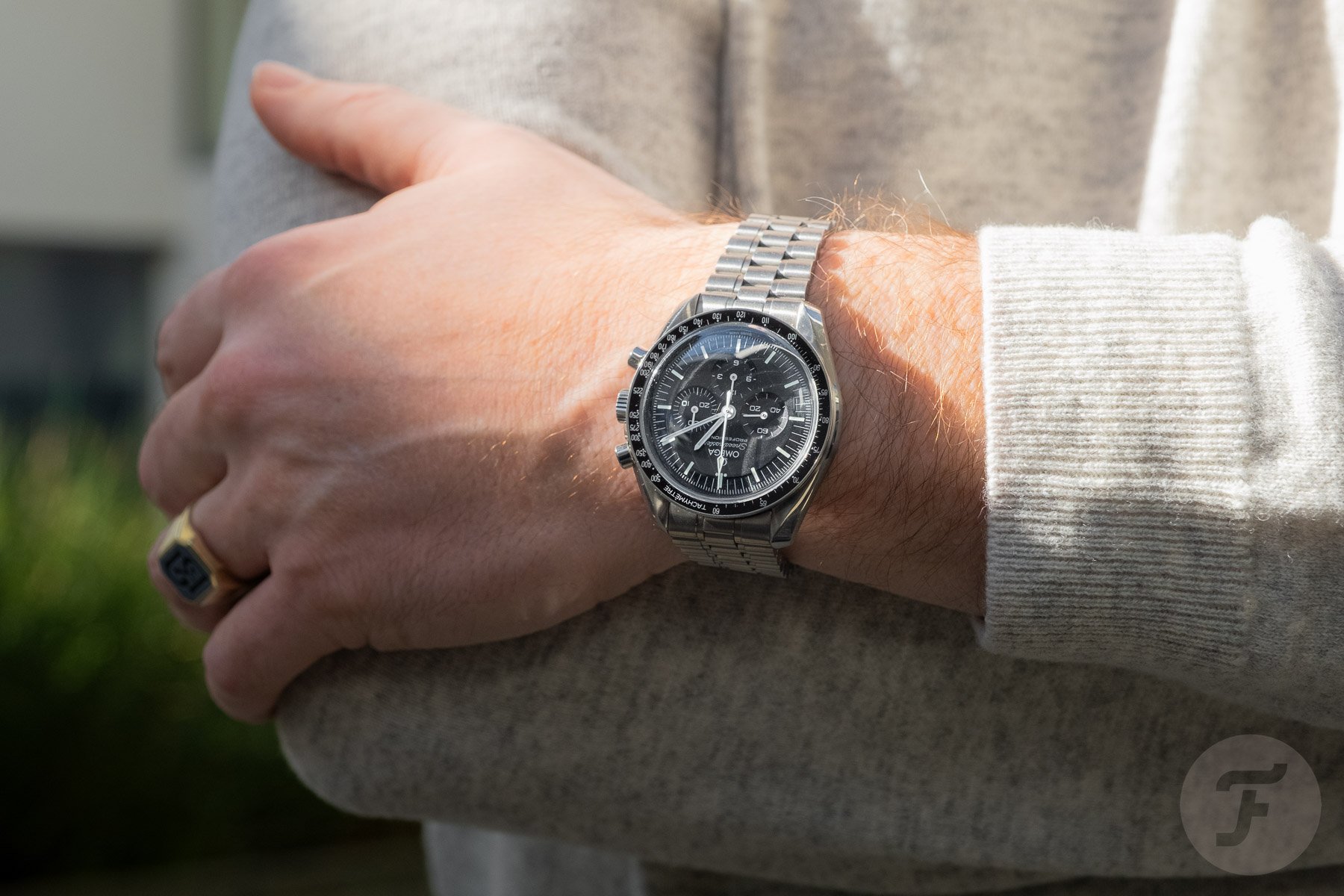
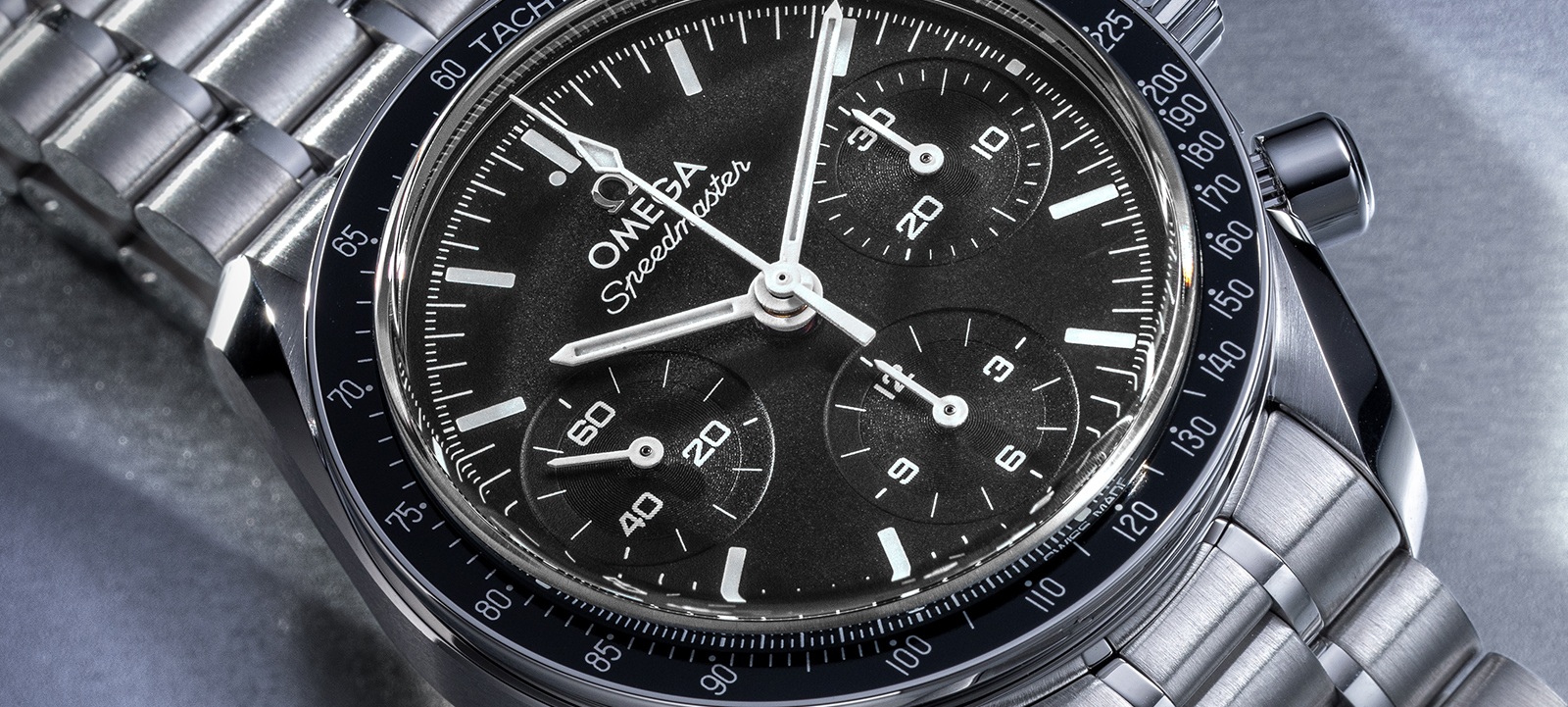
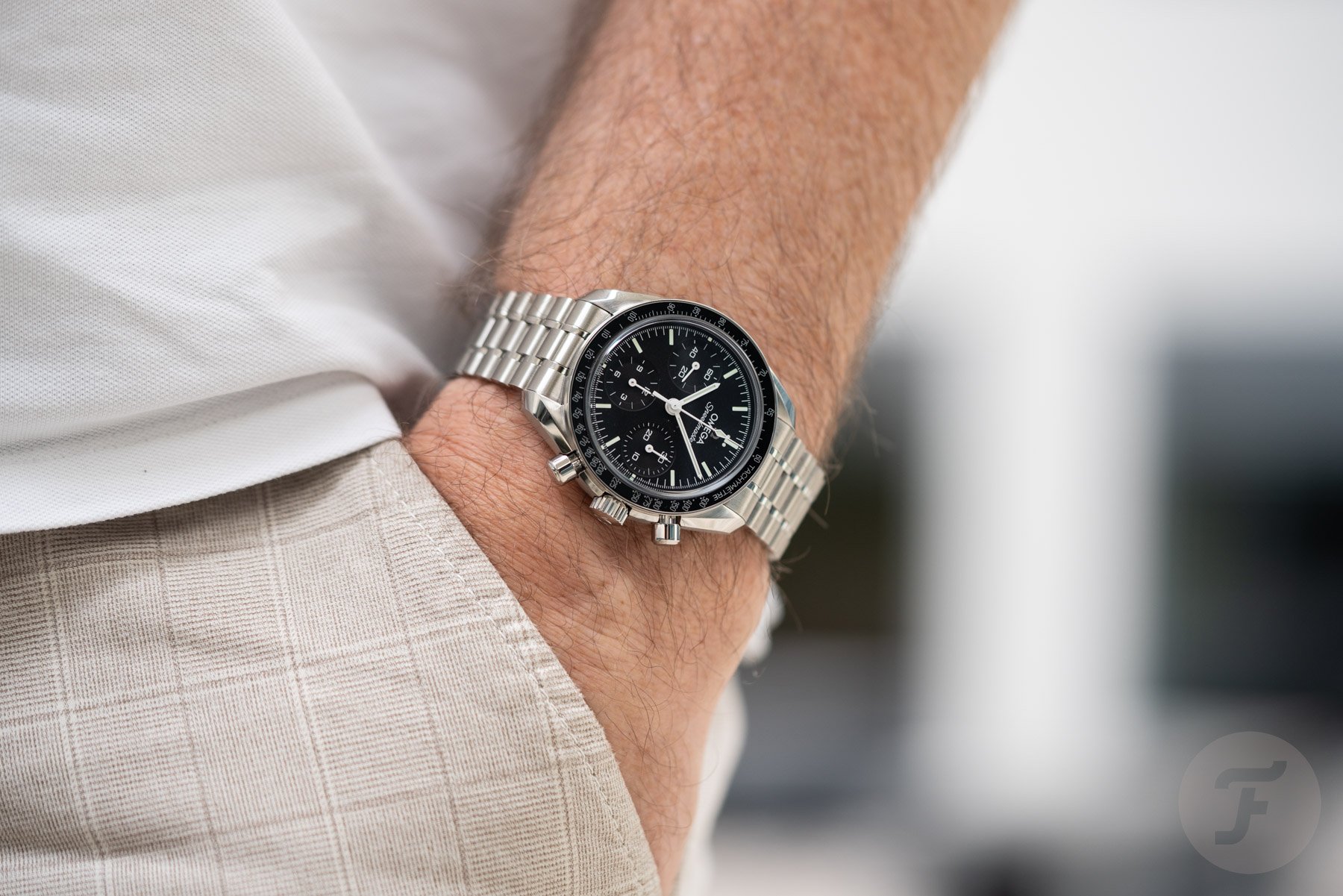
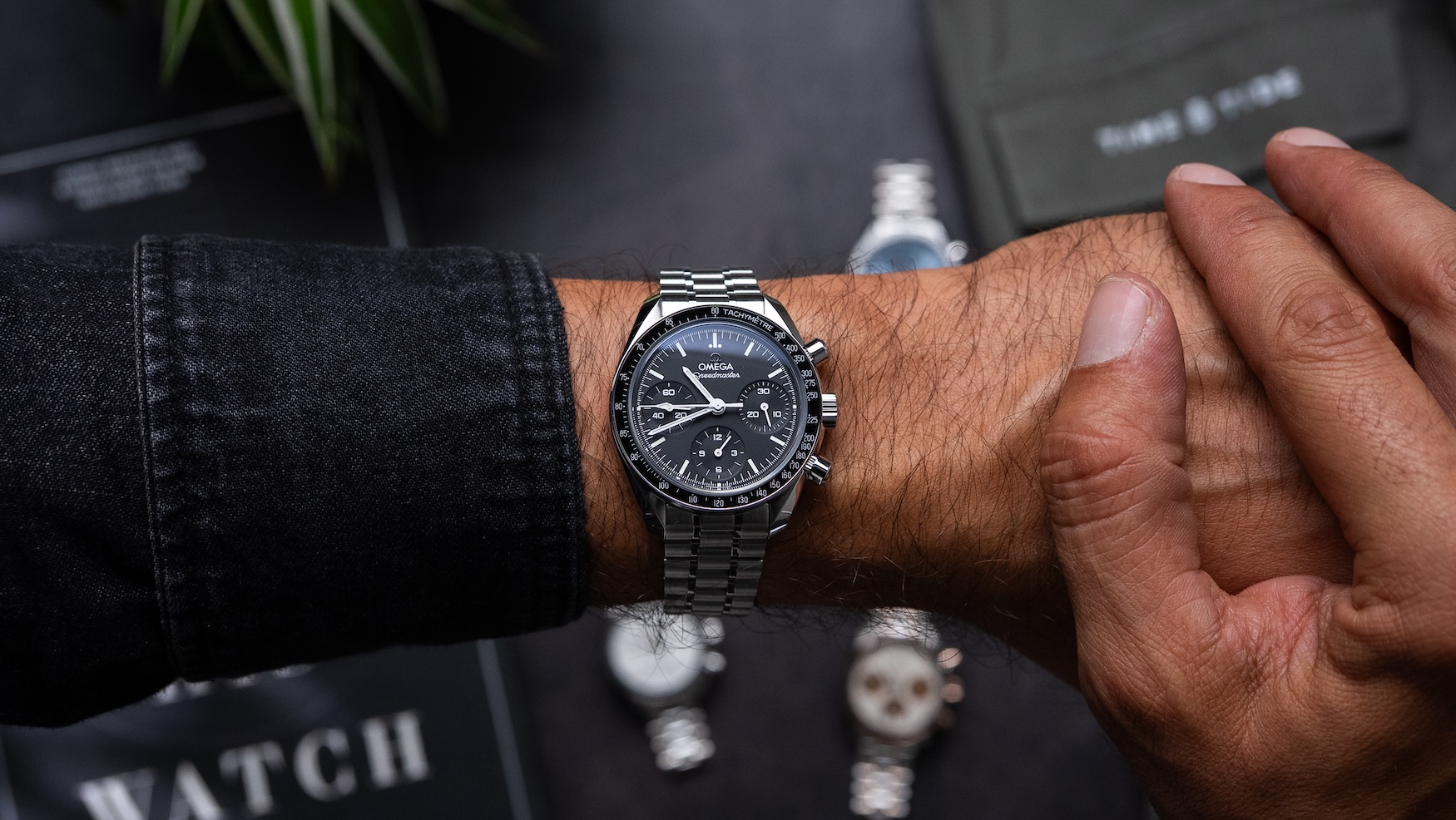
Through the decades the Speedmaster family has expanded dramatically. The 1968 Calibre 861 replaced the Cal 321 with a cam-actuated simplification, followed by the Calibre 1861 (1997) and the current Calibre 3861 (2021) which brought the Moonwatch into the Master Chronometer era with silicon balance spring, METAS certification to 15,000 gauss, and ±2 seconds per day accuracy. Non-Moonwatch variants proliferated alongside: the Speedmaster Mark II and Mark III of the 1970s; the X-33 quartz titanium multifunction worn by modern astronauts; the Snoopy and Silver Snoopy Award limited editions; the Moonshine Gold Apollo 11 anniversary pieces; and in 2022 the viral Omega x Swatch MoonSwatch, a $260 bioceramic Speedmaster that triggered boutique queues around the world. The Moonwatch itself remains in continuous production with design elements traceable directly to the 1969 ref 105.012: the same case silhouette, the same tachymeter bezel, the same hand-wound movement architecture, the same iconic dial.


Comments
No comments yet, be the first to weigh in.