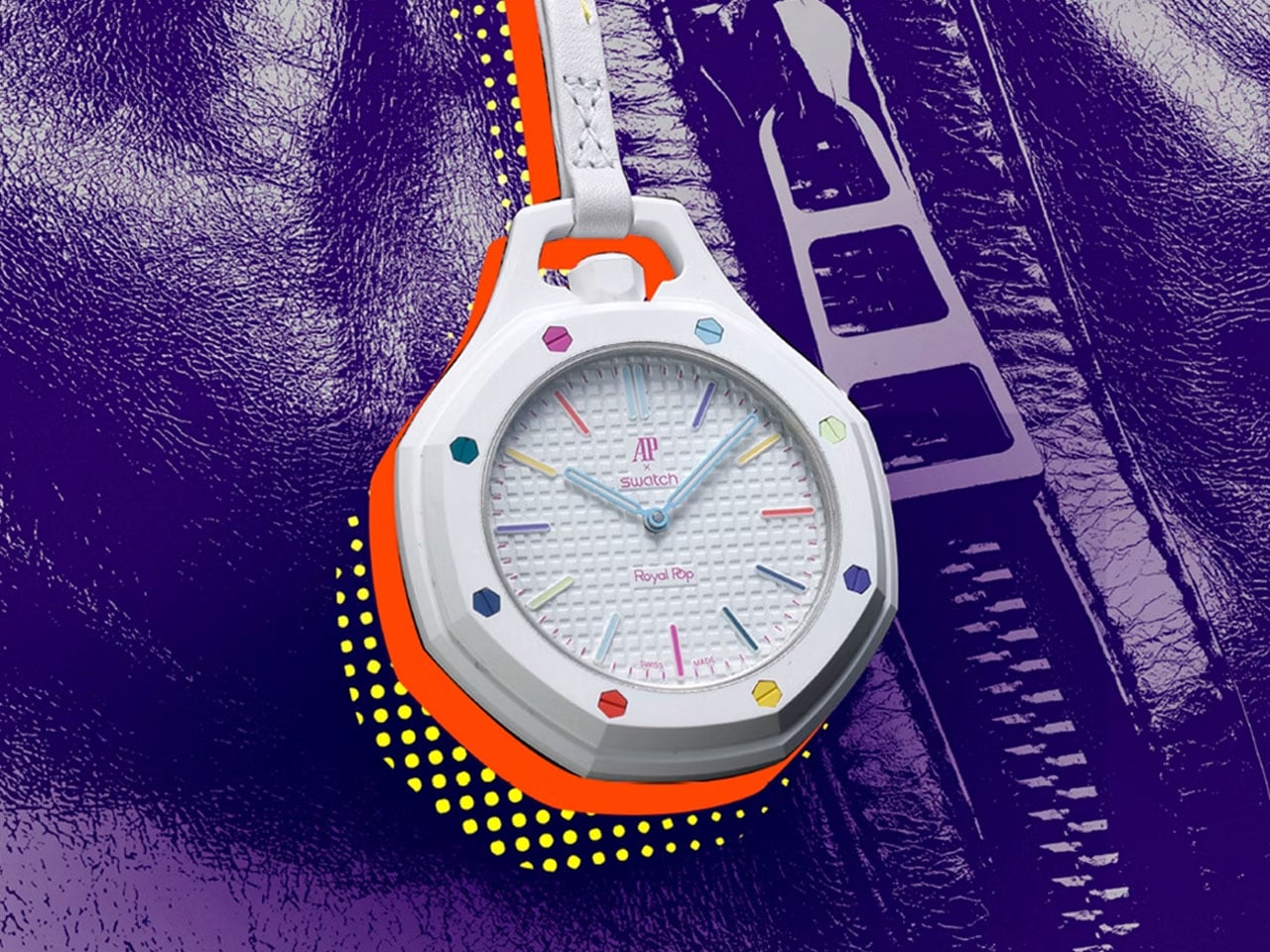
On Saturday 16 May 2026, Swatch and Audemars Piguet co-launched the Royal Pop pocket watch in physical Swatch stores worldwide. It was the first time Swatch had partnered with a luxury brand outside the Swatch Group, and the eight Bioceramic Royal Oak-shaped pocket watches were priced at €370 a pop. The hype was real. The execution was, in industry-polite terminology, "challenged".
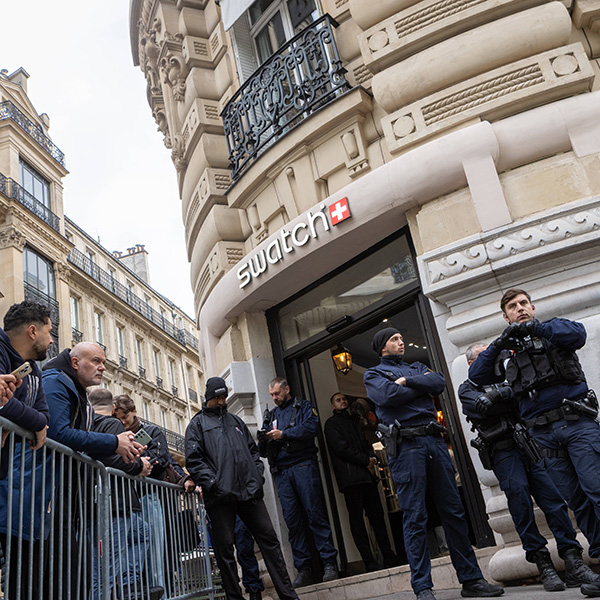
Quick summary of how the launch actually went:
- Milan, Piazza Gae Aulenti. Fights broke out before opening. Videos showed chairs being thrown. Security stepped in.
- New York City. Police used pepper spray on shoppers near the Times Square store. Resellers were openly selling "line spots" for €185-600.
- Tokyo, Ginza. The queue hit 300-plus people overnight.
- The Netherlands. All three stores (Amsterdam, Utrecht, Leidschendam) ended up closing for safety reasons. In Utrecht, the lines stretched across the Lange and Korte Elisabethstraat with people in tents.
- Dubai, Mall of the Emirates. The launch was cancelled outright for crowd safety.
- United States. Swatch decided not to open 15 of its US stores at all that Saturday after watching the European morning unfold.
By Monday 18 May the watches had been pulled from all three Dutch stores and shipped back to headquarters. Industry trade press called it "a failed launch". A Hublot-veteran retail consultant on LinkedIn called it "entirely avoidable". The MoonSwatch precedent from 2022 had told Swatch exactly what was going to happen at this kind of price point with this kind of hype. The retail prep didn't match the warning signs.
The Utrecht angle that should embarrass everyone
The most-quoted bit of fallout in the Dutch press has been an interview the Utrecht entrepreneur Daan Broekman did with regional broadcaster RTV Utrecht. Broekman owns shops near the Swatch store in the Lange Elisabethstraat. After launch weekend he came back to find what he called "unacceptable" damage: graffiti on his shop fronts, and, in his own words, poep en pies (poop and pee) left around the entrances. He announced he would file a damage claim with Swatch.
The Dutch local press has since reported (via DUIC) that Swatch did apologise to Broekman and agreed to cover the damage. When RTL Z called him this week for an update he declined to comment further: "I don't have time to respond to this right now." The damage-claim status is now quietly settled, at least in the press.
What Swatch did next: the 'silent sale'
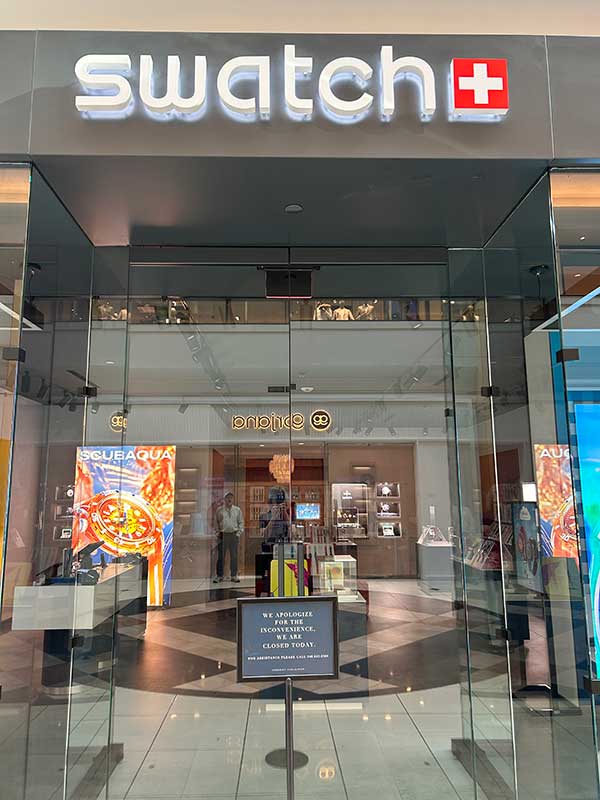
The Dutch stores reopened after about a week with the Royal Pop quietly back on the shelves. But the operational model has changed completely, and the change has not been announced anywhere. The new model has three components, which staff in the Utrecht and Leidschendam stores confirmed to RTL Z:
- No announcement of restocks. Staff don't know when new pieces will arrive. Customers don't know either. "We know as much as the customer does", said a Leidschendam employee.
- One watch per customer per day, in-store only. No reservations. No online sales. The customer service line confirmed: "There is no real-time view of stock in the stores."
- No marketing or social push. The Royal Pop has effectively been removed from the Swatch communications calendar. The watches are still being made (the official statement says factories "run seven days a week") but the only way to know whether your local store has any is to walk in.
The result is exactly what Swatch needed: the queues evaporated, the resale market cooled, and the press conversation moved on.
Swatch's own explanation
The international Swatch press desk gave RTL Z a written statement that is worth quoting in full because it tells you how Swatch sees the whole thing.
"Crowding or chaos only happened on the first day in about 10 to 15 percent of our stores worldwide. When people see an unexpected, innovative and affordable product, they obviously rush to buy it, even if they know it's not just available for one day."
"Crowding or chaos is not necessarily negative in itself. The world is already organised and regulated enough."
"Our factories run seven days a week to meet demand, but we are still far behind. Reminder: we are not making hamburgers. We are making a high-tech and innovative product here in Switzerland. Production capacity cannot be increased at the push of a button."
Read that carefully. Swatch is doing three things at once: downplaying the chaos (only 10-15% of stores), defending the scarcity as a real production constraint rather than artificial marketing, and quietly admitting that the chaos may have been useful marketing. "Crowding or chaos is not necessarily negative" is, in any normal corporate communications playbook, a remarkable thing to put on paper.
Why the queues evaporated
According to Swatch's own explanation, the queues shrank "because people have understood that the product is not available every day and that it is not a limited edition". Translated: once the Royal Pop stopped feeling like a Supreme drop or a Labubu and started feeling like normal Swatch stock that happens to be unevenly available, the FOMO collapsed.
That's the actual playbook. There are three reasons the queues are gone:
- It's not a limited edition. The watches will be in stores "for many months, if not years". Anyone willing to wait will get one. That alone destroys reseller economics, because if the resale market knows fresh stock keeps arriving forever, the secondary premium evaporates.
- One per customer per day, in-store only. Flippers can't stack the eight colours in one visit. The economics of professional resale (driving to multiple stores, hiring runners, etc.) get harder than the price difference justifies.
- No comms. No restock announcements, no social posts, no PR. There is no signal to trigger a queue around. The Royal Pop has become a "in-store browsing" product, the same emotional category as a regular Swatch you discover while picking up batteries.
What this actually teaches us about hype-product retail
Two things matter beyond Swatch.
First, the silent-sale model works for a specific kind of product: low price-point, high-emotion, not actually rare. The Royal Pop ticks all three boxes. It would not work for a Patek Nautilus 5811. It would not work for a Hermès Birkin. It works for a €370 Swatch with a viral hook, because the hook fades once the FOMO mechanism is removed.
Second, Swatch is now sitting on a remarkably efficient hype-management mechanism that does not need PR. The 2022 MoonSwatch went the opposite way: Swatch leaned into the queues for months, and the long-term result was secondary-market saturation and a degraded brand association ("Swatch is the queue brand"). Royal Pop is the corrective: launch with the bang, then pivot to silence and let the product become normal.
Whether by accident or by design, the Royal Pop has become Swatch's most interesting retail experiment in twenty years. The chaos was real, the damage to small Utrecht shop owners was real, and the reputational cost on launch weekend was real. A month later all of that is essentially gone from the news cycle, because Swatch decided to stop telling anyone the watch existed. That worked.
Now you can walk into a Swatch store, ask, and either be told "we don't have any" or be told "yes, which colour". No queue. No drama. No press calls. The chaos watches are still on sale. You just have to want one badly enough to ask.
Comments
No comments yet, be the first to weigh in.