Hodinkee
Introducing: Jaeger-LeCoultre 101 Chain
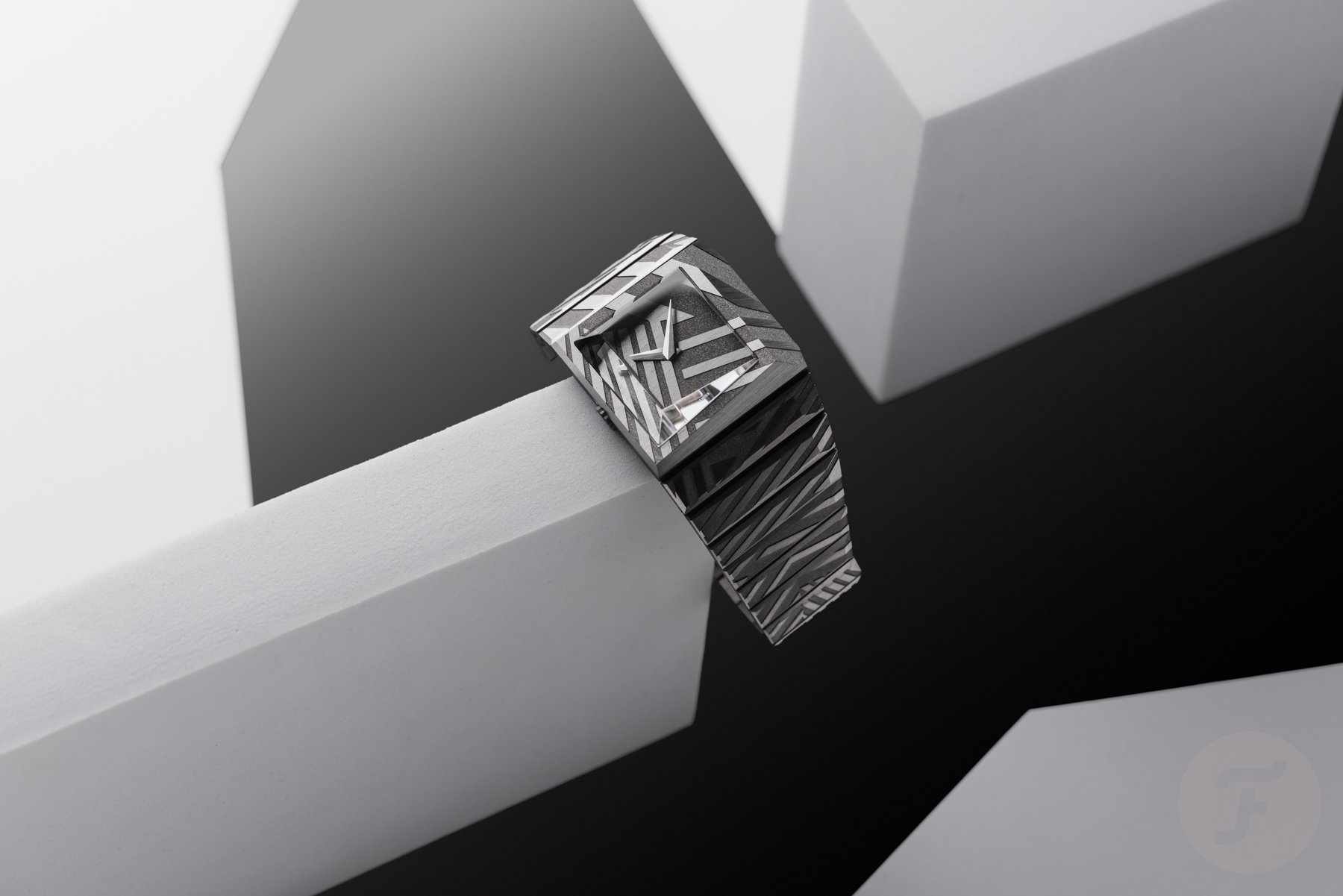
What We Know There's a new miniature watch in town, and it's the Jaeger-LeCoultre 101 Chain. Inspired by a 1955 Duoplan model nicknamed the "Chain" for its "braided" gold-link bracelet, the new high-jewelry watch reinterprets that design with a sculptural 18K pink-gold bangle. It features diagonal bands that alternate between black HyCeram (a high-gloss ceramic material) and rows of brilliant-cut diamonds, offering a contemporary take on the original's sinuous chain motif. The bangle is cast in a mold made specifically for each watch, with 36 cavities filled by hand with liquid HyCeram. A master gem-setter then drills and sets the alternating diagonal bands with brilliant-cut diamonds. The finished bangle frames a diminutive watch with a black lacquered dial, which has a "JL" monogram above the hour and minute hands, all surrounded by a diamond bezel—bringing its overall diamond weight to an approximate 2.73 carats. But despite all the jewelry surrounding it, the real star is the Calibre 101, the world's smallest manually wound mechanical movement. The story dates back to the Duoplan, which was invented and patented in 1925, before JLC introduced the Calibre 101 in 1929 using the same two-level architecture (hence the name "Duoplan"). At just 14mm long, 4.8mm wide, and 3.4mm thick, the movement weighs barely a gram, and remarkably, its dimensions and architecture remain unchanged nearly a century later. Today, each movement takes around 40 hours to assemble by hand, maki...