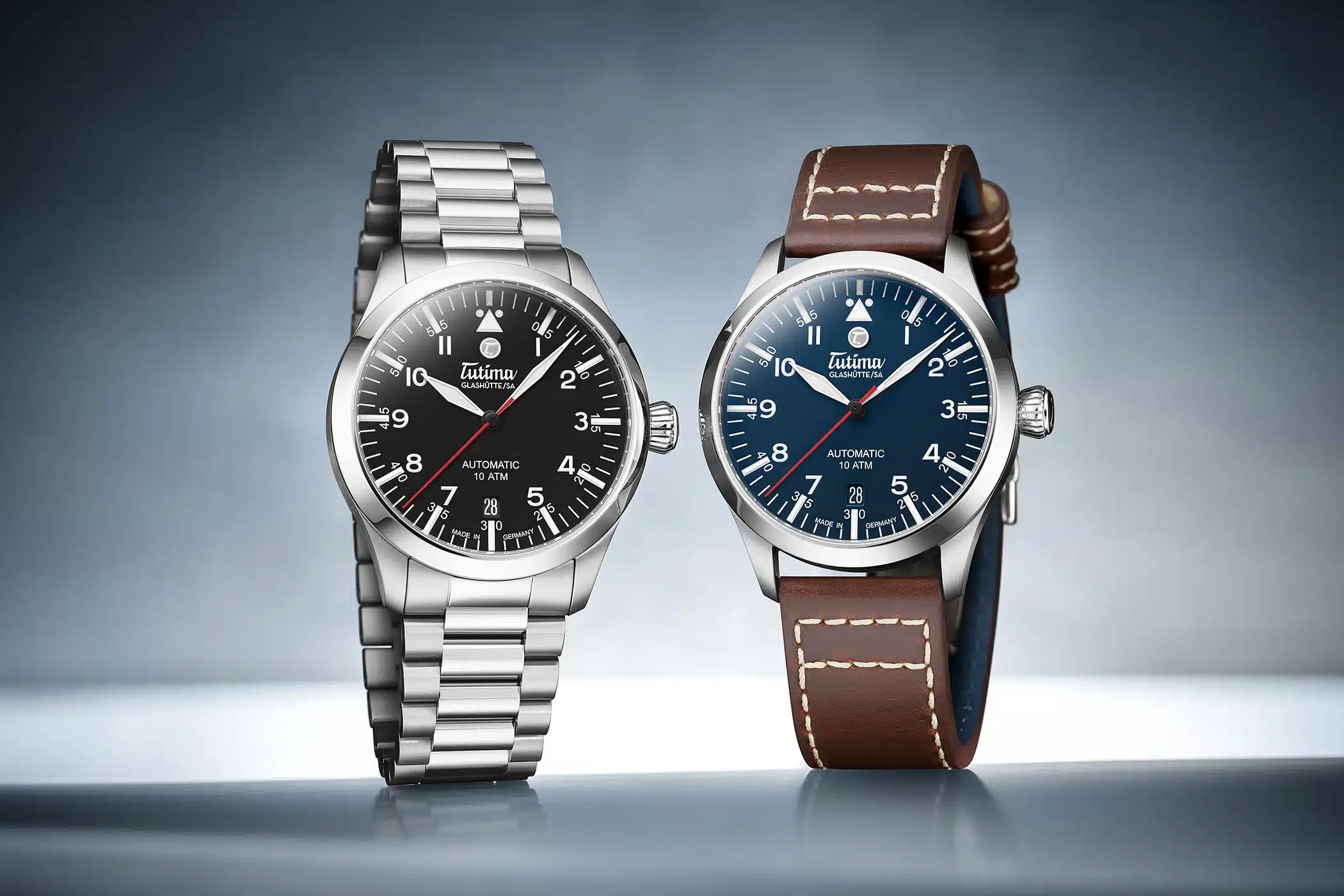
A pilot watch, in collector vocabulary, is any wristwatch designed for cockpit use, but the genre coalesces around four historical specifications. The earliest is the Cartier Santos (1904), commissioned by aviation pioneer Alberto Santos-Dumont because pocket watches were unworkable in the cockpit; the Santos is the first true pilot wristwatch and arguably the first purpose-designed wristwatch of any kind. The other three are wartime: the German B-Uhr (Beobachtungsuhr) navigator watch, the French Type 20 flyback chronograph, and the British RAF Mark XI antimagnetic three-hand. The modern catalogue draws from all four lineages.
The B-Uhr ("observation watch") was a Luftwaffe-issued wristwatch produced 1940-1945 to specification RLM (Reichsluftfahrtministerium) 4940-3030. It was 55 mm in diameter, larger than any modern wristwatch, with a 16 mm onion crown for gloved operation, a matte black dial, and a Type A (12-hour) or Type B (60-minute outer ring with 12-hour inner) layout. Five makers fulfilled the contract: A. Lange & Söhne, Wempe, Stowa, Laco, and IWC. The B-Uhr was strapped over the flight jacket via a long calf-leather strap, set on the ground via radio time signal, and used for dead-reckoning navigation; it is the source of the canonical "Flieger" pilot-watch design that IWC, Stowa, Laco, and Hanhart still produce today.
"The B-Uhr is the only wristwatch ever designed to be set, strapped over a leather flight jacket, and worn entirely while doing arithmetic in your head."- IWC Schaffhausen heritage statement, B-Uhr documentation
The Type 20 was a French Aéronavale and Armée de l'Air specification (1953-1980s) for a flyback chronograph capable of timed dead-reckoning navigation manoeuvres. Eleven makers fulfilled the contract over its life: Breguet, Vixa, Auricoste, Mathey-Tissot, Dodane, Boullier, Airain, Sicura, and others. The Breguet Type 20 is now a haute-horlogerie reissue collection (Type XX/XXI/XXII); the original 1950s pieces are highly collected at auction. The Type 20 specification mandated a flyback function (single push to reset and restart the chronograph, for fast successive timing burns), 38 mm case, fixed bezel, and 35-hour minimum reserve.
The Mark XI (1948-1953) was a British RAF specification under AIR/4321, fulfilled by IWC (Cal. 89) and Jaeger-LeCoultre (Cal. 488/SBr). It was a 36 mm three-hand antimagnetic wristwatch with a soft-iron Faraday cage protecting the movement from cockpit electrical interference. It introduced the now-canonical pilot-watch dial: triangle with two flanking dots at 12, applied baton hour markers, sweep seconds, no logo on the dial face. The Mark XI is the direct ancestor of the modern IWC Mark XX series and a major influence on every "non-Flieger" antimagnetic pilot watch (Sinn 856, Tudor Ranger, Damasko DA34).
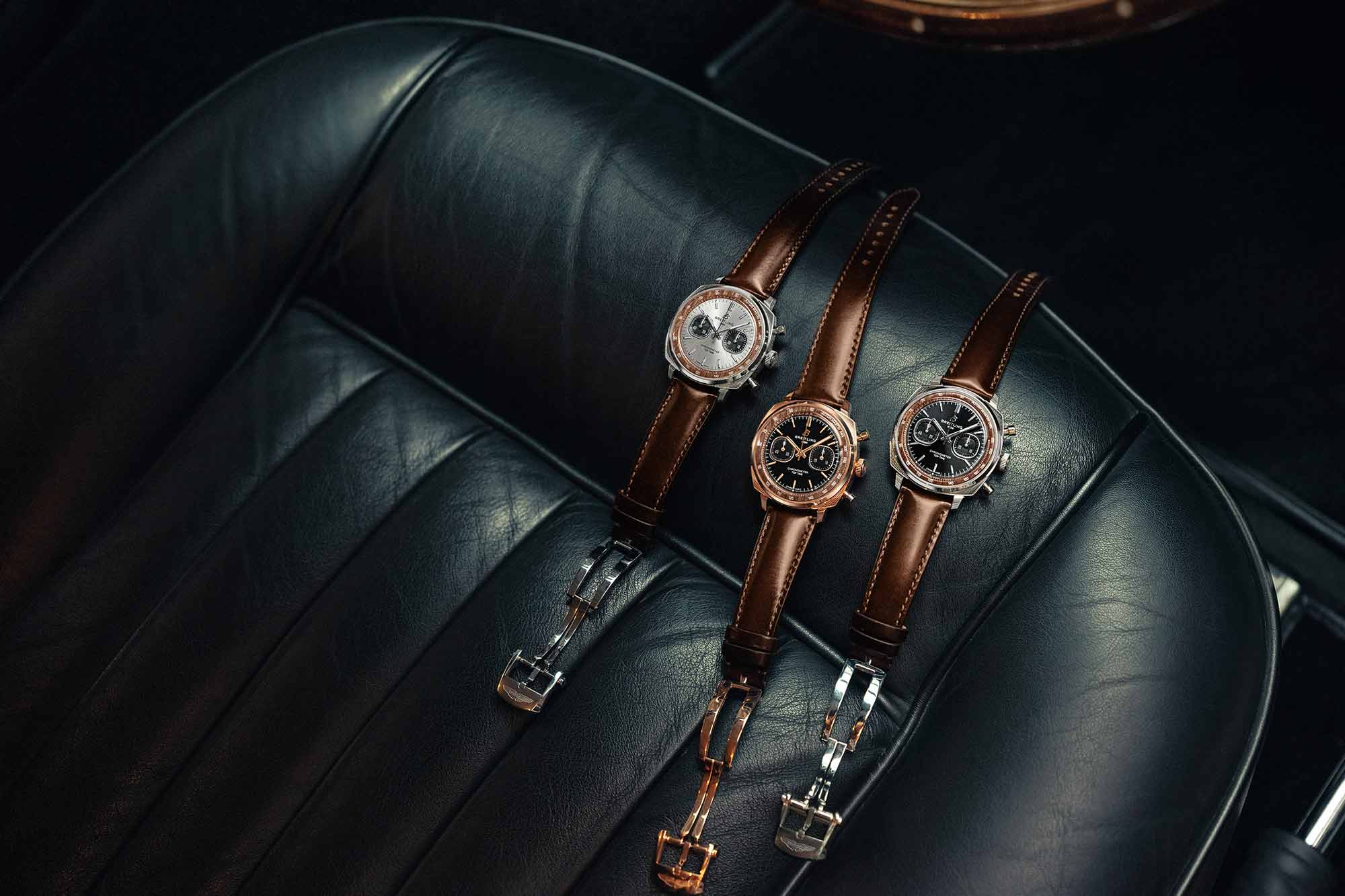
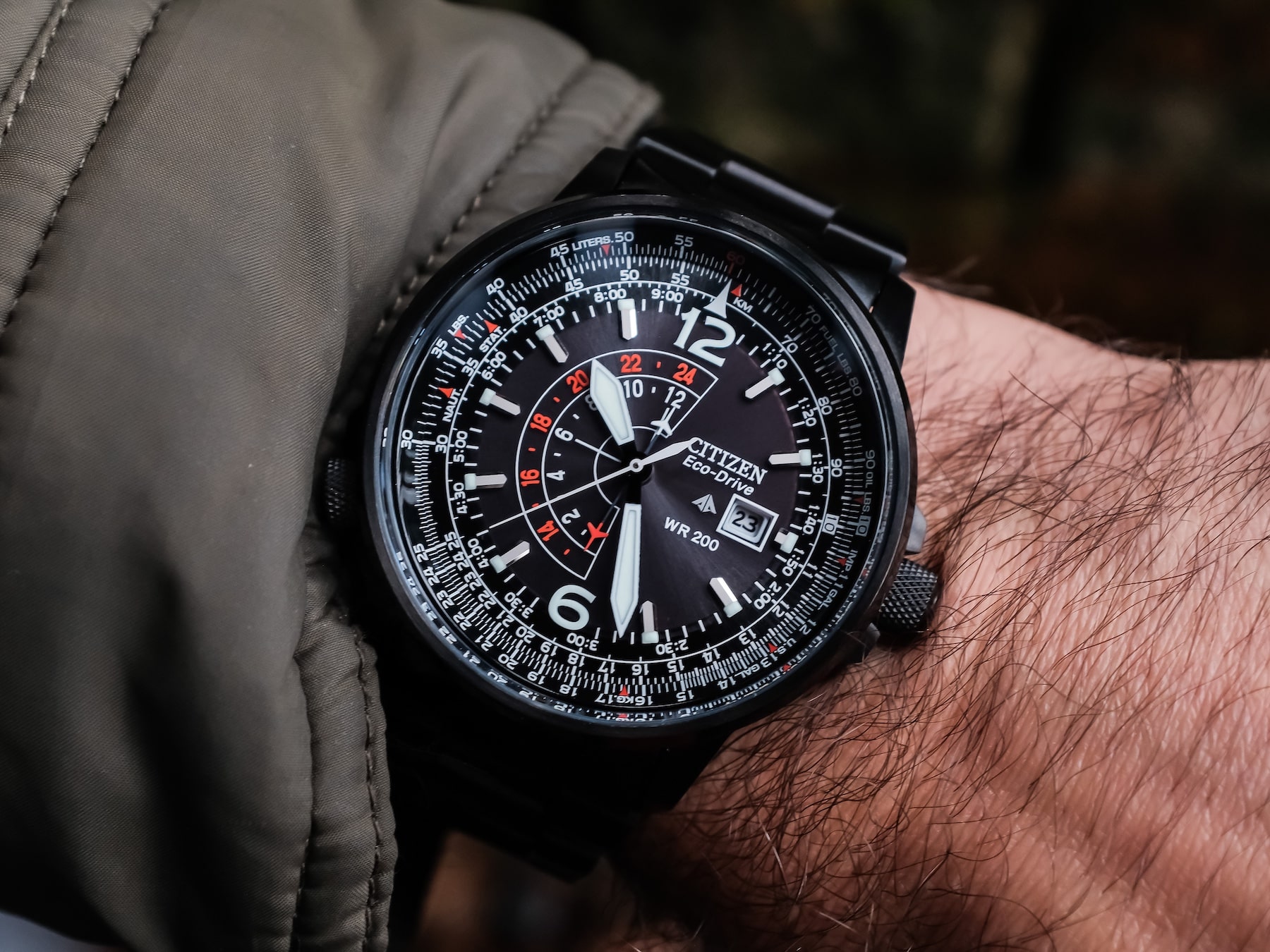
A separate fourth lineage is the slide-rule pilot, the Breitling Navitimer (1952). Designed in collaboration with the Aircraft Owners and Pilots Association (AOPA), the Navitimer added a circular slide rule to the chronograph bezel for in-flight calculation of fuel burn, true airspeed, ground speed, climb rates, and time-distance problems. It was carried by John Glenn on Mercury Aurora 7 (1962) and is now Breitling's longest-running continuous reference. The slide rule complication is decorative for most modern pilots (GPS killed the requirement), but the dial complexity has become a recognisable visual signature.
The modern pilot-watch catalogue divides into three buckets. Heritage Flieger: Stowa Flieger Verus, Laco Aachen Erbstück, IWC Big Pilot 46 mm, all faithful to the WWII B-Uhr design language with date-window concessions. Heritage Type 20: Breguet Type XX, Zenith Pilot Type 20, Hanhart 417 ES, Tutima Saxon One Flieger Chronograph. Modern antimagnetic: Sinn 856 / 857 UTC, Damasko DA46, IWC Pilot Mark XX, Tudor Ranger; these emphasise field-watch functionality with pilot-watch heritage cues. Above these sit the haute pilot watches, Patek Calatrava Pilot Travel Time (5524G), A. Lange Pilot 1940/2000 reissues, Vacheron Constantin Historiques American 1921, where the pilot template is reinterpreted as a luxury-dress hybrid.





Comments 1