Watch brandsWatch wikiWatch videosVariousWatch calendarSaved articles
PopularRolexOmegaPatek PhilippeAudemars PiguetTudorGrand SeikoCartierSeikoIWCTAG HeuerBreitlingJaeger-LeCoultreA. Lange & SohneZenith

Results for Mainspring

82 articles found · page 3 of 3

Related pages

Wiki · Guide
Mainspring

The coiled power source inside the barrel; stores all energy running a mechanical watch.

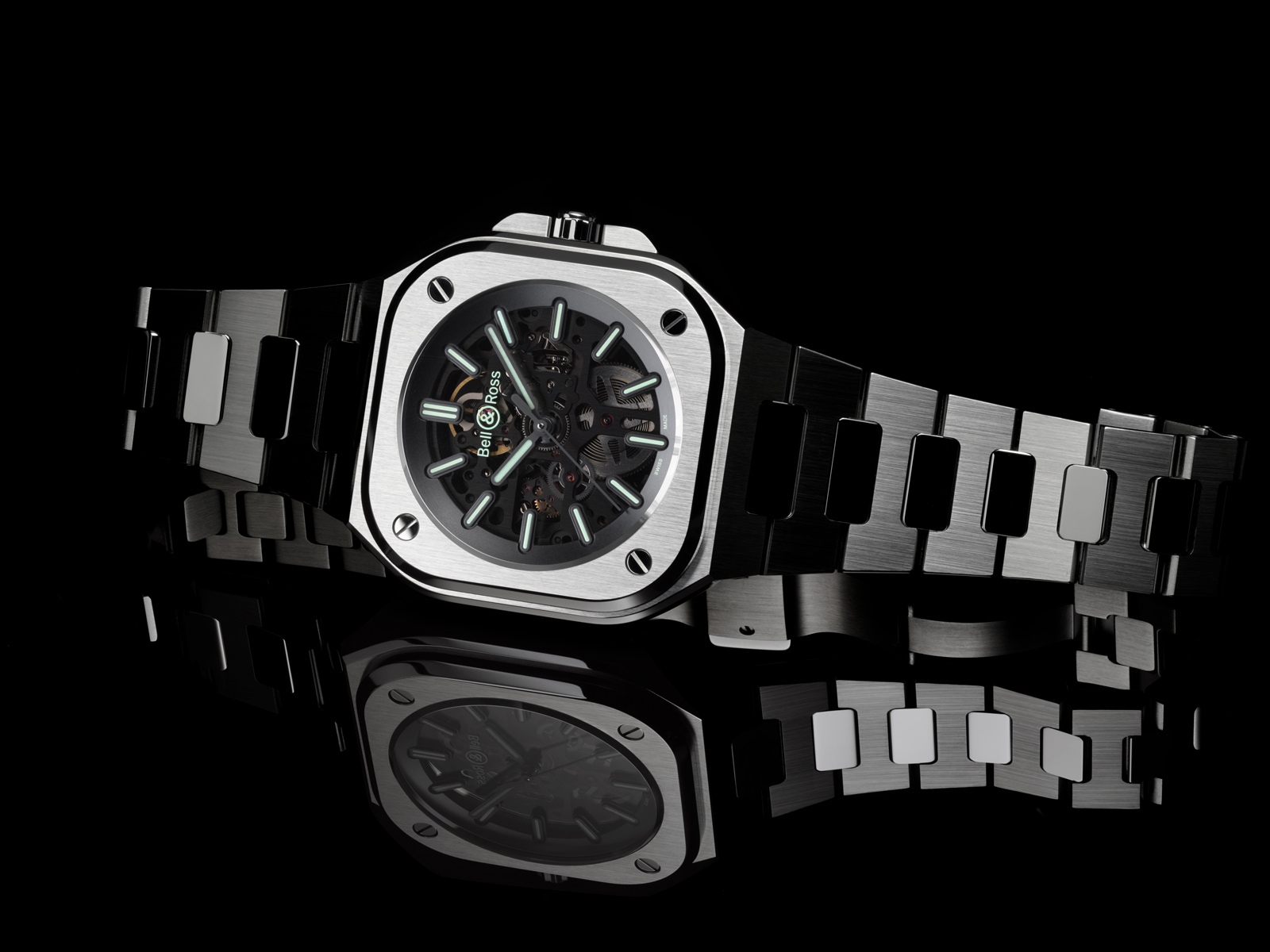
Bell & Ross Introduces the BR 05 Skeleton Nightlum SJX Watches
Bell & Ross Introduces May 17, 2021

Bell & Ross Introduces the BR 05 Skeleton Nightlum

Very much the fashion of today, sports watches with integrated bracelets have proliferated rapidly at every level of the price spectrum. At the more accessible end is the Bell & Ross BR 05 launched two years ago and now available in three formats: time-only, chronograph, and skeleton. Continuing a glow-in-the-dark theme established by several recent models, Bell & Ross (B&R;) now unveils the BR 05 Skeleton Nightlum. Legible in the dark Initial thoughts Though the BR 05 was contentious because of its design, I’m a fan. The square case – with perfectly aligned bezel screws – evoke B&R;’s signature watches like the BR 01 and BR 03, making the BR 05 instantly recognisable. And it is executed well, with strong finishing on the case and bracelet considering the price. The most striking BR 05 model is arguably the skeleton variant, and that remains true with the BR 05 Skeleton Nightlum. Revealing most of the movement, including key bits such as the balance wheel and mainspring, the skeleton is a good looker. The BR 05 Skeleton Nightlum to be more attractive than its predecessors, including last year’s iteration in blue. It has a tactical feel thanks to the all-black movement, bringing to mind the recent BR 03 Diver Military and feels true to the brand’s history of watches for military and police personnel. Notably, the new Skeleton Nightlum has a clear dial, in contrast to the blue-tinted dial found on last year’s Skeleton Blue. The clear finish gives the Sk...

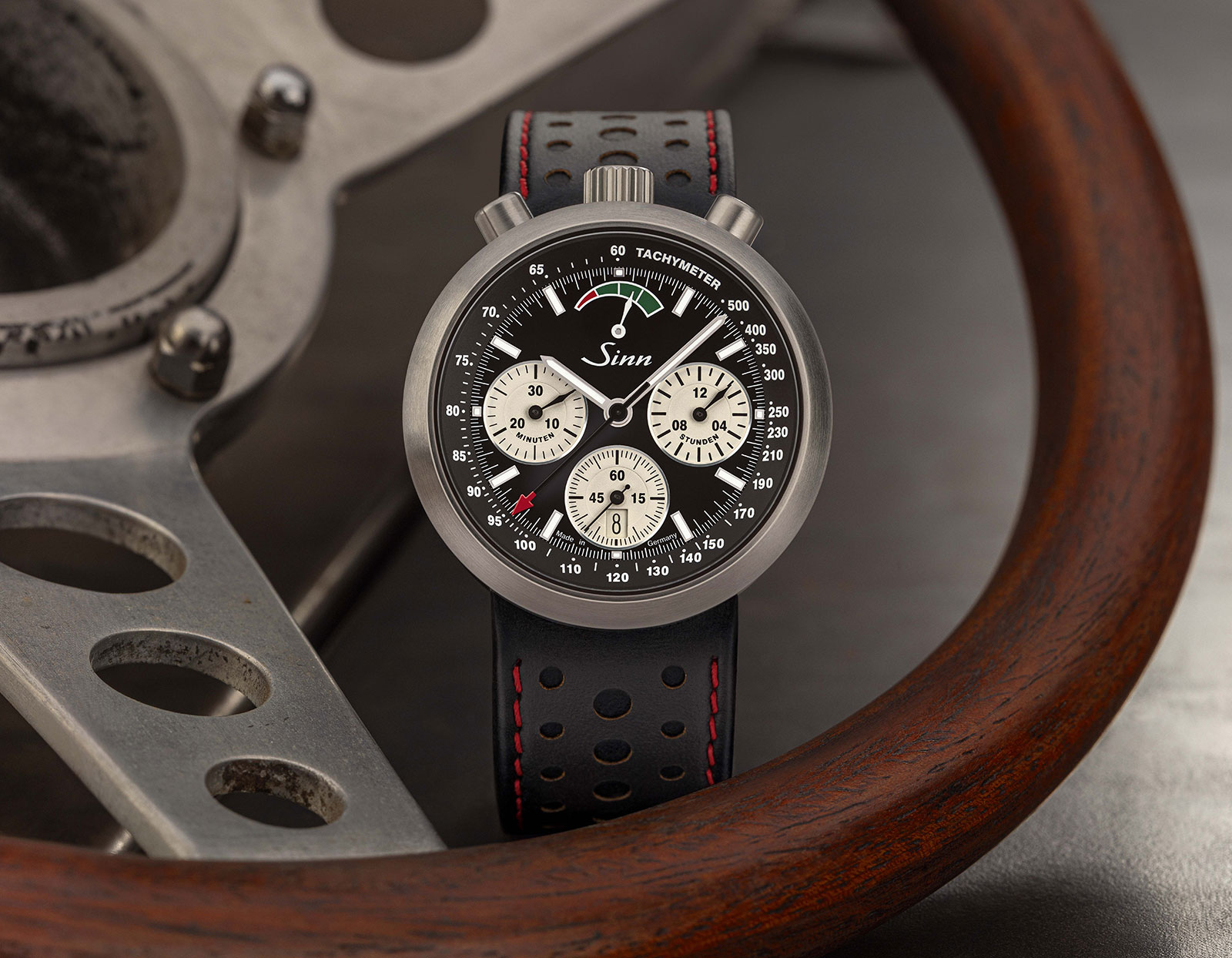
Sinn Introduces the R500 Chronograph SJX Watches
Sinn Introduces Nov 11, 2020

Sinn Introduces the R500 Chronograph

Famous for its no-nonsense “tool” watches, some of which are supplied to the German military and law enforcement, Sinn’s latest debut is slightly different. Inspired by auto racing, the R500 chronograph is a watch that shows the brand can have some fun, while being properly functional. Modelled on a funky chronograph Sinn produced in the 1970s, the R500 is a “bullhead” chronograph, with the twin pushers positioned like horns at one and 11 o’clock. While the style very much evokes the 1970s, the R500 is built like a robust modern wristwatch, with titanium case rated to 200 m that’s resistant to extreme low and high pressures. Initial thoughts Radically different from Sinn’s usual fare of pilot’s or military-style watches, the R500 is arguably the most interesting watch amongst the brand’s recent releases. It’s recognisably 1970s in style, but with a clean dial design that avoids the “exotic” dial found on the vintage original, which was a typically 1970s feature that can look dated today. A notable element of the dial design is the power reserve indicator at 12 o’clock, which seems unnecessary for an automatic watch. But German rally champion Peter Göbel, speaking during a video interview for the launch of the R500, noted that a fully-wound mainspring is crucial before starting a race – since the chronograph can be used to time laps – so it is useful in that context. And it’s also unusual against the broader landscape because “bullhea...

MB&F; HM10 Bulldog: Forget The Dog, Beware Of The Owner (Video) Quill & Pad
MB&F; Sep 20, 2020

MB&F; HM10 Bulldog: Forget The Dog, Beware Of The Owner (Video)

Inspired by a bulldog, MB&F;’s Horological Machine No. 10 features a rounded, stocky body; the time display forms its eyes; and the stout legs form the lugs, hugging its owner fiercely and loyally. But what is more likely to attract your eye are the wildly canine jaws with teeth that open and shut according to the amount of tension in the mainspring. The Watches TV takes a close look (but not too close - woof!).

In-Depth: A History of the Pulsations Chronograph SJX Watches
Louis Moinet accomplished Aug 3, 2020

In-Depth: A History of the Pulsations Chronograph

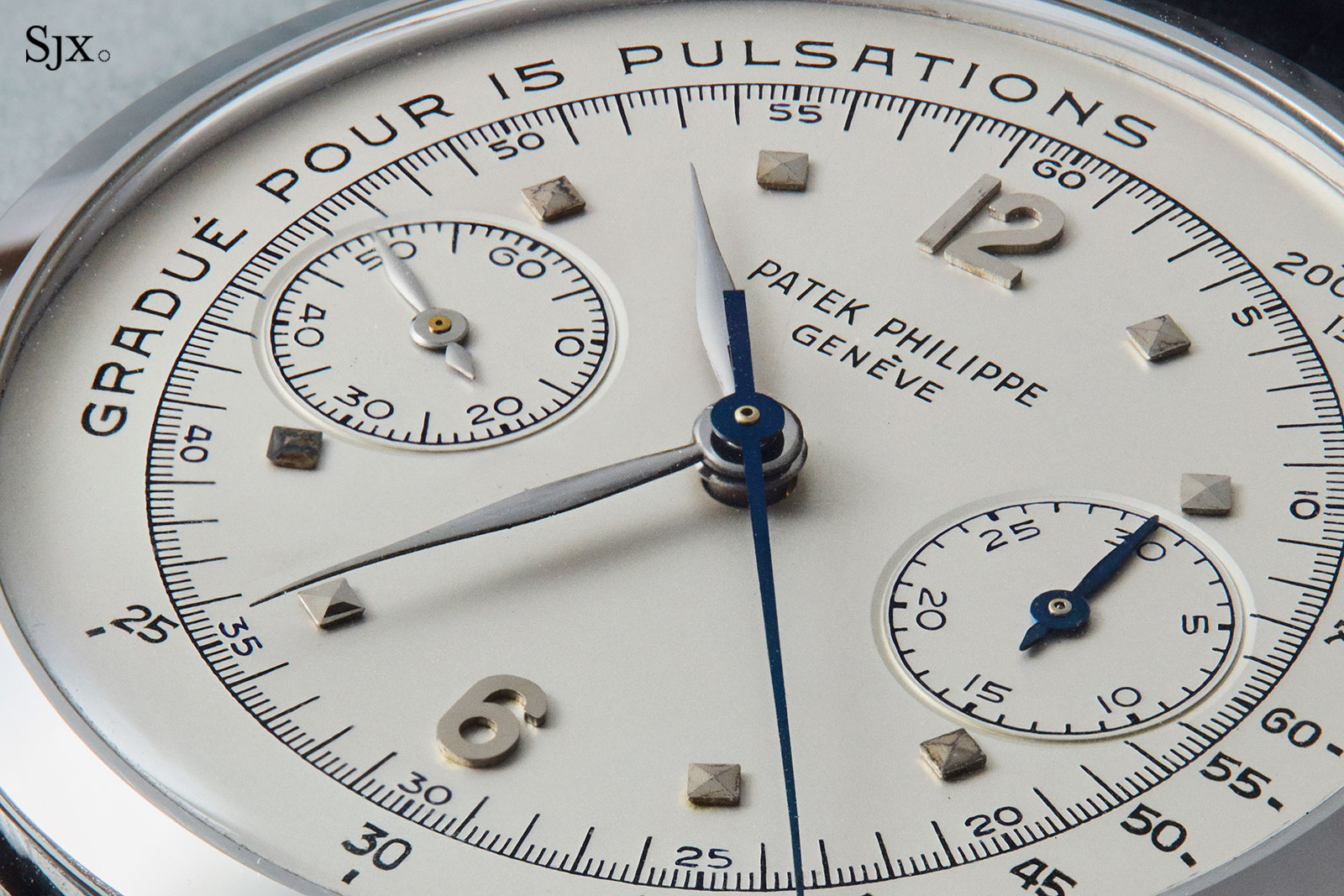
In 1816, Louis Moinet accomplished a first in watchmaking: a timepiece that could precisely track elapsed time. Measuring periodicity on demand had been accomplished before, but the French watchmaker’s invention gave it the functionality and exactness that we expect today. In assessing prototypes, we often tend to forgive their shortcomings and rosily reminisce, rewriting flaws as charms. Moinet’s timepiece, however, was a prescient opus. The layout of the dial had the now-familiar large central hand and elapsed time in subdials. Two pushers controlled the start, stop and reset functions, the power reserve lasted over 30 hours, and the mainspring could be wound while the timing mechanism was engaged to allow for longer timing runs. Most impressive, though, was its precision. Louis Moinet’s compteur de tierces of 1816. Image – Louis Moinet Named the compteur de tierces, or “timer of thirds”, Moinet’s invention ran at 216,000 beats per hour, measuring time down to one-sixtieth of a second. To allow for this ambitious exactitude to be utilised, the central chronograph hand completed revolutions once per second – such that the user could easily see which sixtieth of a second the period in question ended on - and the watch had an extra sub-dial for tracking elapsed seconds in addition to those for the minutes and hours. Whys and wherefores An impressive story, except that it’s missing something. Why did Moinet build it? And what did he use it to measure? A...

Oris Big Crown ProPilot X Calibre 115 Review WatchAdvice
Oris Big Crown ProPilot X Jun 18, 2020

Oris Big Crown ProPilot X Calibre 115 Review

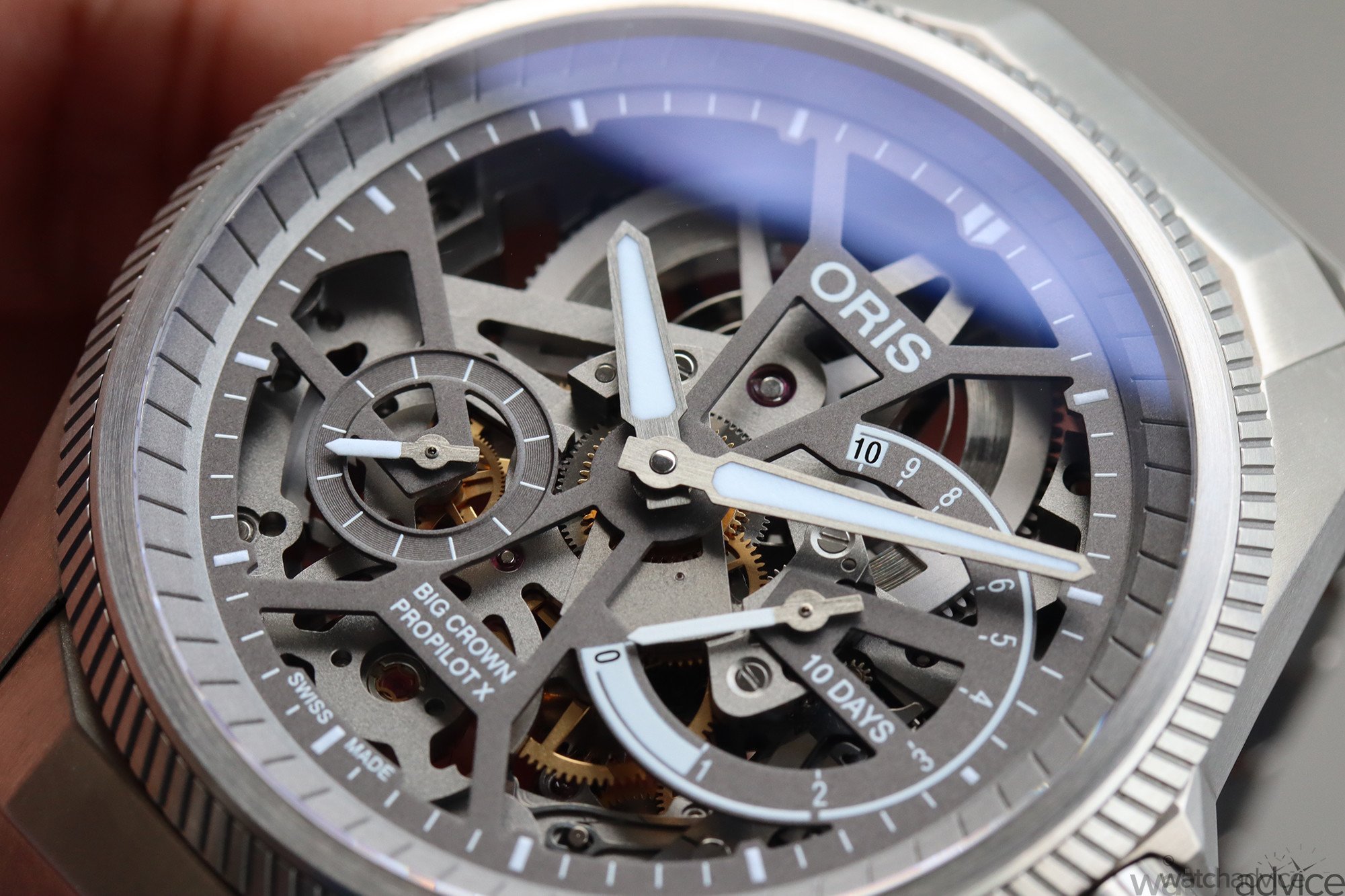
The Big Crown ProPilot X Calibre 115 is simply a watch that explains Oris’s true personality. The Big Crown ProPilot X Calibre 115 goes back to the roots of what mechanical watches are all about. In today’s world, so many of us know what the things around us can do, but rarely actually know how they work.  The same logic applies to mechanical watches too. We see brilliant timepieces made and know what they can do, yet rarely see or understand the inner workings behind them. This is the idea behind the Big Crown ProPilot X Calibre 115, to show as much as possible how the true inner workings of a mechanical watch operate.  Oris Big Crown ProPilot X Calibre 115 There is almost a natural connection between a mechanical watch and its owner. If we don’t wind it, or even yet move, we won’t drive enough power to turn the mainspring which ultimately powers the movement. This is what Oris is trying to show with the Big Crown ProPilot X Calibre 115.   Oris Big Crown ProPilot X Calibre 115 Oris’s Big Crown ProPilot X Calibre 115 was inspired by nature, in particular, a Valley named Waldenburg, which surrounds the village of Hölstein. This particular village is significant to Oris, as it is there where the brand originally began. Oris was founded in 1904, and since then the brand has been based in Hölstein. It’s no wonder then that they would go back there to find sources of inspiration for arguably the “most Oris watch” they have ever made.  Oris Big Crown ProPi...

Jaeger-LeCoultre Introduces the New Master Control Collection SJX Watches
Jaeger-LeCoultre Introduces Apr 24, 2020

Jaeger-LeCoultre Introduces the New Master Control Collection

A mainstay of Jaeger-LeCoultre’s catalogue for almost three decades, the Master Control made its debut in 1992 and has been facelifted every couple of years since. Fresh off the press at Watches & Wonders 2020, the latest Master Control collection forgets the facelifts and is instead throwback to the inaugural line-up of three decades ago. The new range reproduces the models and style of the originals, including the popular, entry-level Master Control Date, but it also includes an all-new model, the Master Control Chronograph Calendar. From left: Master Control Date, Master Control Calendar, and Master Control Geographic And the Master Control Chronograph Calendar New tech, classic style While retaining the look of the originals, the new Master Control models are ever-so-slightly larger, now measuring 40 mm (while the 1990s originals were mostly 37 mm). More importantly, the new watches have been fitted with newly-upgraded movements equipped with silicon escapements. The cal. 899AA of the Master Control Date Though JLC has used silicon escapements in the past, most notably in the Master Compressor Extreme LAB 2 and the more recent Tourbillon Celeste, the movements in the new Master Control watches are the first affordable, regular-production models to feature such escapements. The use of silicon pallet levers and escape wheels, coupled with the use of new lubricants and a stronger and longer mainspring, means substantial improvements in operating efficiency, with power ...

Hands-On: Brivet-Naudot Eccentricity SJX Watches
Mar 30, 2020

Hands-On: Brivet-Naudot Eccentricity

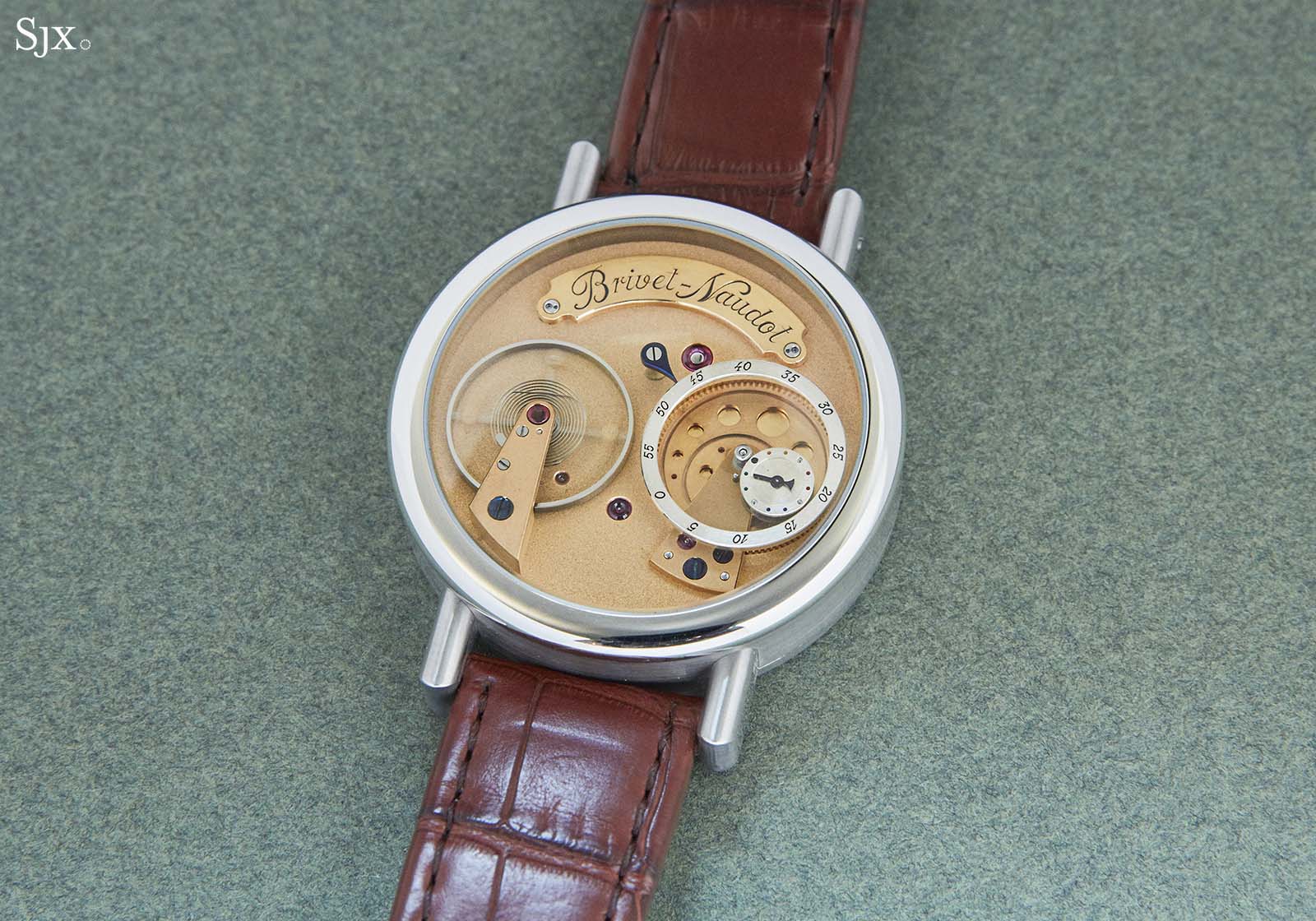
French watchmaker Cyril Brivet-Naudot made his debut two years ago with the Eccentricity, a time-only watch that’s fascinating and impressive on many fronts. Not only is it almost entirely made by hand, the Eccentricity is intriguing in design and mechanics – from the overall architecture to details like the key-winding mechanism and regulator-style time display with a twist, and above all, the proprietary escapement. Just 29 years old, Mr Brivet-Naudot began working on the Eccentricity after graduating from the École Polytechnique Fédérale de Lausanne (EPFL), one of Switzerland’s best technical universities. Prior to that, he earned a diploma in watchmaking from the Lycée Edgar Faure in Morteau, a small town in eastern France that borders Switzerland. The school has gained a reputation for producing imaginative watchmakers, many pursuing a similar style that’s inspired by 19th century pocket watch movements, including Theo Auffret, a peer of Mr Brivet-Naudot. The result of three years of development, the Eccentricity is very much in the same vein as the watches produced by Mr Brivet-Naudot’s fellow graduates. It artfully combines a 19th century aesthetic sensibility with exotic features, including a novel, free-eccentric escapement, for which the watch was named. And it is built by hand: with the exception of the mainspring, hairspring, jewels and crystals, every component of the watch was made from scratch by Mr Brivet-Naudot, without the aid of CNC machine...

Jaeger-LeCoultre Introduces the Atmos Transparente SJX Watches
Jaeger-LeCoultre Introduces Dec 17, 2019

Jaeger-LeCoultre Introduces the Atmos Transparente

As crucial to Jaeger-LeCoultre’s identity as the swivelling Reverso wristwatch, the Atmos clock remains a unique and intriguing invention almost a century after its invention – a clock that runs on air. Having been offered in a variety of iterations over the years, including several by industrial designer Marc Newson, the latest is the Atmos Transparente, a clean, modernist reinterpretation of a longstanding model in the line-up. Despite being synonymous with Jaeger-LeCoultre, the Atmos was actually invented by someone else, who was inspired by a much older idea. Clocks wound by changes in atmospheric temperature were invented sometime in the 17th century, but remained largely experimental until French engineer Jean-Léon Reutter invented the Atmos in 1928. His idea was actually an evolution on the 400-day clock, which is regulated by an exceptionally slow pendulum and need only be wound once a year. The magic of air The genius of Reutter’s invention was a sealed metal bellows containing mercury, which expanded and contracted with changes in temperature, thus winding the clock’s mainspring. Despite its novelty, Reutter’s clock met with little commercial success – early Atmos clocks marked “J.L. Reutter” are rare but not especially valuable – leading him to sell the idea to LeCoultre in 1935 (and two years later the company joined forces with Edmond Jaeger to form Jaeger-LeCoultre). The company refined his concept, with the key improvement being the repl...

Hands-On: F.P. Journe Octa Réserve de Marche Prototype SJX Watches
F.P. Journe Octa Réserve de Marche Dec 2, 2019

Hands-On: F.P. Journe Octa Réserve de Marche Prototype

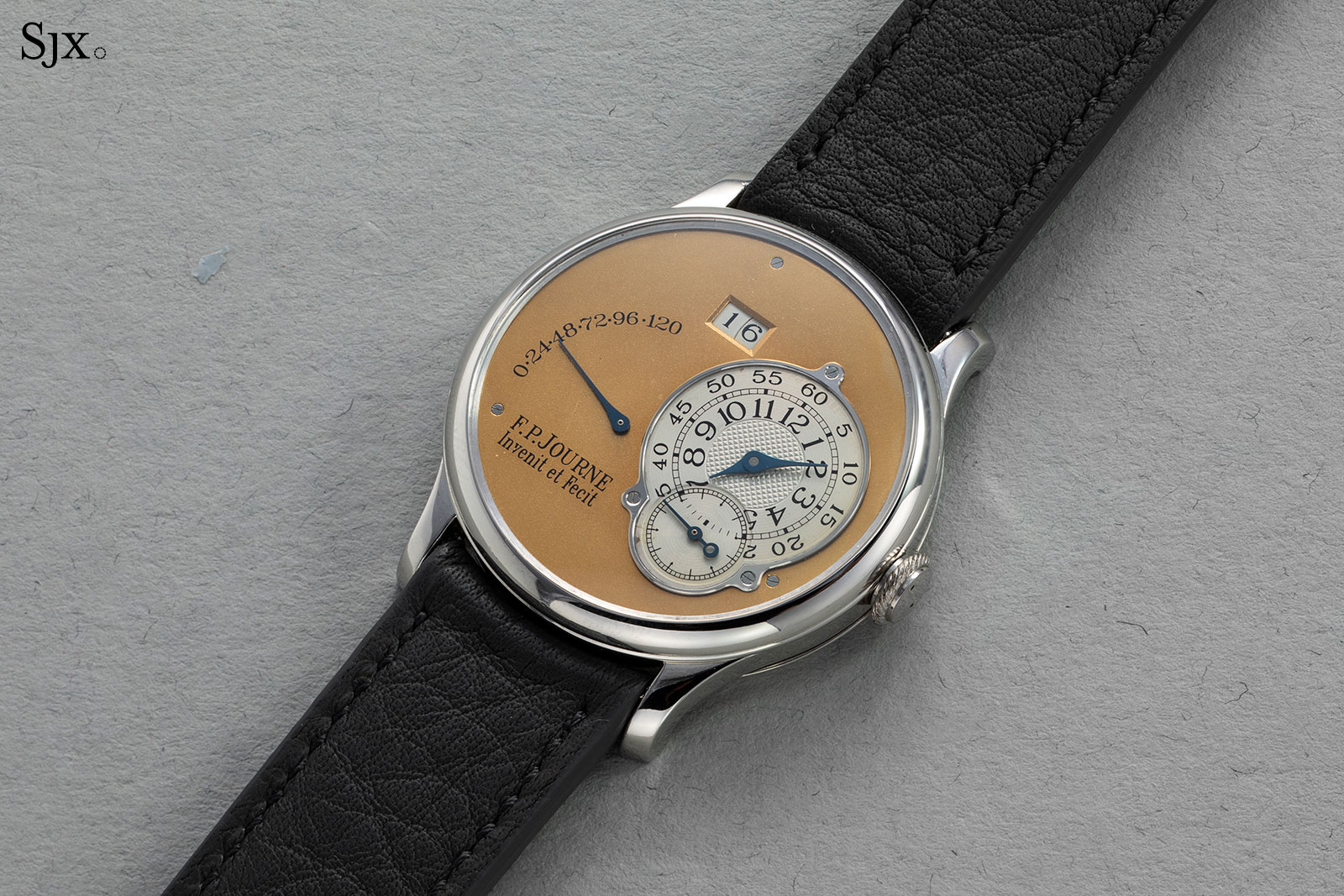
As has become tradition, a good part of Phillips’ upcoming New York watch auction is a memorabilia sale of sorts, including watches owned by Marlon Brando, golfer Jack Nicklaus, and astronaut John Glenn, as well as the Urwerk worn by Robert Downey Jr. while playing Iron Man in Avengers: Endgame. The auction also includes a piece of historical horological memorabilia: an F.P. Journe Octa Réserve de Marche prototype. The prototype is largely identical to the later, serially produced version of the watch – the case is platinum and the dial, yellow gold – but is marked as a prototype on the case back, and also bears the various traits unique to early watches made by Francois-Paul Journe. The cal. 1300 Launched in 2002 and discontinued in 2014, the Octa Réserve de Marche was the brand’s first entry-level wristwatch, powered by an automatic movement, the cal. 1300. Originally conceived to have an eight-day power reserve – hence “Octa” – the movement instead has a power reserve of 120 hours, or about five days. Reputedly constructed with a gear train borrowed from a robust and well-known hand-wind movement plus an extra-large mainspring, the cal. 1300 was the base calibre for the entire Octa line. Although a variety of complications were added on top, ranging from the Octa Chronograph to the annual calendar of the Octa Calendrier, all versions of the movement had identical height of 5.7mm regardless of function. The slimness and smart construction did come at th...

Introducing the Hasta la Vista Revolver 8-Day Table Clock SJX Watches
Chanel Oct 10, 2019

Introducing the Hasta la Vista Revolver 8-Day Table Clock

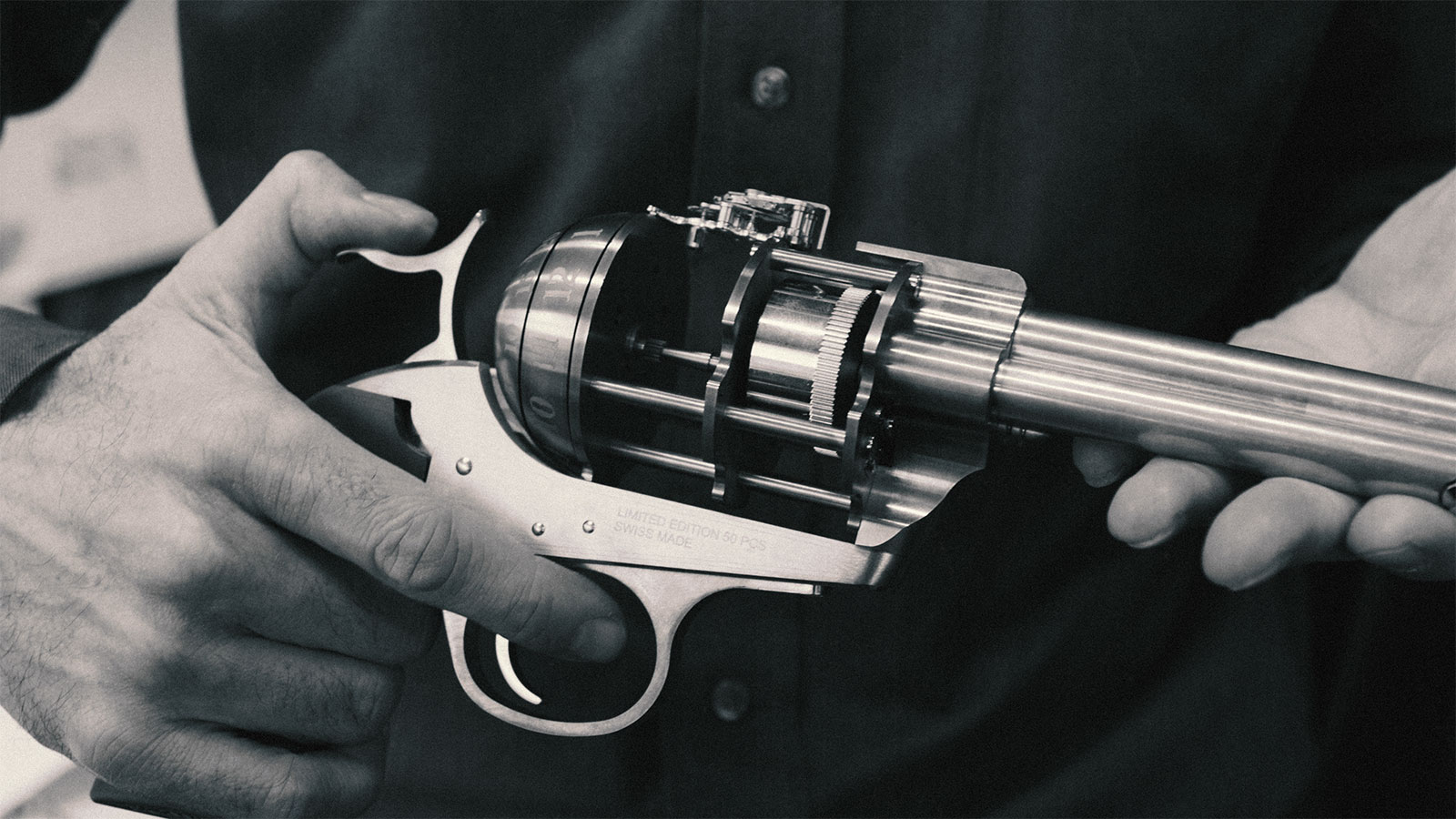
A recent startup dedicated to creating unusual objects, The Unnamed Society makes its debut with a table clock shaped like the Colt Bisley Model revolver of the early 20th century. The clock is produced by L’Epee 1839, the Swiss clockmaker that is responsible for practically all of the unconventional and avant-garde mechanical clocks of recent years, most famously those designed by MB&F; but also Chanel. But it’s undoubtedly the success of MB&F;’s sci-fi clocks that have compelled various brands, old and new, to develop their own L’Epee 1839 clocks. Named Hasta la Vista, “goodbye” in Spanish, the clock is the shape and size of an actual revolver, measuring 350mm or just under 14 inches long. It’s made of steel and palladium-plated brass, and can be mounted on its accompanying base either via the grip or the barrel. Pictured here with the grip made of horn from the bighorn sheep, as well as engraving on the frame Mechanically it is identical to the 8-day clocks L’Epee 1839 has produced in other shapes and sizes. The time is indicated by two revolving cylinders – one each for the hours and minutes – that take the shape of the rear section of the pistol frame. The escapement, wheel train and mainspring are where the cylinder (which contains the bullets) would be. Winding is accomplished by a key that’s inserted into the end of the barrel. Though it’s a limited edition of 50, each clock can be customised with a variety of options offered for the g...

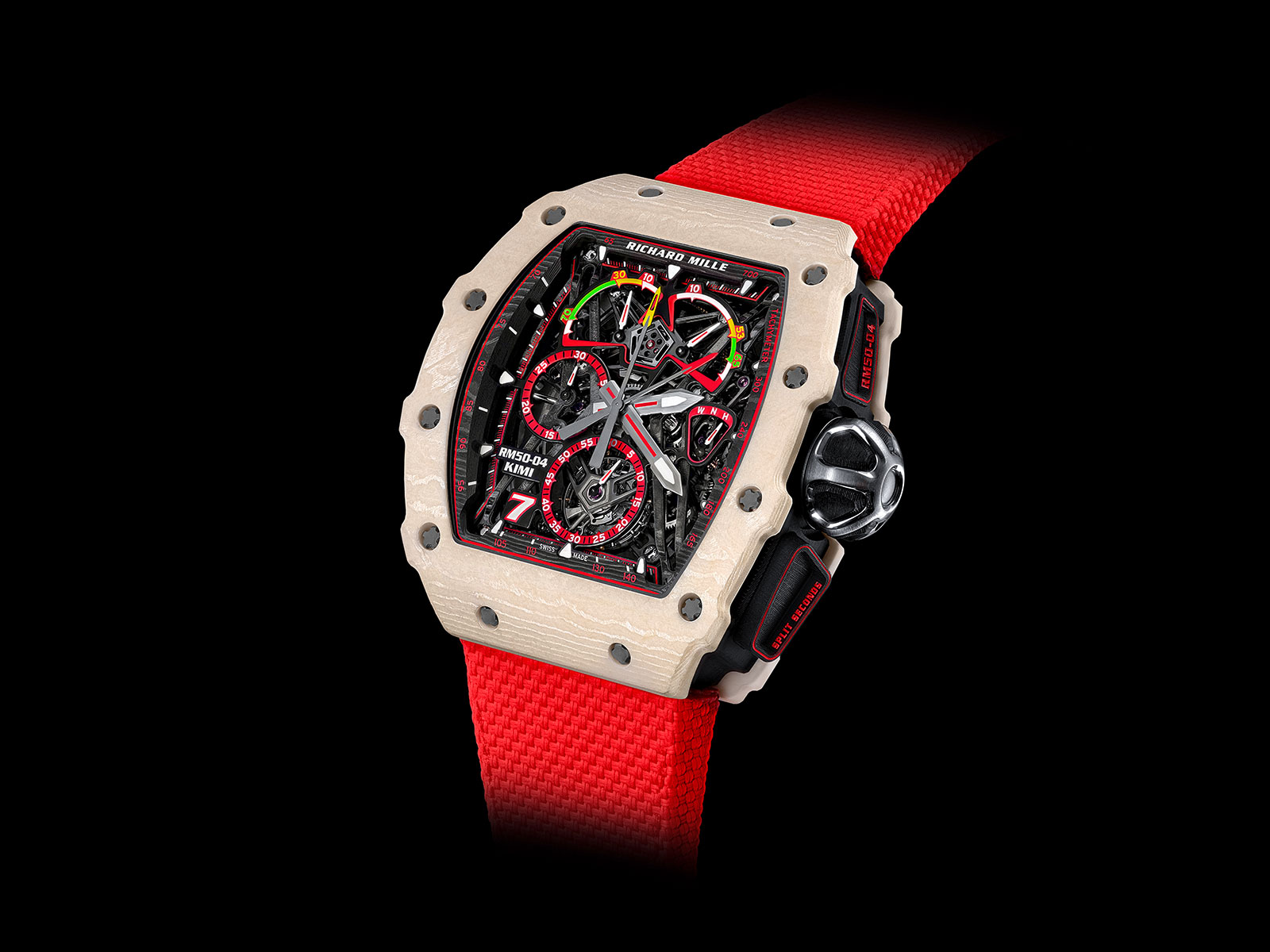
Richard Mille Introduces the RM 50-04 Kimi Räikkönen SJX Watches
Richard Mille Introduces Sep 21, 2019

Richard Mille Introduces the RM 50-04 Kimi Räikkönen

As complications go, the RM 50 is the ultimate Richard Mille, combining a tourbillon and split-seconds chronograph. Descended from the RM008 of 2003, one of the brand’s foundational models, the top of the line complication now has now been dressed up in new livery for Finnish Formula 1 driver Kimi Räikkönen, who drives for the Alfa Romeo Racing Team. Launched at the start of the 2019 Singapore Grand Prix, the RM 50-04 Tourbillon Split-Seconds Chronograph Kimi Räikkönen is large, lightweight, and complex, and dressed in a red, white and black colour combination that’s the same as the livery on the Alfa Romeo C38 Formula 1 car. Kimi Räikkönen Though it’s a mass of details and colours, the dial is actually easily to decipher. The two chronograph sub-dials are the six and nine o’clock. The fan-shaped indicator at 11 o’clock is the power reserve, and its mirror image to the right is the torque indicator. This indicates the level of wind in the mainspring, with the ideal being between 53Nmm and 65Nmm; “Nmm” is short for Newton millimetre. And at three o’clock is the power reserve display. Made of various lightweight carbon composites, the watch case is generously sized, like other top of the line Richard Mille complications – 44.5mm in diameter and 16.1mm high. The front and back plates are white Quartz TPT, while the middle is Carbon TPT. Both composites are made by North Thin Ply Technology (NTPT), a Swiss lightweight composite specialist that’s...

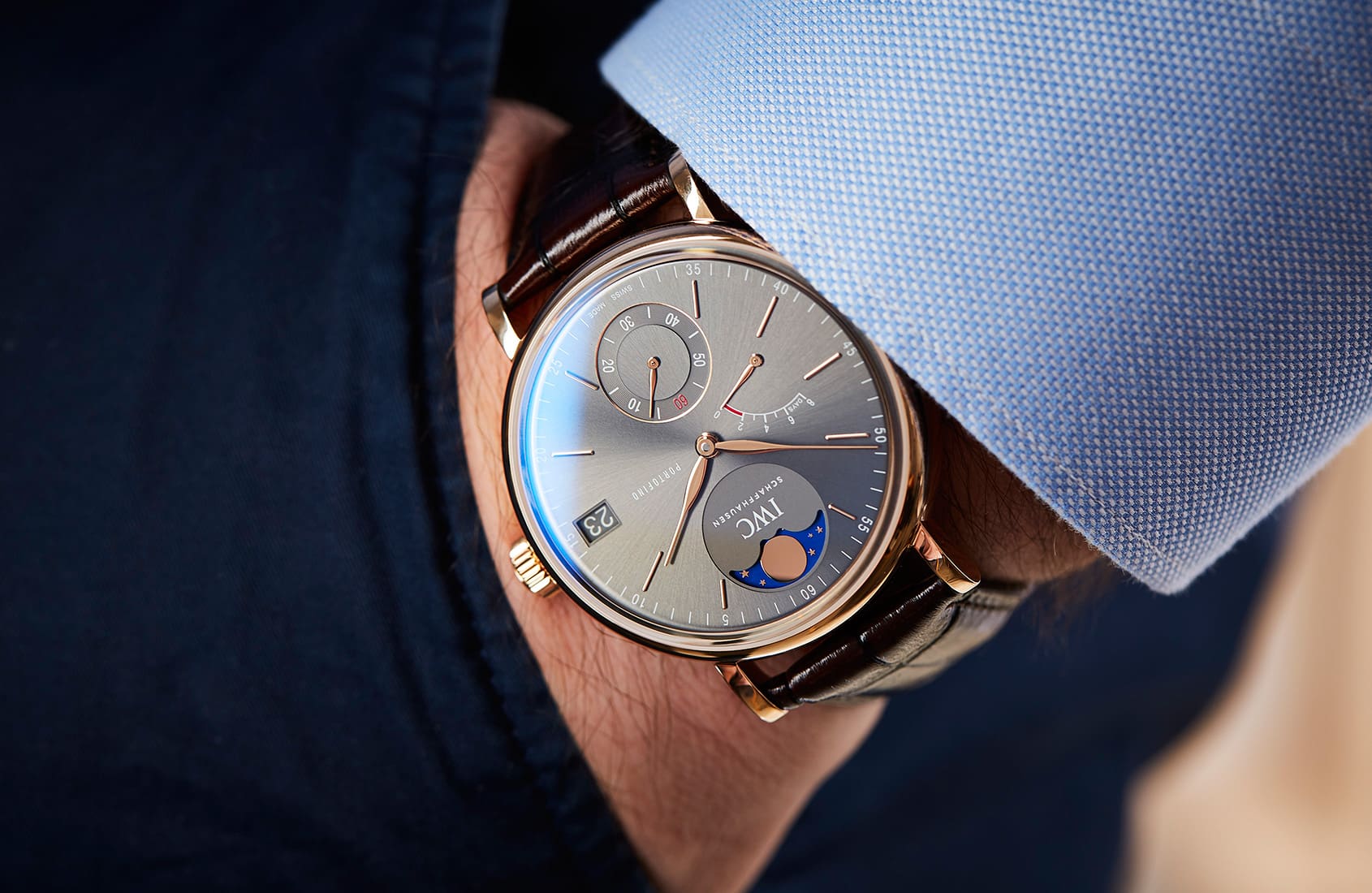
Full power! The IWC Portofino Hand-Wound Moon Phase Time+Tide
IWC Portofino Hand-Wound Moon Phase Jul 25, 2019

Full power! The IWC Portofino Hand-Wound Moon Phase

Editor’s pick: If you’re in the market for a massive, 45mm manually winding dress watch with more power than you can shake a mainspring at, we think the IWC Portofino Hand-Wound Moon Phase might just be up your alley …  Few things are as tactile and pleasing as manually winding a watch, and I’ve got … ContinuedThe post Full power! The IWC Portofino Hand-Wound Moon Phase appeared first on Time+Tide Watches.

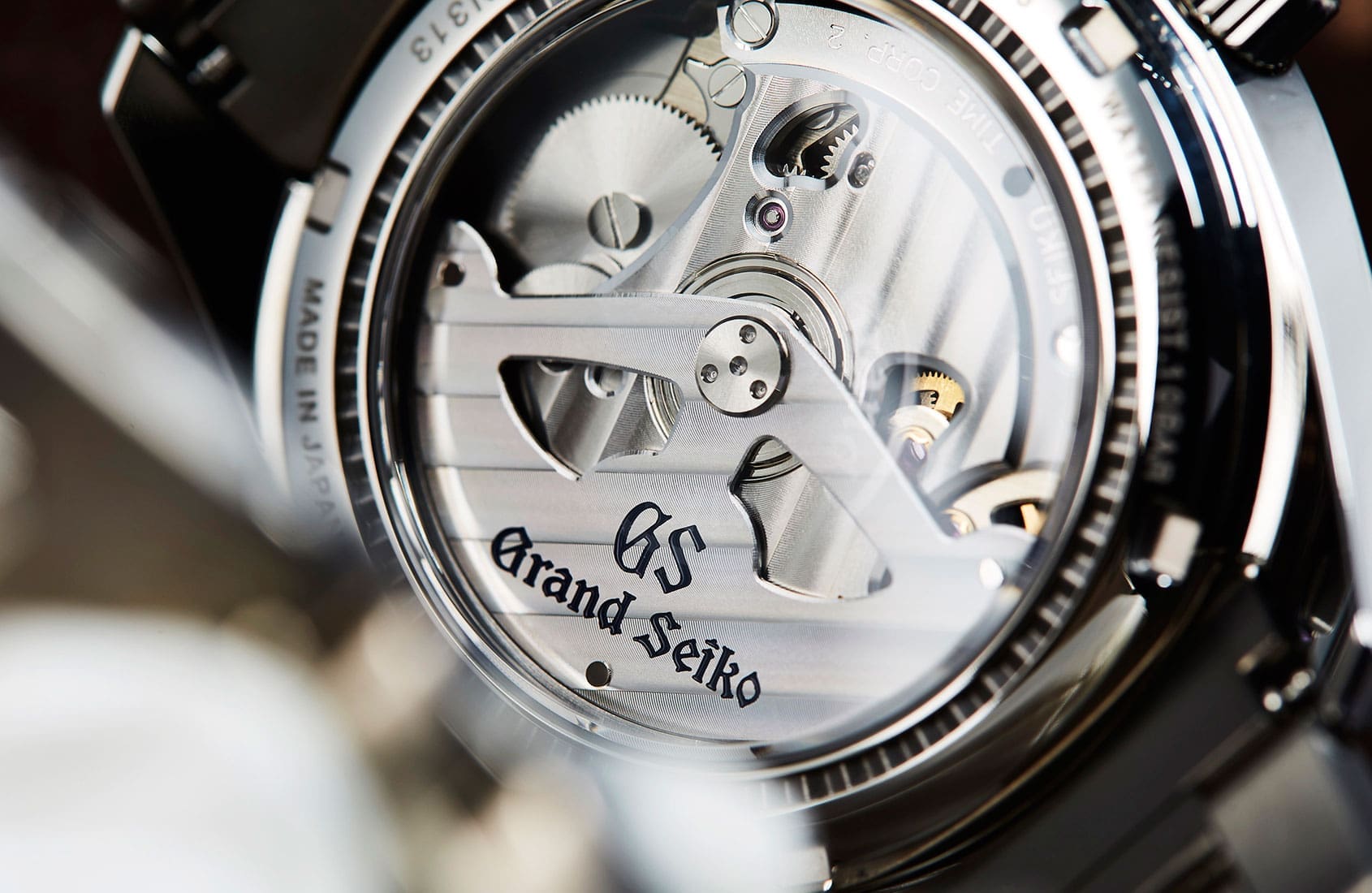
VIDEO: Grand Seiko’s Spring Drive technology explained … in 2 minutes Time+Tide
Grand Seiko s Spring Drive technology Oct 28, 2017

VIDEO: Grand Seiko’s Spring Drive technology explained … in 2 minutes

Fundamentally, there’s not a whole lot of variation in watch movements. Sure, the peripheral details might vary, but basically you’re either looking at a purely mechancial movement, with a mainspring and escapement setup that’s remained pretty much unchanged for the last few hundred years, or you’re looking at a battery-powered quartz watch that’s come to … ContinuedThe post VIDEO: Grand Seiko’s Spring Drive technology explained … in 2 minutes appeared first on Time+Tide Watches.

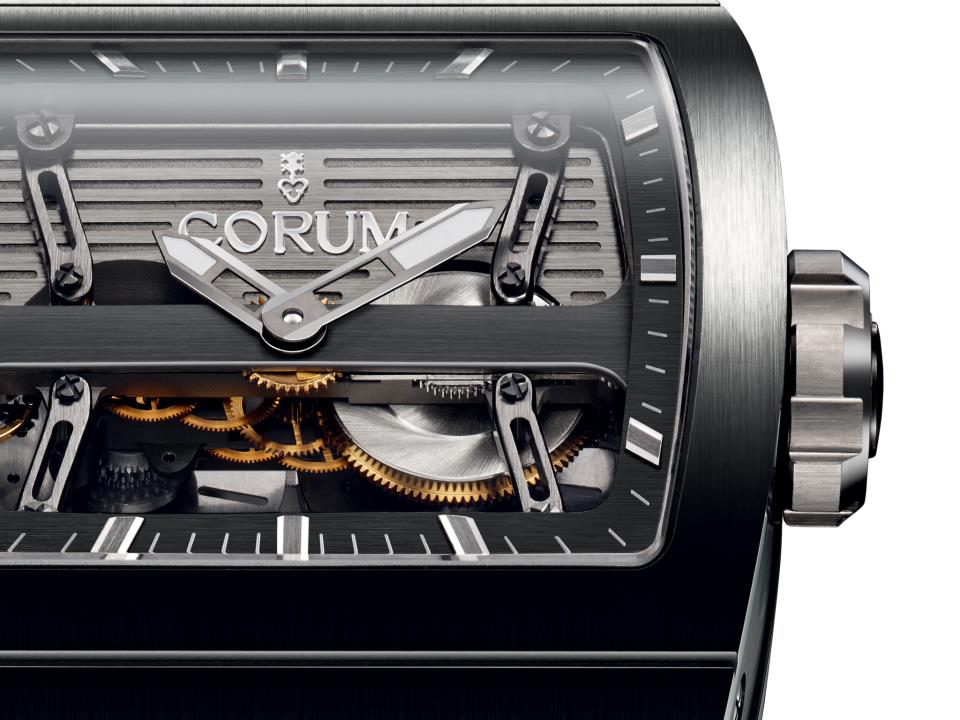
Automatic Attraction: Corum Debuts New Golden Bridge Automatic At BaselWorld 2013 Revolution
Corum Debuts New Golden Bridge May 13, 2013

Automatic Attraction: Corum Debuts New Golden Bridge Automatic At BaselWorld 2013

Something old, something new –that’s the theme that runs through much of watchmaking.  Lest we forget, the basic technology of watchmaking consists of a mainspring barrel, gears, a lever escapement, and a temperature compensated balance controlled by a balance spring.  All of those elements –every one –were in place by 1750, boys and girls, when […]

Pre-Baselworld 2013: Corum Ti-Bridge Automatic Dual Winder Revolution
Corum Ti-Bridge Automatic Dual Winder Apr 9, 2013

Pre-Baselworld 2013: Corum Ti-Bridge Automatic Dual Winder

In 2011, Corum debuted a stunning world-first with the Golden Bridge Automatic movement, the self-winding cal. C0 313. For the first time in the history of wristwatches, a movement incorporated a linear oscillating weight, shuttling parallel to the baguette movement on guide rails to wind the mainspring. Although the La Chaux-de-Fonds watch company has kept its […]

The Science of Steel: The Stuff of Cases, Mainsprings, Hairsprings, Pinions, Escapements and the Backbone of Watchmaking Quill & Pad
Sep 28, 2023

The Science of Steel: The Stuff of Cases, Mainsprings, Hairsprings, Pinions, Escapements and the Backbone of Watchmaking

Joshua Munchow talks about steel here, the metal that made the world! Watch cases and other movement components are commonly made from certain stainless steels, 304 and 316L being the most frequent. It also happens that some brands hold exclusive rights to use specific alloys in the production of its watches. Here's what you should know about steel.

The Science of Steel, The Stuff Of Cases, Mainsprings, Hairsprings, Pinions, Escapements And The Backbone Of Watchmaking - Reprise Quill & Pad
Sep 10, 2022

The Science of Steel, The Stuff Of Cases, Mainsprings, Hairsprings, Pinions, Escapements And The Backbone Of Watchmaking - Reprise

Joshua Munchow talks about steel here, the metal that made the world! Watch cases and other movement components are commonly made from certain stainless steels, 304 and 316L being the most frequent. It also happens that some brands hold exclusive rights to use specific alloys in the production of its watches. Here's what you should know about steel.

Focus On Materials: Primer On The Science of Steel, The Stuff Of Cases, Mainsprings, Hairsprings, Pinions, Escapements And The Backbone Of Watchmaking - Reprise Quill & Pad
Sep 19, 2020

Focus On Materials: Primer On The Science of Steel, The Stuff Of Cases, Mainsprings, Hairsprings, Pinions, Escapements And The Backbone Of Watchmaking - Reprise

Joshua Munchow talks about steel here, the metal that made the world! Watch cases and other movement components are commonly made from certain stainless steels, 304 and 316L being the most frequent. It also happens that some brands hold exclusive rights to use specific alloys in the production of its watches. Here's what you should know about steel.