 Hodinkee
Auctions: A Thunderbirds Pilot's Legacy Lives On Through A Gold Rolex
Captain Herman Griffin's unique Rolex with a high-flying backstory is up for sale.
2,293 articles · 4 videos found · page 71 of 77
Breguet's 1801 rotating-cage escapement, explained.
Alfred Helwig's 1920 tourbillon variant with no upper bridge; the entire cage is visible.
Twelve years on, the watch that introduced chiming complications to Jacob & Co. returns with a transparent red mineral crystal dial and meaningful mechanical updates.
42.8 mm × 11.4 mm, lug 22 mm, Cal. R 27 HU
Hodinkee
Captain Herman Griffin's unique Rolex with a high-flying backstory is up for sale.
 Hodinkee
The new Endeavour Tourbillon Concept Tiger's Eye tells time so you don't have to.
 Hodinkee
Théo Auffret is building his legacy one handmade tourbillon at a time.
 SJX Watches
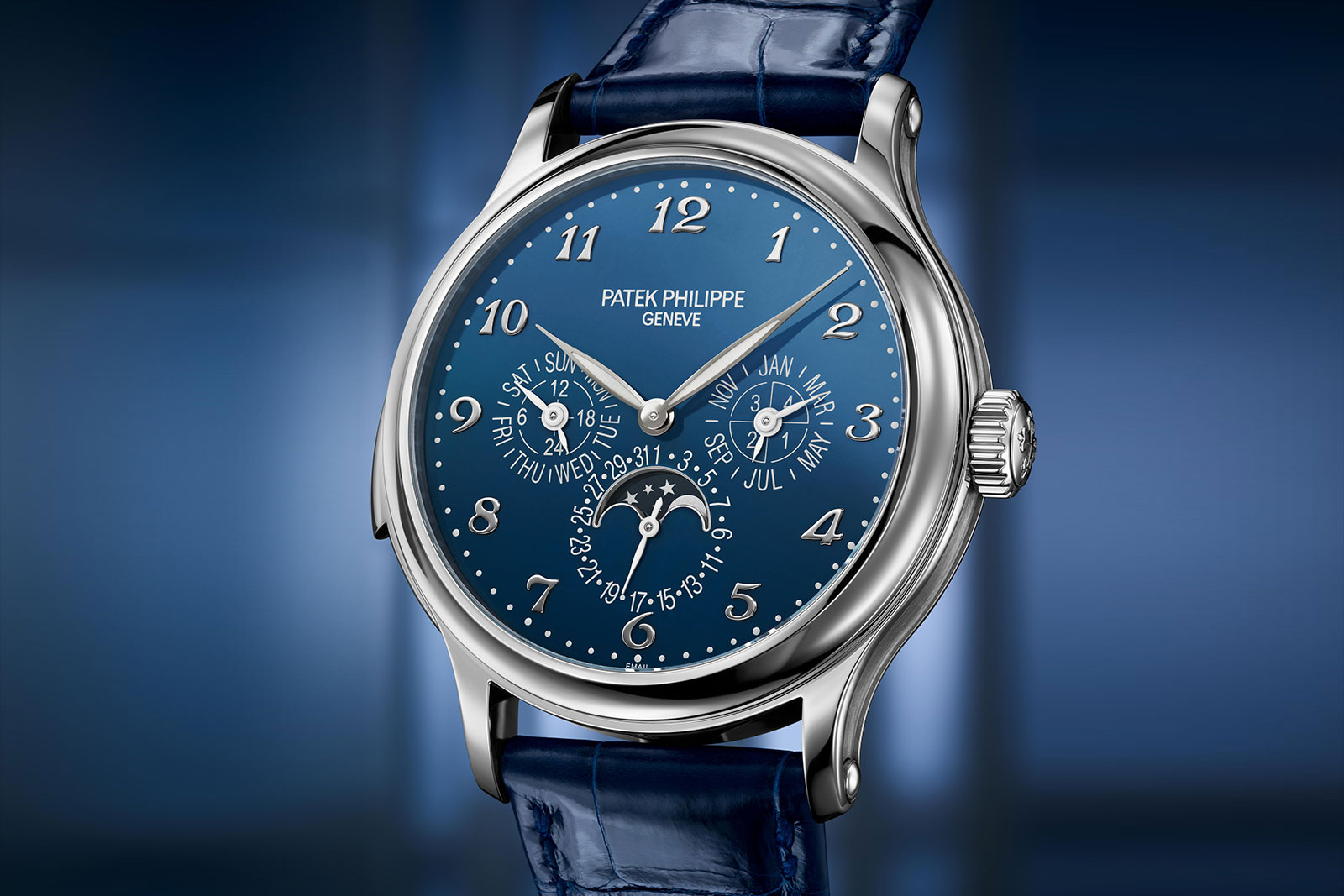
Patek Philippe keeps up the pace with the fourth instalment of new releases for the year, which were just announced at its annual Rare Handcrafts Exhibition in Geneva. While most of the watches at the exhibition are one-offs bestowed with colourful, artisanal decoration, the line up includes an ensemble of repeating watches, led by the flamboyant Sky Moon Tourbillon in pink gold and brown. Simpler, at least relatively speaking, is the Minute Repeater Perpetual Calendar Ref. 5374G that packs a pair of high-end complications fronted by a blue, grand feu enamel dial. Initial thoughts Today’s launches stand in stark contrast to the brand’s hottest watches of the moment – the sports watches that are arguably its most recognisable products now – that were its opening act for the year. Patek Philippe launched a slew of exquisite, highly decorated timepieces today, affirming its twin strengths – haute horlogerie and metiers d’art. The generous array of Rare Handcrafts, along with the fact that several are chiming watches, is a reminder that Patek Philippe is more than a faddish, integrated-bracelet sports watch. That said, the ref. 5374 is not entirely new (neither is the flagship Sky Moon Tourbillon ref. 6002R). In fact, the only truly new reference amongst the Rare Handcrafts complications is the Ladies Minute Repeater ref. 7040/250G. The ref. 5374 was first introduced in 2016 with a platinum case and black enamel dial – a formal, classical package. Now it ge...
 SJX Watches
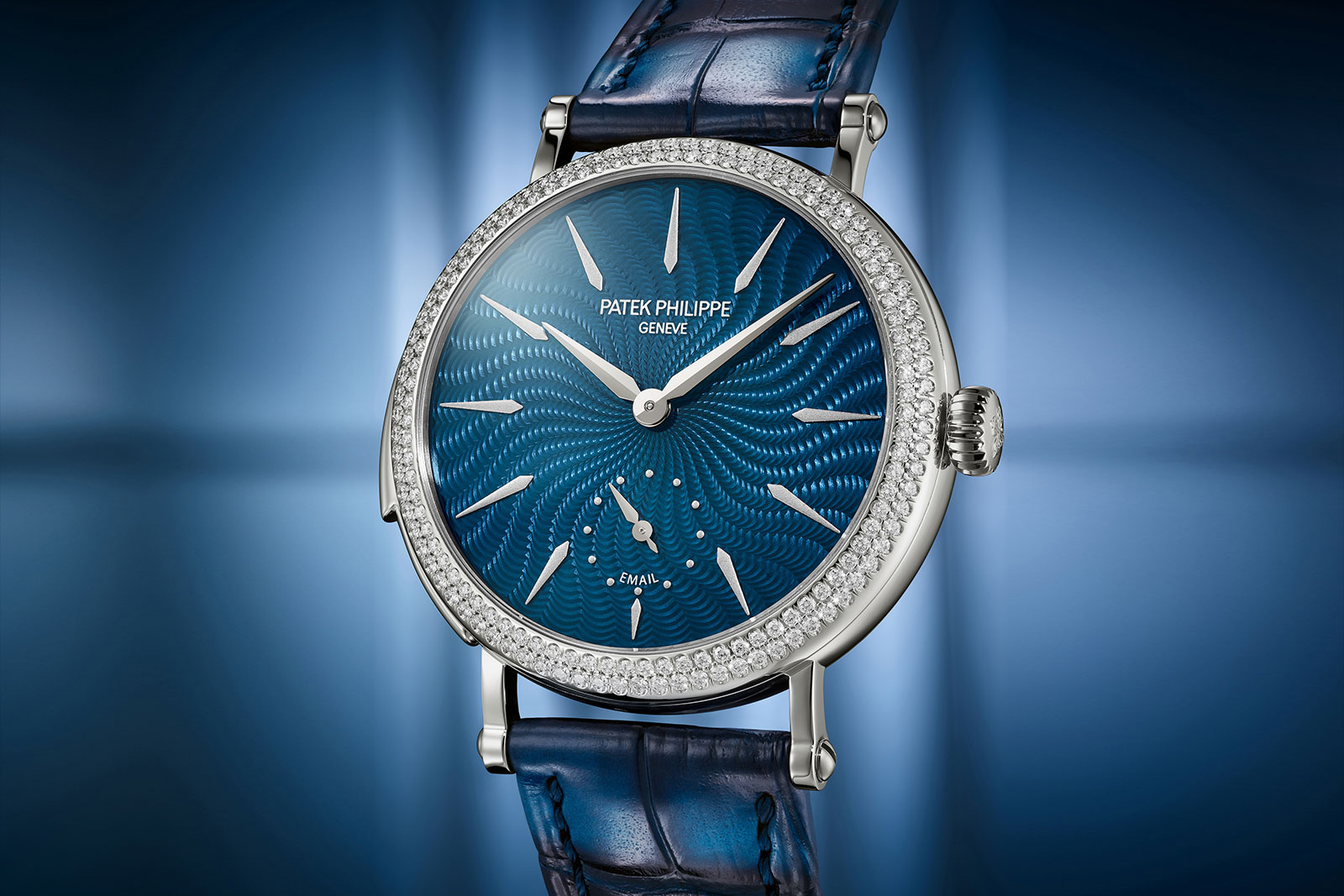
While the Sky Moon Tourbillon introduced at the same time is bold and over the top, the Rare Handcrafts Ladies’ Minute Repeater ref. 7040/250G is graceful and delicately detailed. Now the only minute repeater for ladies in the catalogue, the ref. 7040/250G features a dial with spiral guilloche covered in translucent enamel, match with unusual, spear-shaped hands and markers. Initial thoughts The ref. 7040/250G is surprisingly reminiscent of Patek Philippe’s men’s watch of the 1990s with its “officer’s” case. In fact, that case is quite close to that of the ref. 5029, the limited-edition minute repeater made in 1997 to commemorate the opening of its factory in Plans-les-Ouates. That resemblance is a good thing, because the ref. 5029 was an elegant, classical watch. The new repeater shares similar lines, but has been tastefully dressed up as a ladies watch with a diamond bezel and guilloche dial. The dial is a first for Patek Philippe, and certainly good looking. There’s a hint of Laurent Ferrier design in the dial, but again, the resemblance isn’t a bad thing. All in all, the ref. 7040/250G is an all-rounder – a pretty watch with a finely detailed dial and a complex movement. Svelte dimensions Slightly larger than the preceding minute repeater for ladies (the ref. 7000 that was 33.7 mm), the ref. 7040/250G has a case of 18k white gold that measures just 36 mm by 10.14 mm high – more or less the dimensions the men’s minute repeater of the 1990s. The rou...
 Quill & Pad
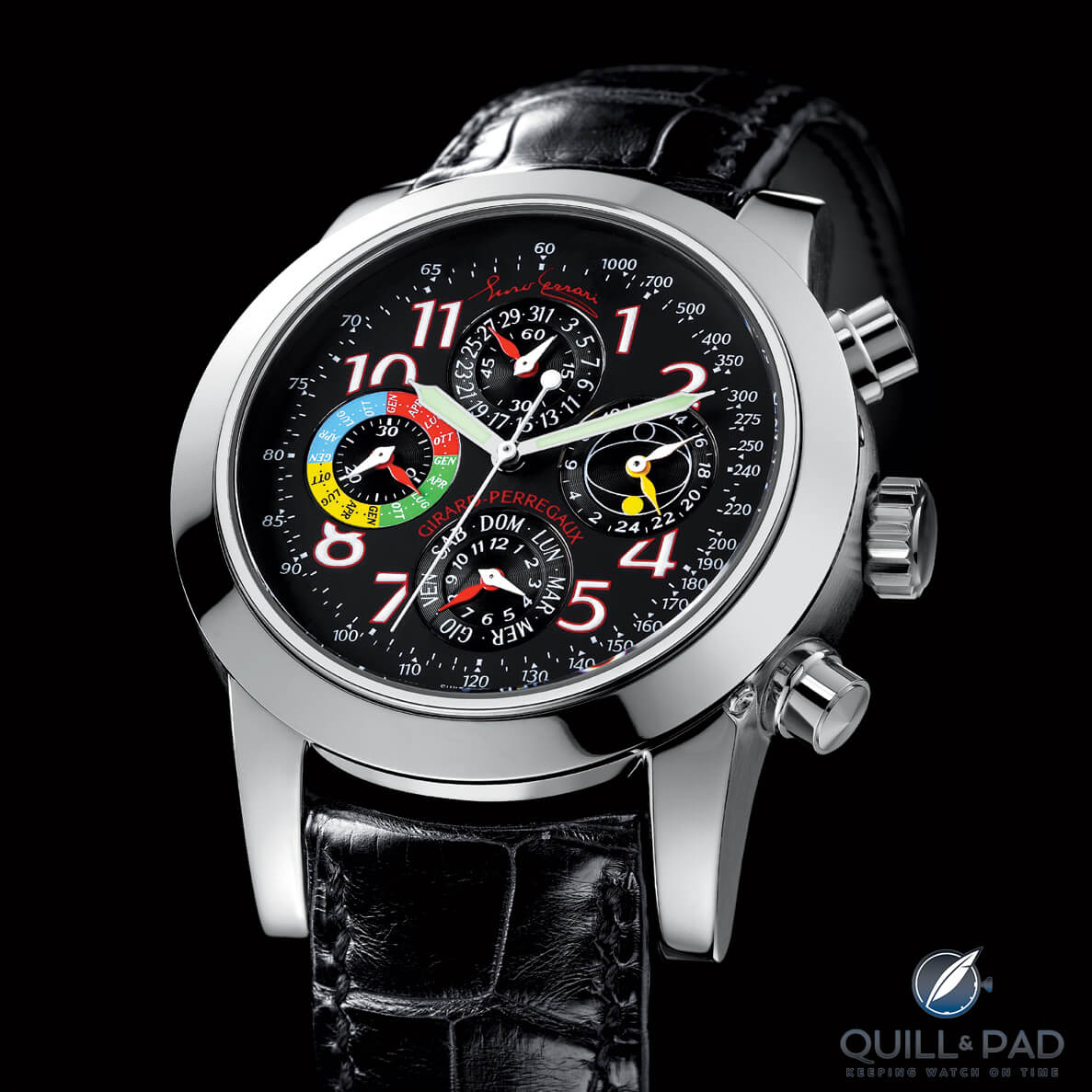
In this non-chronological multipart series called “History of Ferrari Watches,” Elizabeth Doerr takes us through a comprehensive look into the Girard-Perregaux Pour Ferrari collaboration, which took place between 1993 and 2004 and culminated in the Girard-Perregaux Pour Ferrari Tribute to Enzo Ferrari Tourbillon with Three Gold Bridges perpetual calendar chronograph.
 Revolution
Two new takes on the automatic tourbillon by Richard Mille
 Quill & Pad
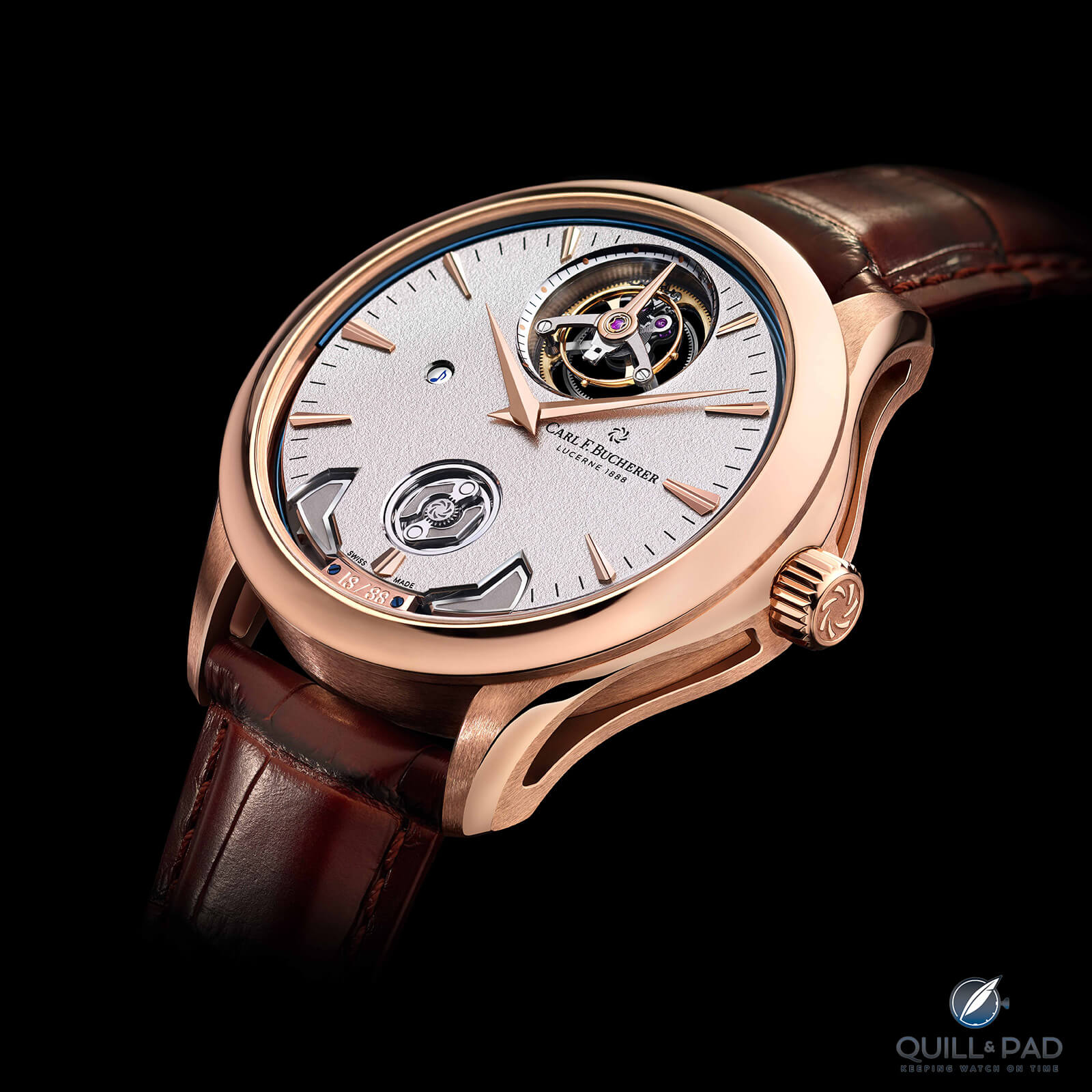
The new Carl F. Bucherer Manero Minute Repeater Symphony features a very cool peripheral winding rotor, but it also has a few more tricks up its sleeve including a tourbillon and a minute repeater. There's also much more here than meets the eye as Joshua Munchow explains.
 Time+Tide
It was the week of events for Time+Tide, even if they were nearly 4000 kilometres apart. Andrew changed timezones flying to Perth for the second Time+Tide Club event of the year so far, spotting a few very nice watches on the wrists of our Western Australian club members. At the same time, I was in … ContinuedThe post FRIDAY WIND DOWN: Events in Sydney, Perth and going hands-on with a funky new ’70s Tissot appeared first on Time+Tide Watches.
 Revolution
The flying carrousel equipped Freak X receives a dose of artistry inspired by naval camouflage and Cubist art.
 SJX Watches
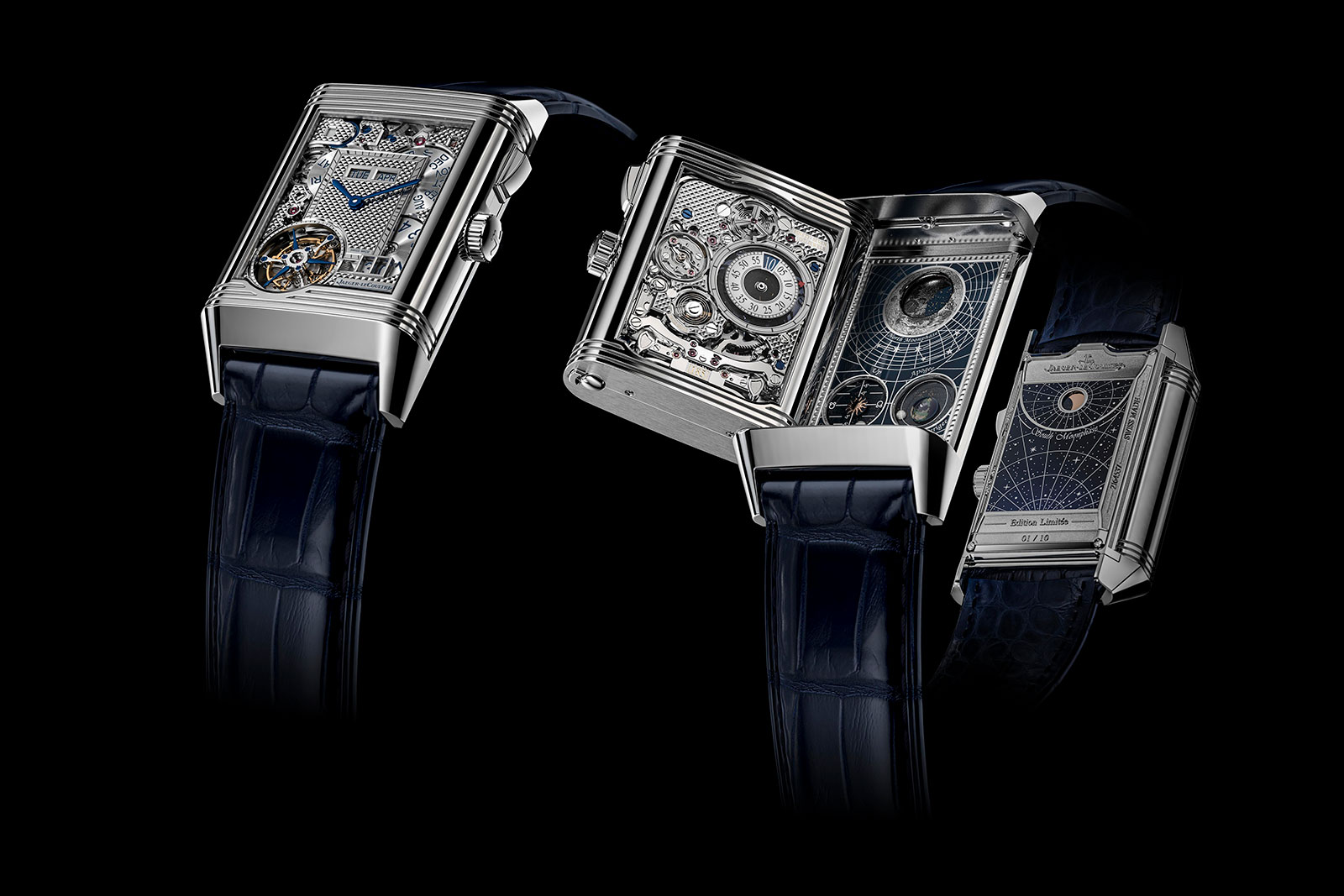
Appropriately for the 90th anniversary of famed reversible wristwatch, Jaeger-LeCoultre (JLC) has debuted the ultimate Reverso. Boasting 11 complications, including a tourbillon, minute repeater, and instantaneous perpetual calendar, the Reverso Hybris Mechanica Calibre 185 Quadriptyque is a monumental wristwatch with four faces and a movement made up of 800 parts. Initial thoughts The Calibre 185 Quadriptyque is smaller than the Reverso Grande Complication à Triptyque – which was so big as to be almost unwearable for most – but still sizeable enough to be clunky. It measures 51.2 mm by 31 mm, while standing 15.15 mm high, making it larger than the biggish Nonantième that was launched at the same time. Granted, the size is necessary for the ultra-complex, four-faced movement. Majority of the complications within the new grand complication can be found in past JLC watches, making the Calibre 185 Quadriptyque something of a greatest-hits compilation for the brand. Impressive as it is, the Calibre 185 feels dated, in the sense that watches with numerous complications stacked up were a “thing” in the 2000s; the Triptyque was launched in 2007 and truly exotic in its day. Now that such watches are fairly common, with many leading brands having their own grand multi-complications, the concept is less impressive, regardless of the technical achievement. It’s also worth pointing out that the watch is elaborately decorated – mainly with Clous de Paris guilloche ...
 SJX Watches
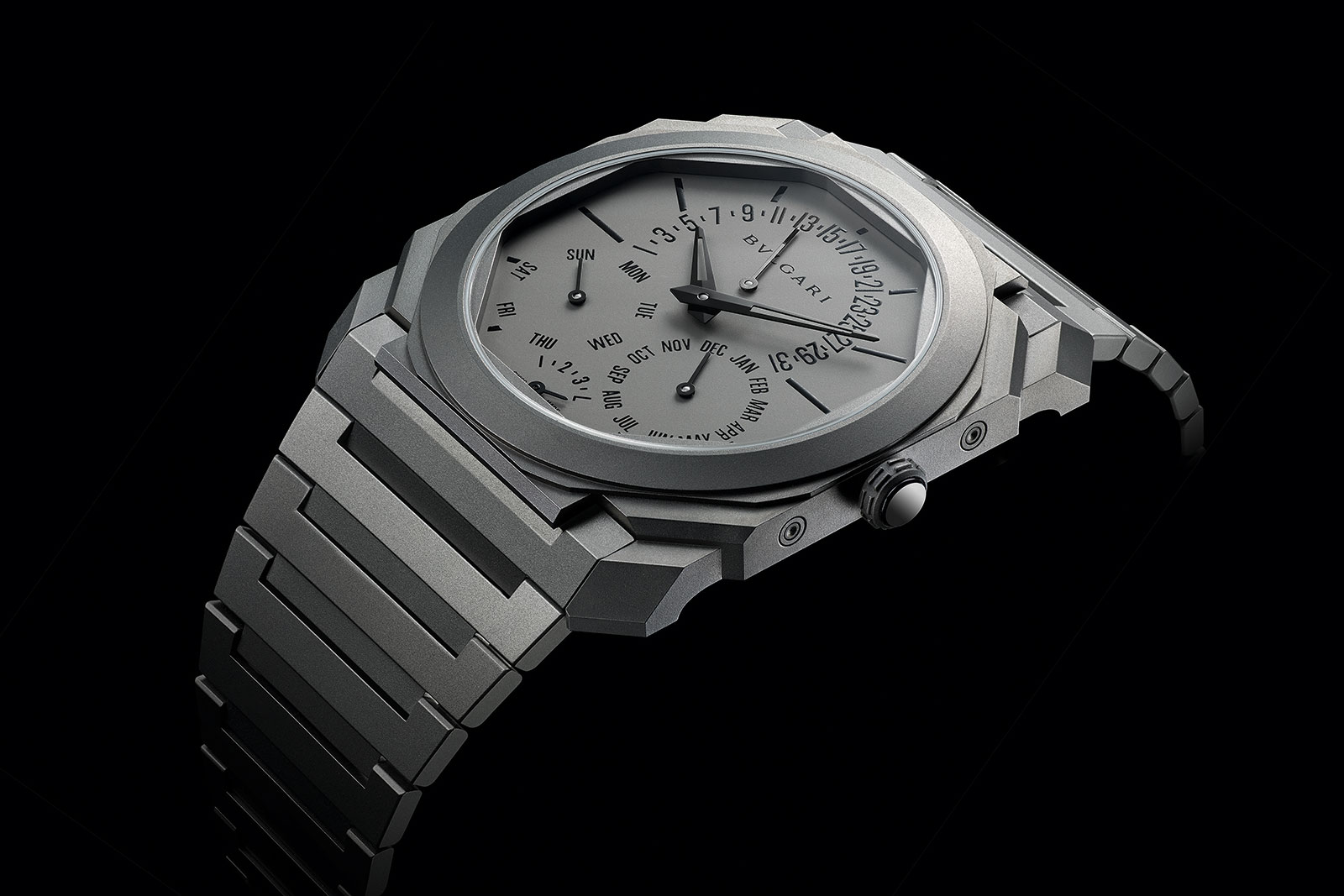
Having notched up records for the thinnest watch in several categories – including tourbillon, chronograph as well as minute repeater – Bulgari is continuing with the perpetual calendar. The Italian jeweller now claims another record for thinness – its seventh – with the Octo Finissimo Perpetual Calendar. Taking the mantle from the Audemars Piguet Royal Oak Perpetual Calendar Ultra-Thin, the new Octo perpetual calendar is just 5.8 mm in its entirety – with a movement only 2.75 mm high. It’ll be offered in the traditional livery of the Octo Finissimo of sandblasted titanium, but unusually also in platinum with an alligator strap. Platinum (left), and titanium Initial thoughts There’s no doubt that Bulgari is perhaps the best at ultra-thin watches – its titles for the thinnest watch in seven categories are testament to that. Yet the brand doesn’t simply rely on its record-setting thinness as a gimmick. Most of its ultra-thin watches are interesting beyond the slimness. The Octo design in its own right is striking. And the perpetual calendar has been executed in a symmetrical, sensible manner. Though the dial is somewhat crowded, it remains legible thanks to the large sub-dials and minimalist aesthetic. It’s a well-designed watch and perhaps the most stylish perpetual calendar on the market. The calendar includes a retrograde date in an arc on the upper half of the dial, with the day and month just below, and the leap year in a tiny display at the base Be...
 SJX Watches
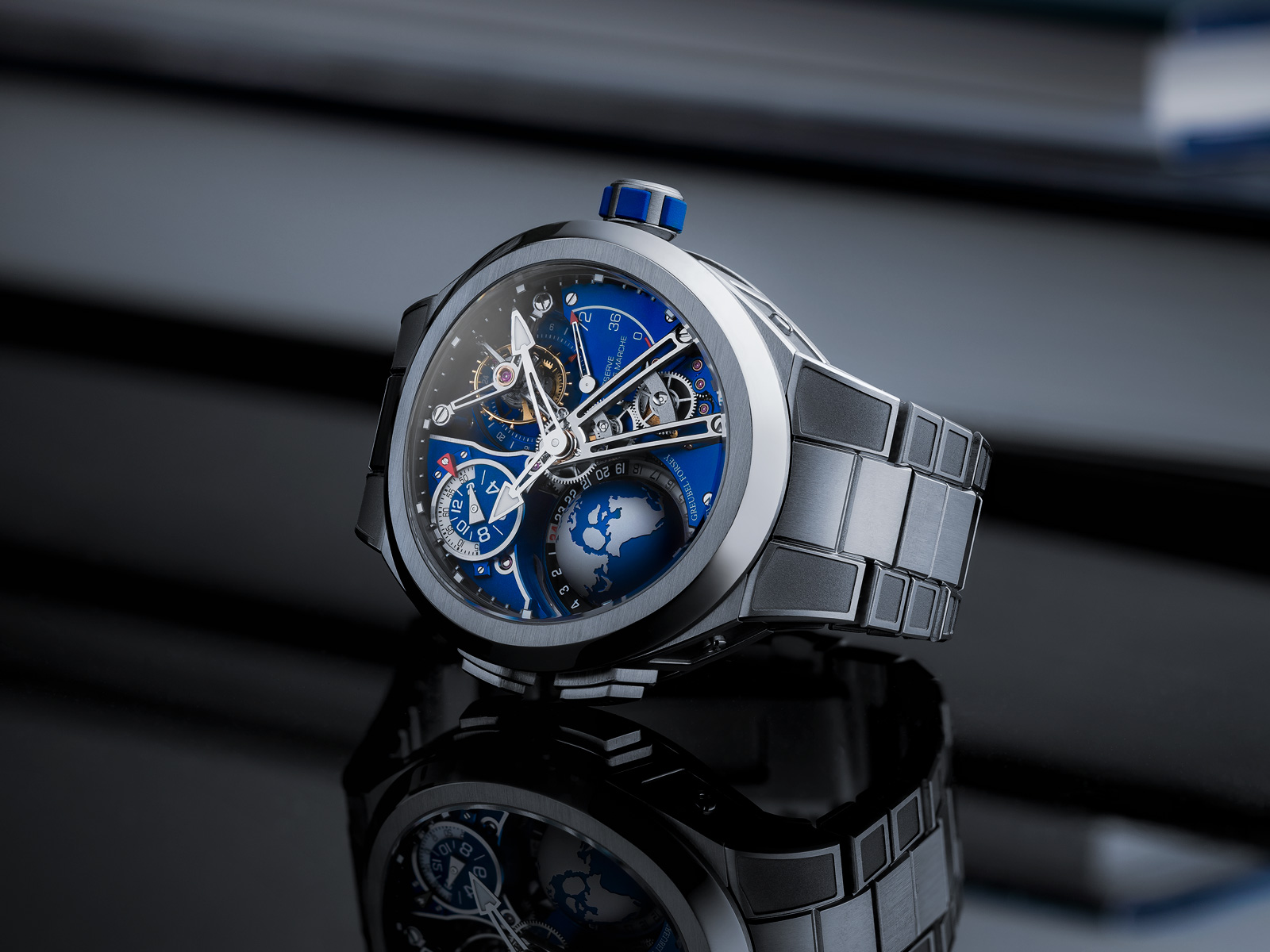
Best known for its ultra-exotic tourbillons, Greubel Forsey builds movements with unique three-dimensionality and exemplary finishing. In 2019, it started applying its unusual brand of watchmaking to the sports watch for the first time with the GMT Sport – a world time with inclined tourbillon – and now follows up with the new GMT Sport that has the same movement but the addition of an integrated titanium bracelet, a first for the brand. Initial thoughts Although the integrated-bracelet sports watch may be new for Greubel Forsey, it’s now a familiar and fashionable concept. Greubel Forsey is relatively late to the party – beyond veterans like the Royal Oak and Nautilus, such sports watches are already found at almost every price point, from Citizen’s US$2,000 Series 8 to the Lange Odysseus. That said, the GMT Sport is noteworthy for one simple reason – it’s the most complicated, and perhaps best finished, integrated-bracelet sports watch money can buy, combining a world time, dual time, and an inclined tourbillon. So while Greubel Forsey took its time with the concept, the brand certainly executed it in style. I much prefer the new GMT Sport over the earlier version. For one, the bezel is now plain, devoid of the tiny, relief inscriptions that are something of a Greubel Forsey signature but don’t quite work on a sports watch. The dial is now entirely in blue, giving the new GMT Sport a more modern look (that admittedly is also fashionable given the popular...
 Deployant
TAG adds to their successful chronograph tourbillon line with a new Heuer 02T model with a solid blue dial. blue ceramic bezel in titanium case and bracelet.
 Time+Tide
It’s no secret we are rather enamoured with the Bulgari Octo Finissimo and calling it a micro-technological marvel of the new century would not be overselling it. Following our article on Bulgari’s latest chapter of one-upmanship – where they managed to somehow engineer a tourbillon to fit the already infinitessimally optimised space inside the angular … ContinuedThe post RECOMMEND READING: The insane craftsmanship in the Bulgari Octo Finissimo revealed by The Naked Watchmaker appeared first on Time+Tide Watches.
 SJX Watches
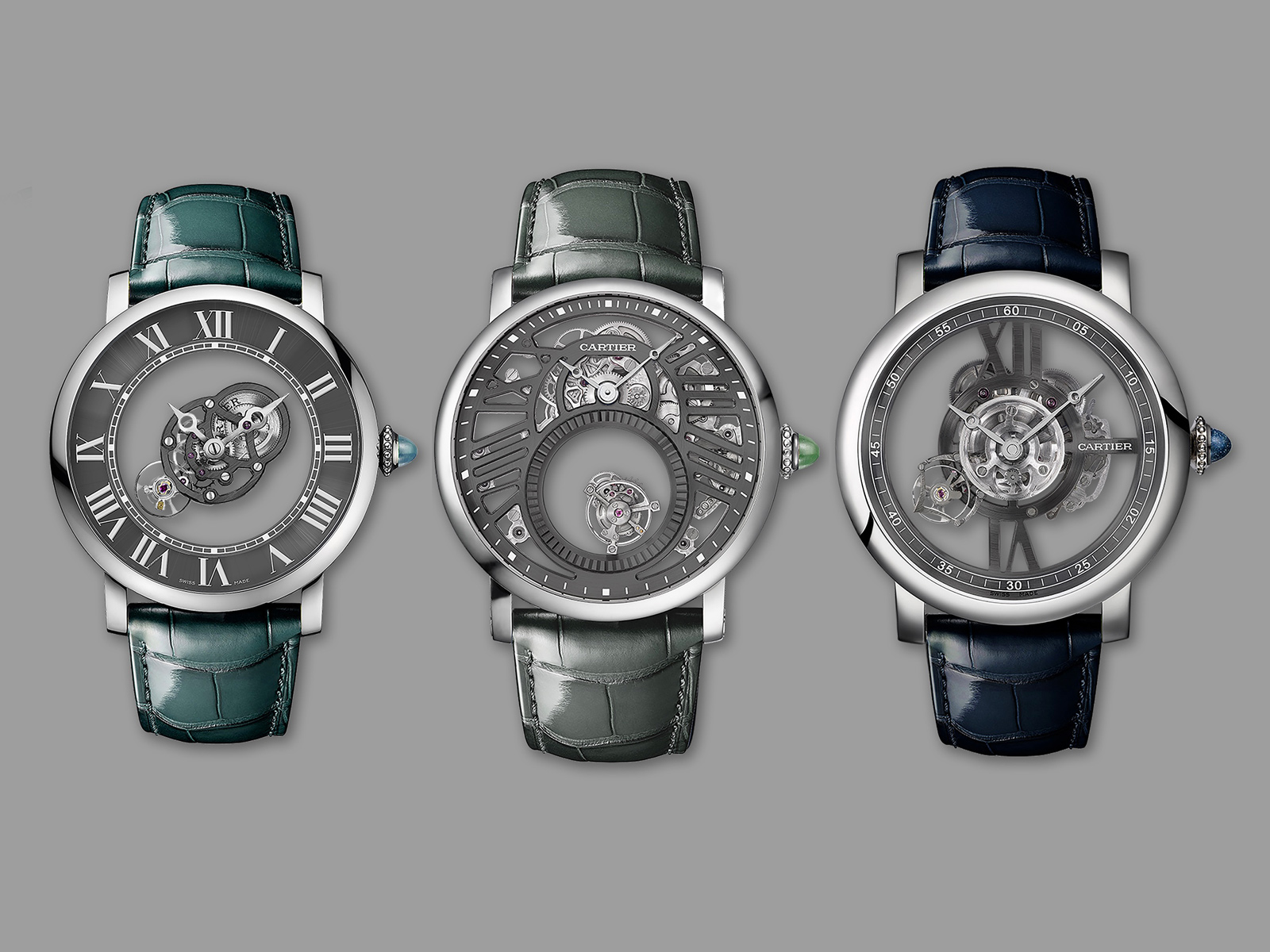
Although the most classic – and simple – of Cartier wristwatches designs have lately enjoyed resurgent popularity, the jeweller still makes exceptionally complicated watches. Its latest is not one but is a three-part set, the Fine Watchmaking Rotonde de Cartier Precious “Icons Set”. All three watches are amongst the brand’s flagship complications that go beyond design and into the realm of ingenious and unusual watchmaking. And the trio share a common theme of the mysterious display and tourbillon, fusing an optic illusion that is synonymous with Cartier and the rotating regulator. The Skeleton Mysterious Double Tourbillon with a jade cabochon on the crown Initial thoughts Each of the watches in the set is special for how it combines Cartier’s traditional design with intriguing technical details. Although the movements are modern in style – the skeleton bridges have a dark grey finish – the designs remain classical. And the streamlined, “mysterious” construction of the movements belie the complexity of their construction. But the movements are unquestionably appealing, both in concept and execution. A curious mind might ponder how the mechanics seemingly float within the case. It’s an old trick that makes it seem like there is no connection between the movement and the case, but a good one that still has visual impact. While the details of the watches are elegant, all of them are huge. The smallest of the trio is 43.5 mm in diameter, and the larges...
 Time+Tide
Yes, maybe you use your watch mostly to tell the time. But how about the joys of using a good old chronograph to time your bike ride to the shops. Or flying into another time zone with a GMT on your wrist (it will happen again one day). Let’s tempt you with the best value … ContinuedThe post Is your life complicated enough? These are the best value watch complications that deliver serious bang for your buck appeared first on Time+Tide Watches.
 Time+Tide
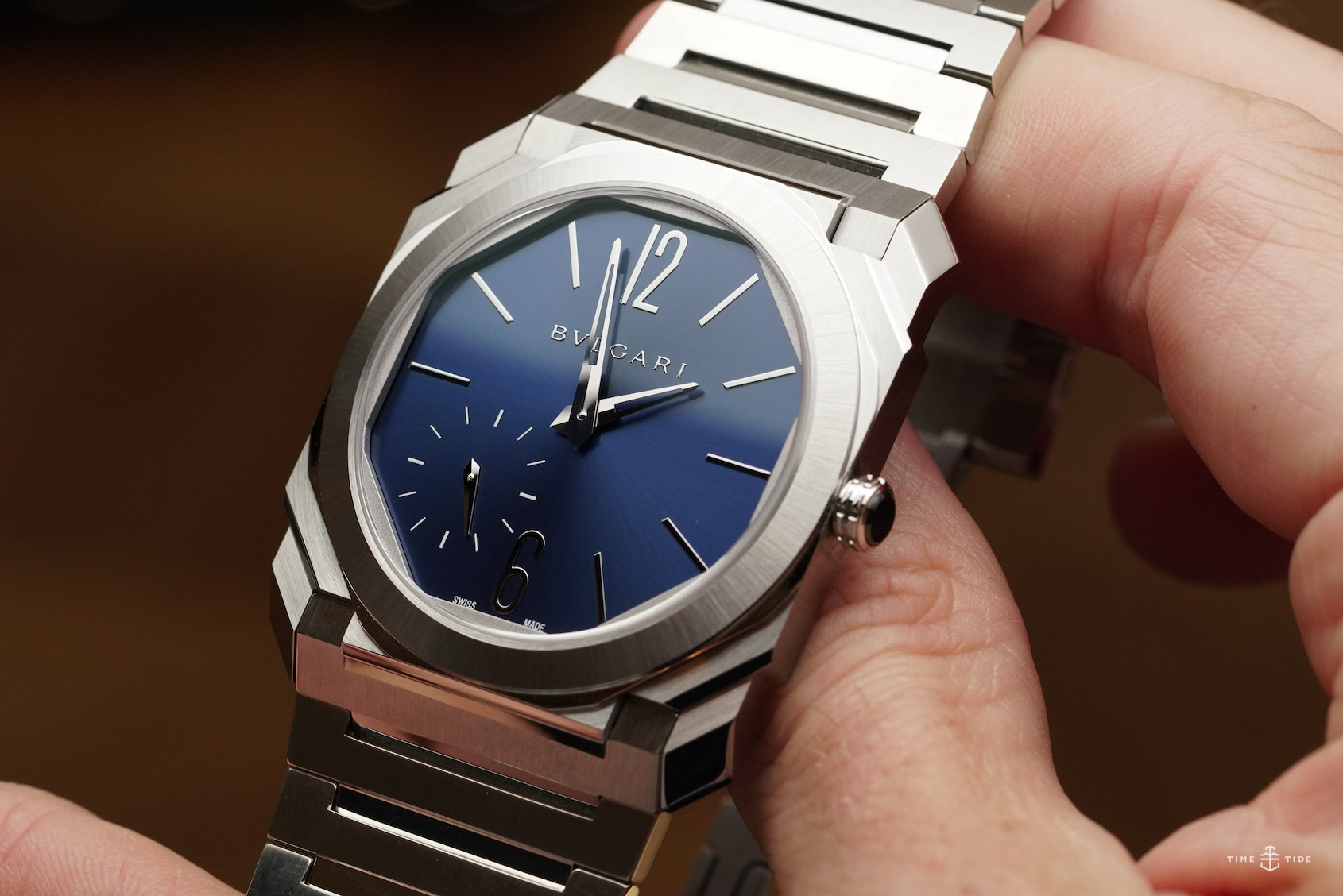
Fast-forward 30 years into the future. You’re being chauffeured by your robot valet in your flying car on a trip to buy another pair of underpants made from laser-beam holograms (you’re not entirely convinced by them, but your cyborg wife thinks they look sexy). But when you glance at the watch on your wrist – … ContinuedThe post How the Bulgari Octo Finissimo accidentally became the most contemporary watch of modern times appeared first on Time+Tide Watches.
 Time+Tide
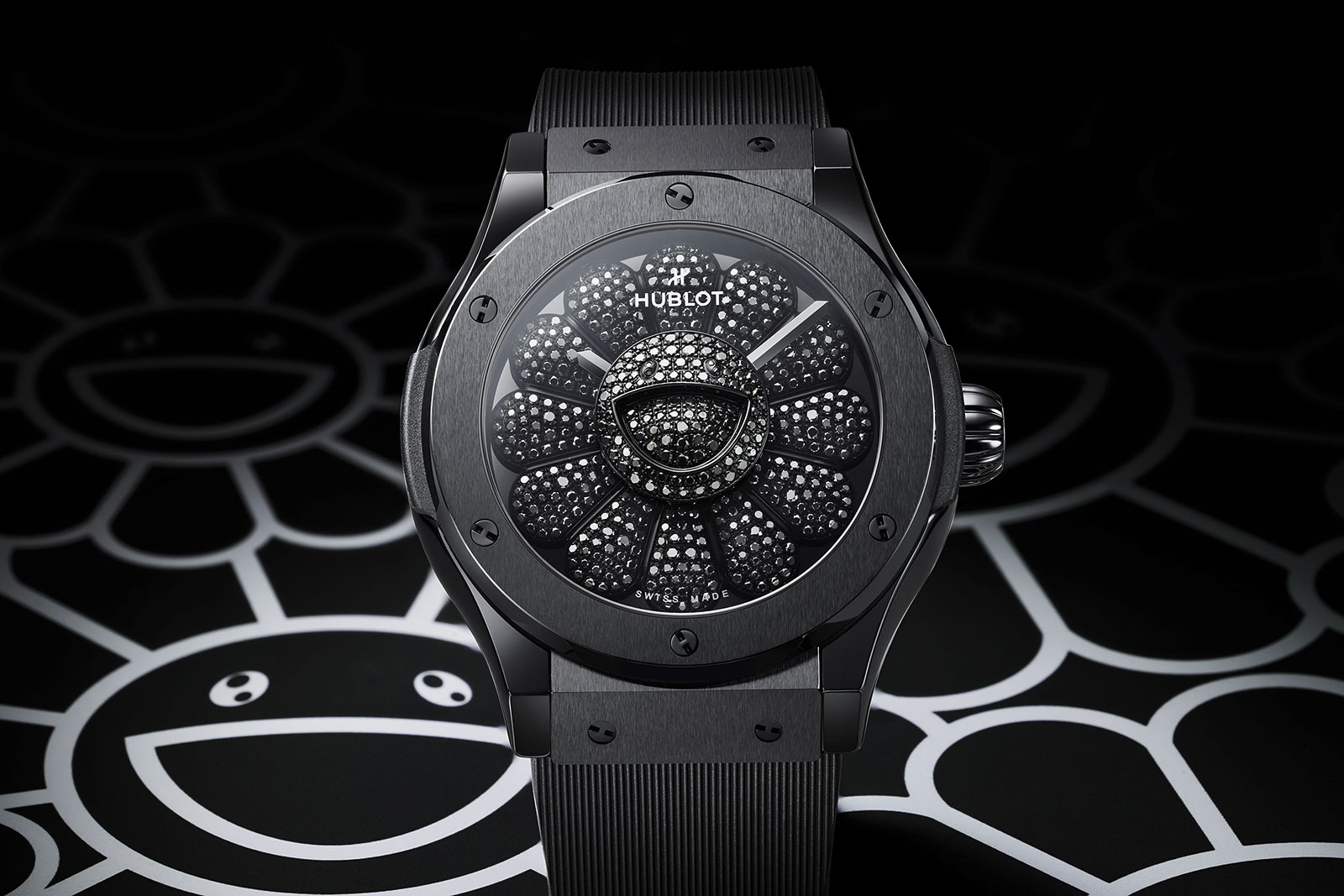
It’s late January, which means it’s LVMH Watch Week, an event where the watch departments of Bulgari, Hublot and Zenith unleash their new novelties for the year. For Hublot in 2021, we enjoyed a number of updates to existing collections, including a totally new colour of sapphire crystal in the Big Bang Tourbillon Automatic, a … ContinuedThe post INTRODUCING: Put the petal to the metal with the Hublot Classic Fusion Takashi Murakami All Black appeared first on Time+Tide Watches.
 Revolution
Bulgari rings in LVMH Watch Week 2021 with new sport-inspired Octo Finissimo watches and the Roma Octo Carillon Tourbillon.
 Time+Tide
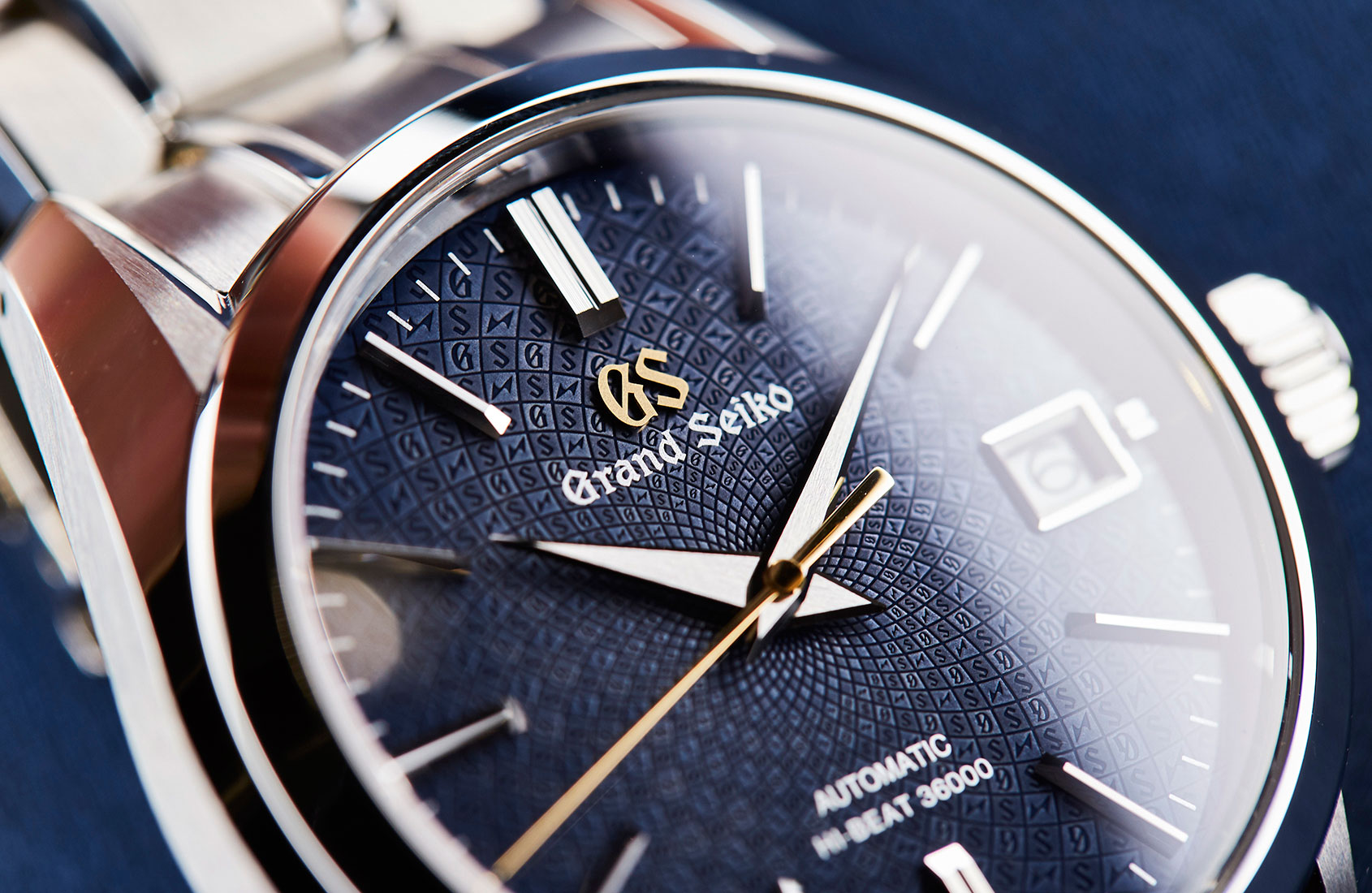
OK, honesty time: I’m a self-confessed dial obsessive. Don’t get me wrong, the hypnotic ballet of a tourbillon still tugs my heartstrings so much it hurts. But have that poking out of a masterful dial and I’m ready to sell my BMW. The dial is the face, the first impression and, for me, the absolute … ContinuedThe post Our sexiest watch shots of 2020 plus five tips to take better watch pics yourself appeared first on Time+Tide Watches.
 Time+Tide
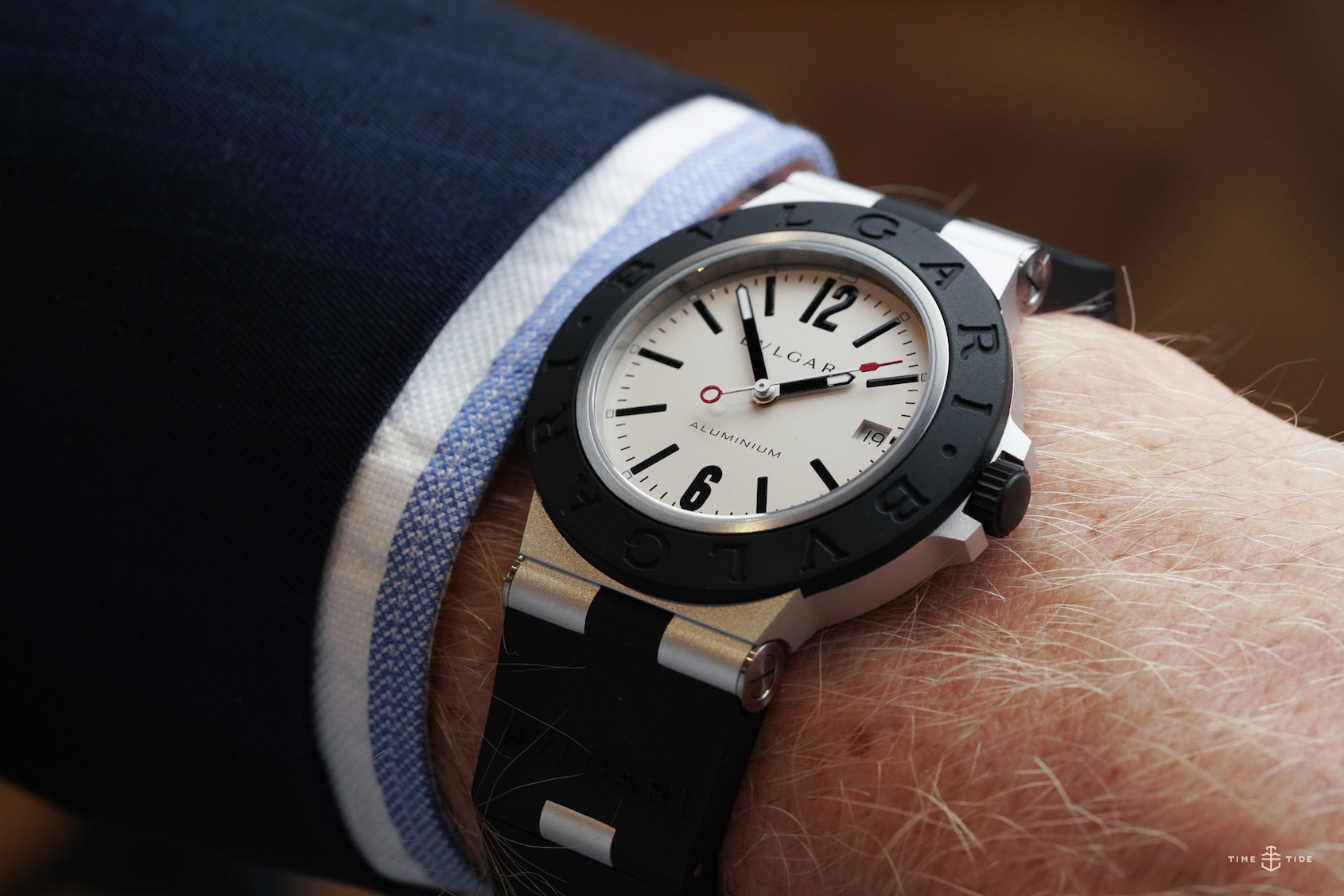
Editor’s note: There’s no doubt that the Bulgari watch department is having a very big year. So far they have got hearts racing with the launch of their record-breaking Octo Finissimo Tourbillon Chronograph Skeleton Automatic, the new Octo Finissimo in satin-polished steel, and then their remarkable High-End Watch novelties. And if that wasn’t enough, there … ContinuedThe post The Bulgari Aluminium collection shows lightweight watches can pack a heavy punch appeared first on Time+Tide Watches.
 SJX Watches
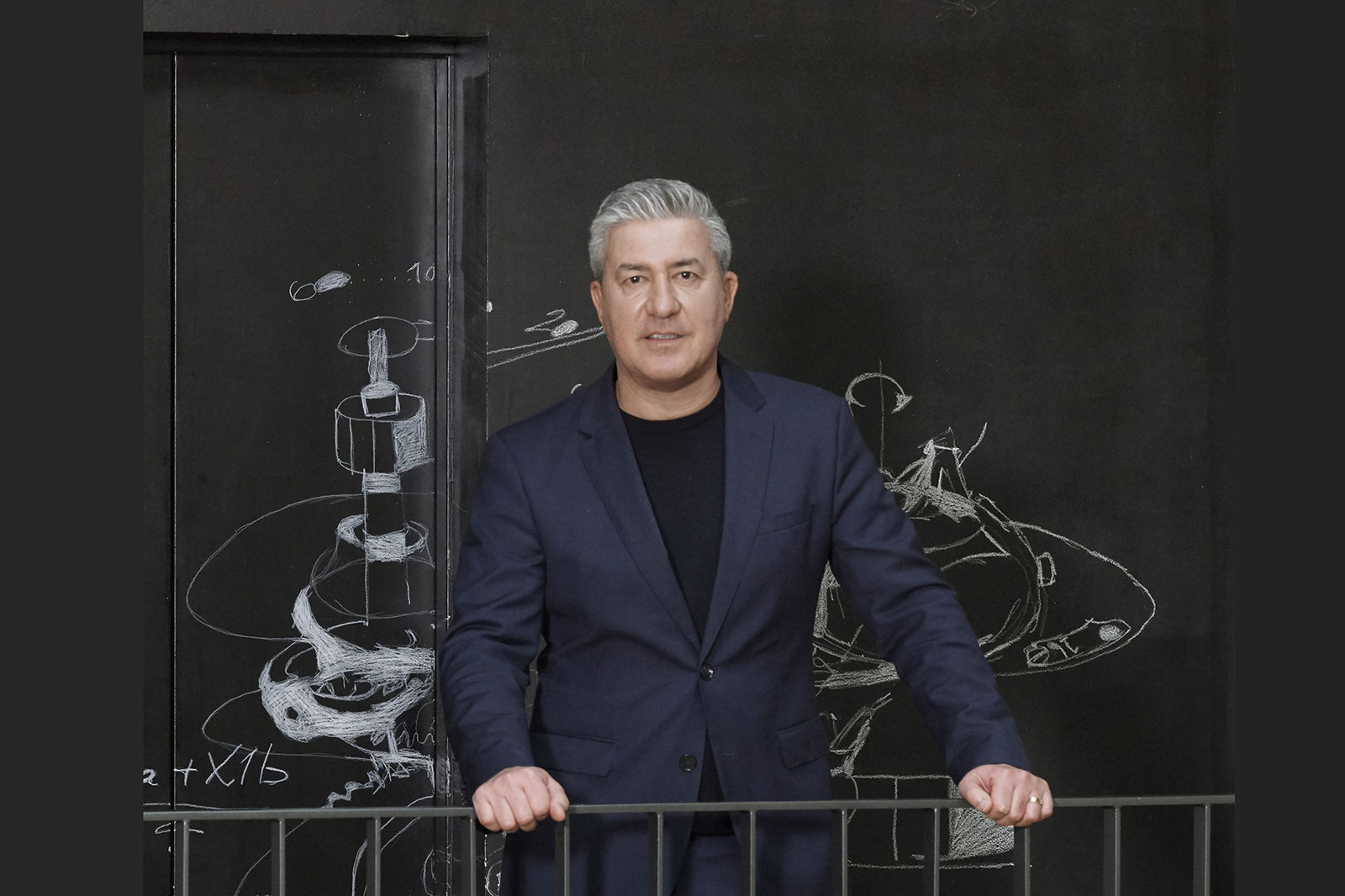
Perhaps the leading maker of avant-garde and exotic tourbillon wristwatches, Greubel Forsey has just appointed Antonio Calce as chief executive officer. Having spent the early years of his career at Panerai in product development and then overseeing its manufacture, Mr Calce then became chief executive of Corum, and subsequently Eterna as well. Next came the top job at Girard-Perregaux, where he had a mandate to turn it around but departed before his plans gained traction. At Greubel Forsey, Mr Calce succeeds Fabrice Deschanel, who became chief executive officer of Greubel Forsey in 2017 after several years as head of Audemars Piguet’s complications subsidiary Renaud & Papi. The recently-launched Greubel Forsey GMT Sport Commenting in the announcement, Robert Greubel stated, “I am convinced Antonio will carry the Greubel Forsey signature a long way, all the while respecting our values and our DNA.” Mr Greubel remains chairman of the board, while fellow cofounder Stephen Forsey continues in his role helming product and movement development. While the role of Greubel Forsey chief executive was historically one and the same with the top job at Complitime, Greubel Forsey’s sister company that builds complications for other brands, Mr Calce’s new role is only overseeing Greubel Forsey.
 SJX Watches
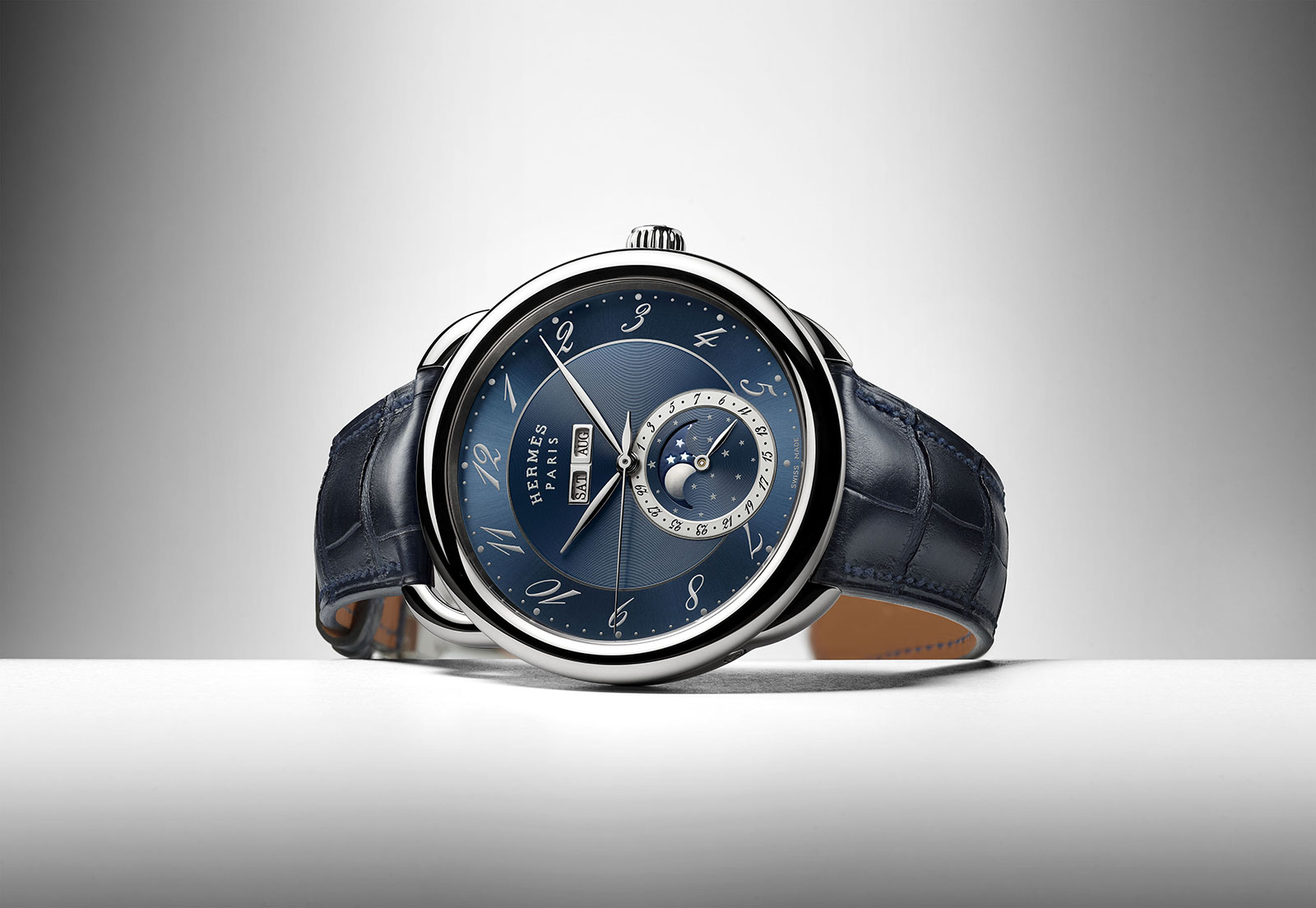
Possibly the most iconic Hermès watch, the asymmetrical Arceau has been used to showcase complications like the recent minute repeater with tourbillon or the quirky L’Heure de la Lune. A counterpoint to that is the Arceau Grande Lune, an accessible watch that still preserves the design elements that make the Arceau so recognisable. With its latest facelift, the Arceau Grande Lune now has an altogether more modern aesthetic with a two-tone, metallic blue dial. Initial thoughts The new Grande Lune is a handsome watch with all the typical design cues of the Arceau, from the Breguet-style numerals for both the hours and date to the stirrup-inspired case. At the same time, the Arceau Grande Lune is a more formal-looking watch than recent releases from Hermes that had a bit more whimsy, most notably the Arceau Pocket Aaaaargh! Minute Repeater. The distinctive lugs are larger on the top While the “XL”, 43 mm Arceau case is ideal for showing off uber-complications, it is perhaps a shade too large for a more formal watch, especially one with an old-school triple-calendar and moon phase. It’s still a good looking watch, with a style that is more contemporary than earlier iterations of the model. The dial is dressed in a fashionable colour, but has plenty of visual interest thanks to the clever use of varied surface textures that give it a subtle two-tone finish. And despite the case design being over 40 years old, the Arceau still feels current thanks to its subtle asy...
 Time+Tide
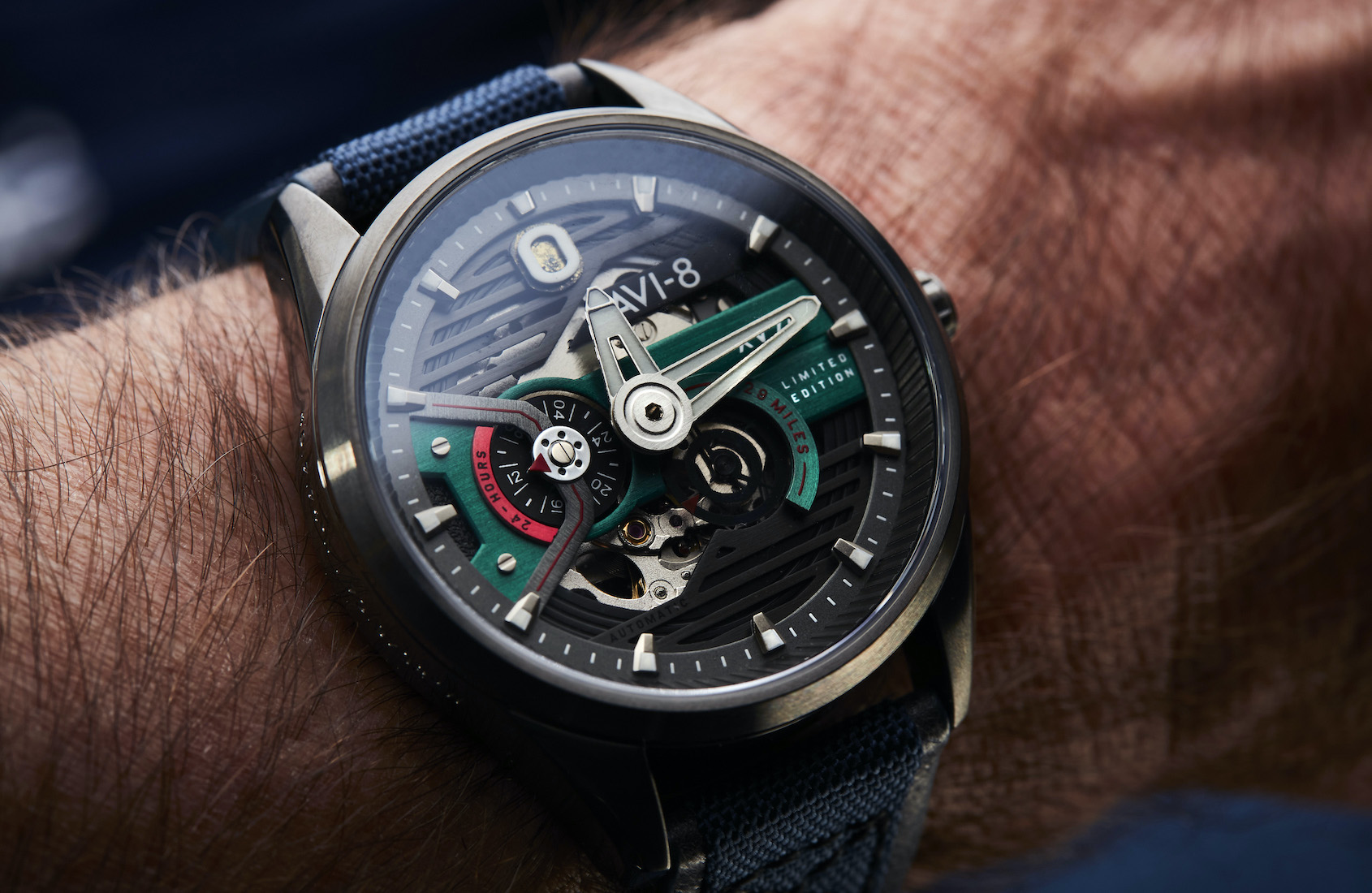
More than 50 years ago, an aviation team led by pilot Tom Lecky-Thompson embarked on what they referred to as codename “Blue Nylon”. So, what was the top-secret project? The group was making preparations for Lecky-Thompson’s attempt to enter the Transatlantic Air Race in 1969, which involved pilots flying from London all the way to … ContinuedThe post HANDS-ON: The AVI-8 Hawker Harrier Blue Nylon is a tempting sub-$500 throwdown for aviation fans appeared first on Time+Tide Watches.
 SJX Watches
One of the earliest entrants in the luxury-sports watches segment, the Girard-Perragaux Laureato made its debut in 1975. But the model did not remain in production consistently, and only recently enjoyed a revival with a relaunch in 2017. With its relaunch, the Laureato line up now includes complications like the tourbillon, exotic case materials like sapphire, and onyx stone dials. The latest is perhaps the most striking version to date: the Laureato Ghost that was designed in collaboration with Bamford Watch Department (BWD) and rendered entirely in white ceramic. George Bamford with the Laureato Ghost Founded by George Bamford, the fashion and watch entrepreneur who’s the son of construction-equipment tycoon Sir Anthony Bamford, BWD started out as an after-market customiser of Rolex watches and swiftly became one of the preeminent brands in that niche. But BWD has since evolved into an officially-endorsed customiser (albeit not by Rolex), having received the stamp of approval from various watchmakers, most notably from the brands owned by LVMH, namely TAG Heuer and Zenith. The Laureato Ghost is the first collaboration between BWD and Girard-Perregaux (GP), having been rolled out for the 45th anniversary of the Laureato, explaining the small, 45-piece run. Initial thoughts Named Ghost because of its singular colour palette, the watch is attractive in its simplicity. BWD’s house style is often characterised by an all-black finish, making the all-white Laureato Ghos...
 SJX Watches
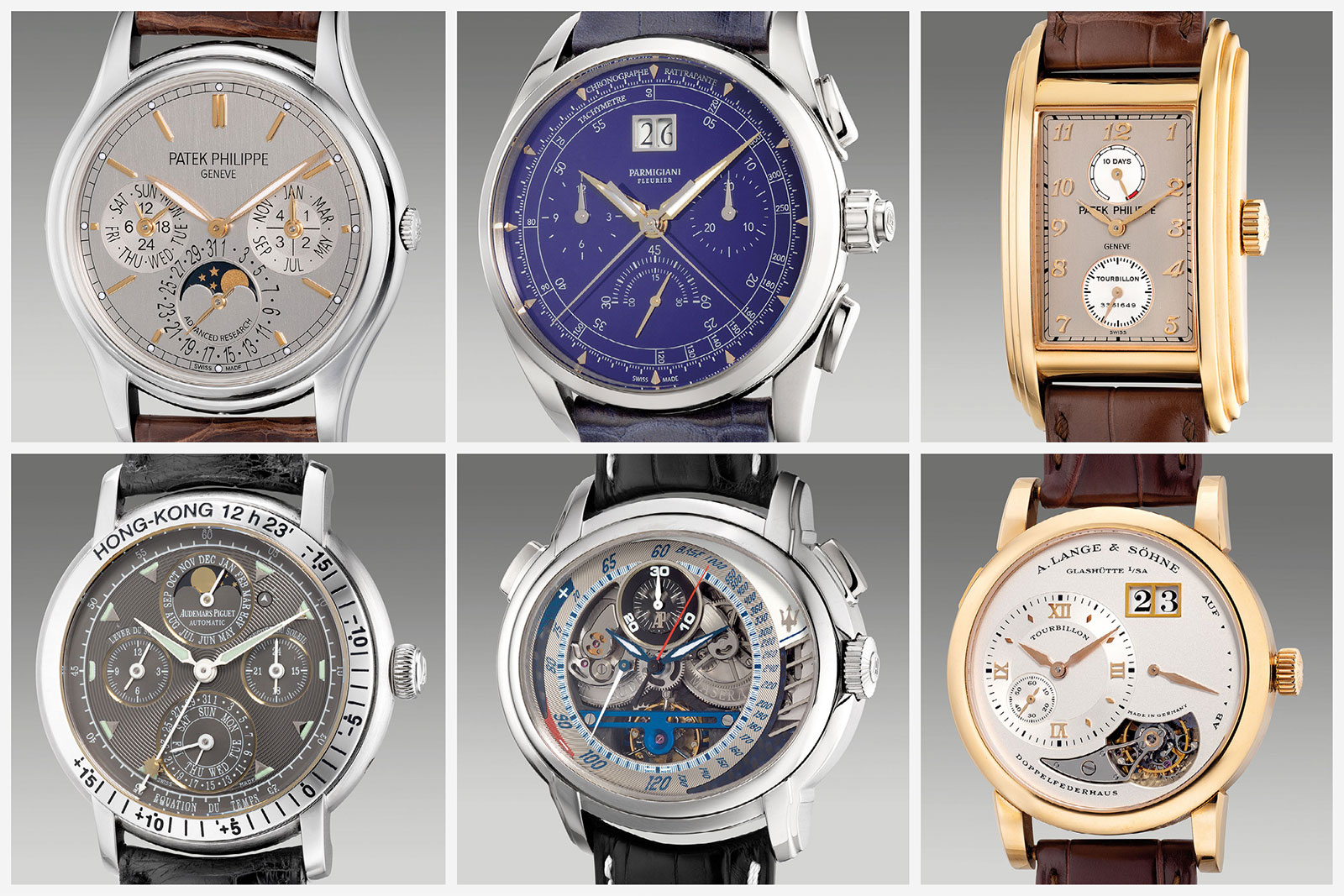
Taking place on Sunday, November 29, Phillips’ Hong Kong auction spans a wide range, including independent watchmaking, which includes the S.U.F Sarpaneva x Moomin prototype, as well as value buys (including a surprisingly well-priced Grand Lange 1 Luna Mundi). Here’s a look at a few standouts amongst the complicated watches on offer – particularly watches that might go under the radar. It includes the Patek Philippe ref. 5101R 10-Day Tourbillon powered by an under-appreciated but gorgeous movement inspired by the brand’s observatory chronometers, along with the Audemars Piguet MC12, one of the coolest complications in any shape but an octagon to leave Le Brassus. The auction happens on November 29 at the JW Marriott Hotel Hong Kong, while the catalogue and online bidding are available on Phillips.com. Lot 850 – Audemars Piguet Millenary MC12 Despite being overwhelmingly famous for its octagonal luxury-sports watch, Audemars Piguet has produced highly-complicated watches in other case styles. Amongst the most interesting is the Millenary C12, a cutting-edge watch when it was launched in 2006 and inspired by the Maserati MC12 supercar (which was based on the Ferrari Enzo). Equipped with a hand-wind chronograph movement with a tourbillon, the MC12 is unusual both mechanically and aesthetically. Most obvious is the oval case with a “bullhead” chronograph layout, with the pushers at one and 11 o’clock, which is usually associated with auto-racing chrono...
 Two Broke Watch Snobs
Kaz is flying solo and you know what that means..? We're taking another deep dive into the history of Soviet Watches! This installment focuses on the impact that French watch maker LIP had on SU horology. If you feel like going full neckbeard on Soviet Watches with Kaz then tune in and enjoy.
 SJX Watches
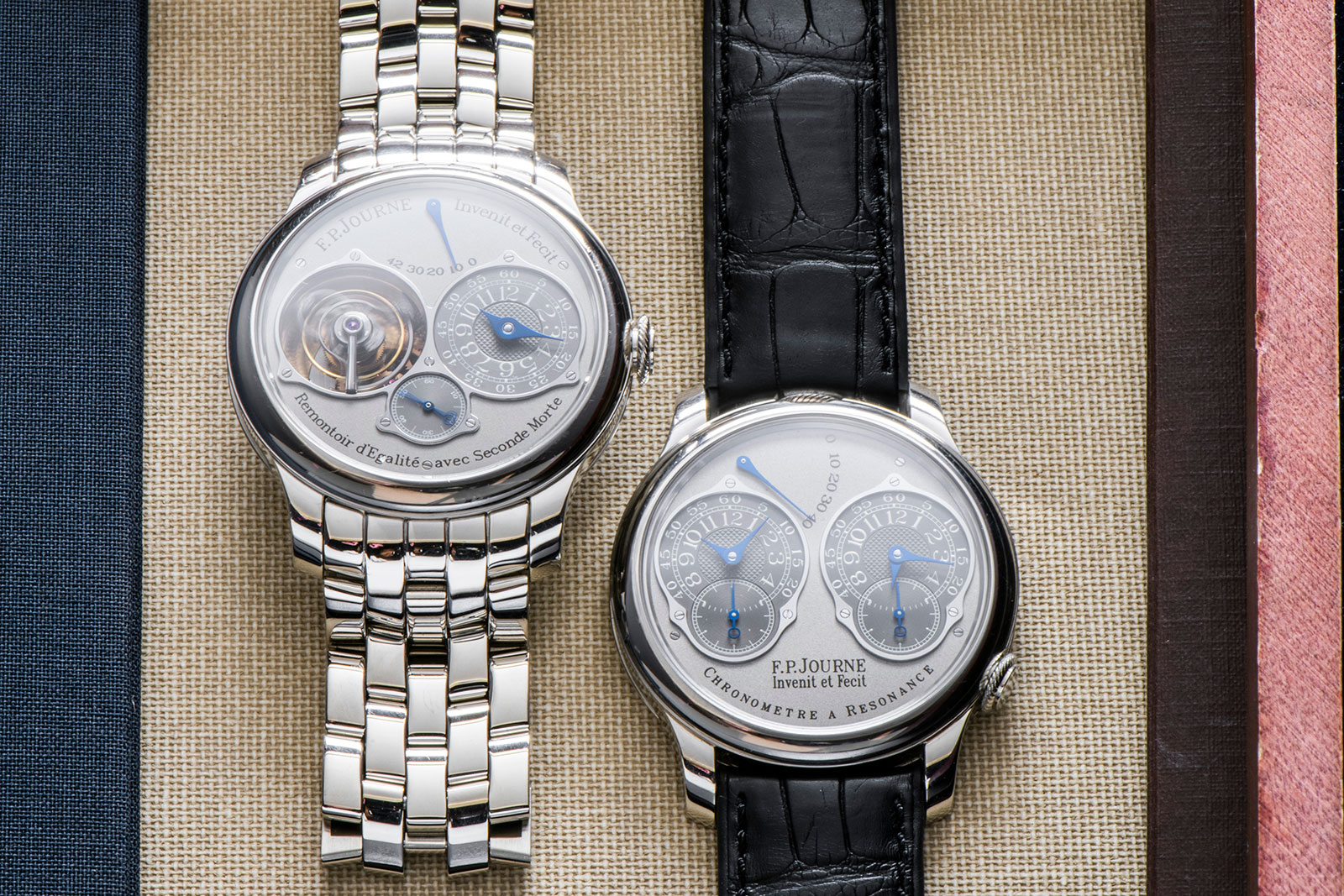
Once a leading auctioneer for high-end pocket watches in the late 20th century, Zurich-based Ineichen is now also specialised in wristwatches. Its upcoming November auction includes an intriguing pair of F.P. Journe watches – a Resonance and tourbillon naturally – both from limited editions made for Pisa Orologeria. Located in Milan, Pisa is one of Italy’s more storied watch retailers. It is a family-run business and prominent enough that a good number of watch brands – ranging from A. Lange & Söhne to Vacheron Constantin – once created limited editions exclusively for Pisa, back when brands used to do such things. Both F.P. Journe watches going on the block at Ineichen were limited editions made for Pisa, and share the same uncommon silver-and-grey livery. The first watch is a Resonance made to mark the 60th anniversary of Pisa in 2000. It has standard 40 mm case and rose gold movement, with an extremely unusual dial. Made of white gold, the dial features dark grey, ruthenium-plated sub-dials with white markings, an unusual combination then and still today. Only five were made, and only one has been sold publicly before – another example sold for 106,250 Swiss francs at Christie’s Geneva in 2015, which was then a record price. The market for F.P. Journe watches has since taken a turbocharged ride upwards, which means the 2015 price will probably be left in the distance at next month’s auction. The next Pisa edition was a follow up to the Resonance. It’...
 Quill & Pad
The Mechanical Exception category features men’s or ladies’ watches with a special mechanism such as an innovative or sophisticated display, an automaton, a belt-driven movement, a striking or other acoustic function, or any other original and/or exceptional horological concept. And we surely have an intriguing set of finalists in the Mechanical Exception category this year: everything from a tumbling triple-axis tourbillon to an electronically controlled hybrid timepiece to a paper-thin mechanical watch and an automaton minutely replicating a 16-cylinder engine. And even more!
Question, suggestion, or just want to say hi? Drop a note.