Watch brandsWatch wikiWatch videosVariousWatch calendarSaved articles
PopularRolexOmegaPatek PhilippeAudemars PiguetTudorGrand SeikoCartierSeikoIWCTAG HeuerBreitlingJaeger-LeCoultreA. Lange & SohneZenith
WristBuzzWatch WikiFlying Tourbillon
🌀 Complication · Invented 1920

Flying Tourbillon

A <a href="/watch-wiki/tourbillon/">tourbillon</a> held only from below, with no upper bridge

A modification of Breguet's 1801 tourbillon that eliminates the upper bridge, so the entire rotating cage is visible from above with nothing obscuring it. Invented by Alfred Helwig at the German Watchmaking School at Glashütte in 1920. Visually the most spectacular tourbillon variant.

InventorAlfred Helwig, 1920
SchoolDeutsche Uhrmacherschule Glashütte
Vs. classicalNo upper bridge
Typical cageSteel or titanium
CategoryTourbillon variant
WristBuzz Articles297
Flying Tourbillon

Photo: Monochrome · 6 days ago

1920First Built
GlashütteOrigin
60sClassical Rotation
360°Visible Cage
297WristBuzz Articles

The Flying Tourbillon Story

The classical tourbillon, patented by Abraham-Louis Breguet in 1801, holds its rotating cage between two bridges, one below and one above. The upper bridge crosses the visible face of the cage, and partially obscures the view of the mechanism when viewed through the dial. For most of the 19th century this was not a problem, because tourbillons were hidden under pocket-watch dials. When the tourbillon moved to the wristwatch in the late 20th century and manufacturers began cutting dial apertures to show the complication, the upper bridge became a visual obstruction.

Alfred Helwig, a master watchmaker at the Deutsche Uhrmacherschule Glashütte (German Watchmaking School in Glashütte, Saxony), solved the problem in 1920. Helwig engineered the cage to be held only from below, suspended on a single bearing with no upper support, so the cage appears to float. The mechanical challenge is isochronism: without the upper bridge, the cage is less stable on its axis, and the lower bearing must carry both radial and axial loads. Helwig's solution used a reinforced lower bridge and a tightly-tolerated single bearing. His students produced prototypes through the 1920s and 1930s; series production did not begin until the post-war German and Swiss revival of haute horlogerie in the 1960s.

The flying tourbillon is now the dominant variant in modern wristwatch watchmaking. Most contemporary tourbillons, including all A. Lange & Söhne tourbillons (Cabaret Tourbillon, Pour le Mérite, Tourbograph), Glashütte Original's entire tourbillon range, Cartier Astroregulateur, Breguet's modern Classique Double Tourbillon, and Hublot's MP-series flying tourbillons, use Helwig's architecture. The classical two-bridge tourbillon is now the minority position, retained mainly by purists such as F.P. Journe and some Vacheron Constantin Patrimony models.

Modern flying-tourbillon variants include the multi-axis flying tourbillon (Greubel Forsey, Jaeger-LeCoultre Gyrotourbillon), where the cage rotates on two or three axes simultaneously; the central flying tourbillon (Audemars Piguet RD#1), placed at the centre of the dial instead of at 6 o'clock; and the peripheral flying tourbillon where the cage is driven by a peripheral ring rather than a central pinion. Each reduces further the mechanical supports visible to the eye and pushes the "floating cage" effect closer to its logical limit.

Notable Flying Tourbillons

1994 · A. Lange & Söhne
Pour le Mérite Tourbillon
Ref. 701.005

The watch that revived the flying tourbillon for serious haute horlogerie. Fusee-and-chain constant force, platinum case, 50 pieces in platinum. The Lange statement watch that re-established Glashütte watchmaking after the Berlin Wall fell.

Revival
2004 · Greubel Forsey
Double Tourbillon 30°
DT 30°

Two flying tourbillon cages, inner cage inclined 30°, rotating at different speeds. A geometric solution to "what happens at every possible wrist angle". ~€600,000 new; secondary market €1M+.

Multi-Axis
2008 · Jaeger-LeCoultre
Gyrotourbillon 2
Cal. 174

Two flying tourbillon cages on perpendicular axes, one full rotation on outer axis in 60s, inner axis in 24s. Constant-force mechanism. The second of JLC's Gyrotourbillon series.

Spherical
2018 · Audemars Piguet
Royal Oak Concept RD#1
Supersonnerie

Central flying tourbillon combined with a Supersonnerie minute repeater. The cage sits at the centre of the dial, replacing the seconds hand. Part of AP's Code 11.59 and Royal Oak Concept experimentation.

Central Cage
2021 · Breguet
Classique Double Tourbillon Quai de l'Horloge
Ref. 5345

Two flying tourbillon cages geared together, rotating once every 12 hours in opposite directions, forming the hour hand by the cages' own rotation. An engraved Paris map on the case back shows the Breguet atelier.

Twin Cages
2023 · Hublot
MP-10 Flying Tourbillon
HUB9013

A flying tourbillon inclined at 35° combined with a linear power reserve display. 54-part cage weighing 0.30g, one of the lightest tourbillon cages in production.

Inclined Cage

Latest Flying Tourbillon News

Hodinkee
Introducing: The Vanguart Orb Pink Ceramic (Live Pics)
Yesterday
Monochrome
First Look – Vanguart Releases New Versions of the Orb Flying Tourbillon in Coloured Ceramic
6 days ago
Monochrome
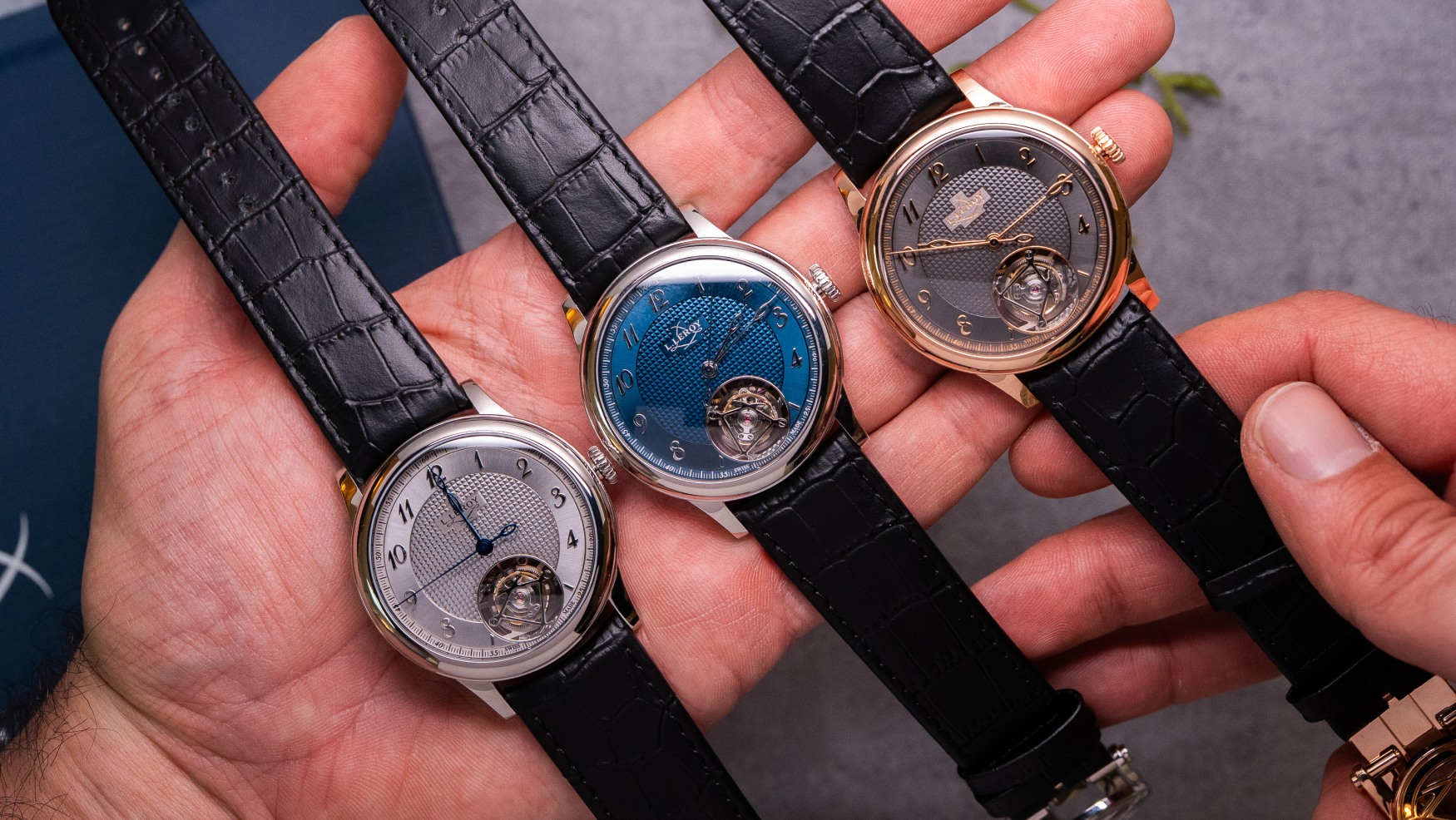
First Look – Chapter Two in the Revival of L. Leroy with the New Elyor Flying Tourbillon
Apr 24, 2026
Monochrome
Introducing – H. Moser & Cie Endeavour Minute Repeater Cylindrical Tourbillon Skeleton
Apr 18, 2026
Monochrome
Introducing – Bulgari Octo Finissimo Ultra Tourbillon Platinum
Apr 16, 2026
Deployant
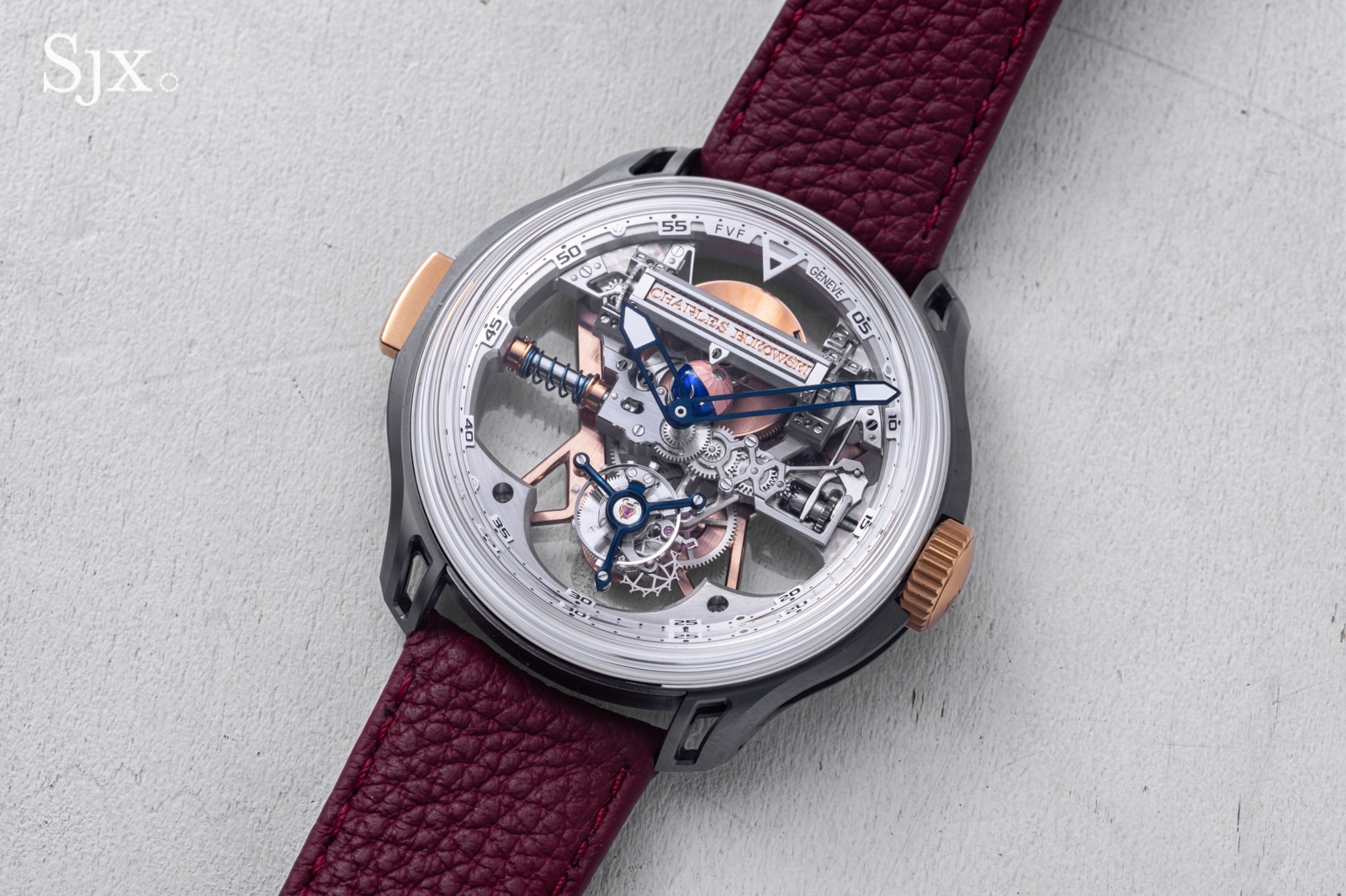
New: Vanguart Orb Ceramic Titanium and Ceramic Rose Gold
Apr 6, 2026
SJX Watches
Louis Vuitton’s Arty Automata is Psychedelic Metiers d’Art
Apr 6, 2026
Deployant
New: Kerbedanz Maxima GR8 39mm
Apr 4, 2026
SJX Watches
Ferdinand Berthoud, Inverted: The Chronomètre FB 2TV.1
Apr 3, 2026
Monochrome
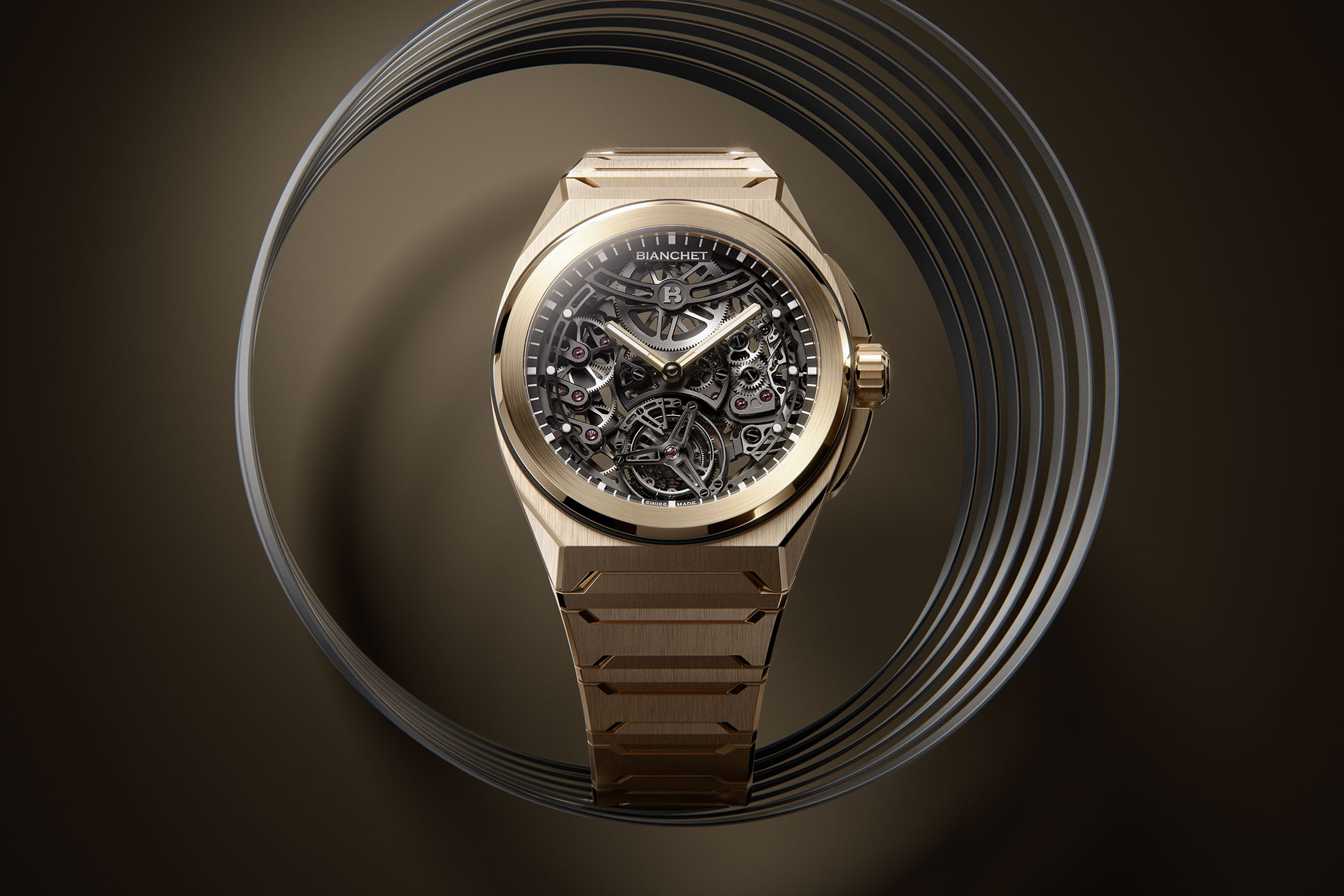
First Look – The Bianchet Ultrafino Rotondo Flying Tourbillon
Mar 30, 2026
Monochrome
First Look – The New David Candaux DC6 Night Forest, In Carbon and Titanium
Mar 30, 2026
Monochrome
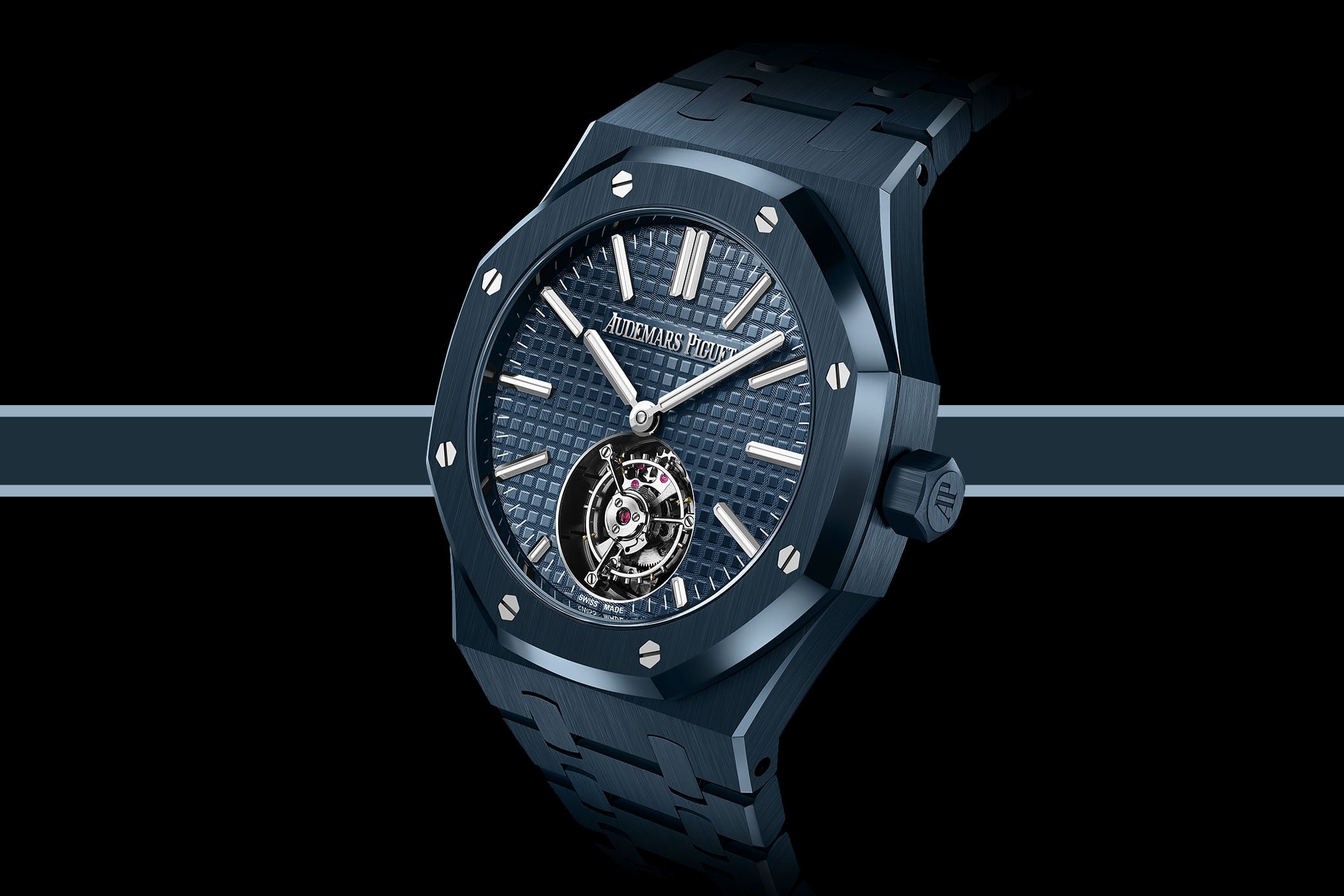
Introducing – The Code 11.59 by Audemars Piguet Selfwinding Flying Tourbillon
Feb 4, 2026
View all 297 articles

Learn More