Hermès as a serious watchmaker
Hermès has made watches since 1912 (originally as accessories to its leather goods) but only became a serious mechanical watchmaker in the 1990s-2000s through investments in Vaucher Manufacture Fleurier (acquired 25% in 2006) and Joseph Erard SA (case and dial supplier). The Cal. H1837, designed in 2009 and launched in 2012 with the Arceau 40, was Hermès' first proprietary automatic engine and the foundation of its mechanical line. The "1837" in the name refers to the year Thierry Hermès founded the house.
Vaucher base, Hermès finish
The H1837 is built on a Vaucher base movement, the Vaucher 5401, which is also (in slightly different finishing) supplied to Parmigiani Fleurier and a handful of other brands. Hermès specifies its own finishing: a circular "H" pattern on the rotor (a discreet brand signature visible through the sapphire back), Côtes de Genève on the bridges, polished bevels, and blued screws. The rotor is decorated with the Hermès "H" but the underlying mechanical architecture is identical to other Vaucher 5401 derivatives, which is to say excellent: this is one of the better mid-tier in-house automatic bases in modern Swiss watchmaking.
In the Slim d'Hermès and Arceau
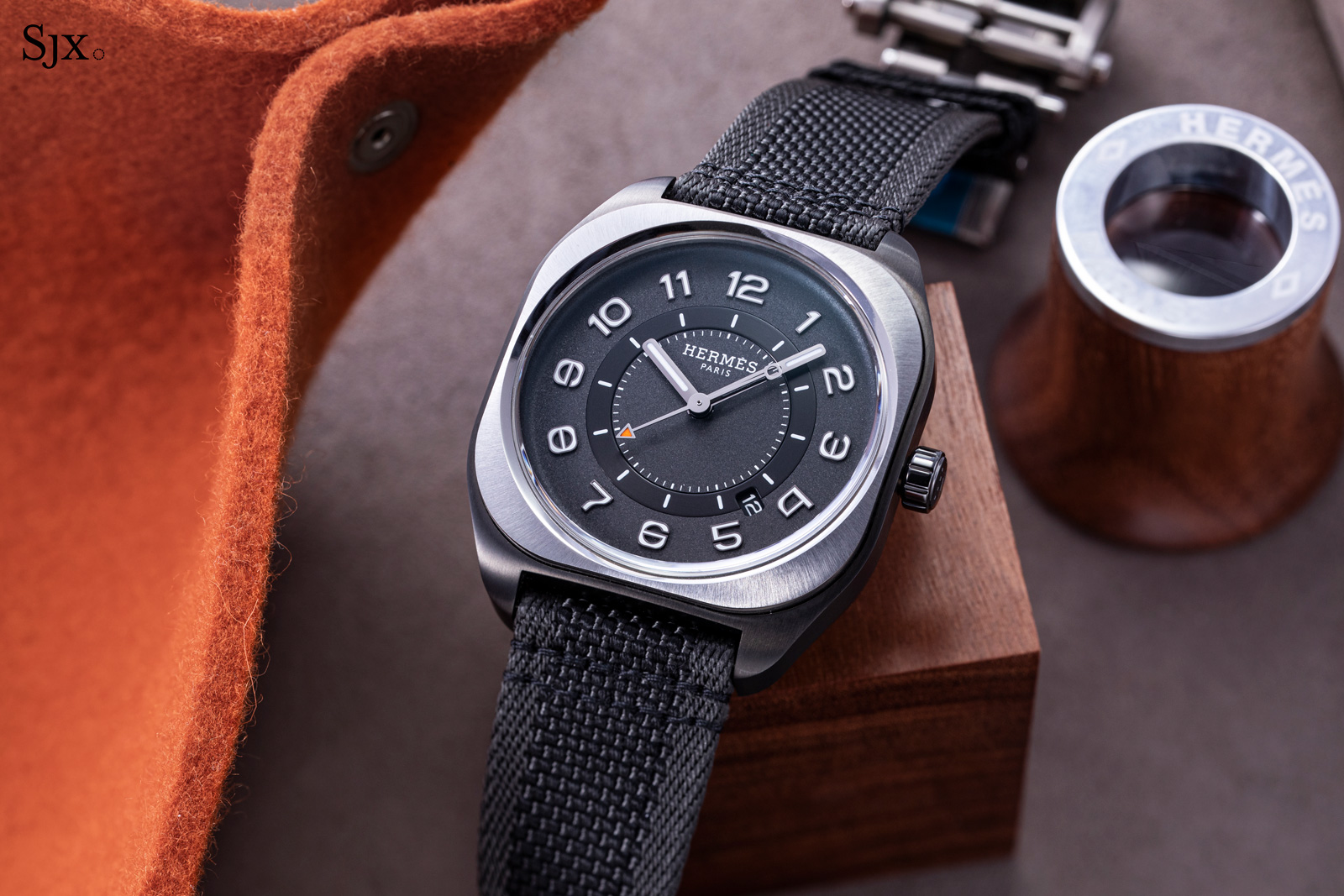
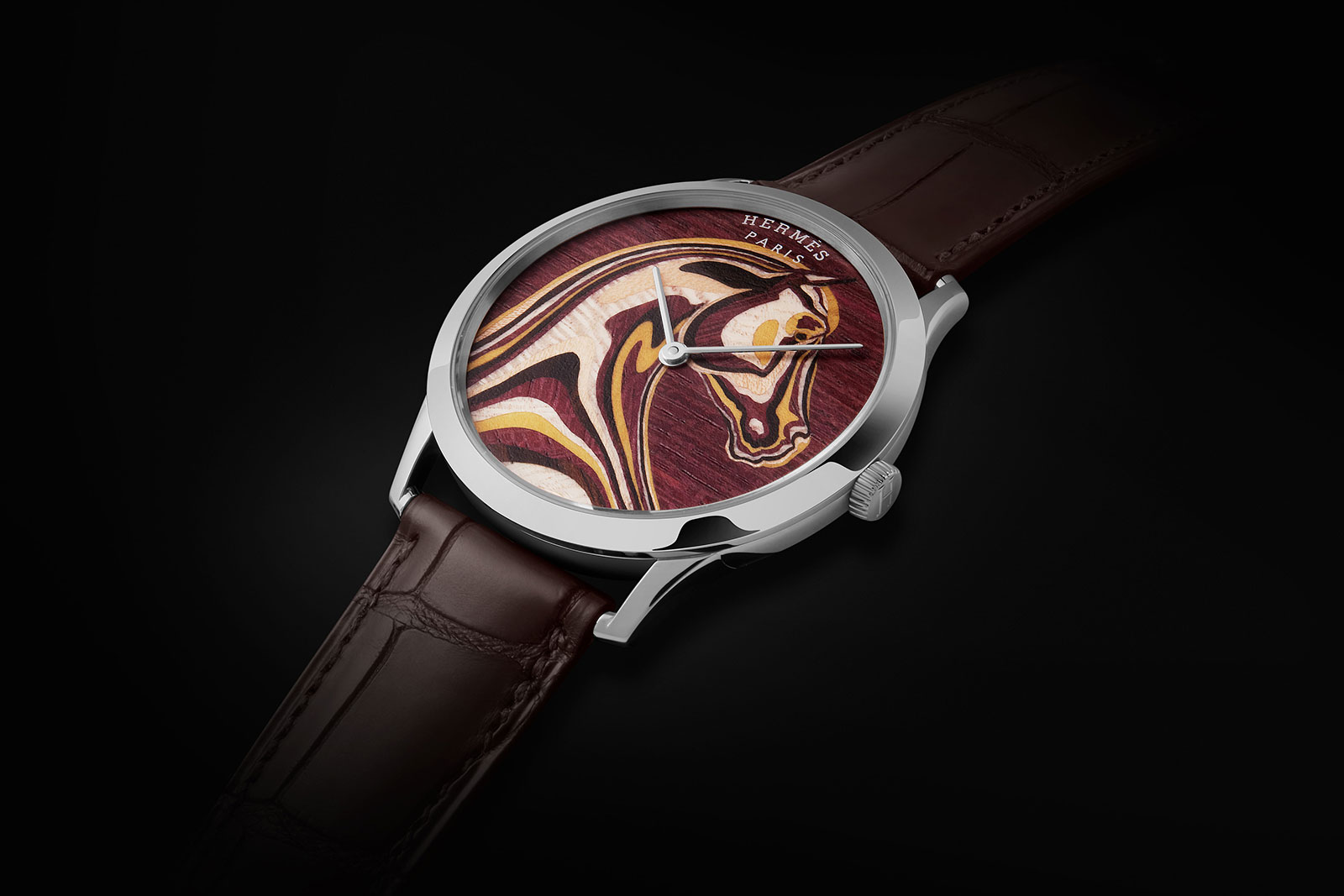
The H1837 powers the standard Arceau Automatique 40 mm, the Slim d'Hermès 39.5 mm dress watch (the brand's primary modern collection), the Cape Cod Tonneau automatic, and selected limited editions. In each case the dial is the Hermès interpretation: clean, unfussy, often with the brand's signature italicised numerals (designed for Hermès by graphic designer Philippe Apeloig for the Slim d'Hermès), printed indices, and minimal date window placement. The watches retail from USD 5,000-8,000 in steel, USD 15,000-25,000 in gold.
Variants in the family
Hermès has expanded the H18xx family across complications: H1912 (small seconds variant), H1925 (manual-wind for ultra-thin dress models), H1928 (with day/date module), and the H1837 GMT for travel-time variants. The base architecture stays the same; complications and dial layouts vary. The Hermès Le Temps Suspendu module (a dial complication that "stops" the time on demand) is built on top of the H1837 base.
Where it sits
The H1837 is one of the more interesting "quiet luxury" in-house movements in modern Swiss watchmaking. Hermès does not market the caliber heavily; the watch buyer is typically a Hermès-orange-box customer first and a watch enthusiast second. But for collectors who do look at the movement, the H1837 represents serious mechanical pedigree at retail prices well below comparable in-house calibers from Patek, Vacheron, or AP. The Slim d'Hermès in particular has a quiet following among watch enthusiasts who appreciate Apeloig's dial design and the Vaucher-base reliability.

Comments
No comments yet, be the first to weigh in.