How an 80-hour reserve happened
The classic ETA 2824-2 runs at 28,800 vph with a 38-42 hour power reserve. By 2012 the marketing battle in entry-level mechanical watches had shifted from beat rate to power reserve: brands wanted 80-hour movements to compete against premium long-reserve calibers from Patek, AP, and the higher-tier in-house manufactures. ETA's solution was the C07.111 (marketed as Powermatic 80 in Tissot, Cal. 80 in Mido, H-10 in Hamilton, etc.): keep the 2824 platform, but reduce the beat rate to 21,600 vph and redesign the mainspring barrel to deliver more torque over a longer period.
What's the trade-off?
The 21,600 vph beat rate (down from 28,800) is the main concession. The seconds hand ticks 6 times per second instead of 8, slightly more visible "stutter" on the dial. Theoretical timekeeping precision is also slightly reduced (lower beat = less averaging of disturbance), though practical accuracy in normal wear is comparable. The trade is widely considered worth it: 80 hours means the watch survives a long weekend off the wrist without restarting, a meaningful feature for modern users who own multiple watches.
Nivachron upgrade
In 2018-2020 ETA began equipping the C07.111 with the Nivachron hairspring, a titanium-alloy spring that is highly resistant to magnetic fields (handles ~15× more magnetic exposure than a standard Nivarox spring). This was rolled out across Powermatic 80, H-10, and other Swatch group long-reserve calibers as a standard upgrade. Modern Tissot and Hamilton watches with the Powermatic 80 / H-10 are therefore now better equipped against the magnetism of phones, laptops, and tablets that an everyday user encounters.
Brands and watches
The Powermatic 80 architecture lives across Swatch Group brands under different marketing names:
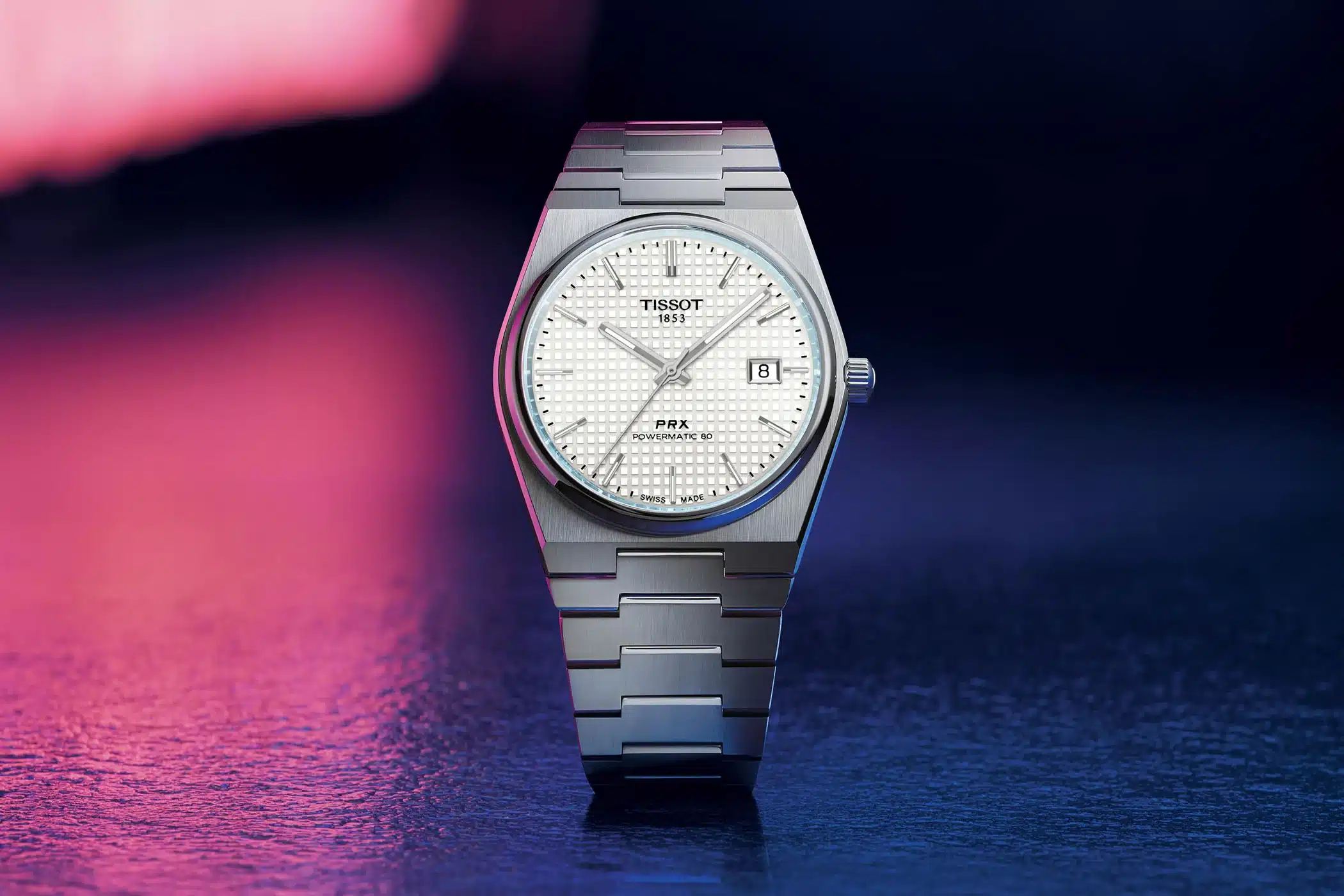
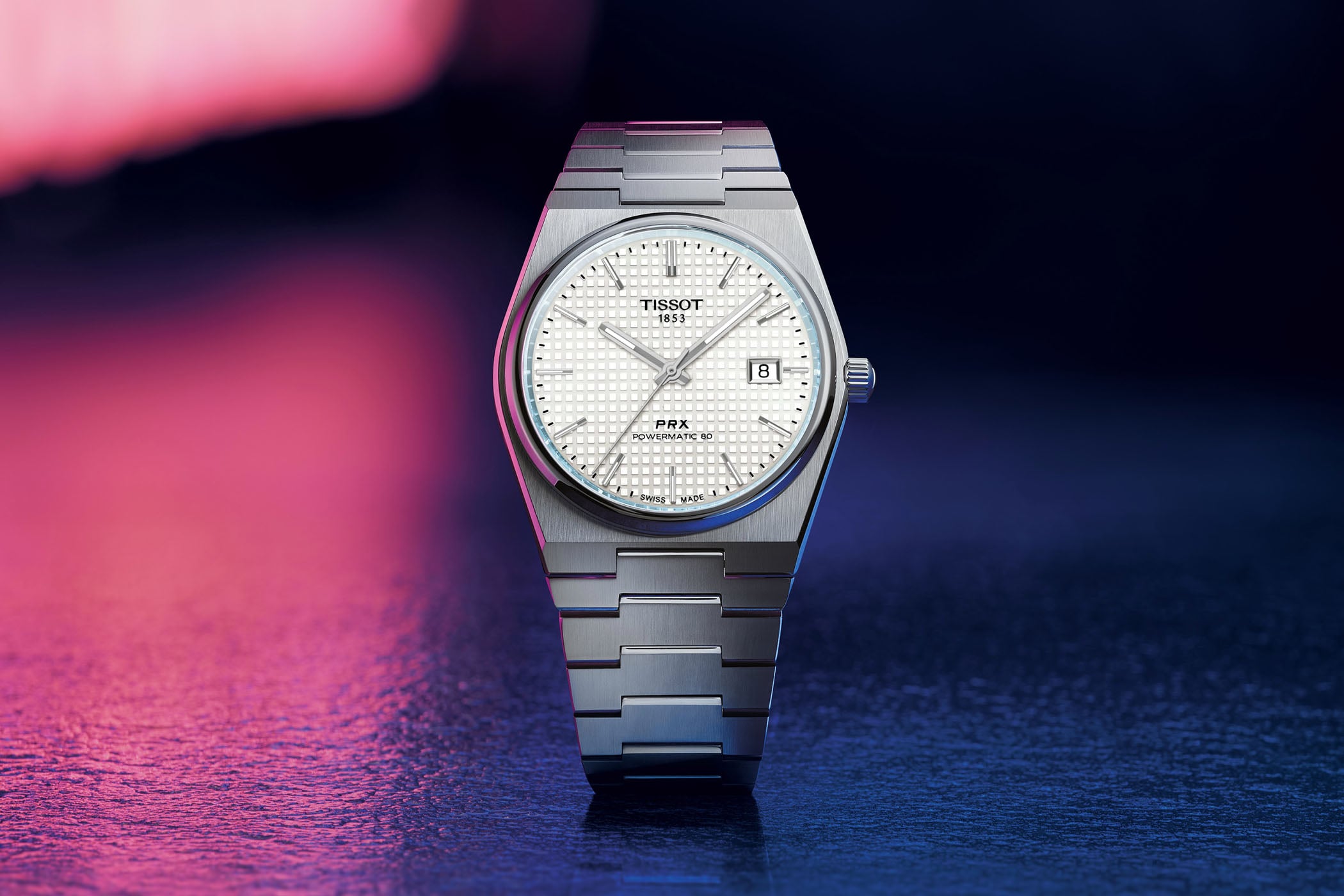
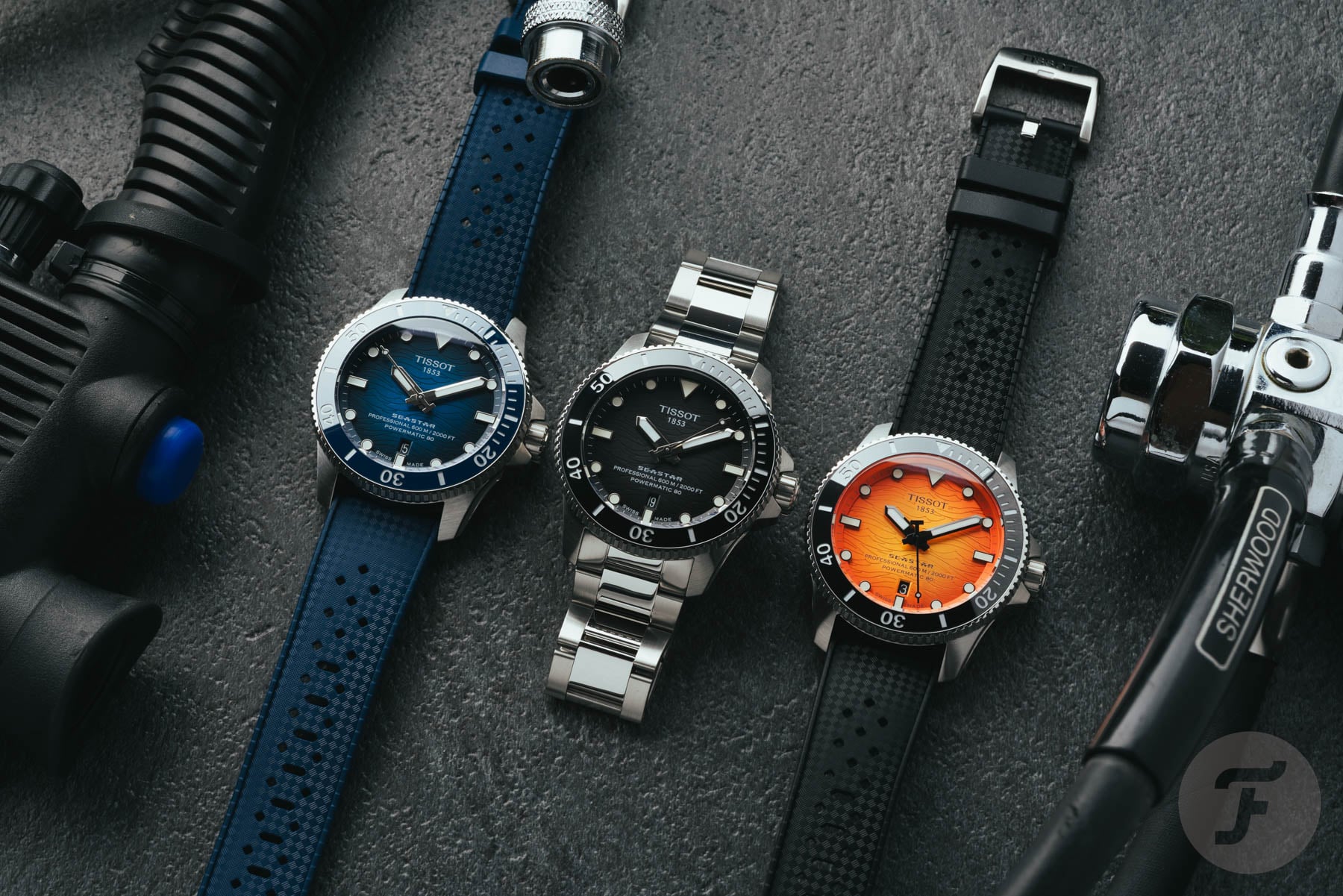
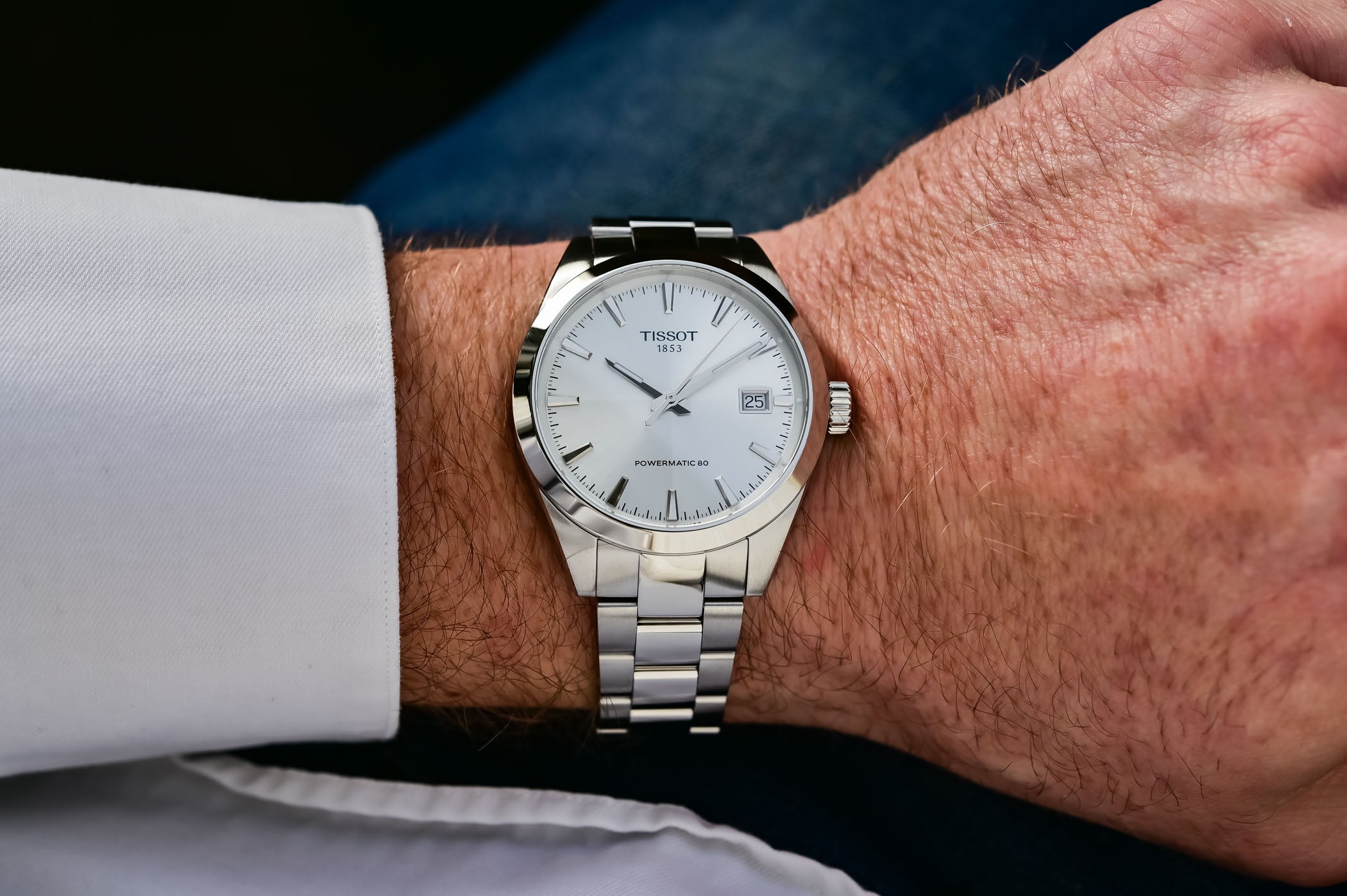
- Tissot Powermatic 80: PRX Powermatic, Le Locle Powermatic 80, Gentleman Powermatic 80, Seastar 1000
- Hamilton Cal. H-10: Khaki Field Mechanical (manual variant), Khaki King, Jazzmaster
- Mido Caliber 80: Multifort, Ocean Star, Commander
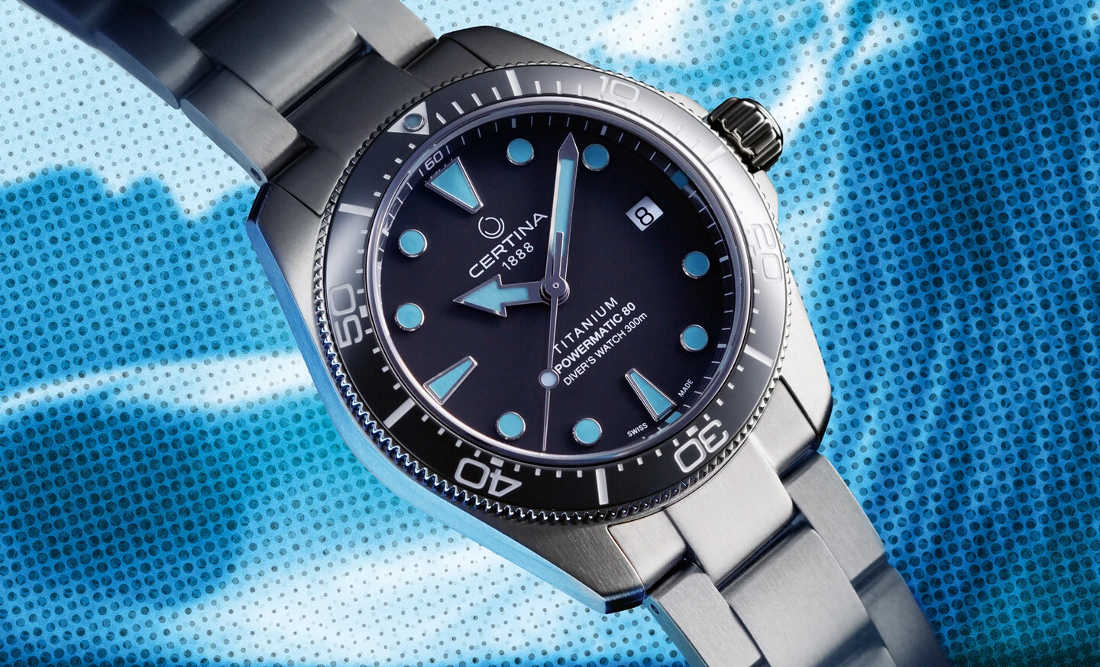
- Certina Powermatic 80: DS-1, DS Action, DS-8
This is a single architecture under different brand badges, the standard Swatch Group practice of platform reuse across price tiers.
Where it sits in the entry-level mechanical market
For watches in the USD 500-1,500 range that need a Swiss automatic with strong reserve, the Powermatic 80 / H-10 is now the dominant architecture. Competitors include the Sellita SW200 (38 h reserve), the Soprod A10 (42 h), and the Miyota 9015 (42 h). The Powermatic 80 wins on reserve; the others may win on beat rate or finishing depending on application. For the Tissot PRX Powermatic 80 and similar enthusiast favourites, the C07.111 is one of the best-value Swiss automatic engines available today.
Comments
No comments yet, be the first to weigh in.