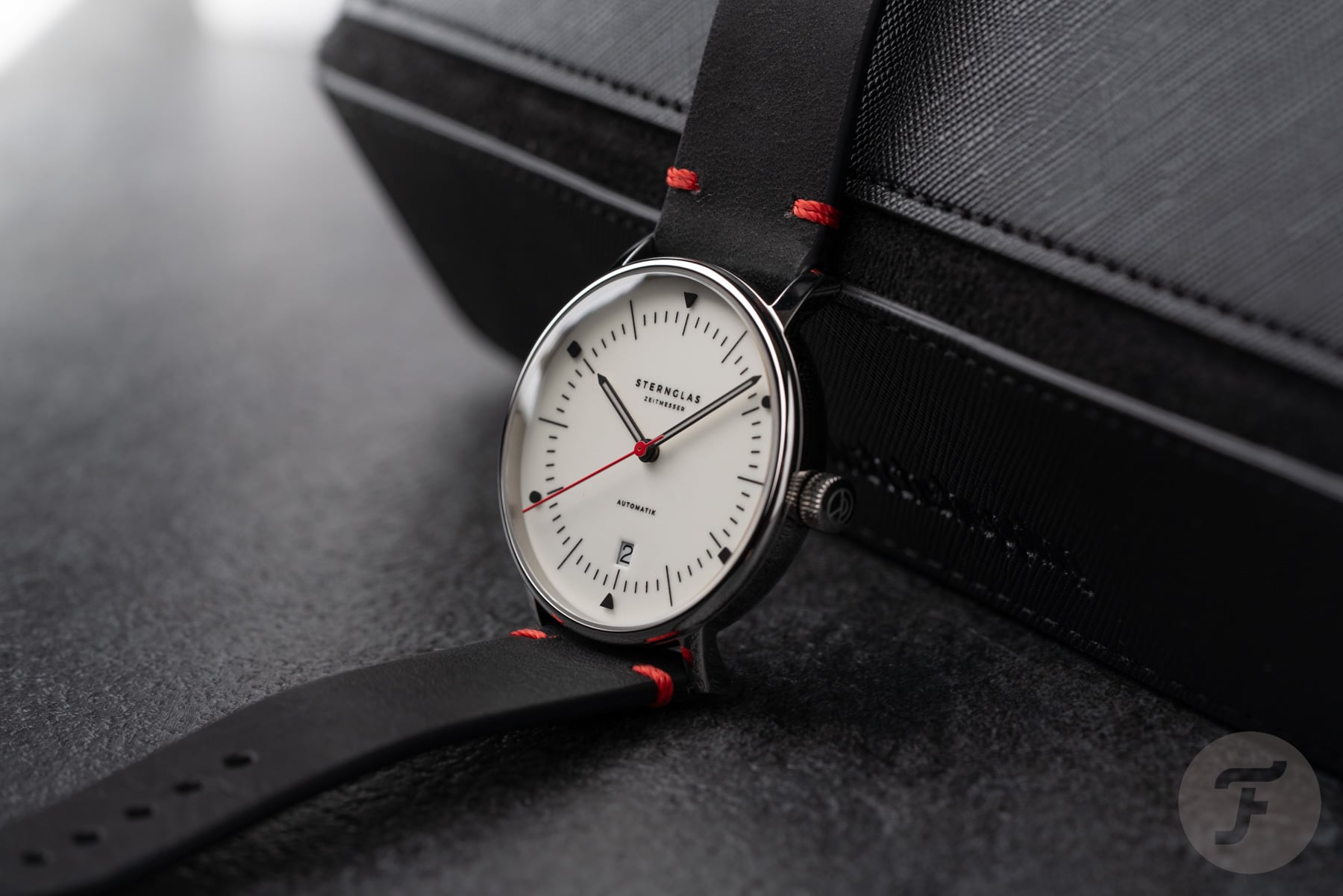
Bauhaus was the German design school founded by the architect Walter Gropius in Weimar in April 1919, the year after the end of World War I. The name combines "Bau" (building) with "Haus" (house); the school's purpose was to integrate fine art, industrial design, and architecture into a single discipline that served the new mass-production economy. Bauhaus moved from Weimar to Dessau in 1925, then briefly to Berlin in 1932, before being closed by the Nazi government on 10 August 1933. In its 14 years of operation it became one of the most influential design movements of the 20th century; its faculty (Gropius, Ludwig Mies van der Rohe, Wassily Kandinsky, Paul Klee, László Moholy-Nagy, Marcel Breuer) emigrated to the US and seeded American mid-century modernism.
The Bauhaus design philosophy is summarised in the (often misattributed) phrase "form follows function". The school's teaching dispensed with applied ornament, emphasised geometric clarity (the circle, square, and triangle as primary forms), sans-serif typography (the Bauhaus typefaces are direct ancestors of Helvetica and Univers), monochrome or restrained colour palettes, industrial materials (steel, glass, concrete, leather), and visible construction (no decorative cladding hiding structural elements). Furniture by Marcel Breuer (the Wassily chair, the Cesca chair) and architecture by Mies van der Rohe (the Barcelona Pavilion, the Farnsworth House) became the canonical examples. The Bauhaus aesthetic was the antithesis of the ornate Belle Époque and Art Nouveau styles that preceded it.
"Form follows function. Less, but better. The Bauhaus did not invent these phrases, but it taught them to a generation of designers who taught them to the next."- Dieter Rams, on the Bauhaus inheritance in industrial design
The translation of Bauhaus to watch design happened gradually. The school itself produced no watches; Bauhaus students were trained in furniture, textiles, ceramics, and architecture, not in horology. The first major Bauhaus-influenced wristwatches came from Max Bill, the Swiss painter, sculptor, and architect who studied at the Bauhaus from 1927-1929 under Kandinsky, Klee, and Moholy-Nagy. Bill collaborated with Junghans from 1956 on a series of wall clocks; in 1961-62 Junghans launched the Max Bill wristwatch, with a stark white dial, sans-serif Arabic numerals (a Bill-designed font), and minimal hour and minute hands. The Max Bill chronograph (1962) and the Max Bill 38mm three-hand are still in production today, more or less unchanged from Bill's 1962 drawings.
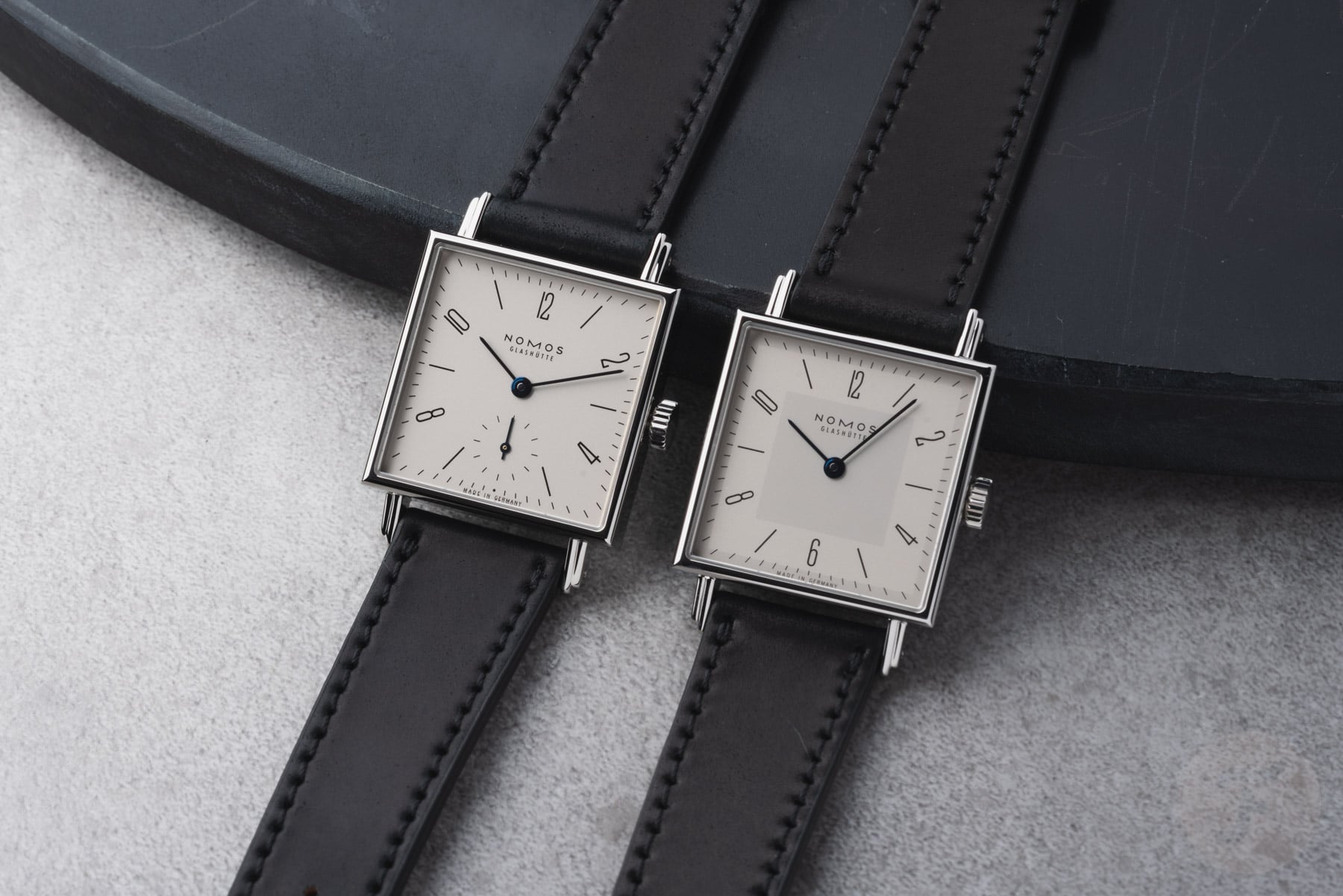
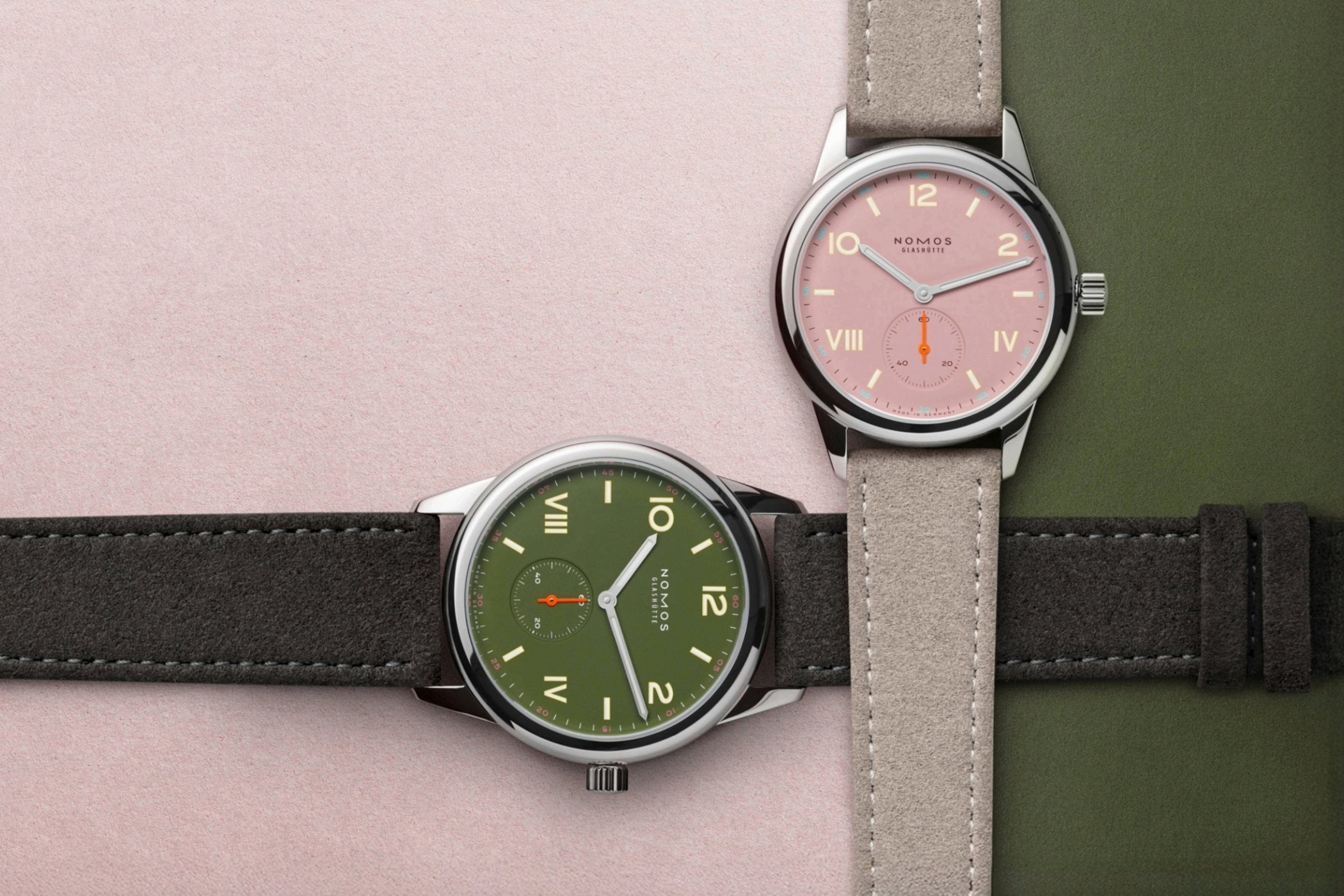
The German Glashütte-revival brand NOMOS, founded in 1990 by Roland Schwertner, took the Bauhaus aesthetic as its foundational design principle. The original NOMOS catalogue (Tangente, Orion, Tetra, Ludwig) all draw directly from Bauhaus: white dials with a small sub-second register at 6, slim sans-serif Arabic numerals, slim baton hands, no luminous material, no logos beyond a small "Nomos Glashütte" line at 12. The Tangente reference 101 (1990) is the canonical NOMOS Bauhaus watch; the Tangente Neomatik (2015) added an in-house automatic three-quarter plate caliber while keeping the dial unchanged.
Outside watchmaking, the Bauhaus aesthetic had a powerful adjacent influence through Dieter Rams, the German industrial designer at Braun who studied at the Werkkunstschule Wiesbaden (founded by Bauhaus alumni). Rams' "Ten Principles of Good Design" (formulated in the 1970s) read like a Bauhaus manifesto. Braun produced wristwatches under Rams' design influence from the 1970s through the 1990s; the Braun AW10 (1989), the BNH0011 (1996), and the modern BN0021 (2010s) are all Bauhaus in the Rams interpretation: matte black or white dials, slim sans-serif numerals, minimal hand styles, no decorative elements. Apple's Jony Ive cites Rams as a primary influence, which is why modern Apple Watch UI typography has a strong Bauhaus lineage too.
Among collectors, "Bauhaus" has become a category label for any minimalist round wristwatch with a clean white or black dial, sans-serif Arabic numerals or simple indices, no luminous material, no decorative finishing on the dial, and a restrained case. The category includes Junghans Max Bill, NOMOS Tangente / Orion / Ludwig / Metro, Braun BN0021 and successors, Stowa Antea KS, Mondaine's Swiss Railway watches (a Hans Hilfiker design from 1944, often grouped with Bauhaus although technically Swiss modernist), and dozens of microbrand interpretations. The modern Bauhaus watch is the visual antithesis of the busy, multi-complication, heavily-finished Swiss Royal Oak or Nautilus; Bauhaus is what watch design looks like when ornamentation is treated as suspect.







Comments 1