
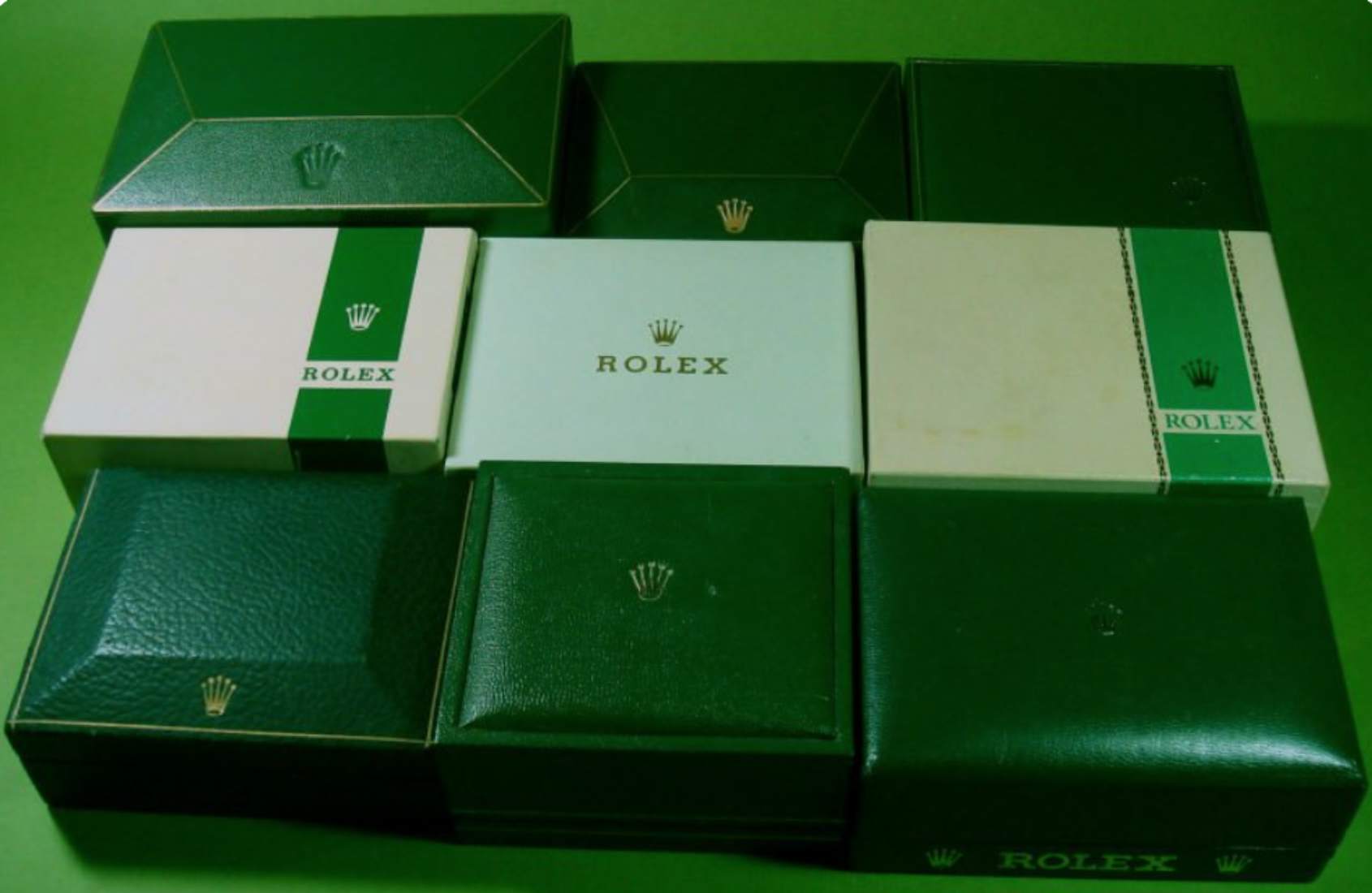
"Box & papers" (often abbreviated B&P) is collector vocabulary for the documentation that originally accompanied a watch when it left the authorised dealer. The phrase is older than the modern watch market, used in vintage car and luxury-goods circles since the 1980s; it entered watch collecting around 1995-2000 with the first online watch forums. The exact contents vary by brand and era, but the canonical inclusions are: the original presentation box in brand-correct format, the warranty card stamped or signed by the AD with the original purchase date, and the instruction manual or booklet for the specific reference. A "full set" extends to: hangtags (chronometer card, in-house movement card, COSC certificate where issued separately), spare links for the bracelet, polishing cloths or chamois, the booklet wallet the papers came in, and any service paperwork (workshop receipts, replaced-parts lists) generated since.
For modern watches, Rolex issues a green or red plastic warranty card the size of a credit card, machine-stamped with reference, serial, and AD details. Earlier (pre-2007) Rolex watches came with a paper "Punched Card" that the AD literally hole-punched on issue; punched cards have collector value, with the date and AD location visible. Patek Philippe issues a long folded "Certificate of Origin" with the watchmaker's seal and ledger details; on rare references this paper is itself negotiable like a small bond. Audemars Piguet uses a similar folded certificate. A. Lange & Söhne issues a leather-bound book with hand-written notes by the watchmaker and watch-house director. Omega uses a printed pictogram card with reference, serial, and an extended chronometer-related sticker.
"You aren't buying the box and the card. You are buying the chain of custody from the boutique counter to your wrist, and the box is the cheapest physical proof that the chain is intact."- Aurel Bacs, opening remarks Phillips Geneva XV, 2022
Why the premium exists: provenance. A watch with its original B&P proves it left an authorised channel as new, with the date and place documented; this rules out grey-market import (AD warranty applies to first owner, sometimes transferable), used-as-new misrepresentation, and the most common forgery patterns. For a non-hot reference (a 2018 steel Datejust, a 2019 Speedmaster Pro) the premium is usually 5-15%, mostly the cost of replacement boxes and cards (~CHF 200-500 for box, often "unobtainable" for cards). For a hot reference (steel Nautilus 5711, Royal Oak Jumbo 16202, steel Daytona 116500LN) the premium reaches 30-50%; the AD-stamped card with a 2-year-old date, on a watch with a 5-year waitlist, is itself the proof that the watch was bought through legitimate allocation.
The most insidious problem is card pairing: a forger or unethical dealer takes an authentic warranty card from a damaged or junked watch and pairs it with a loose ("head only") watch of the same reference. Without the matching serial number on the card, this is straightforward fraud; even with a matched serial, modern brands (Rolex, Patek, AP, Lange) have started cross-checking authentication requests against issued-card ledgers and can confirm or deny pairing on serial submission. The standard professional authentication workflow now is: photograph the card and the case-back serial side by side, send to brand customer service, wait for confirmation. Auction houses like Phillips and Christie's do this on every consignment.
For vintage watches (pre-1980s) original B&P is far rarer and the premium correspondingly larger. Most pre-1970 Rolex and Omega owners discarded the box within a year; an original 1960s steel Submariner ref. 5513 with original COSC chronometer paper, original warranty paper, original outer box, original inner box, original hangtag, and original cleaning cloth, the "full kit", is a museum-grade object. Auction premium over loose is routinely 200-400%. Specific desirable items in the 1960s/70s vintage kit: the original red Rolex anchor hangtag, the green chronometer hangtag, the brown punched leather pouch, and the dated service receipt. Anything original that survived 60 years is, on its own, a small collectible.
Practical advice for buyers: a recent watch (2010+) without B&P is suspicious on a hot reference and merely cheaper on a standard reference; price the discount accordingly. Always check the warranty card serial against the case-back serial; the dates should match the production year of the reference. For hot allocations, ask for the original AD invoice as well as the card; AD invoices are harder to forge than cards. For vintage, accept that B&P is a bonus, not a baseline; the watch itself is the product, and a great tropical-dial Submariner is worth far more loose than a perfect Submariner with a forged card and a generic box. Finally: keep your own watches' B&P forever. Modern resale markets reward it; future you will thank present you.






Comments 1