Florentine Ariosto Jones was born in Boston on 20 May 1841 and apprenticed at the Howard Watch Company, then America's leading precision watchmaker. By the late 1860s he had risen to a senior position and was studying the productivity differential between American and Swiss watchmaking: American factories like Howard, Waltham, and Elgin produced thousands of watches per worker per year using interchangeable-parts assembly; Swiss makers produced perhaps a tenth as many because they relied entirely on hand-fitted components. Jones believed combining American manufacturing efficiency with Swiss labour rates and craftsmanship would produce watches with the precision of Geneva at the cost of Massachusetts.
In 1868, aged 27, he sailed for Switzerland with American capital and a small team of US-trained machinists. Geneva and the Vallée de Joux watchmakers refused to engage; the existing trade was protective and the established houses had no interest in radical reorganisation. Jones travelled north to Schaffhausen, the Rhine river town in northern Switzerland that lay outside the traditional watchmaking corridor. The combination of cheap hydroelectric power from the Rheinfall, available skilled metalworkers, and proximity to the larger German market made it commercially attractive.
"The American method, applied to Swiss craft, produces a watch better than either tradition alone." (Jones's 1868 prospectus)- F. A. Jones, founding prospectus for the International Watch Company
On 15 April 1868 Jones founded the International Watch Company with local partner Heinrich Moser (the watchmaker, not the modern brand). They built a factory beside the Rhine on Baumgartenstrasse that still stands as IWC's headquarters today, and began producing precision pocket watches that combined American manufacturing tooling with Swiss-grade hand finishing. The early Cal. F. Jones movement, named for its inventor, was sold primarily to the American market and to British colonial customers in India and the Pacific.
The economic depression of the 1870s, combined with the technical difficulty of combining the two manufacturing cultures, made the venture struggle financially. Jones returned to Boston in 1875 and was succeeded by Swiss management; he never returned to Switzerland. The firm continued under Johann Rauschenbach-Vogel and his descendants from 1880 onward, and the Rauschenbach family ran IWC until Ernst Jakob Homberger took over in 1929. He is the great-grandfather of the current Schaffhausen entrepreneurial family.
Jones spent his post-IWC years back at Howard Watch in Boston, eventually moving into mechanical-engineering consulting. He died in Boston on 20 March 1916, aged 74, having never seen the modern IWC he founded. The firm passed through the Schaffhausen industrial hands he had set up, then in 1978 was bought by VDO Adolf Schindling AG, then in 2000 absorbed into the Richemont group. Today IWC is one of Richemont's biggest revenue contributors at roughly EUR 1 billion in annual sales.
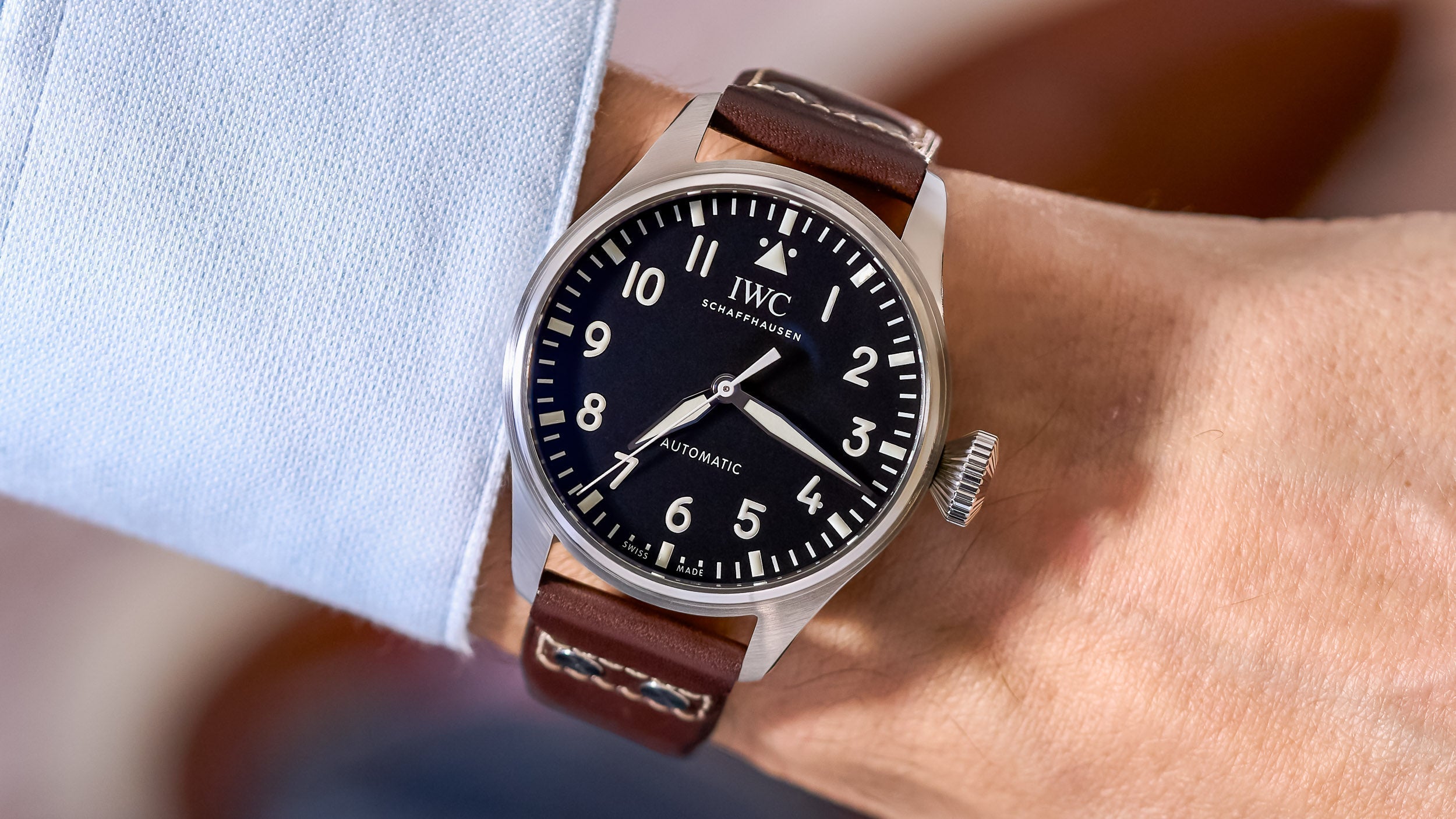
The brand still draws on its founder's engineering character: the Mark XI (1948 RAF specification, see pilot watch), the Ingenieur (1955 antimagnetic, Genta-redesigned 1976), the Big Pilot (2002 reinterpretation of the WWII B-Uhr), and the Aquatimer (1967 dive watch) all read as American engineering values translated through Swiss execution. That tone is Jones's ongoing legacy 156 years after the founding.


Comments 1