Automatic winding systems share a single goal: convert rotor motion (random in direction and speed) into one-way mainspring tension. The two dominant approaches are reverser-wheel architectures (the ETA / Sellita default, using two one-way clutch wheels), and pawl-based architectures (the IWC Pellaton cam-and-pawl, and the Seiko Magic Lever). Pawl architectures are mechanically simpler and have fewer wear surfaces; the Magic Lever takes the simplicity to its extreme.
The Magic Lever was developed at Daini Seikosha (one of Seiko's two manufacturing arms; the other was Suwa Seikosha) in the late 1950s and patented in 1959. The first commercial calibre was the Cal. 603 (1959), the brand's entry into volume automatic production. The mechanism is striking in its simplicity: a single eccentric pin on the rotor axle drives a sprung claw-shaped lever ("the Magic Lever"); one end of the lever pushes a tooth on the barrel ratchet wheel forward, and the other end pulls the next tooth back. As the rotor turns, the lever alternately pushes and pulls; each rotor motion produces barrel rotation, regardless of direction.
"One lever. Both directions wind. Sixty years of production. There is no simpler, more elegant automatic winding system."- Watch industry commentary on the Magic Lever
The system has three structural advantages over reverser-wheel architectures. (1) Fewer parts: a single lever vs two reverser wheels with their bearings; lower assembly cost and lower failure surface area. (2) Lower friction: the lever moves on a single bearing pivot, vs the rolling contact of reverser wheels; less energy is lost in the winding train. (3) Higher torque per rotor revolution: the lever geometry can be tuned to extract more winding torque per degree of rotor motion than reverser wheels.
The trade-off is component wear at the lever tips. The lever's pushing and pulling action concentrates force at small contact areas, and traditional steel-on-steel contact wears measurably over decades. Modern Seiko / Grand Seiko implementations use hardened or coated lever tips to address this; in practice the wear rate is comfortably within the typical 5-7 year service interval. The Magic Lever is not silent like Pellaton; the click of the lever on the ratchet teeth is audible during fast rotor motion (a Seiko on a wrist tap can be heard winding).
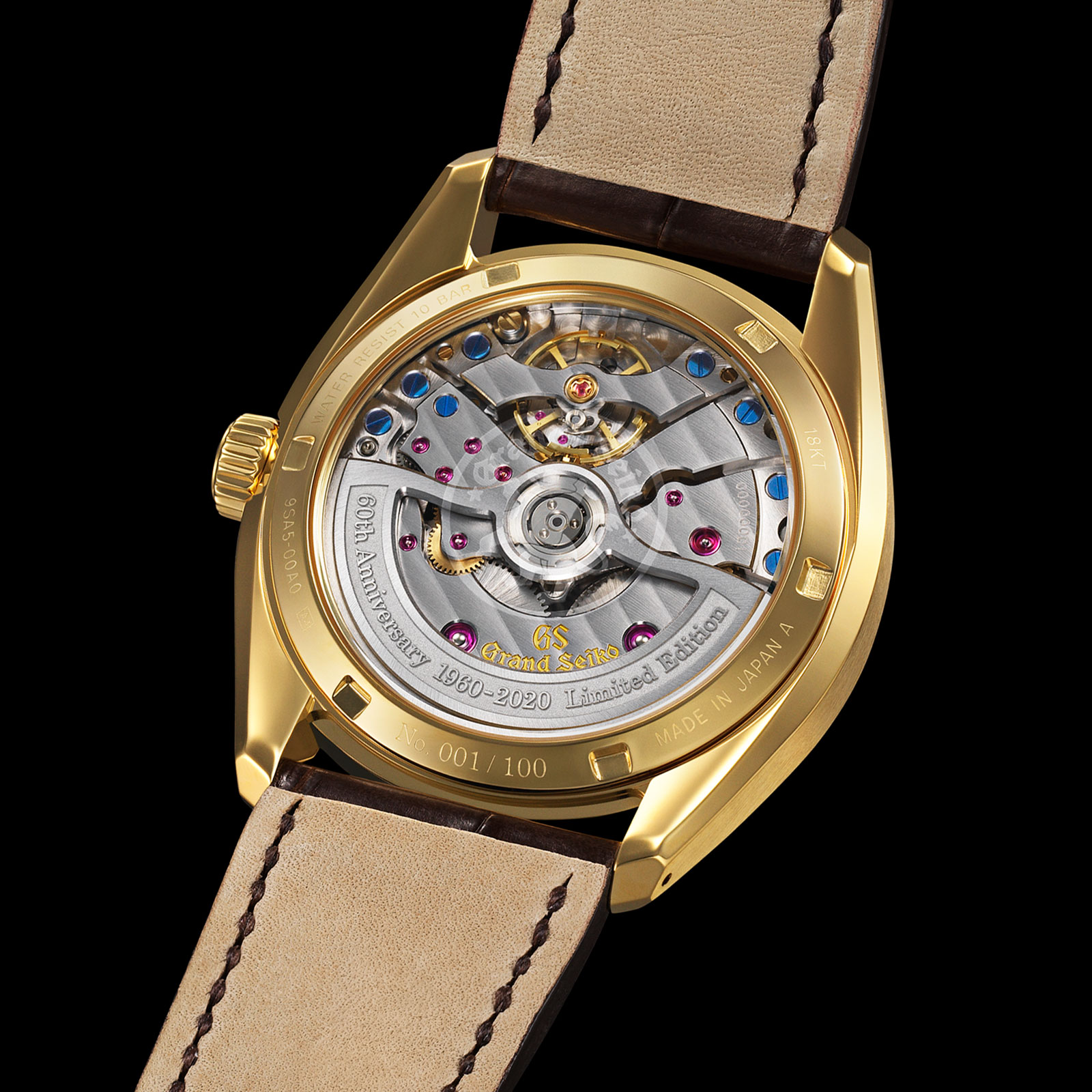
Across 65+ years and hundreds of millions of movements, the Magic Lever has been the standard Seiko / Grand Seiko automatic system. The modern Seiko 4R36 / 6R15 / NH series (entry to mid-tier Seiko) and the Grand Seiko 9S65 / 9S85 / 9SA5 (high-tier) all use Magic Lever winding. The system also appears in selected Spring Drive calibres where the spring-energy-fed quartz movement still requires automatic mainspring winding. The 9SA5 5 Hz high-frequency calibre uses an updated Magic Lever with optimised geometry for higher rotor torque.
For buyers, the practical signal: any modern Seiko / Grand Seiko automatic uses Magic Lever winding. The system is the technical signature of the Seiko manufacture in the same way Pellaton is for IWC. Cross-brand: the system has not been licensed to non-Seiko brands and is therefore unique to the Seiko ecosystem; "magic lever winding" in marketing copy reliably indicates a Seiko-family movement.
Comments 2