What it is
Spring Drive is the third major timekeeping technology in modern watchmaking, sitting between purely mechanical (escapement + balance wheel) and purely electronic (quartz oscillator + battery). Conceptually: the watch has a normal mainspring that winds via a normal automatic rotor or by hand. The mainspring drives a normal gear train. But instead of an escapement and balance wheel regulating the gear-train release, Spring Drive substitutes a glide wheel that spins continuously, generating tiny electrical current via a stator coil. That current powers an integrated circuit and a quartz oscillator, which monitors the glide wheel's rotation eight times per second and applies an electromagnetic brake to keep the rotation precisely on rate.
Why it matters
Three reasons. Accuracy: ±15 seconds per month is roughly 30x tighter than the best mechanical chronometers and matches mid-tier consumer quartz, but achieved through a fully mechanical power source. No battery, ever. Visual signature: because the glide wheel rotates continuously rather than ticking, the seconds hand sweeps perfectly smoothly across the dial. No discrete steps, no judder, just continuous motion. To the eye it is mesmerising. Conceptual elegance: it is the only mass-produced timekeeping system that combines the advantages of mechanical (no battery, hand-finished movement, decades of life) and quartz (high accuracy, no escapement to wear) without the trade-offs of either.
How long it took to build
Spring Drive's development is the longest single-engineering-project story in modern Seiko. Yoshikazu Akahane, a Seiko engineer, started the project in 1977. Through the 1980s and 1990s, Seiko built ~600 prototypes, each failing at some combination of accuracy, power reserve, and miniaturisation. The first commercially-viable Spring Drive caliber, the 7R68, launched in 1999 in a Seiko Credor case. The dedicated Grand Seiko Spring Drive 9R65 launched in 2004 after another half-decade of refinement. By 2026, Spring Drive is the GS catalogue's flagship technology alongside the hi-beat Cal. 9S85.
"9R65 vs 9R86"
Both calibers run on the same Spring Drive principle but serve different watches. 9R65: standard time-only Spring Drive automatic, 30 mm diameter, 5.8 mm thick, with date and power-reserve indicator. The default Grand Seiko Spring Drive engine, in the SBGA211 Snowflake and most three-hand GS Spring Drive references. 9R86: chronograph + GMT version, larger and thicker (30 mm, 7.6 mm), with column-wheel chronograph and second time-zone hand. Used in the Grand Seiko Spring Drive Chronograph references (SBGC line). 9R96: high-precision variant rated to ±10 sec/month. 9R01: the manual-wind 8-day Spring Drive used in the GS limited editions.
What Spring Drive is not
Two clarifications. It is not quartz: there is no battery, the energy source is purely mechanical, and the quartz role is only to regulate the glide wheel's rotation, not to generate any motion. Without the mainspring, the watch is dead. It is not a tuning-fork or kinetic watch: tuning-fork (Bulova Accutron) used a vibrating fork as the timing reference; kinetic (Seiko's 1986 Kinetic) is quartz-driven with a recharging mechanical rotor. Spring Drive is structurally different from both: a mechanical movement that uses a quartz to brake rather than to drive. The Wired magazine description ("a watch that swallowed an iPhone") is wrong; the IC inside a Spring Drive consumes essentially zero current, generated by the glide wheel itself, with no separate battery or recharge.
Watches it powers
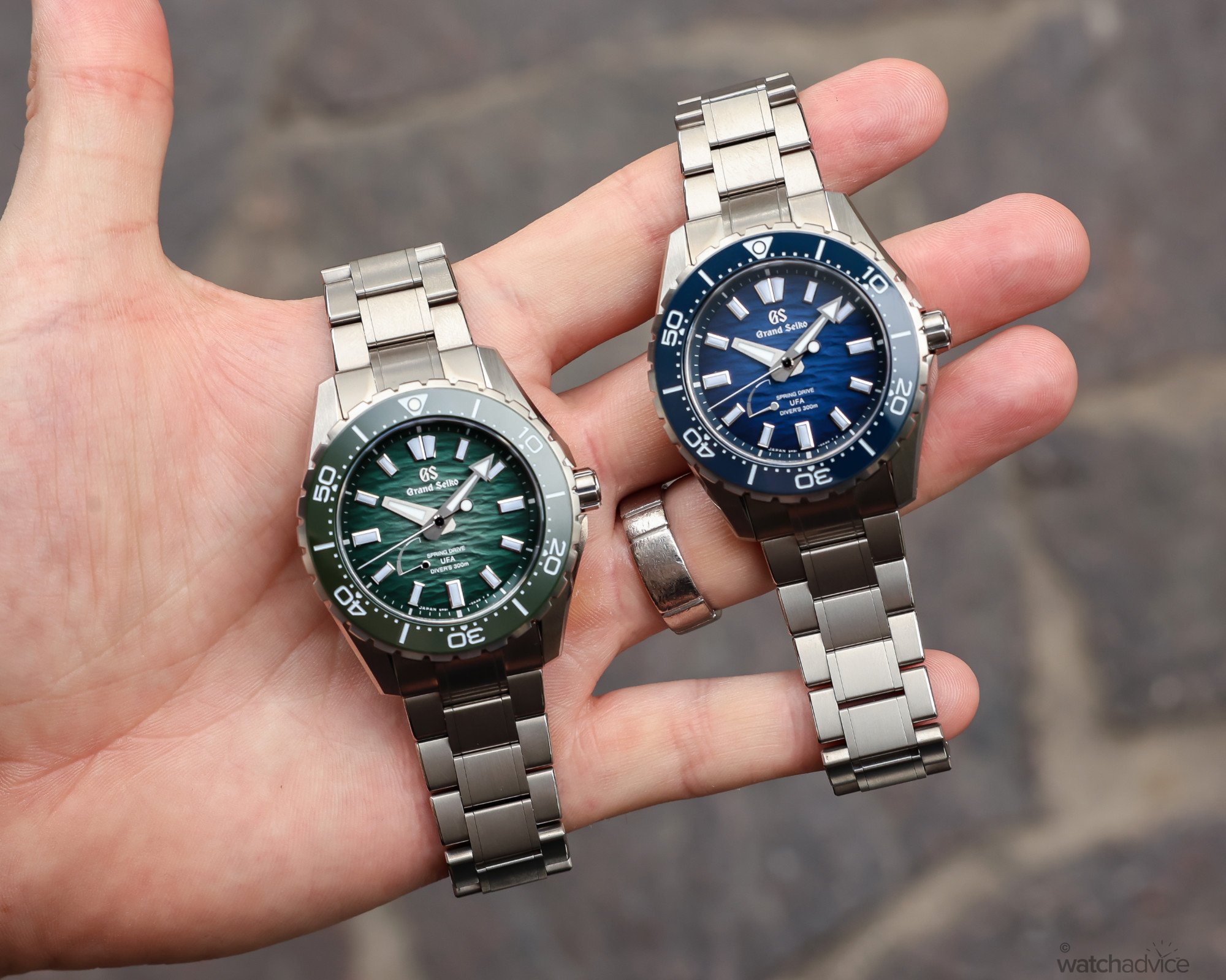
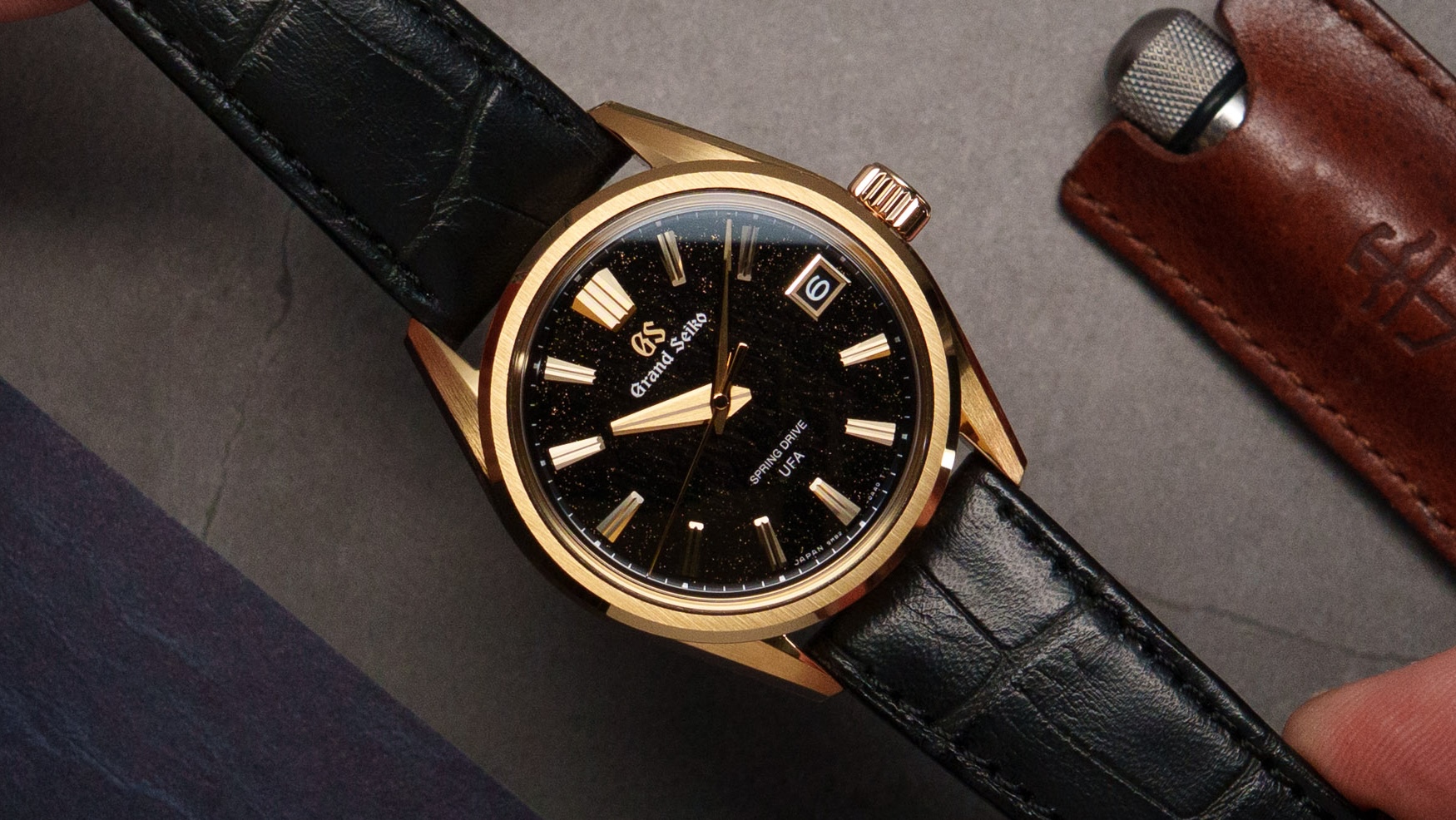
The 9R65 powers the Grand Seiko SBGA211 Snowflake (the canonical Spring Drive watch, white textured dial referencing the snowy landscape around the Shinshu Watch Studio in Nagano), the SBGA011 (Champion white), the SBGA413 (Shunbun pink), the SBGA463 (titanium diver), and dozens more across the GS Heritage, Sport, and Elegance lines. The 9R86 powers the SBGC005, SBGC013, SBGC203 chronograph lines. Outside Grand Seiko, the Spring Drive technology appears in upper-tier Seiko (Credor) and the Seiko Astron limited-editions tier. Service for any Spring Drive caliber runs USD 700-1,200 at the Shinshu Watch Studio (Japan); the technology is too specialised for independent watchmakers, so brand service is the realistic-only option.



Comments
No comments yet, be the first to weigh in.