Watch brandsWatch wikiWatch videosVariousWatch calendarSaved articles
PopularRolexOmegaPatek PhilippeAudemars PiguetTudorGrand SeikoCartierSeikoIWCTAG HeuerBreitlingJaeger-LeCoultreA. Lange & SohneZenith
WristBuzzWatch WikiSwiss vs Japanese Watchmaking
🧭 Concept · National Traditions · Heritage vs Engineering

Swiss vs Japanese Watchmaking

The two great watchmaking traditions: Swiss heritage prestige and Japanese engineering precision, and how they actually compare.

The two dominant national watchmaking traditions are Swiss and Japanese. Swiss watchmaking (~150 brands; ~20-25 million mechanical watches produced annually; CHF 25+ billion export value) emphasises heritage prestige: Geneva, Le Locle, La Chaux-de-Fonds, Vallée de Joux, and Glashütte (German-Swiss adjacent) are the heritage centres; brands sell on 200-year tradition + craft + cultural status. Japanese watchmaking (Seiko, Citizen, Casio dominate; ~50+ million watches/year; engineering-led culture) emphasises engineering precision and accessibility: Spring Drive, Astron quartz, Grand Seiko 9SA5 high-beat, and the broad value proposition at every price tier. Modern collectors increasingly buy from both traditions.

Swiss~150 brands; ~25M mechanical watches/yr; CHF 25B+ exports
JapaneseSeiko + Citizen + Casio dominate; ~50M+ watches/yr
Swiss heritageGeneva, Le Locle, La Chaux-de-Fonds, Vallée de Joux
Japanese centresTokyo (Seiko HQ), Suwa / Shiojiri (Seiko factories), Tokorozawa (Citizen)
Cultural emphasisSwiss: heritage + craft; Japanese: engineering + value
Modern crossoverGrand Seiko competes with Swiss haute horlogerie at lower price
WristBuzz Articles165
Swiss vs Japanese Watchmaking

Photo: Teddy Baldassarre · Aug 28, 2025

~150Swiss Brands
~25MSwiss/yr
~50M+Japanese/yr
HeritageSwiss vs Eng
165WristBuzz Articles

The Swiss vs Japanese Watchmaking Story

Swiss watchmaking is the oldest continuously-operating national watchmaking tradition. The industry began in the 16th century when Geneva's Calvinist religious authorities banned ostentatious jewellery, and the city's gold and silversmiths shifted to making watches as a permitted decorative-functional craft. Through the 17th-19th centuries the industry spread to the Jura mountains (Le Locle, La Chaux-de-Fonds, Vallée de Joux) and to Glashütte in Saxony (related German tradition). Modern Swiss output: ~150 active brands, ~25 million mechanical watches per year, CHF 25-30 billion in annual exports.

Japanese watchmaking began later but with engineering rigour from inception. Seiko (founded 1881 as Hattori Tokei-ten) and Citizen (1918) industrialised watchmaking in Tokyo and Suwa / Shiojiri; the tradition was always engineering-led rather than craft-led. The 1969 Seiko Astron quartz launch demonstrated Japan's capacity for technical leadership; Casio G-Shock (1983) brought structural engineering to consumer watch design; modern Grand Seiko 9SA5 (2020) demonstrates Japanese capacity for high-end mechanical at sub-Swiss-price tiers.

"Swiss watches sell heritage. Japanese watches sell engineering. Both sell time."- Watch retailer on national-tradition positioning

Cultural positioning: Swiss watches sell on heritage + craft + cultural status. The Patek Philippe / Rolex / Lange brand-equity moats are essentially impossible to reproduce because they require centuries of continuous reputation. Japanese watches sell on engineering + value: a Grand Seiko Snowflake at CHF 6,000 delivers case-finishing comparable to Swiss CHF 30,000 work; a Seiko Marinemaster at CHF 3,000 delivers ISO 6425 dive certification at half the price of Swiss equivalents. The two traditions operate at different points in the value-vs-status curve.

Volume and price tier comparison: at the entry tier, Japanese dominates (Seiko 5 at USD 200-400 outsells any Swiss entry mechanical by orders of magnitude). At the volume luxury tier, Swiss dominates (CHF 5-30k Tudor / Tissot / Mido / Hamilton compete with Grand Seiko Snowflake at the upper edge). At the haute-horlogerie tier, Swiss is essentially unchallenged (Grand Seiko Kodo and SBGA425 limited editions sit at CHF 50-100k+; Patek Grand Complications at CHF 500k+ have no Japanese competitors). The two traditions are structurally complementary rather than directly substitutable.

For buyers, the practical guide: Swiss is the right choice when heritage prestige and cultural status are central; Japanese is the right choice when engineering / value / specific technical specifications (Spring Drive, GPS Solar quartz) are central. Modern collectors increasingly own pieces from both traditions; the absolute either-or framing is largely a 20th-century cultural inheritance that modern collectors have moved beyond. The two traditions both deserve respect in the modern watch market.
Reference Watches from Each Tradition

Swiss Heritage · Patek Philippe
Calatrava 5196
5196

Swiss haute horlogerie heritage; CHF 21,000 retail.

Swiss Heritage
Swiss Volume · Tudor
Black Bay 58
79030

Swiss mid-tier; in-house MT5402 + Chronofiable testing.

Swiss Volume
Japanese Crossover · Grand Seiko
Snowflake SBGA211
SBGA211

Japanese haute-horlogerie crossover; Spring Drive + zaratsu polishing at CHF 6,000.

Japanese Crossover
Japanese Volume · Seiko
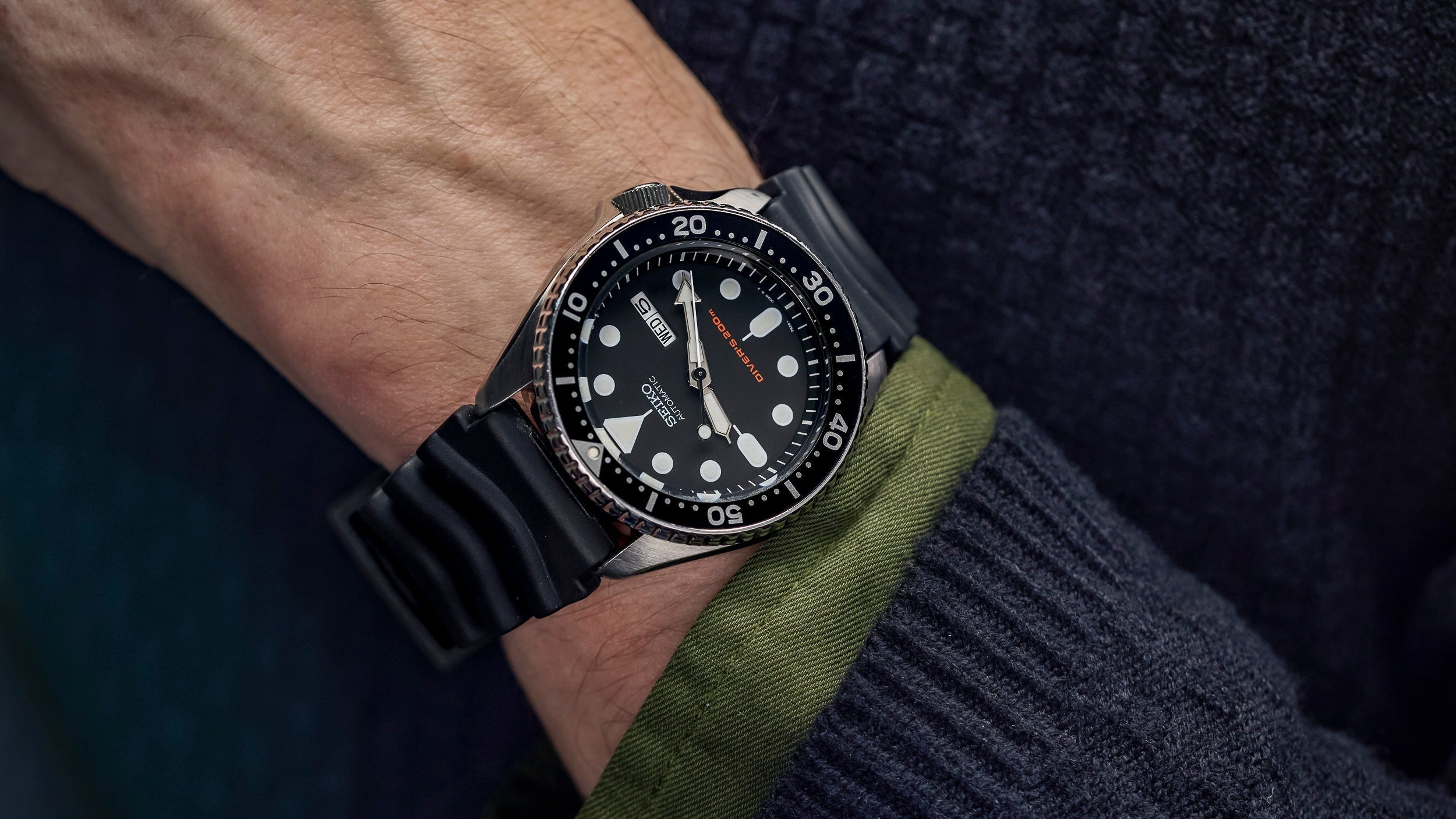
SKX007 / Marinemaster
SKX007

Japanese volume dive watch; engineering + value at USD 200-3000.

Japanese Volume
Japanese Tactical · Casio
G-Shock GW-M5610
GW-M5610

Japanese engineering tactical; structural shock-absorbing module + atomic-radio sync.

G-Shock

Latest Swiss vs Japanese Watchmaking News

Hodinkee
Business News: Watches And Wonders Attendance Climbs Despite Geo-Politics And Economic Challenges As Brands Make Case For Value
5 days ago
Hodinkee
Introducing: Oris Star Edition Celebrates A Turning Point In The Brand's History
Apr 14, 2026
Monochrome
Introducing – The Sculptural Appeal of the New Hautlence Kubera Series 1
Apr 13, 2026
Monochrome
Introducing – The Jacob & Co The Godfather II, a Spectacular Double Melody Musical Timepiece
Apr 8, 2026
Fratello
Universal Genève Is Back! Introducing Four Collections, With The Famous Polerouter Leading The Way
Apr 8, 2026
Monochrome
Introducing – Delbana Celebrates 95 Years with the Della Balda Limited Editions
Apr 8, 2026
Teddy Baldassarre
Oris Big Crown Pointer Date “Bullseye” Review
Mar 27, 2026
Teddy Baldassarre
Credor Eichi II Review: High-End Minimalist Elegance from Japan
Mar 3, 2026
SJX Watches
Raymond Weil’s Well-Dressed Millesime “Tuxedo”
Feb 26, 2026
Teddy Baldassarre
Nivada Grenchen Review: Modern Remakes, Classic Designs
Feb 13, 2026
Worn & Wound
Windup Watch Fair Returns to Dallas for the Second Year in a Row
Feb 12, 2026
Teddy Baldassarre
The 18 Best Japanese Watch Brands For 2026
Feb 12, 2026
View all 165 articles

Learn More