La Chaux-de-Fonds is a Swiss Jura town of roughly 37,000 residents in the Neuchâtel canton, at 994 metres altitude, seven kilometres from its smaller sister town Le Locle. It is the watchmaking capital of the world by any reasonable metric: more Swiss watchmaking movements have been built inside its city limits over the past 180 years than anywhere else on Earth. The town was levelled by a catastrophic fire in 1794, and was rebuilt to a deliberate grid street plan with long east-west avenues that let the low Jura winter sun into second-floor workshops, tall buildings with large north-facing glazing for stable light, and apartments stacked directly above workshops. The entire urban fabric is industrial planning: Karl Marx cited La Chaux-de-Fonds in Das Kapital (1867) as an example of a town that had become, in his words, eine einzige Uhrmachermanufaktur, a single watchmaking factory.
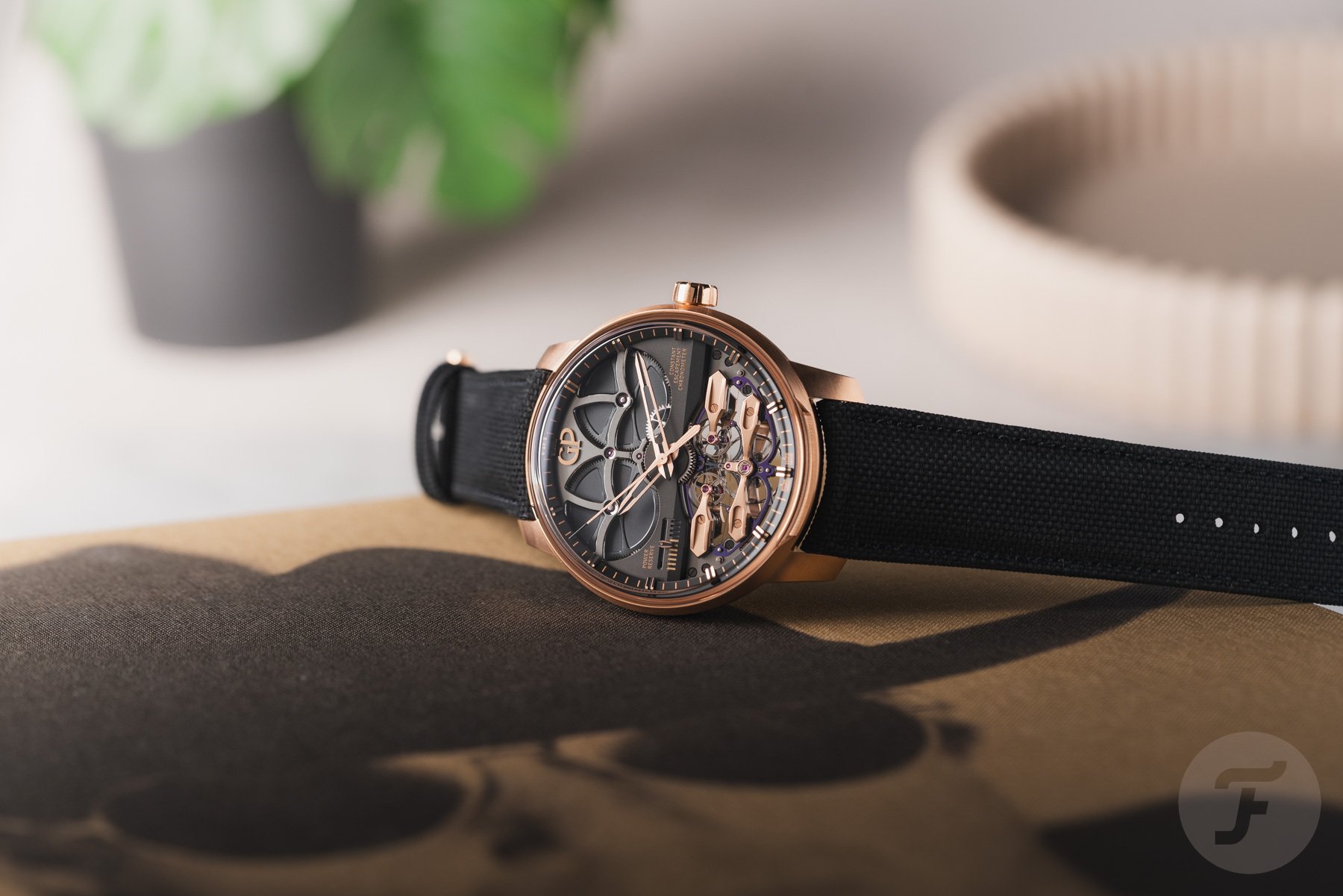
The 19th century built the industry. Girard-Perregaux's antecedent firms were founded in La Chaux-de-Fonds in 1791, and the modern Girard-Perregaux manufacture is still headquartered in the town at the historic Place Girardet. In 1848 Louis Brandt, aged 23, opened a watchmaking workshop in La Chaux-de-Fonds that would eventually be renamed Omega, before Brandt's sons moved the firm to Biel/Bienne in 1880. Eberhard (1887), Movado (1881), and dozens of component suppliers (hairsprings, dials, cases, hands) grew into a supply network that reached every Swiss and much of the European trade. By 1900 La Chaux-de-Fonds produced roughly half of all the watches made in Switzerland.
"We observe a division of labour in the Swiss watch industry, the seat of which is the Jura, and particularly La Chaux-de-Fonds. The whole town is a single watchmaking factory."- Karl Marx, Das Kapital, Volume I (1867)
The 20th century brought both crisis and concentration. The quartz crisis of the 1970s halved the industry's employment in the town; many smaller ateliers were absorbed into the Swatch-Group predecessor ASUAG or closed entirely. But the town rebounded in the 1990s and 2000s as the major Swiss houses consolidated their manufacture activity back into the Jura. Greubel Forsey was founded here in 2004 and built a new atelier on the heights above the town in 2011. Cartier concentrated its complicated movement production here at the Cartier Horlogerie manufacture. TAG Heuer (headquartered in Le Locle), Corum (founded La Chaux-de-Fonds 1955), Ebel (1911), Invicta, and numerous component and complication suppliers operate from the town today.
The cultural infrastructure is dense. The Musée International d'Horlogerie (MIH), founded 1902, is the most important public watchmaking collection in the world, with over 4,500 timepieces from Egyptian water clocks to modern tourbillons. The Haute École Arc Ingénierie in La Chaux-de-Fonds trains the majority of university-level Swiss watchmaking engineers, and the Technicum Neuchâtelois (jointly with Le Locle) trains the apprentice-level watchmakers. Philippe Dufour trained here before returning to Le Sentier in the Vallée de Joux. The town also produced Le Corbusier (architect, born 1887), Louis Chevrolet (automotive founder, born 1878), and Louis-Joseph Chevrolet's brother Arthur. Alongside Geneva and the Vallée de Joux, La Chaux-de-Fonds is one of the three geographic pillars of the Swiss watchmaking industry.
In 2009 UNESCO inscribed La Chaux-de-Fonds and Le Locle together on the World Heritage list. The citation specifically recognises the urban-planning dimension, the fact that both towns were planned around the requirements of watchmaking workshops, as an exceptional example of a single industry shaping a city. A walking tour of La Chaux-de-Fonds today still reveals the pattern: long straight avenues, identical window heights across entire blocks, pedestrian streets linking residential apartments to ground-floor workshops, and the occasional brass plaque on a doorway reading "Horloger-Rhabilleur", a watchmaker still working in the same studio his great-grandfather opened.





Comments 3