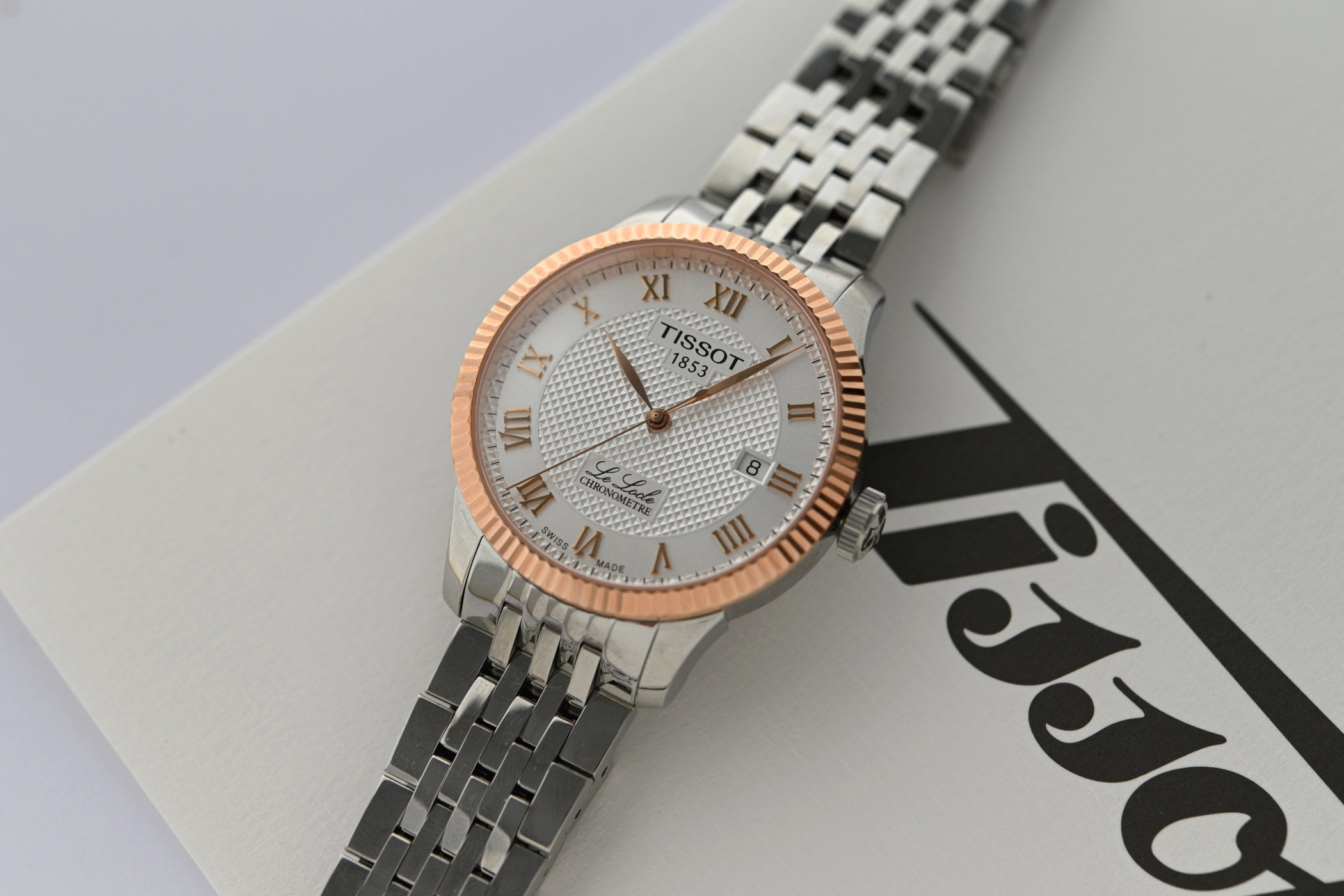
Le Locle is a small town of roughly 10,000 residents in the Neuchâtel canton of the Swiss Jura, at 915 metres altitude, tucked into a high valley two kilometres from the French border. Its geography is unremarkable; its significance to watchmaking is global. Swiss watchmaking as a distinct industry essentially began here around 1700, when a young blacksmith named Daniel Jeanrichard (1665-1741) repaired an English pocket watch that a passing horse trader had handed him, reverse-engineered it, built one himself, and then trained his neighbours to do the same. Within two generations, the farmhouses of Le Locle and the surrounding Montagnes Neuchâteloises had transitioned from winter-idle agriculture to cottage-industry watchmaking, supplying calibres and dials to the Geneva, London, and Paris trades.
By the 19th century, Le Locle and its larger sister town La Chaux-de-Fonds (seven kilometres away) had become the centre of gravity of the Swiss watchmaking industry, outstripping Geneva in total production volume. The urban plan of both towns was deliberately engineered around the craft: long straight streets running east-west and wide enough for the low winter sun to reach the second-story workshop windows, tall buildings with large north-facing glazing for stable indirect light, and residential apartments stacked directly above workshops so the watchmaker could walk from breakfast to bench in seconds. In 2009 UNESCO inscribed both towns on the World Heritage list specifically for this "exceptional example of urban planning devoted entirely to a single industry."
"Le Locle is the mother of watchmaking. La Chaux-de-Fonds is the father. The rest of us are the children."- Often-repeated Jura watchmaking saying
Le Locle hosts a disproportionate share of the modern Swiss watchmaking industry. Ulysse Nardin was founded here in 1846 and still occupies its original premises on Rue du Jardin. Tissot was founded in 1853 by Charles-Félicien Tissot and his son Charles-Émile and remains headquartered in the town as part of the Swatch Group. Zenith was founded in 1865 by Georges Favre-Jacot and today produces its entire collection, including the El Primero that Charles Vermot famously saved from quartz-era destruction, in its original Le Locle manufacture. TAG Heuer, now part of LVMH, is headquartered in Le Locle even though its Heuer origins were in Saint-Imier. Mido, Certina, Doxa (in the 20th century), and numerous specialist suppliers round out the ecosystem.
The town also houses the Musée d'horlogerie du Locle at the Château des Monts, one of the two most important public watchmaking collections in the world (alongside the Musée international d'horlogerie in La Chaux-de-Fonds), and the Technicum Neuchâtelois, one of the feeder schools from which most Swiss brands still recruit their junior watchmakers. The Jura watchmaking ecosystem is small and tightly networked: a bridge-finisher in Le Locle can be across the street from the manufacture that will use their work that afternoon, and the informal craft knowledge accumulated over three centuries is essentially impossible to replicate elsewhere. This is the practical reason the vast majority of Swiss luxury watch brands still operate their most important workshops in the towns of the Montagnes Neuchâteloises.
The origin story is well preserved and slightly embellished. The conventional date for Jeanrichard's first watch is 1685, when he was twenty. The contemporary evidence is thinner than the plaques in the town suggest, but the cumulative result is indisputable: Le Locle, together with La Chaux-de-Fonds, went from a winter-snowbound farming community in 1680 to the industrial capital of world watchmaking by 1880, a transformation that remains one of the purest cases in European economic history of a craft industry that completely remade the geography around it.





Comments 2