Watch brandsWatch wikiWatch videosVariousWatch calendarSaved articles
PopularRolexOmegaPatek PhilippeAudemars PiguetTudorGrand SeikoCartierSeikoIWCTAG HeuerBreitlingJaeger-LeCoultreA. Lange & SohneZenith
WristBuzzWatch Wiki<a href="/watch-calibers/spring-drive-9r65-9r86/">Spring Drive</a>
⚙ Hybrid Movement · Seiko · Since 1999

<a href="/watch-calibers/spring-drive-9r65-9r86/">Spring Drive</a>

Seiko's mainspring-powered movement regulated by quartz, the gliding seconds hand and ±1 second per day

A wholly mechanical watch movement, wound by a mainspring and built around the same gear train as a conventional automatic, but regulated by a quartz crystal instead of a balance wheel. Invented by Yoshikazu Akahane at Seiko in 1977, productised in 1999, and now the signature movement of the Grand Seiko SBGA family. Accuracy: ±15 seconds per month, with a continuously gliding seconds hand.

MakerSeiko / Grand Seiko
OriginShiojiri, Nagano, Japan
InventorYoshikazu Akahane (concept 1977)
First productSpring Drive Cal. 7R68, 1999
Accuracy±1 sec/day, ±15 sec/month
Power sourceMainspring (mechanical)
RegulatorQuartz oscillator (electronic)
WristBuzz Articles236
<a href="/watch-calibers/spring-drive-9r65-9r86/">Spring Drive</a>

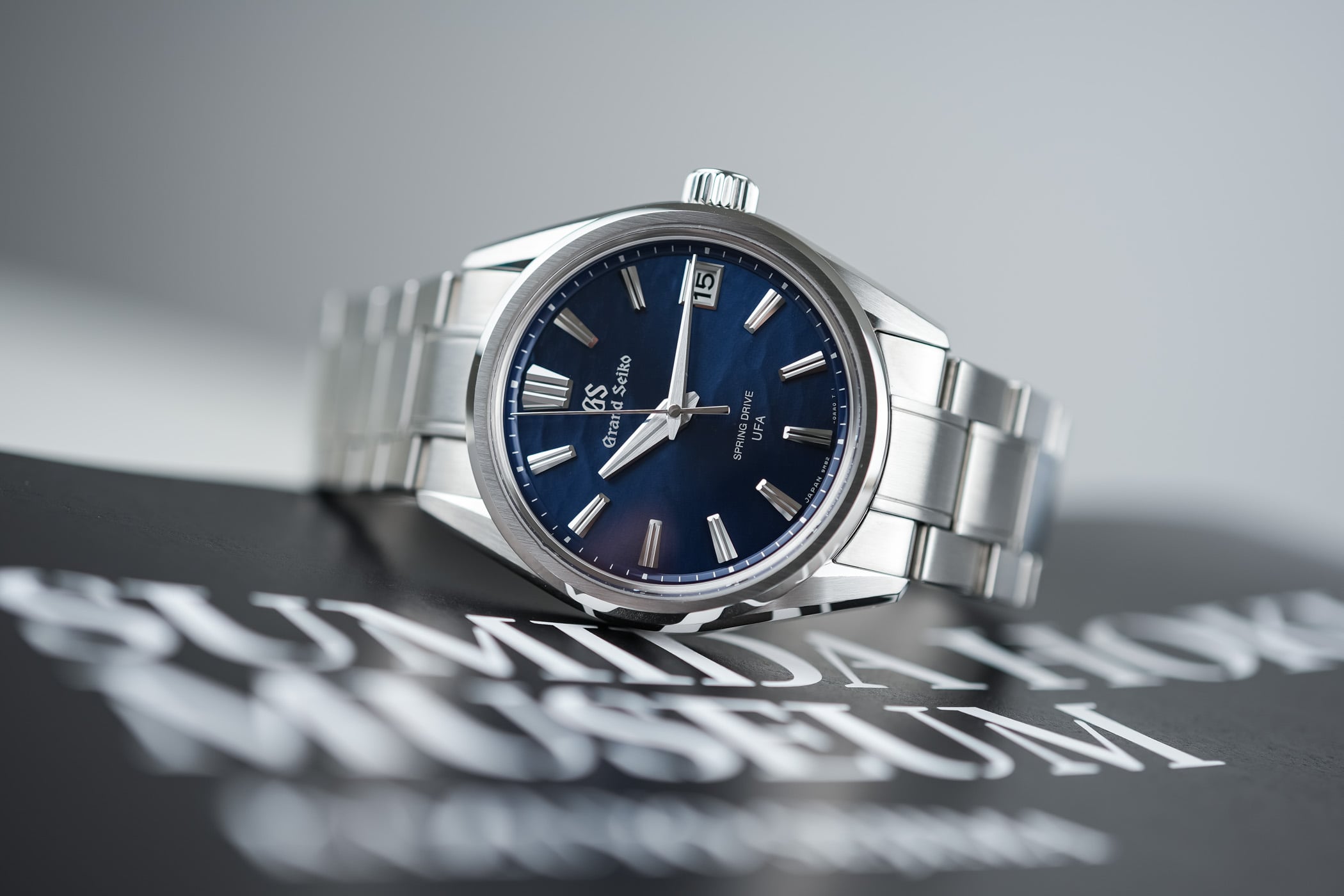
Photo: SJX Watches · Apr 27, 2026

1977Akahane Concept
1999First Product
2004Cal. 9R65
72hPower Reserve
236WristBuzz Articles

The <a href="/watch-calibers/spring-drive-9r65-9r86/">Spring Drive</a> Story

Spring Drive is a hybrid mechanical-quartz movement developed by Seiko over a 22-year span between 1977 and 1999. Mechanically it is a wristwatch with a wound mainspring, a barrel, a gear train, and a rotor for self-winding, identical in structure to any modern automatic caliber. The departure is at the very end of the gear train. Where a Swiss lever uses a balance wheel and escapement to regulate the rate, Spring Drive uses a glide wheel spinning at 8 revolutions per second, regulated by a tiny quartz oscillator and an electromagnetic brake. The result: mechanical power, electronic precision, and a seconds hand that moves continuously rather than ticking.

The concept came from a Seiko engineer named Yoshikazu Akahane in 1977. Akahane was frustrated by the trade-off then defining the watch industry: mechanical movements were beautiful but inaccurate, while quartz movements were accurate but lifeless. His proposal was to keep mechanical winding and the gear train but regulate the train electronically using the energy harvested from the train itself, no battery. Akahane spent the next 20 years on the concept; an internal Seiko presentation in 1982 led to a sealed development project at the Suwa Seikosha plant in Shiojiri, Nagano. The first prototype Spring Drive ran in 1993. Akahane died of cancer in 1999, four months before the first production Spring Drive went on sale; the project survived under his colleagues.

"I want a watch that is mechanical at heart, but with the precision of quartz, and a seconds hand that moves like time itself."- Yoshikazu Akahane, Seiko engineer, on his 1977 concept

The mechanism inside is, in Seiko's language, a Tri-Synchro Regulator. The mainspring drives the gear train as in any mechanical watch; the train terminates not in an escape wheel but in the glide wheel, a flat aluminium disc spinning at 8 Hz. A coil around the glide wheel induces a small current as the wheel spins, charging a capacitor that runs the IC. The IC compares the wheel's rotation against a 32,768 Hz quartz crystal reference; if the wheel is running too fast, the IC pulses the coil to brake it electromagnetically. The braking force is the regulator. No battery exists; the system runs entirely off the energy in the spinning wheel.

The first Spring Drive caliber, the 7R68, launched in a Credor Spring Drive in May 1999, then in a Seiko-branded watch in 2004. The breakthrough caliber, the Cal. 9R65, debuted in 2004 inside the new Grand Seiko SBGA family with a 72-hour power reserve, ±15 seconds per month accuracy, and the iconic continuously sweeping seconds hand. The Cal. 9R86 GMT (2008) added a 24-hour hand and a chronograph, and the Cal. 9RA5 (2020) extended power reserve to 120 hours in a 5.18 mm thin case for the modern SLGA series. Across the family the rate sits at one second per day or better, the dead-still seconds hand of quartz with the architectural beauty of mechanical.

Spring Drive is one of the few major mechanical-watch innovations of the post-quartz-crisis era to survive at scale, alongside the co-axial escapement and silicon hairsprings. It remains a Seiko/Grand Seiko exclusive; Seiko has never licensed it, and no other manufacturer has duplicated it. The continuous-sweep seconds hand has become the visual signature of the Grand Seiko Snowflake (SBGA211), the brand's most photographed reference, and a recognisable shorthand for "the Japanese answer to Swiss watchmaking" in collector vocabulary.

There is no perfectly clean category for Spring Drive in collector taxonomy. It is not COSC-certifiable (COSC tests only mechanical balance-wheel calibers); it is not eligible for the Geneva Seal (a Swiss-only mark); it is not a quartz watch in any commercial sense. Grand Seiko classifies it separately on its dial and in its catalogue. Among collectors it sits in a category of one: a movement category invented and held entirely by Seiko, a thirty-year R&D programme that became a brand defining feature.

Notable Spring Drive Watches

1999 · Credor
Credor Spring Drive
GBLT999

The first Spring Drive watch ever sold, a limited-edition Credor that launched four months after Yoshikazu Akahane's death. Cal. 7R68. About 200 pieces.

First Spring Drive
2005 · Grand Seiko
SBGA011 "Snowflake"
9R65

The reference that made Spring Drive famous. Textured dial that mimics fresh snow on the Shiojiri plain in winter, blued steel hands, 41 mm titanium case.

Snowflake
2007 · Grand Seiko
Spring Drive 8-Day
SBGD001

Eight-day power reserve Spring Drive in a hand-finished platinum case. Power reserve indicator on the dial; the technical statement piece of the family.

8-Day Reserve
2010 · Grand Seiko
Spring Drive GMT SBGE001
9R66

GMT-equipped Spring Drive at 4 Hz quartz reference, 72-hour reserve. The travel-watch entry into the Spring Drive family.

GMT Variant
2020 · Grand Seiko
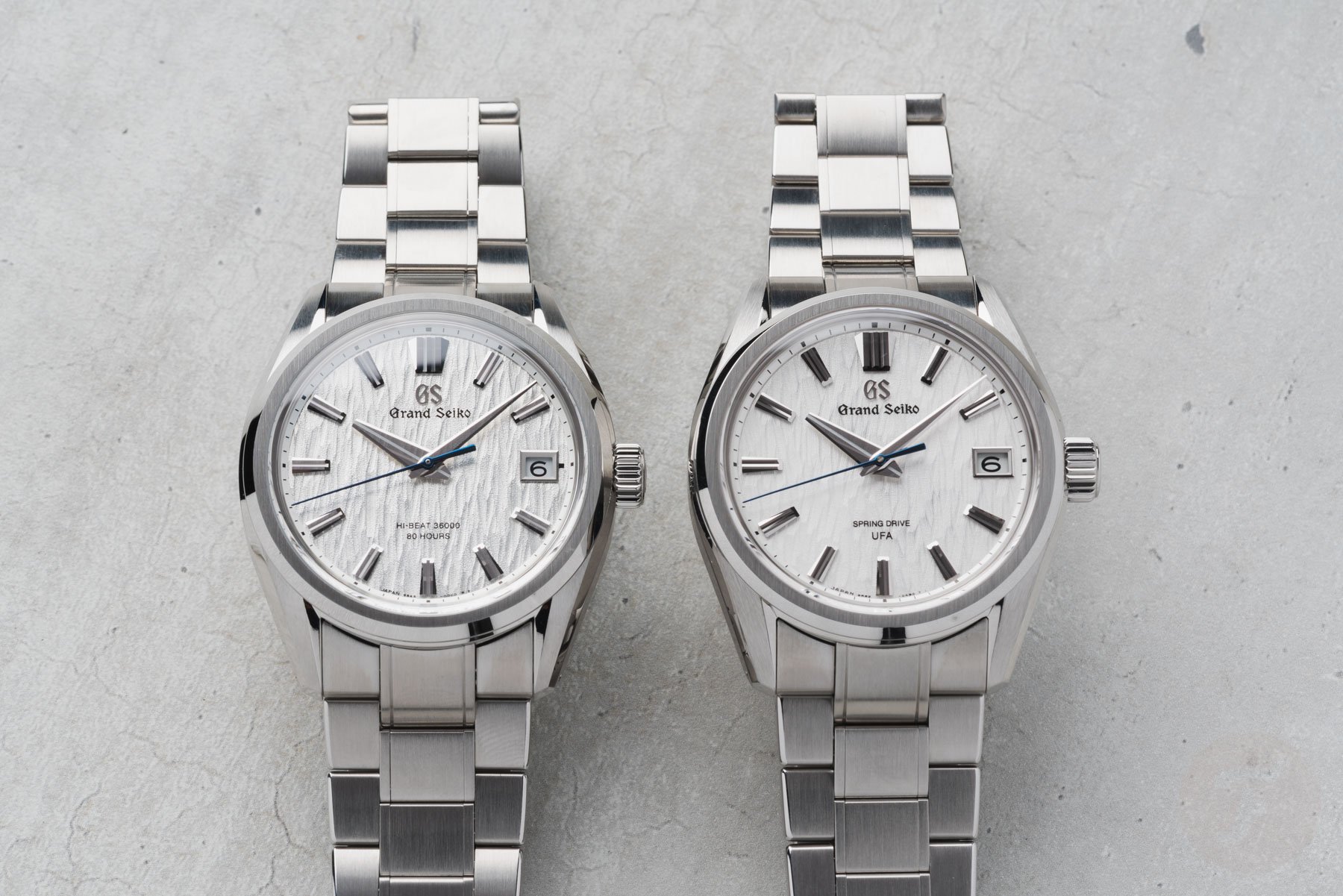
SLGA009 "White Birch"
9RA5

Cal. 9RA5 in a 40 mm steel case, 120-hour power reserve, 5 sec/month accuracy, with the new "White Birch" textured dial. The benchmark modern Spring Drive.

120-Hour Reserve
2023 · Credor
Eichi II
7R14

The artisanal Spring Drive. Hand-finished movement, applied gold indices on enamel dial, made by hand at the Micro Artist Studio in Shiojiri. Roughly 25 pieces a year.

Micro Artist Studio

Latest <a href="/watch-calibers/spring-drive-9r65-9r86/">Spring Drive</a> News

SJX Watches
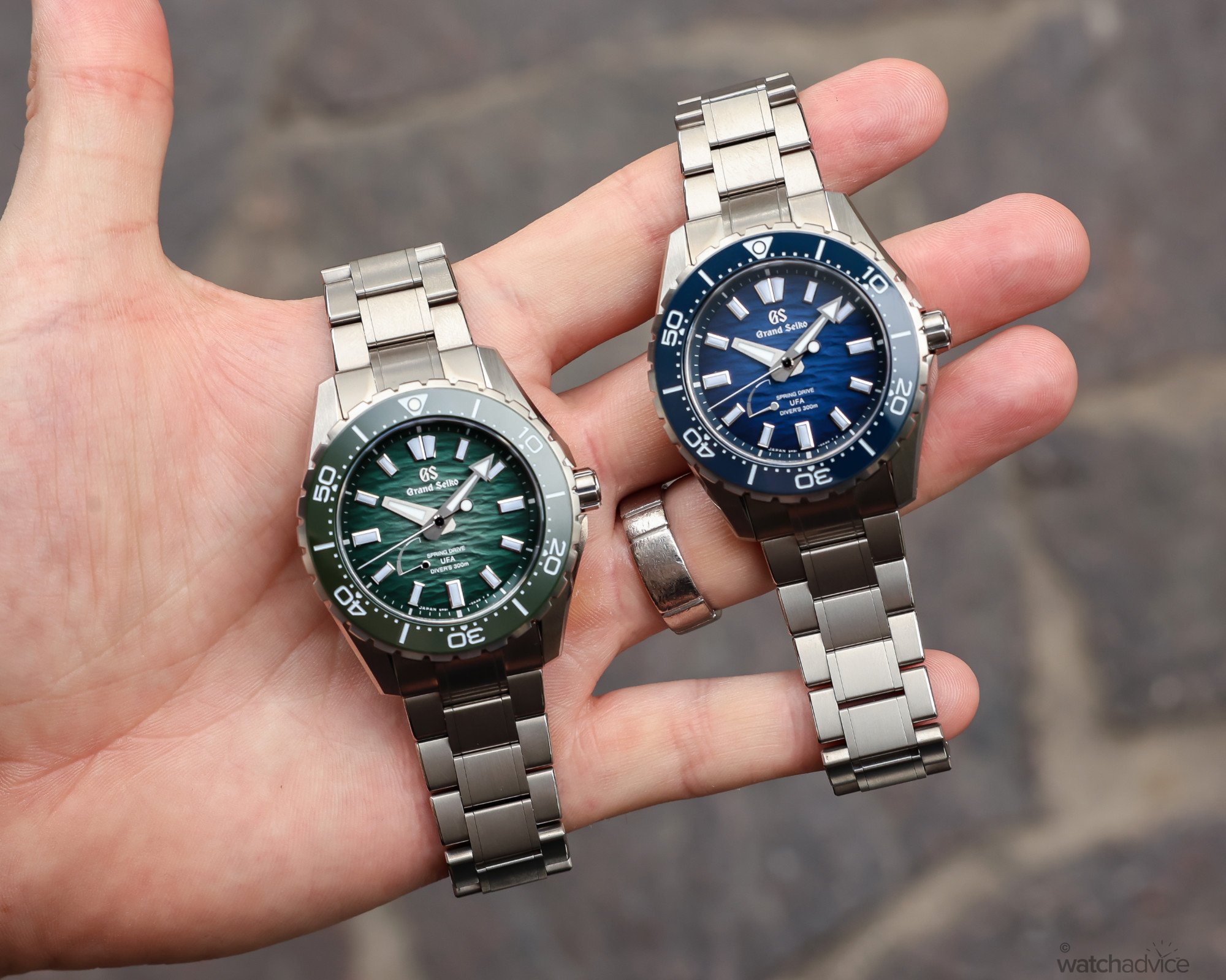
Hands On: Grand Seiko Spring Drive UFA Ushio 300 Diver SLGB025 and SLGB023
Apr 27, 2026
SJX Watches
Home-Made Grande Sonnerie Wins 2026 F.P. Journe Young Talent Competition
Apr 27, 2026
Revolution
A Closer Look: Grand Seiko “Ushio” Diver Spring Drive U.F.A.
Apr 26, 2026
Deployant
WWG26 Armchair Picks: Chester’s Top 3 from the new releases
Apr 20, 2026
Worn & Wound
Watches & Wonders: Grand Seiko’s Nature-Inspired SBGZ011 Spring Drive Limited Release Shows The Shape of Water
Apr 16, 2026
Monochrome
Introducing – The New Grand Seiko SBGY043 Iwao Blue
Apr 16, 2026
Worn & Wound
Watches & Wonders: Grand Seiko Introduces the SBGY043 “Iwao Blue”
Apr 14, 2026
Monochrome
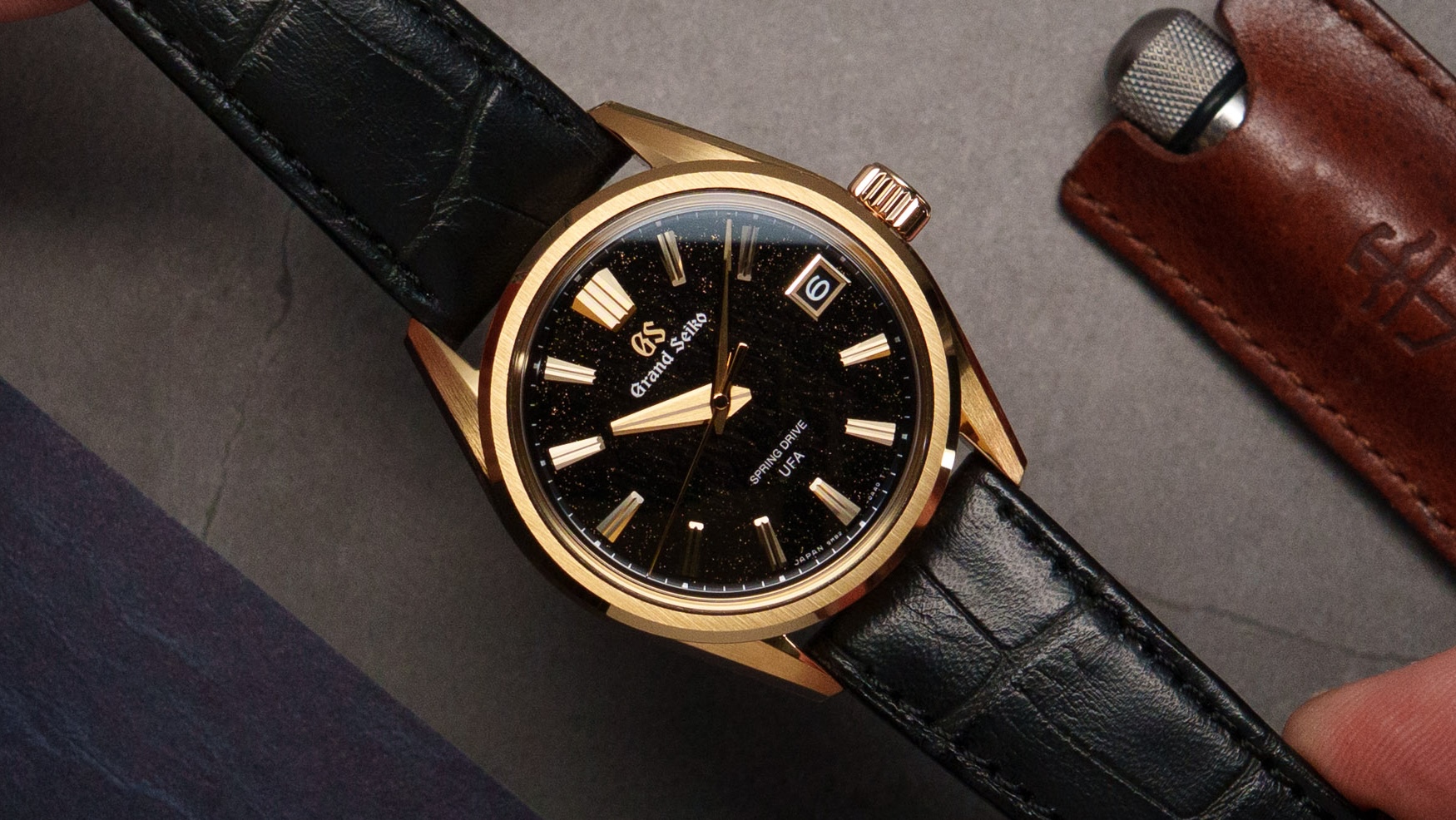
First Look – The Gold Grand Seiko Spring Drive UFA SLGB006 Ice Forest at Dawn
Apr 14, 2026
Fratello
Three New Grand Seiko Spring Drive Models For Watches And Wonders 2026 - The SBGY043, SBGD228, And SBGZ011
Apr 14, 2026
Two Broke Watch Snobs
After Years Of Asking, Grand Seiko Finally Brings Us a Smaller Spring Drive Diver
Apr 13, 2026
Monochrome
In-Depth – The Grand Seiko Spring Drive UFA Ushio 300 Diver, GS’ Smallest and Most Accurate Dive Watch
Apr 13, 2026
Fratello
Grand Seiko Unveils The New Evolution 9 Spring Drive U.F.A. Ushio 300 Divers
Apr 13, 2026
View all 236 articles

Learn More