
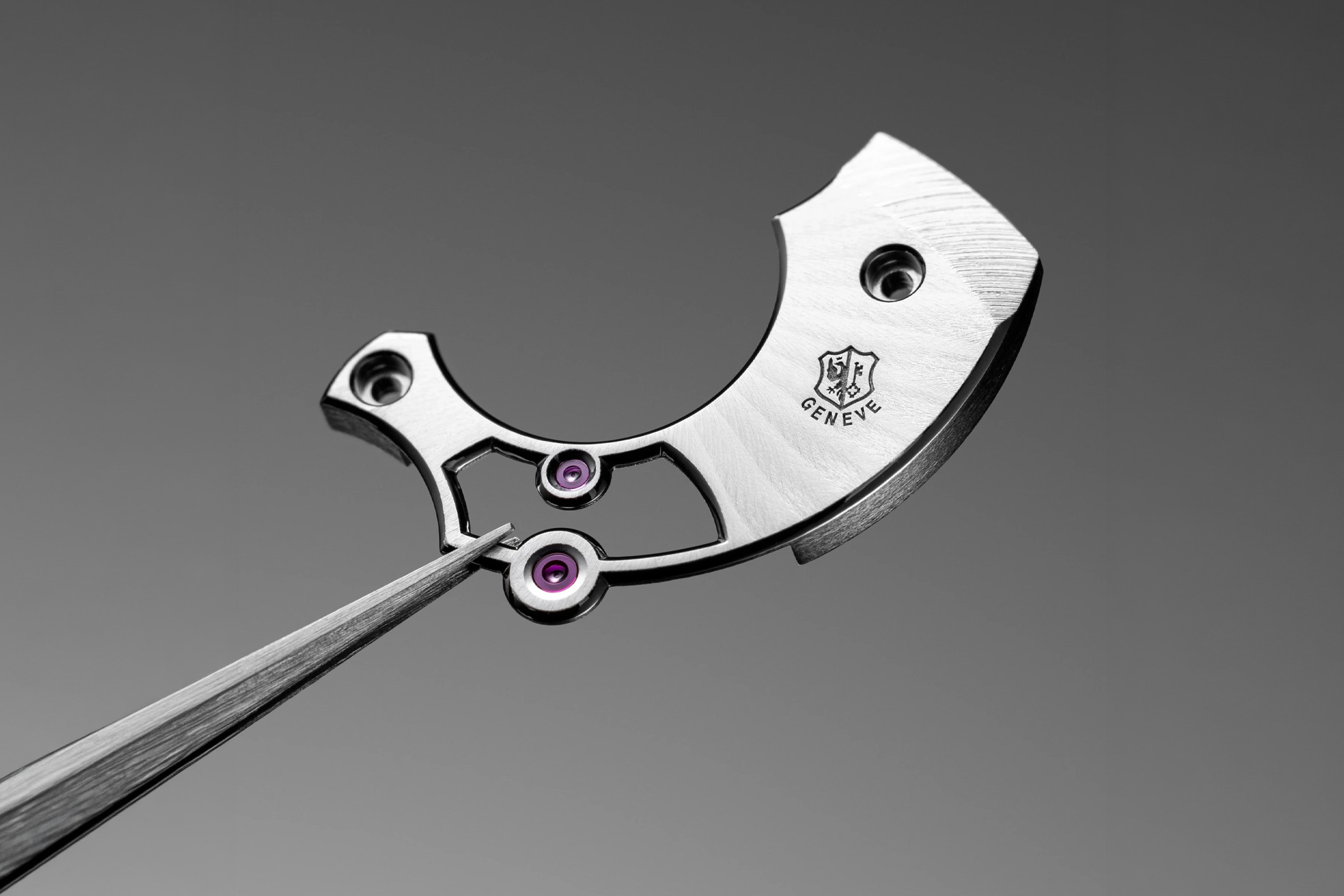
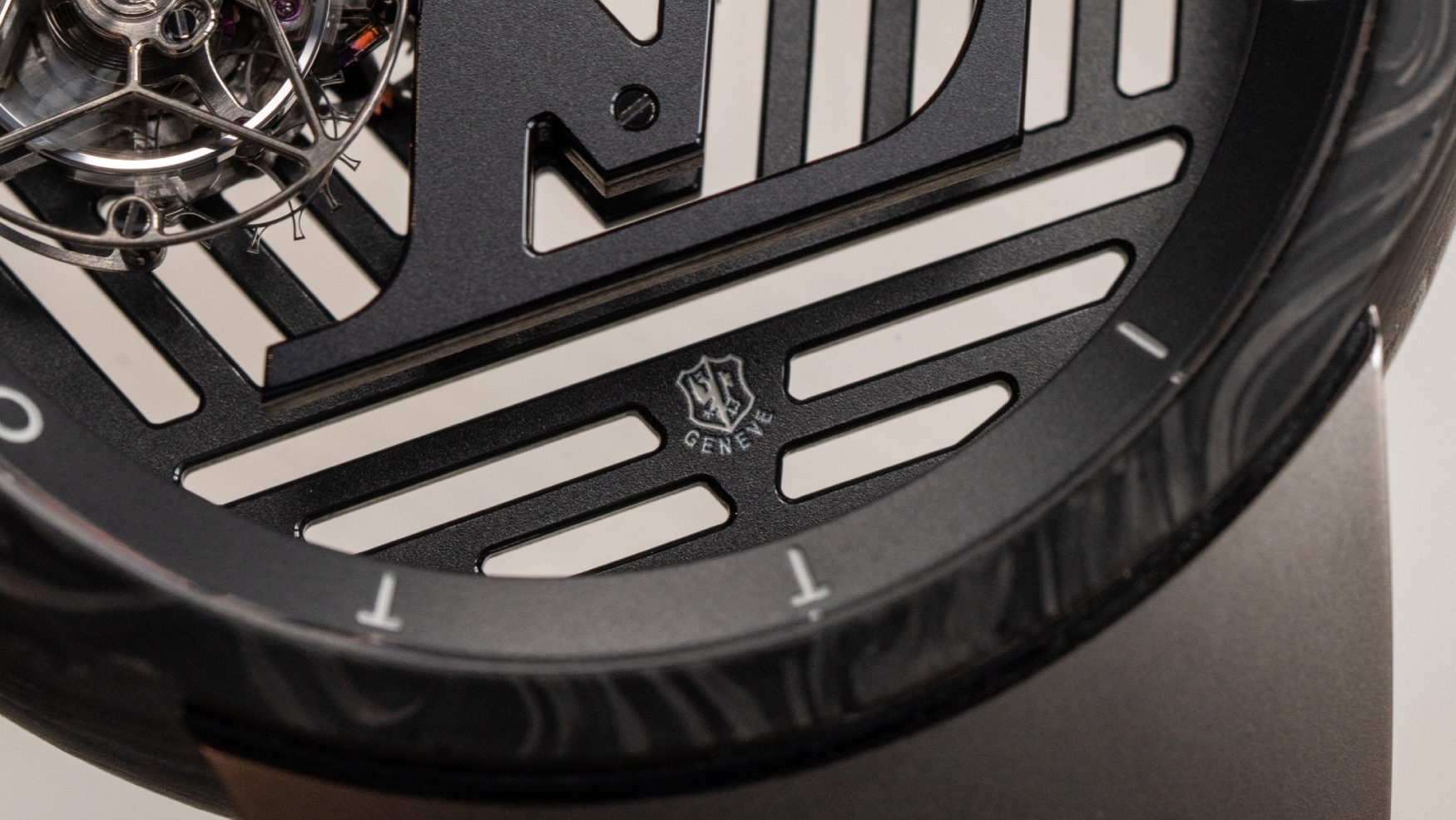
The Geneva Seal, in French Poinçon de Genève, is the finishing-and-performance hallmark administered by the State of Geneva since the federal law of 6 November 1886. It originated as an anti-fraud measure: in the 1880s Geneva watchmaking was being undermined by inferior movements stamped "Genève" on the dial, undercutting the genuine Genevan ateliers on price. The Geneva Conseil d'État introduced the Poinçon as a state-issued mark of finishing quality, applied at the official inspection bureau before a movement could leave the city under the Genevan name. The mark itself is the Geneva coat of arms, an eagle and a key, struck twice on the movement bridges.
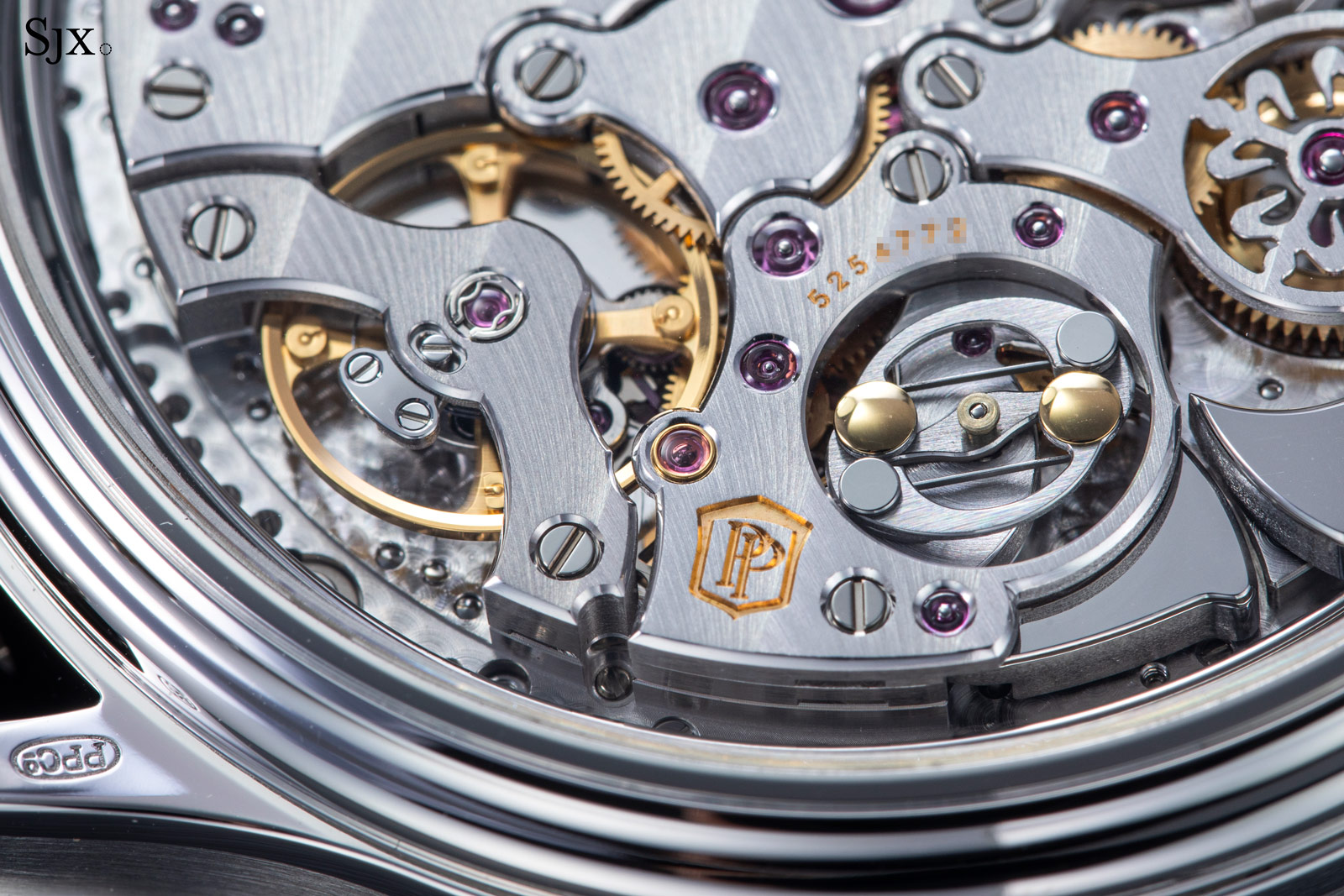
The original 1886 criteria were strictly about movement finishing and construction: chamfered and polished bridges, jewelled bearings in chatons or sunk and polished holes, no exposed screws on the dial side, polished steel work, free-sprung balance with a Breguet overcoil hairspring, and a long list of finishing requirements that came to define what "haute horlogerie" looked like under a loupe. The twelve canonical criteria remained essentially unchanged from 1886 until 2011 and provided the baseline finishing standard that every other quality programme in Swiss watchmaking, the Patek Philippe Seal, Master Chronometer, the Qualité Fleurier, was eventually defined against.
"It is the only seal in our industry that is awarded by an independent body, by a state, by a canton. That is the value of the Geneva Seal."- Juan-Carlos Torres, former CEO of Vacheron Constantin
Through the 20th century the Geneva Seal was carried primarily by Patek Philippe, Vacheron Constantin, Baume & Mercier (under selective use), and a smaller circle of Genevan ateliers. Patek Philippe applied for the Geneva Seal on the majority of its production from the 1950s through the 2000s; the seal on the bridge of a vintage Patek caliber 12-600AT or Cal. 240 is the immediate visual marker of a Genevan-finished movement. In 2009 Patek withdrew from the Geneva Seal programme and replaced it with its own Patek Philippe Seal, applied to the entire watch (movement and exterior) and certified internally rather than by the state. Patek's departure prompted Geneva to overhaul the Seal.
The 2011 reform (formally the Poinçon de Genève 2011) was the first major rewrite of the criteria since 1886. The new standard expanded coverage from the movement only to the complete watch: case, bracelet, water resistance to 30 m, accuracy of ±1 minute / 7 days when fully wound, power-reserve compliance with the manufacturer's claim, and an in-the-wrist test on each finished watch. The original twelve finishing criteria were retained and tightened. Certification moved from the State of Geneva alone to Timelab Geneva, the Geneva Laboratory of Horology and Microengineering, an independent state-affiliated body.
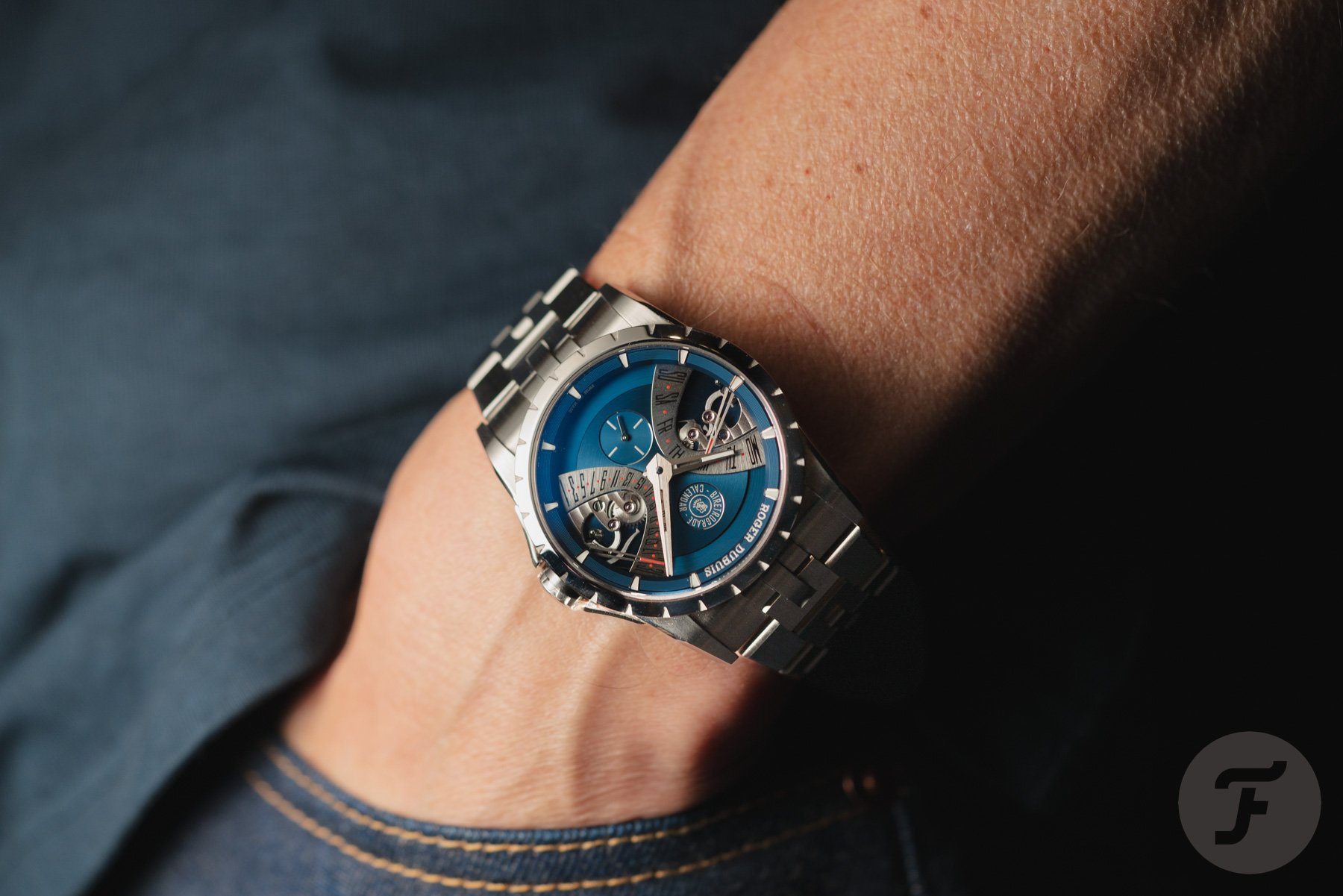
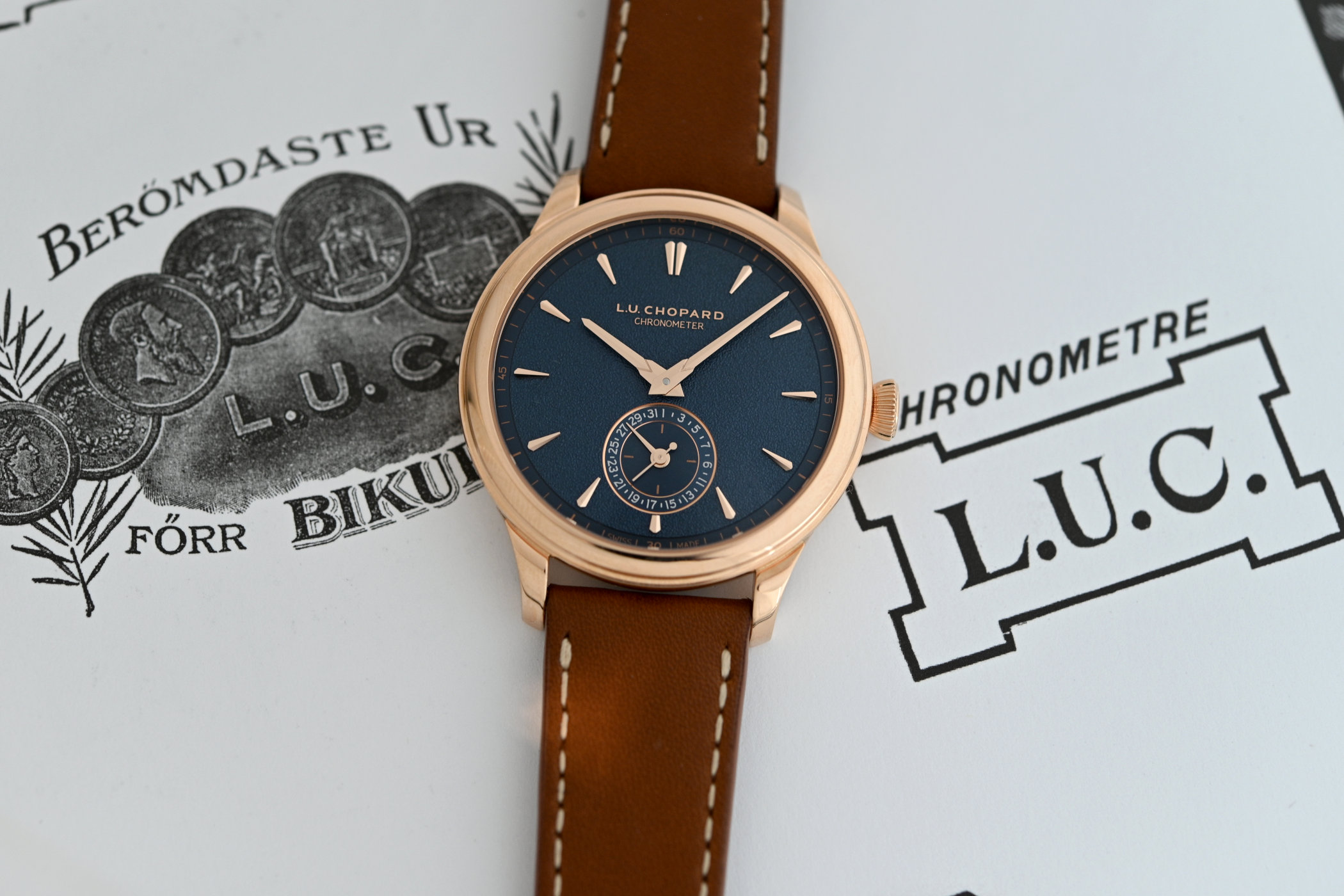
Today the Poinçon de Genève is carried by approximately 5,000 watches per year across Vacheron Constantin (the largest single submitter, applying it to the bulk of its in-house production), Roger Dubuis (every watch since 2003), and Chopard L.U.C (selected references). The seal sits at the top of Swiss watchmaking certification programmes alongside the Patek Philippe Seal, the METAS Master Chronometer, and Qualité Fleurier; the four are not directly equivalent (different criteria; different bodies; some emphasise finishing, some performance, some both) but each occupies an upper-tier position in the formal grading of Swiss output.
For collectors, the Geneva Seal on a vintage Patek caliber, on a Vacheron Patrimony, or on a Roger Dubuis Excalibur is a marker of a complete-cycle Genevan production. The watch was built, finished, adjusted, and certified in the canton; the criteria are publicly audited; the bridge bears a 138-year-old state hallmark. It is, by a meaningful margin, the oldest continuously administered fine-watchmaking quality mark in the industry, and the original benchmark against which every later certification (Swiss Made, COSC, METAS, the Patek Seal) is implicitly defined.






Comments 1