
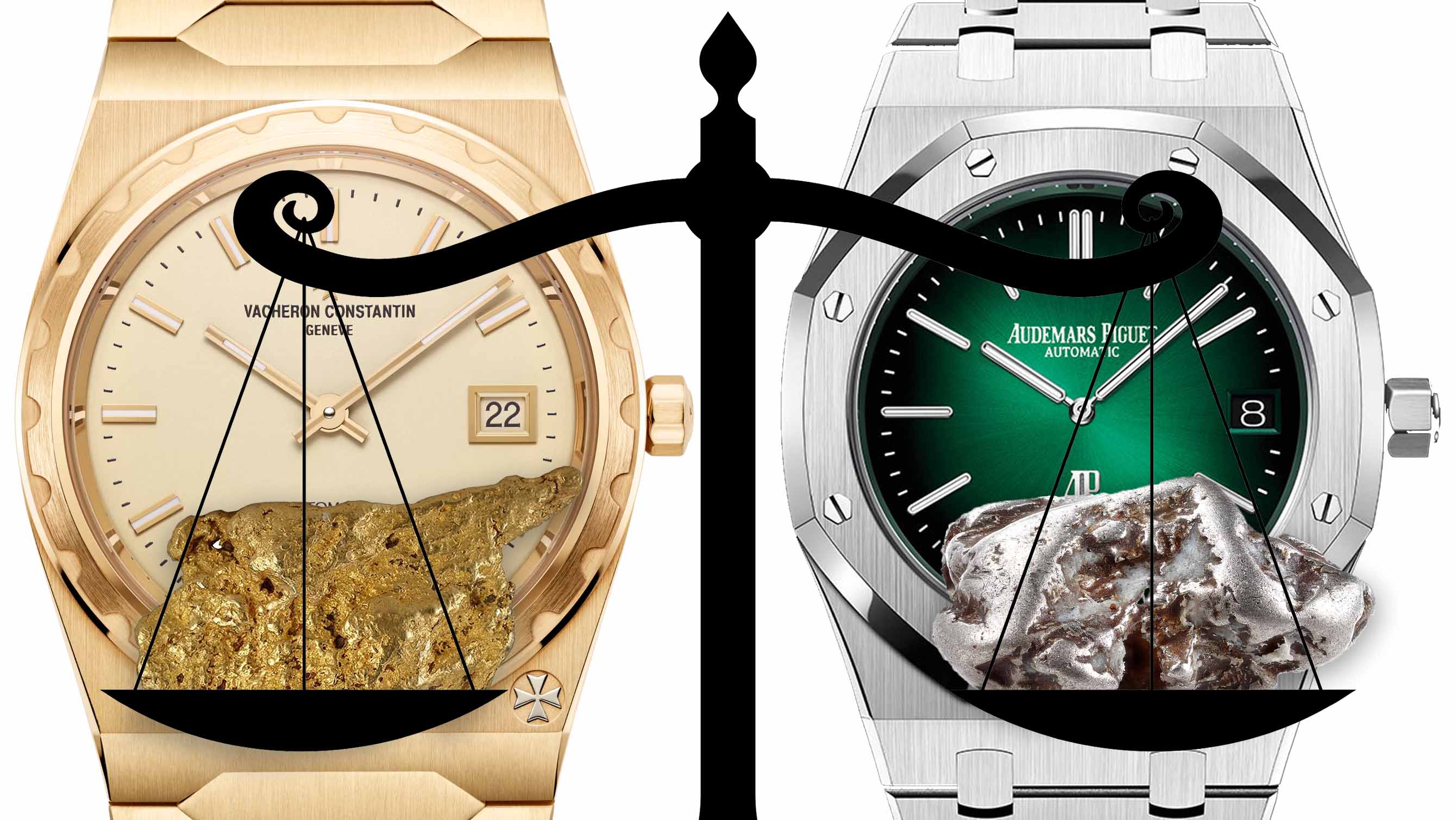
18-karat white gold is 75% pure gold alloyed with 25% palladium and/or nickel (modern white gold is mostly palladium-based for hypoallergenic compliance). Pure gold is yellow; the palladium/nickel alloy bleaches the colour to a slightly grey-cream off-white. Most white-gold watches are rhodium-plated after machining: a thin layer of rhodium electroplated onto the surface gives the bright mirror-white appearance buyers expect. Rhodium is extremely hard (Mohs 6) and corrosion-resistant; the plating typically lasts 5-15 years before showing wear at high-contact points (lug edges, crown).
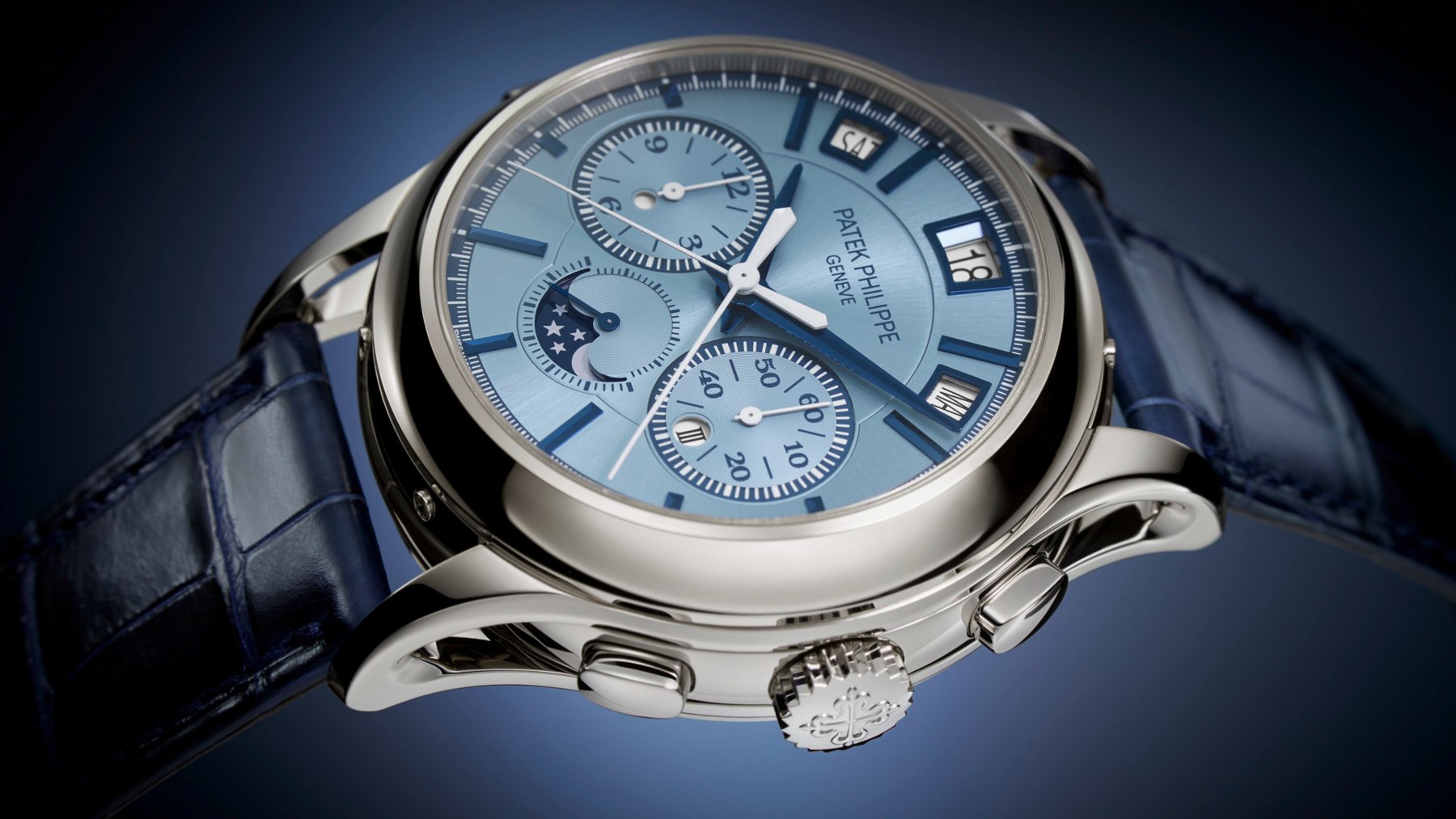
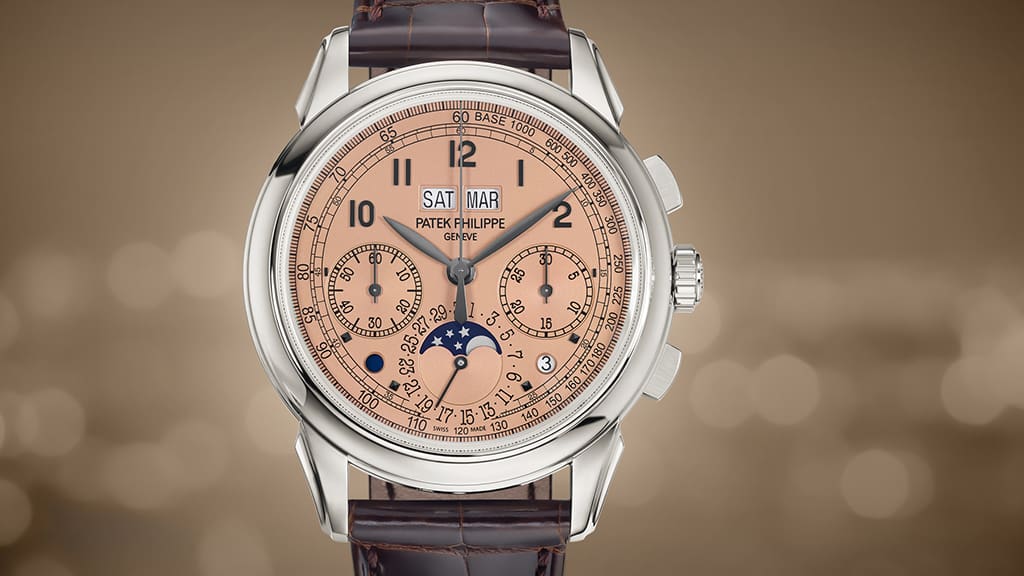
950 platinum is 95% pure platinum alloyed with 5% iridium or ruthenium for hardness. Platinum is naturally bright white; no plating is required. The metal is significantly denser than gold (21.4 g/cm³ vs gold's 19.3 g/cm³), so a platinum watch case is ~30% heavier than the equivalent white-gold case (~10% heavier than steel). The weight is the most immediately perceptible difference: a platinum Patek 5712P feels distinctly heavier than the same reference in white gold.
"Pick up the white gold. Pick up the platinum. The first thing you notice is the weight. After that you cannot un-feel it."- Watch retailer on demonstrating the difference
Maintenance: white-gold rhodium plating wears off over years, particularly at lug edges and crown contact. As the rhodium thins, the underlying alloy's slightly off-white tone becomes visible; eventually the case requires re-plating at service (a CHF 200-500 process). Platinum requires no plating; the surface naturally retains its bright-white colour. Platinum does scratch slightly more readily than rhodium-plated white gold (Mohs 4-4.5 vs ~6 for rhodium plating); the scratches are burnished rather than removed at service, slowly building a soft patina over decades.
Cost differential: at most haute-horlogerie brands, the platinum reference retails 30-50% above the white-gold equivalent. A Patek Philippe Calatrava 5196 in white gold retails at CHF 21,000; the same reference in platinum at CHF 33,000+. The cost differential reflects (1) higher material cost (platinum spot price is ~50% above gold per gram, and the case is ~30% heavier), (2) more difficult machining (platinum is harder on tooling), and (3) brand-tier positioning (platinum is reserved for top-of-line references in most catalogues).
For buyers, the practical guide: white gold is the right choice for a daily-wear luxury watch where the buyer values lightness and lower entry price; platinum is the right choice for a special-occasion or grail piece where the weight, cost premium, and "top of range" signal matter. Both metals are indistinguishable at first glance; the buyer who thinks "I want the best" typically picks platinum at any haute-horlogerie brand. The Patek Philippe Pt mark (Pt950) and the small "Pt" stamp inside the lug are the visible authenticators.



Comments 1