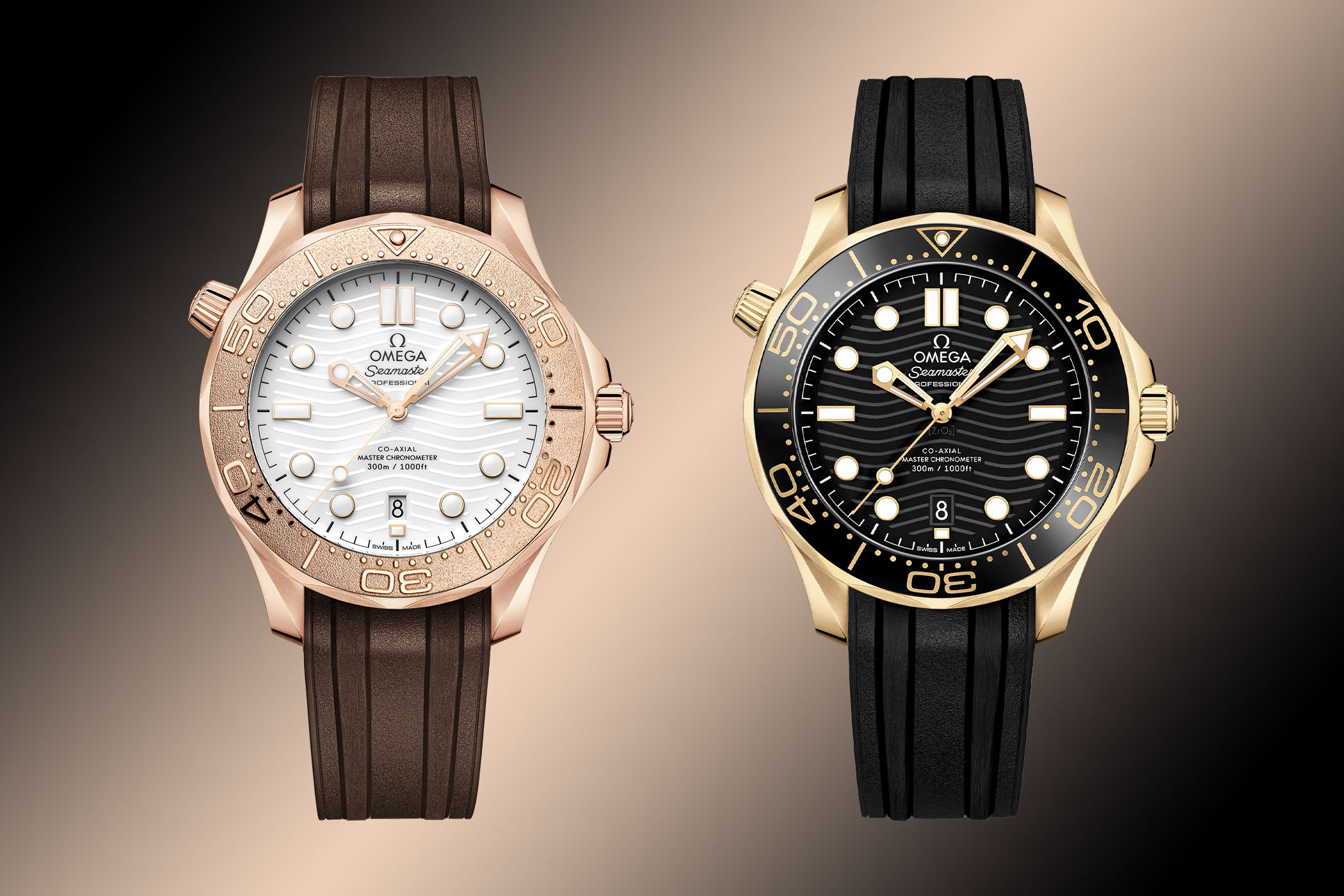
Conventional 18-karat rose gold is a copper-modified gold alloy: 75% gold + 25% copper (and small amounts of silver). The copper gives the alloy its characteristic warm pink-red colour. The chemistry is, however, unstable over decades: the copper component slowly oxidises when exposed to ambient oxygen, sweat, and skin oils, causing the alloy to gradually shift colour toward conventional yellow gold. Vintage 18k rose-gold watches from the 1950s-70s often appear visibly more yellow than their original photographs.
Brands have addressed this with various proprietary rose-gold alloys: Rolex's Everose Gold (2005, with platinum content), Hublot's King Gold (with platinum), AP's Pink Gold, and Patek Philippe's Patek Pink Gold. Each adds a noble metal (platinum, palladium, or silver) to stabilise the alloy chemistry. Omega joined this race in 2013 with Sedna Gold: 75% gold + 12.5% copper + 12.5% palladium (and trace silver). The palladium is the key addition; palladium does not oxidise at ambient conditions and forms a microstructure that locks the copper in place, preventing the colour drift over time.
"Standard rose gold drifts to yellow over fifty years. Sedna does not. We named it after the reddest body we could find in the Solar System."- Omega technical announcement, 2013
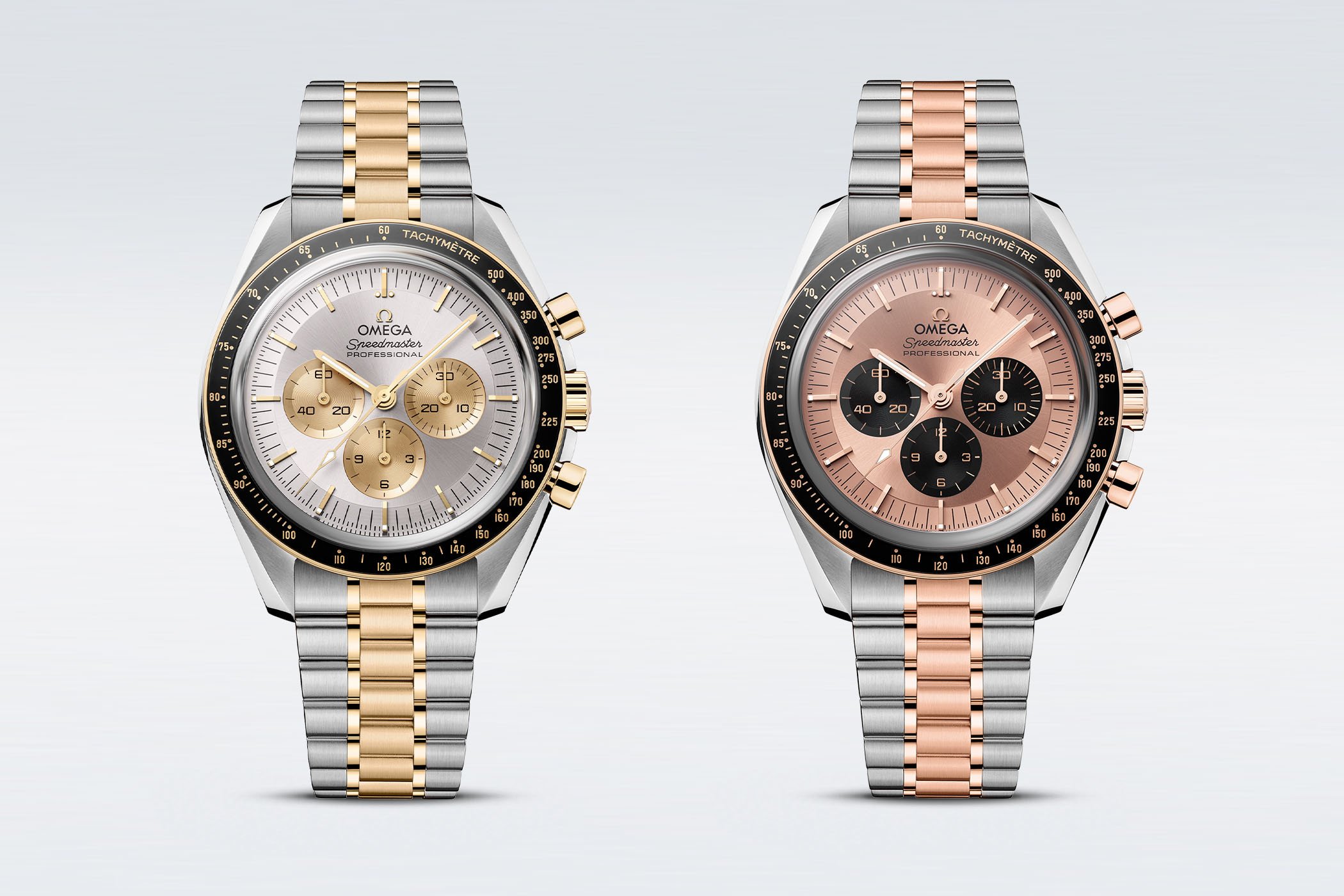
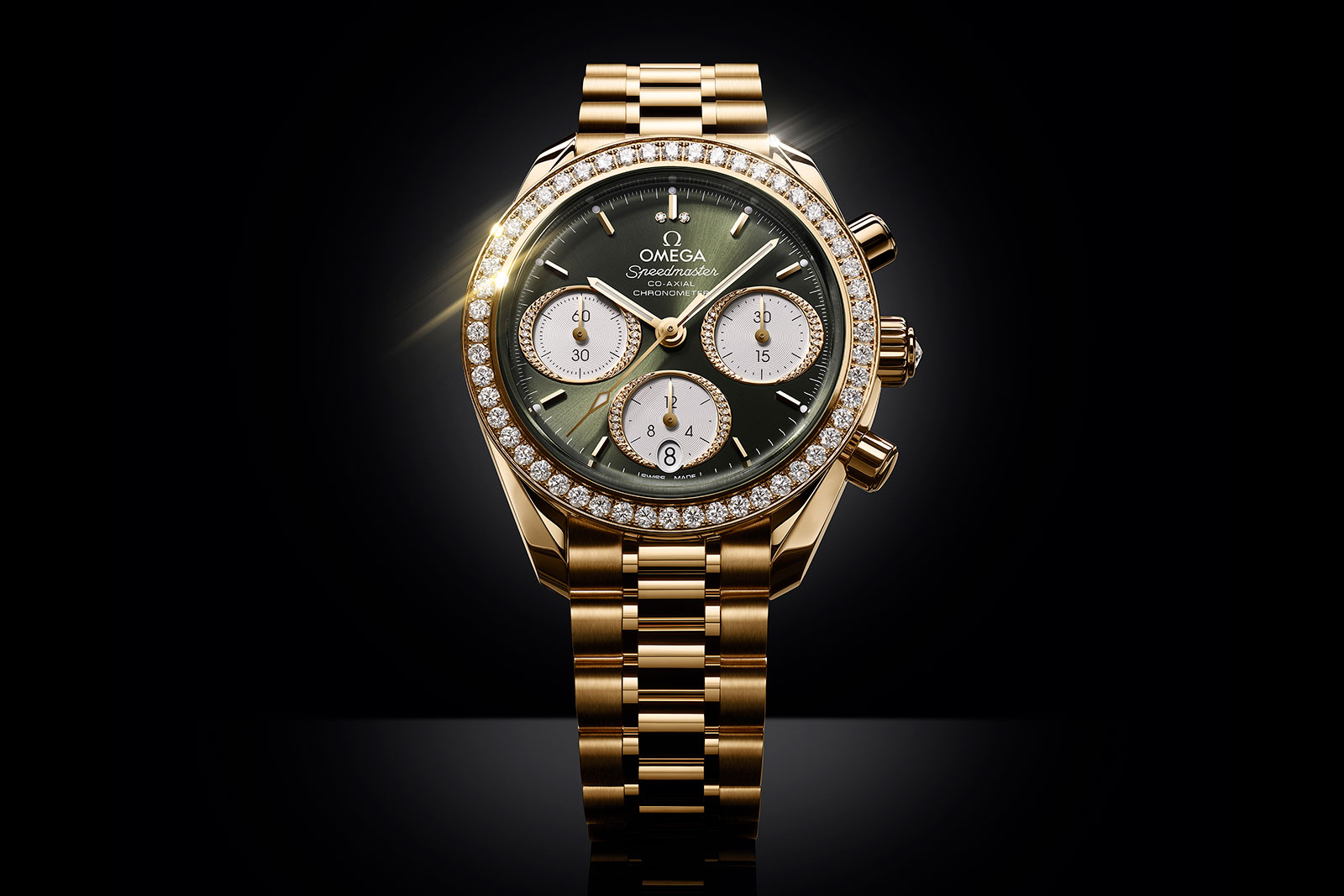
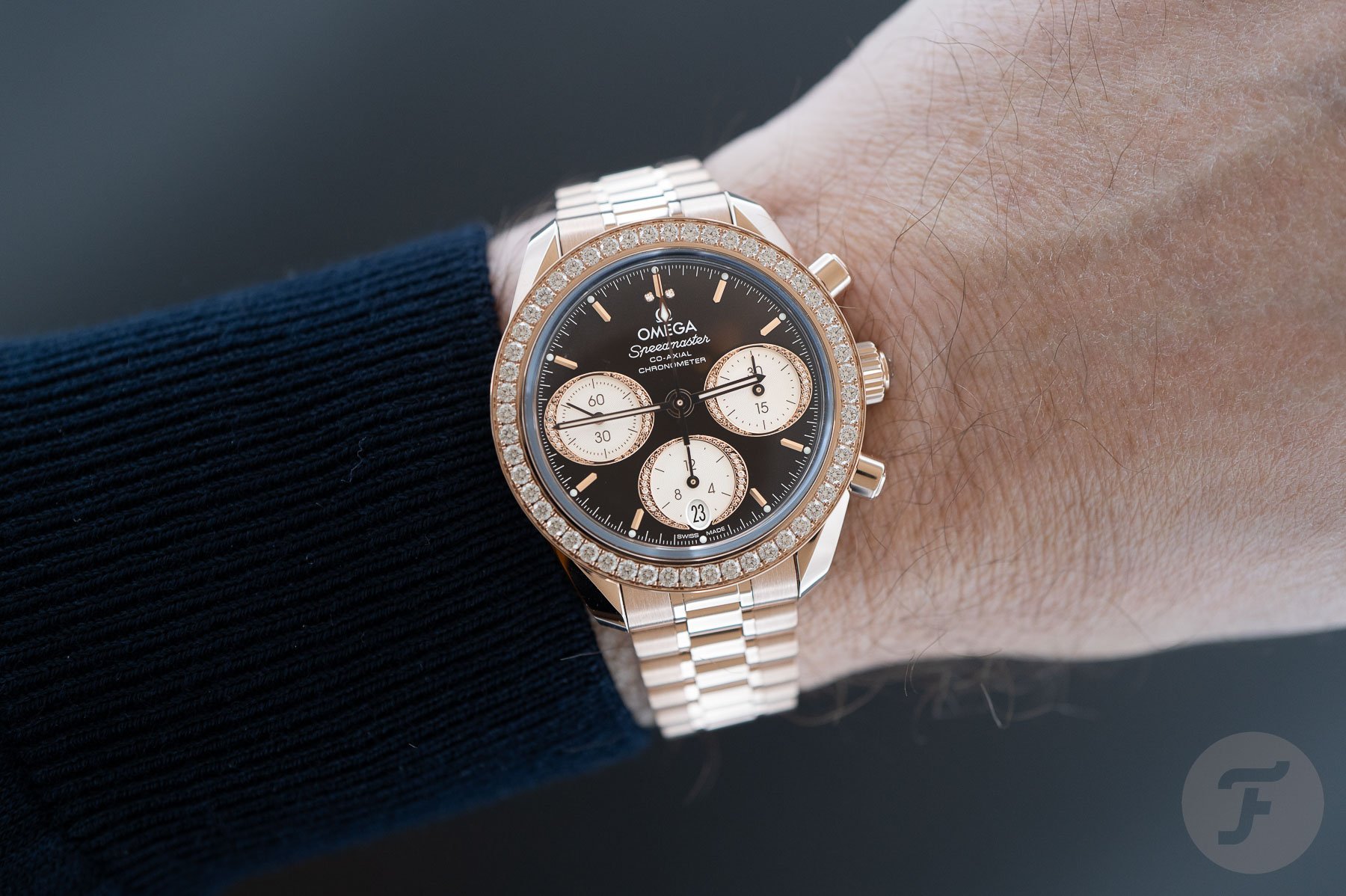
Sedna Gold debuted on the Omega Constellation Sedna 38 in 2013 and the Globemaster family in 2015; it has since been used across the Omega catalogue including the Speedmaster Moonphase, the De Ville Trésor, and the Constellation Manhattan. The colour of Sedna Gold is a slightly cooler, more pinkish rose than conventional rose gold; under direct sunlight the difference is marginal, but in side-by-side comparison Sedna Gold reads more "red-pink" while standard rose-gold reads more "orange".
The name Sedna references 90377 Sedna, a dwarf planet discovered in 2003 in the scattered disc beyond Neptune. Sedna has an exceptionally reddish surface, attributed to long-term cosmic-ray bombardment of organic molecules; it is one of the reddest objects in the Solar System. Omega chose the name to evoke the warm-red colour and the "locked-in stability" of the alloy: Sedna's surface chemistry is essentially fixed because of its slow rotation and distance from the Sun.
For buyers, the practical claim of Sedna Gold is colour permanence over decades; this is difficult to verify in 2024 because the alloy is only 11 years old in production. Conventional rose-gold colour drift becomes visually obvious only after 30-50 years. Omega's testing claims accelerated-ageing equivalent to 100 years of normal wear; the actual long-term performance will be measurable in vintage-watch markets in the 2050s and beyond. In the short term, Sedna Gold is functionally equivalent to other premium rose-gold alloys (Everose, King Gold, Patek Pink Gold) at a similar price point.
Adjacent Omega proprietary materials: Moonshine Gold (an 18k yellow-gold variant for the Speedmaster Moonshine, less reddish than Sedna), Canopus Gold (an 18k white-gold variant with palladium and rhodium), and the Liquidmetal bezel inlay technology. Each is patented and unique to Omega within the watch industry. The proprietary-alloy approach is part of the broader trend (started by Rolex Oystersteel and Everose) of brands developing distinct material identities as part of brand-equity differentiation.


Comments 1