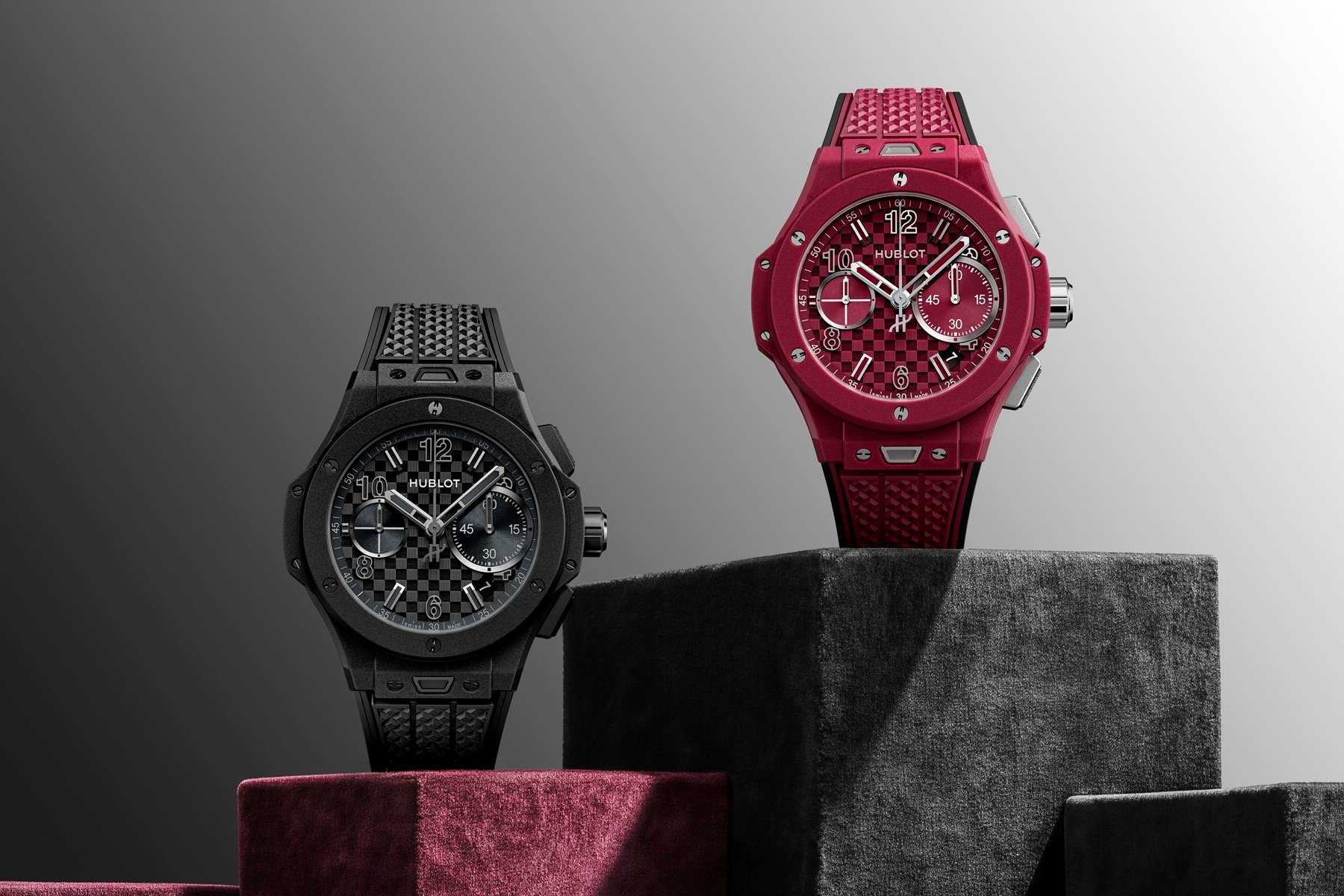
Hublot was founded in 1980 by Italian industrialist Carlo Crocco, and by 2004 was a niche brand best known for being the first to pair a gold watch case with a rubber strap (the 1980 "Hublot Classic"). It was profitable but peripheral. That changed when Jean-Claude Biver - the marketing architect behind the 1980s Blancpain resurrection and the 1990s Omega Speedmaster revival - was appointed CEO in April 2004. Biver's first major project was the Big Bang, launched at Baselworld 2005. It won the Best Design prize at the Geneva Grand Prix d'Horlogerie that year, and within three years Hublot had multiplied its turnover roughly tenfold. LVMH acquired the brand in 2008.
The Big Bang's defining idea is what Biver called "The Art of Fusion": a luxury watch whose case combines radically different materials - ceramic, titanium, rubber, Kevlar, carbon fibre, gold, magnesium, even cast sapphire crystal - in a single, screwed-down sandwich construction. The original 2005 Big Bang used a 44mm case with a brushed titanium barrel, a polished ceramic bezel, and twelve H-shaped titanium screws securing the bezel. The dial left the centre hollow to expose the movement. Inside the early Big Bang sat a Valjoux 7750-based chronograph movement (later the in-house HUB1240 Unico from 2010, with flyback column-wheel architecture visible through the dial).
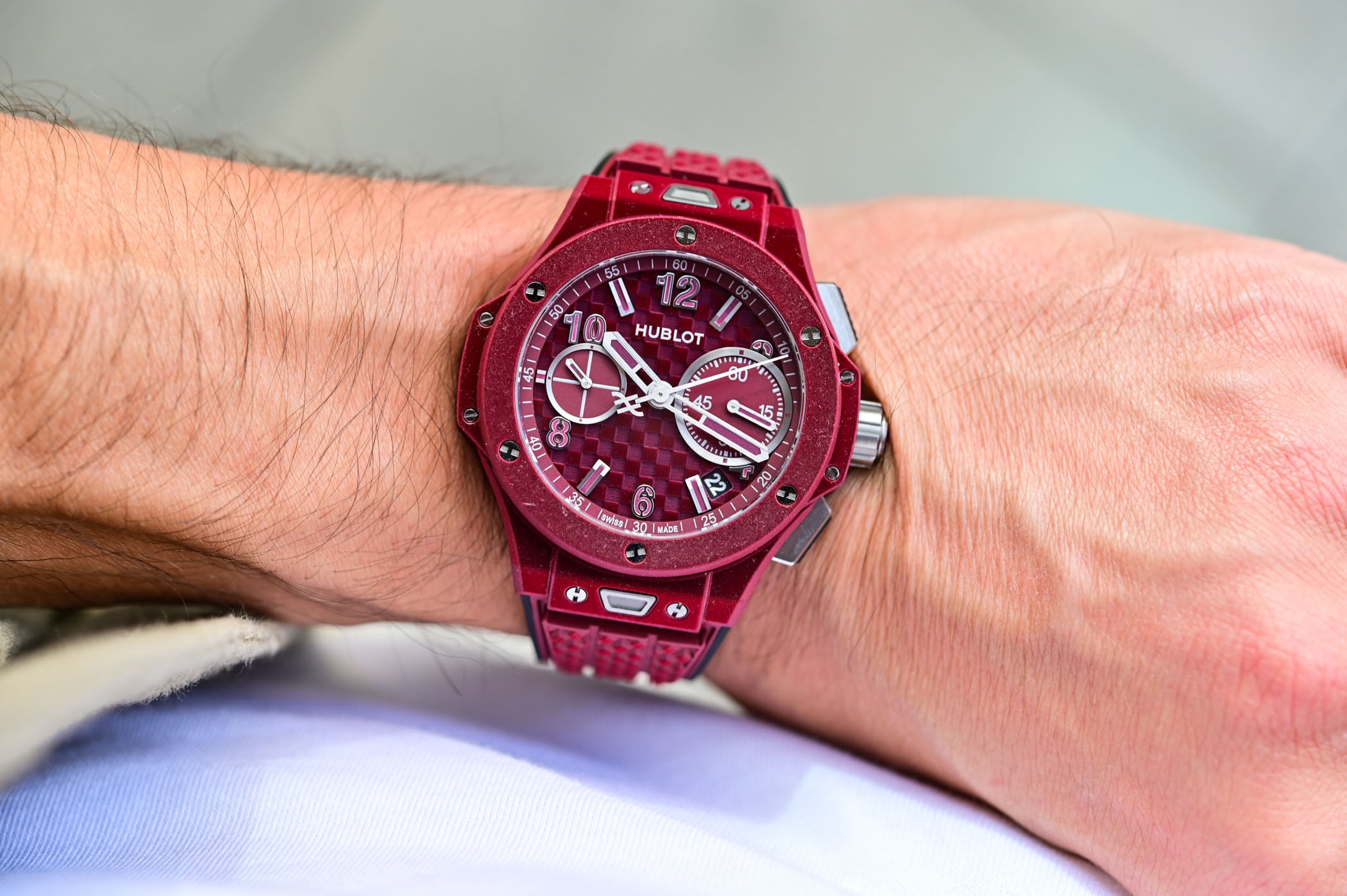
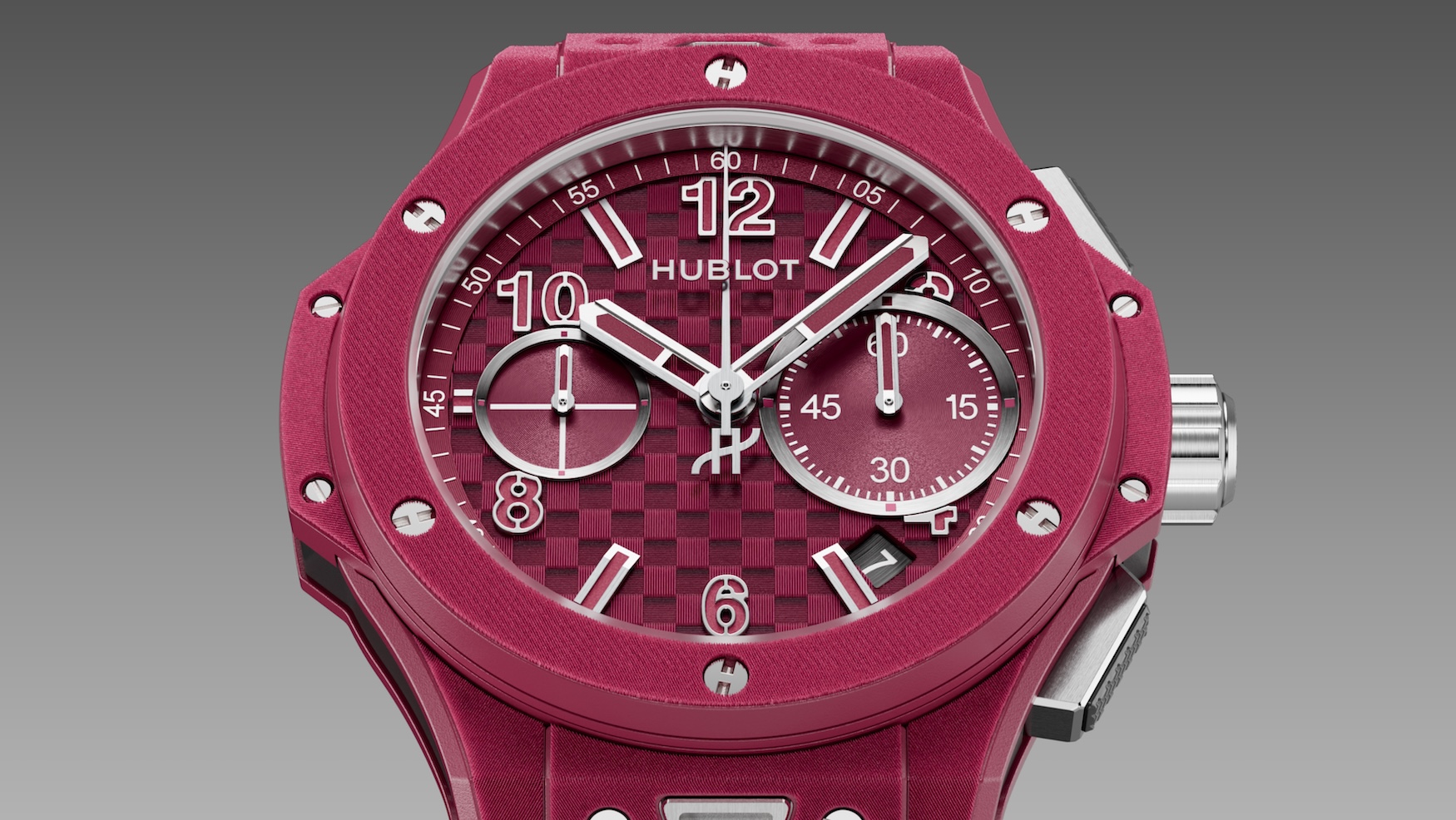
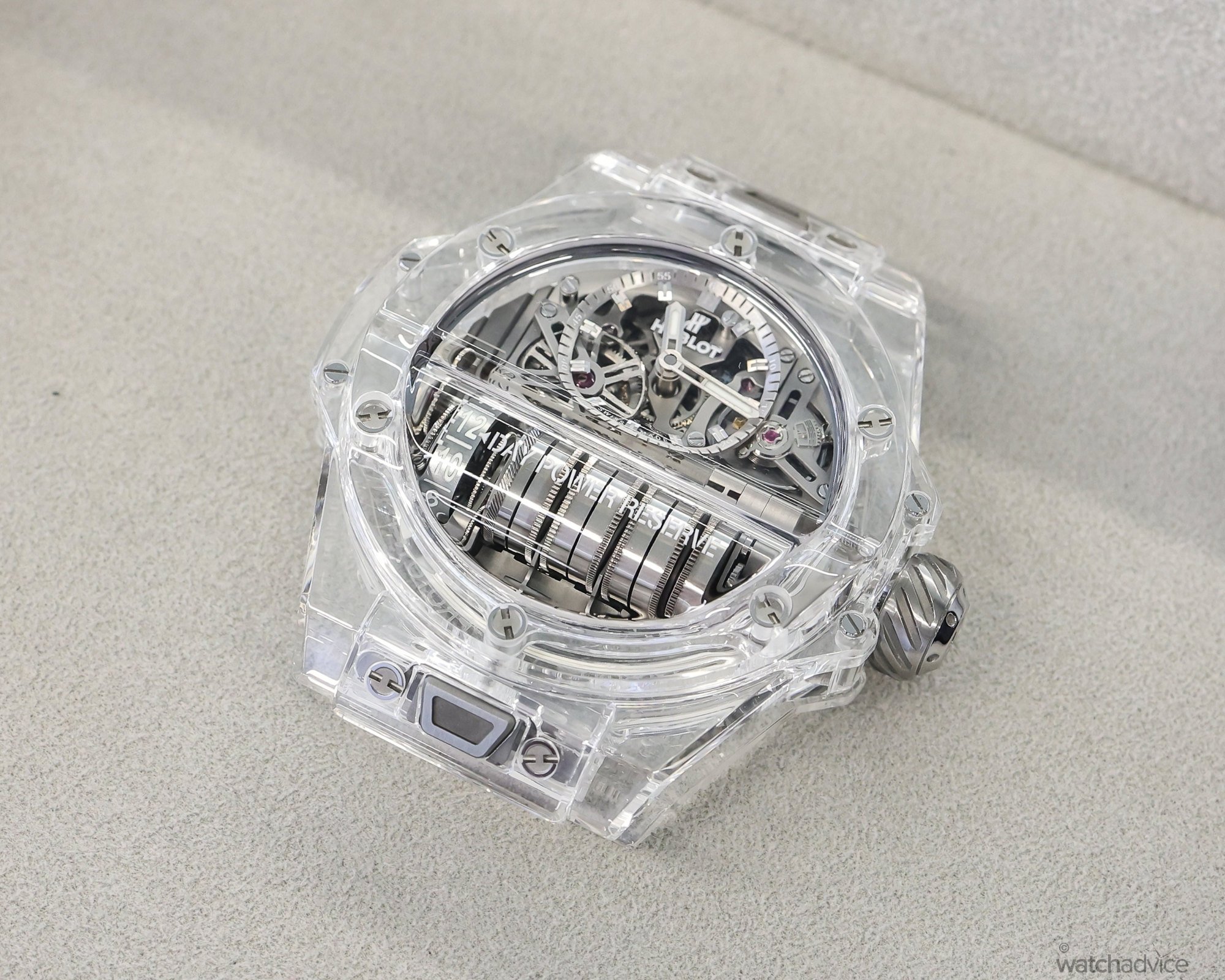
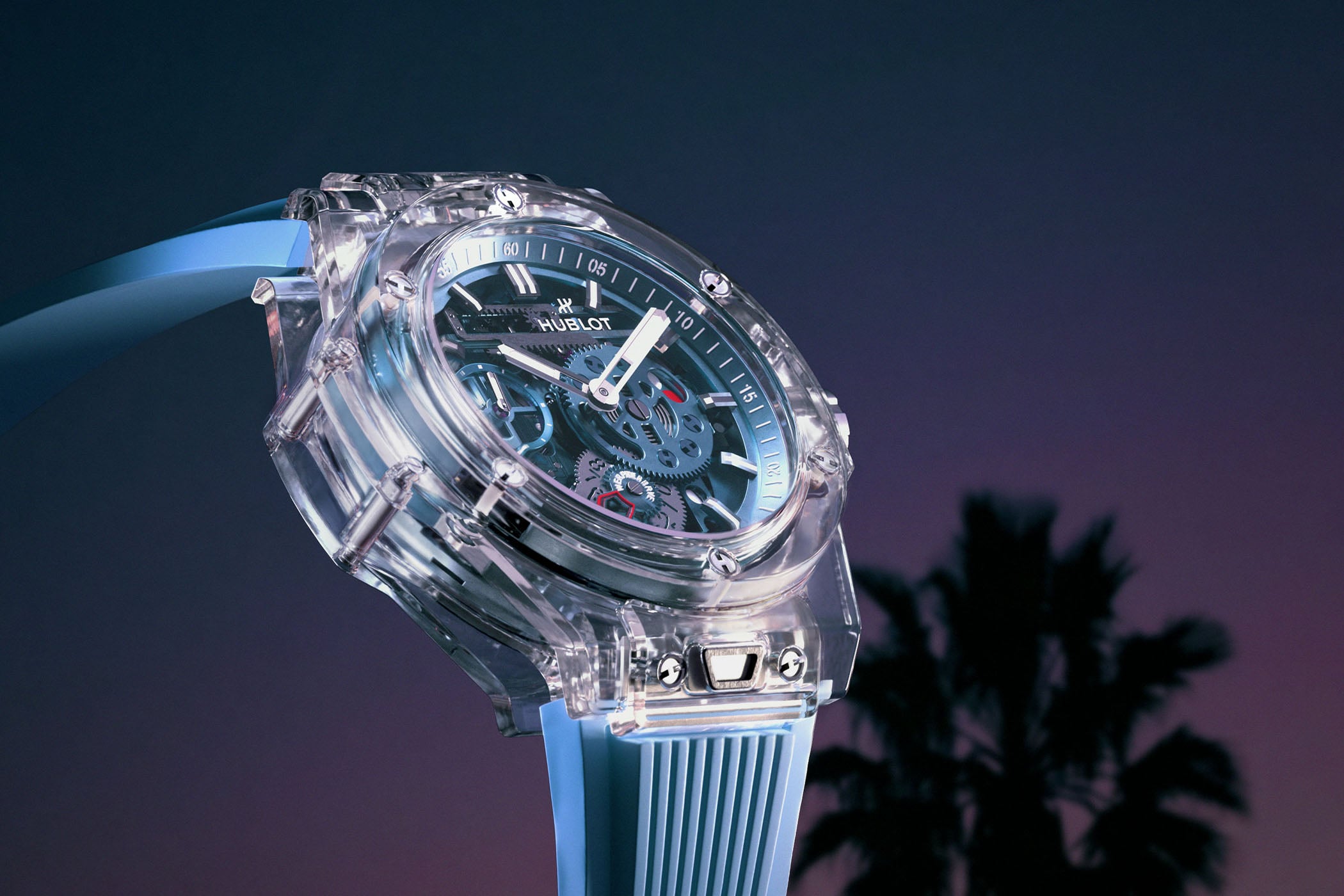
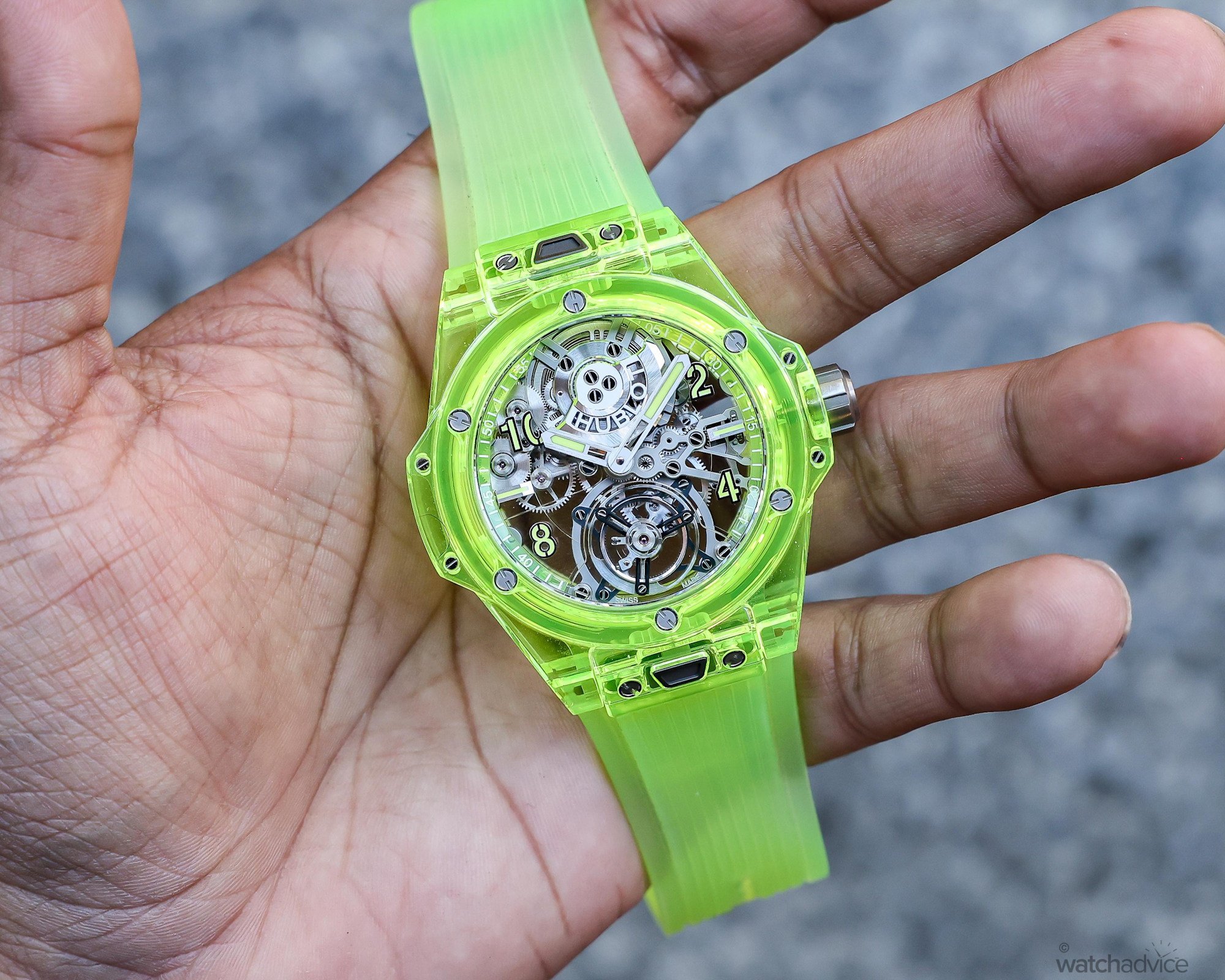
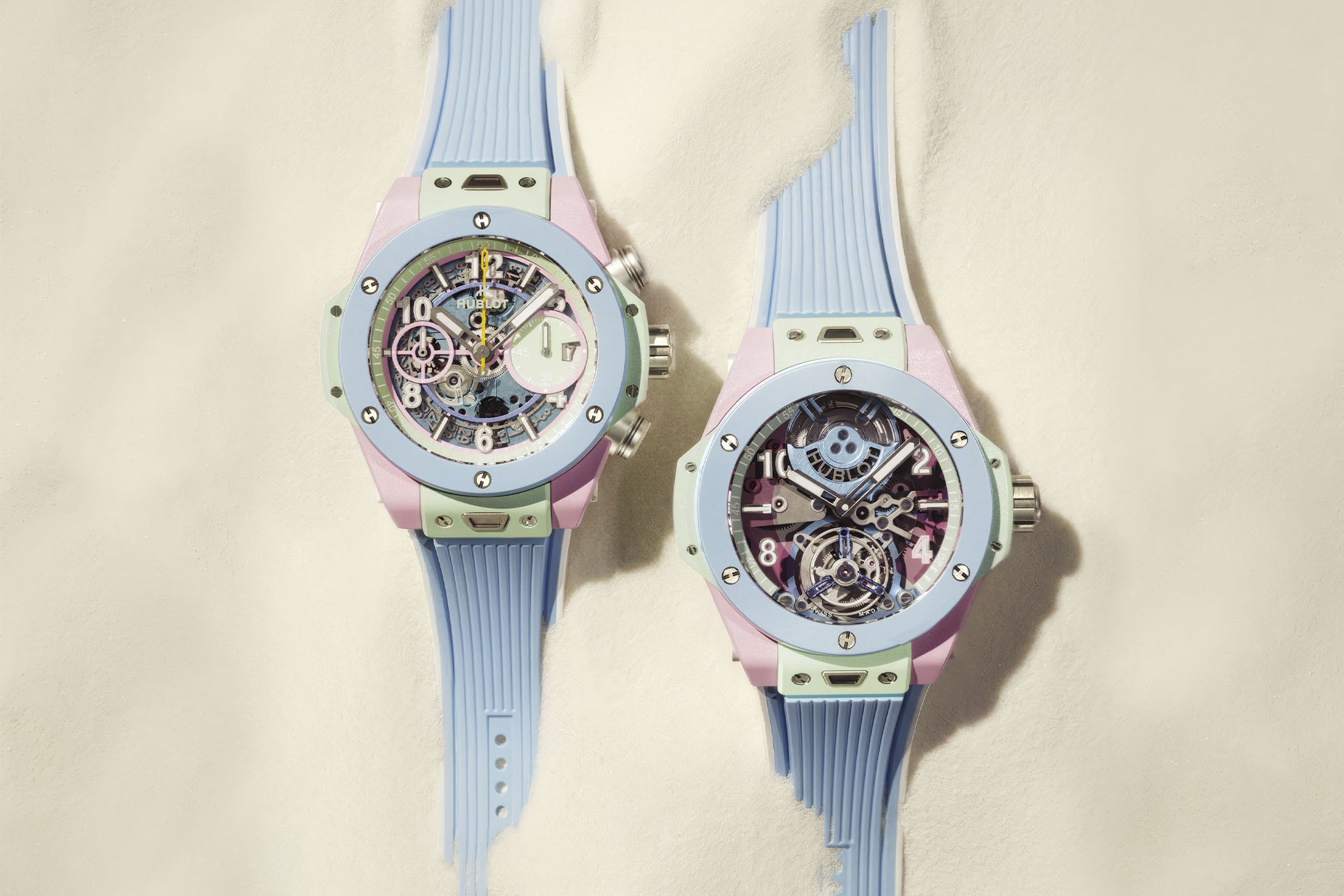
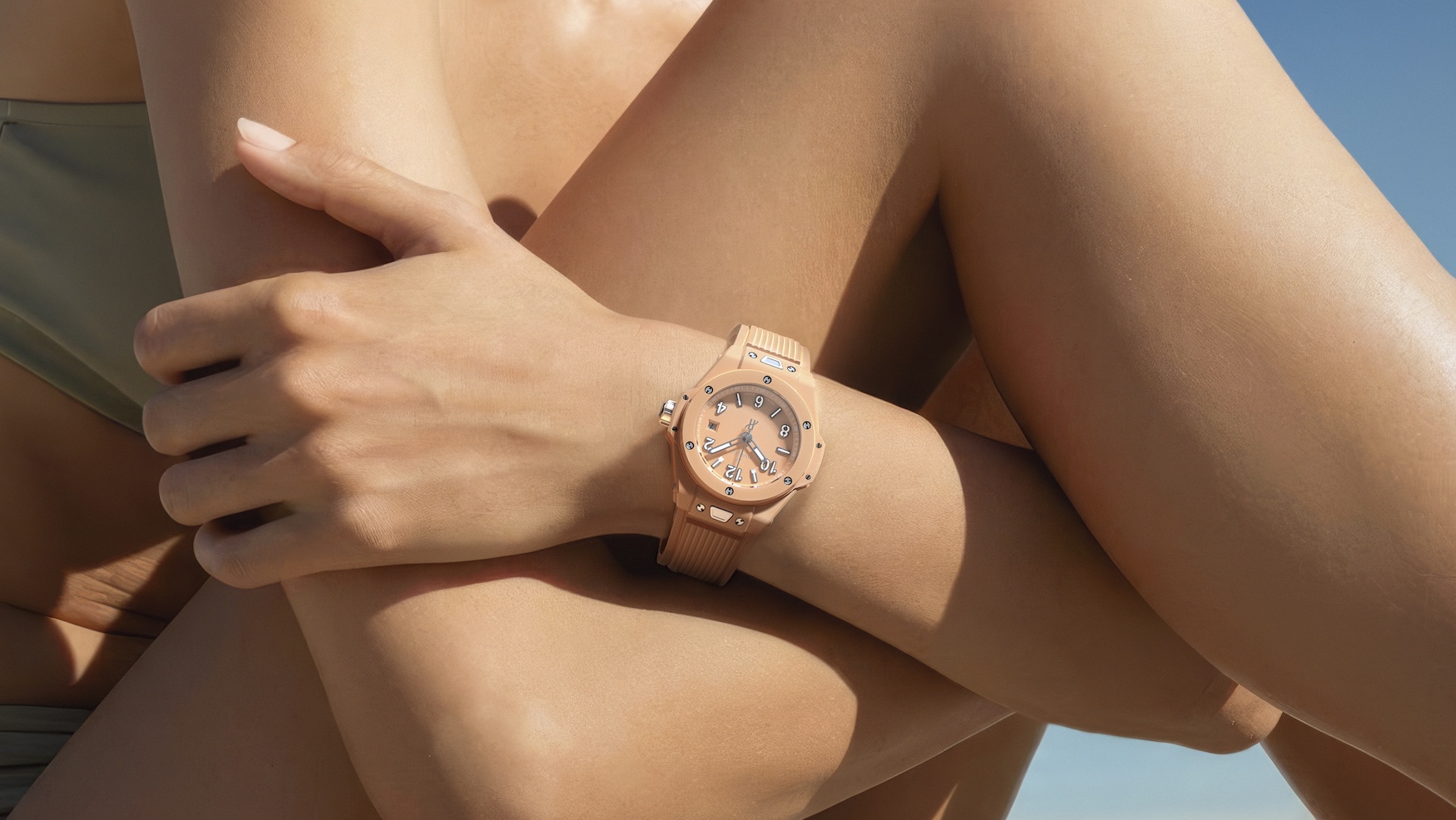
The collection exploded. Through the late 2000s and 2010s the Big Bang case became a platform for every possible material experiment: Magic Gold (a Hublot-patented scratch-resistant 18k gold alloy reinforced with ceramic, 2012), brightly-coloured ceramic bezels in orange, blue, and green, brushed carbon fibre, Sang Bleu designer collaborations with angular geometric dials, and the Big Bang Unico Sapphire (2016, the first fully transparent cast-sapphire chronograph case). The Big Bang also became an enormous sports-partnership vehicle - Formula 1 official timekeeper, FIFA World Cup referee watch, Manchester United, LAFC, and countless other collaborations.
The current Big Bang range centres on the Big Bang Unico 42mm and 44mm with in-house HUB1280 Unico movement (72-hour power reserve, column-wheel flyback chronograph with 330 components). Additional variants include the Big Bang Meca-10 (10-day power reserve), the Big Bang Integrated Time-Only, the Big Bang Integrated Bracelet (the "Hublot Nautilus" introduced 2021), and the Big Bang Tourbillon Automatic. Twentieth-anniversary editions are expected in 2025. Retail: ~$19,800 (Titanium Unico) to ~$525,000+ (Big Bang Tourbillon Sang Bleu sapphire). The Big Bang single-handedly reshaped the luxury watch industry's view of what a flagship chronograph could be.

Comments
No comments yet, be the first to weigh in.