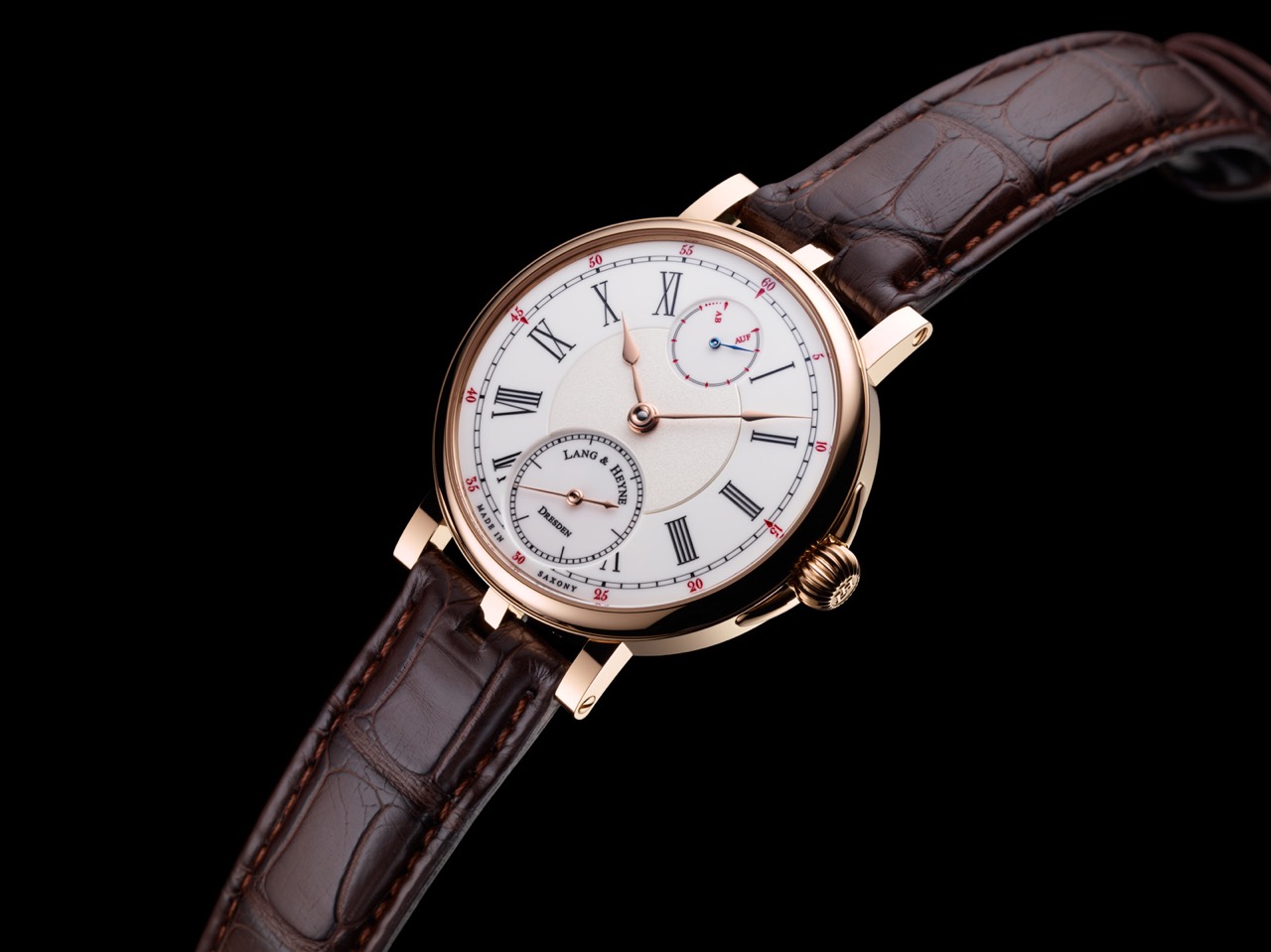
Marco Lang and Mirko Heyne were both trained at the German Watchmaking School (Deutsche Uhrmacherschule) in Glashütte, founded in 1878 by Karl Moritz Grossmann. In 2001 they left employment with other Glashütte manufactures to found their own atelier in Glashütte, positioned as an ultra-independent alternative to the much larger A. Lange & Söhne operating in the same town. The brand produced approximately 40 watches in its first year, grew to around 120 per year by the 2010s, and has never exceeded that scale.
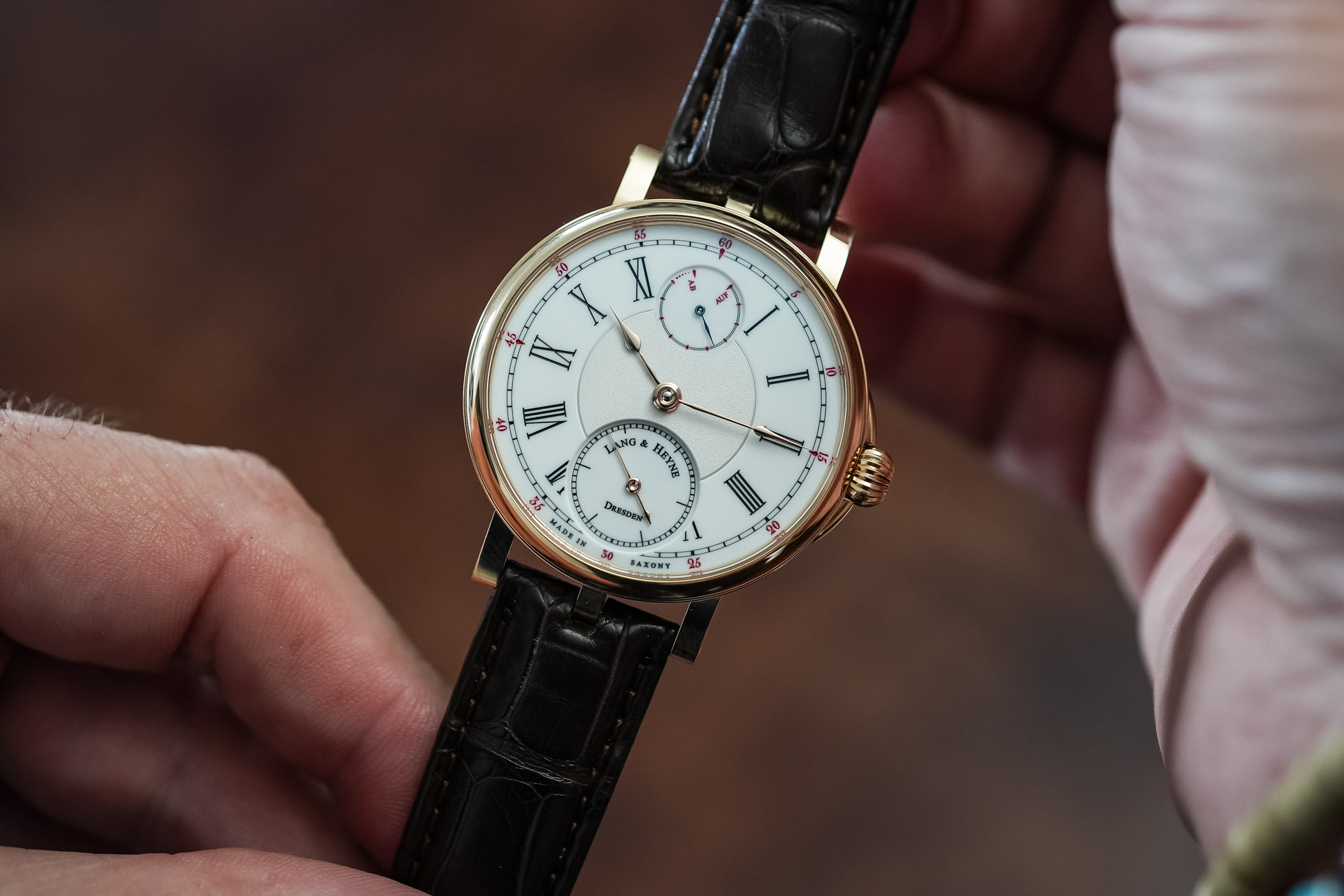
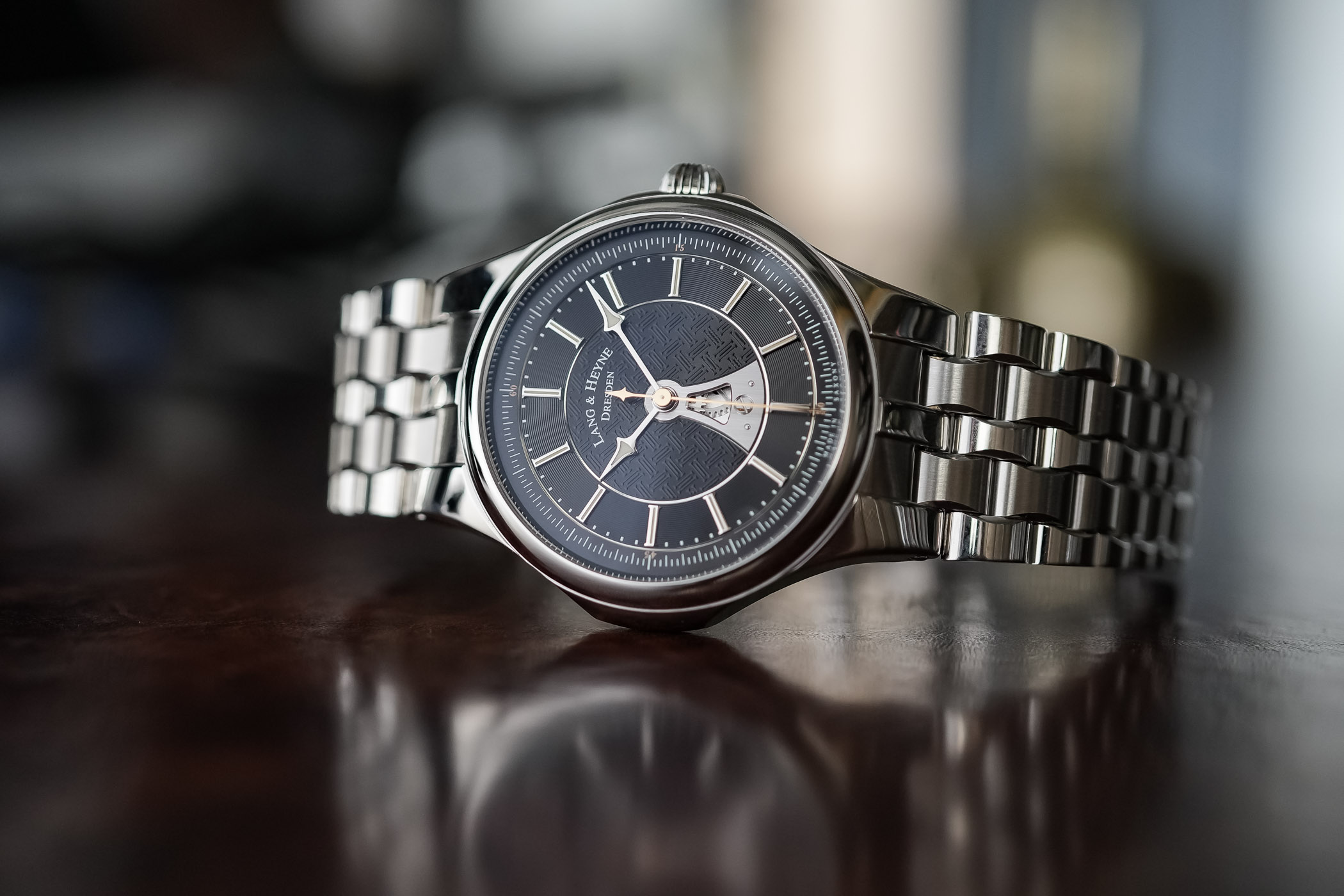
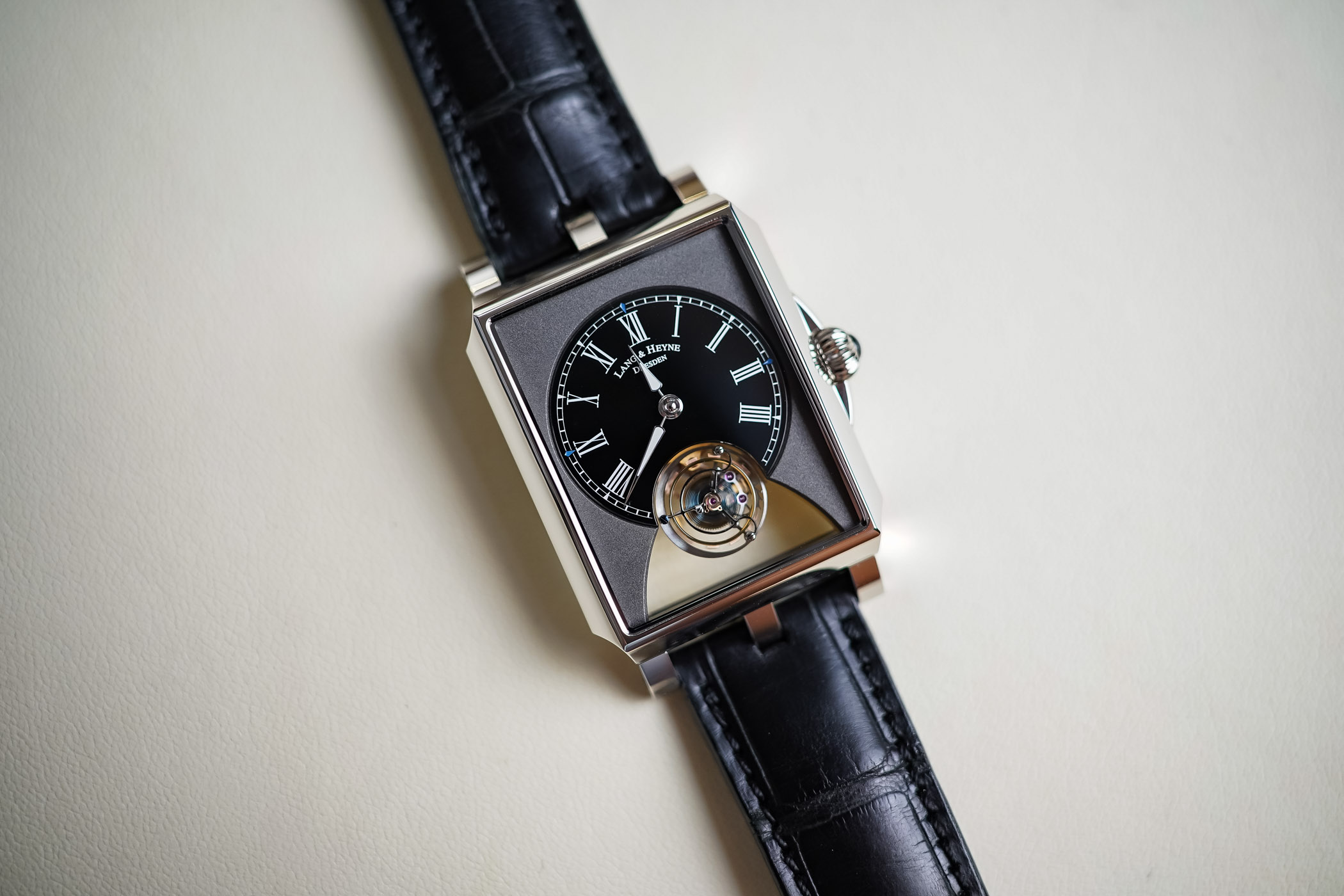
The Lang & Heyne aesthetic is deliberately classical Saxon. Movements feature the traditional Glashütte three-quarter plate, hand-engraved balance cocks, blued-steel screws, and swan-neck regulators. Case work is similarly traditional: round cases with stepped bezels, applied numerals (often in a reserved serif typography), and exposed fluted crowns. The visual reference is Lange-era pre-1945 Saxon watchmaking rather than contemporary Swiss haute horlogerie.
References are named for historical Saxon nobles: the Friedrich II (the first reference, 2001), Anton Albert, Moritz, Konrad, and Georg. Each honours a specific Wettin-dynasty Saxon elector or king. Movements are numbered sequentially (Cal. I through Cal. VII and beyond) rather than given model numbers. Hand-finishing standards are high: interior angles, black-polished sinks, and polished steelwork executed by Lang & Heyne's own bench watchmakers.
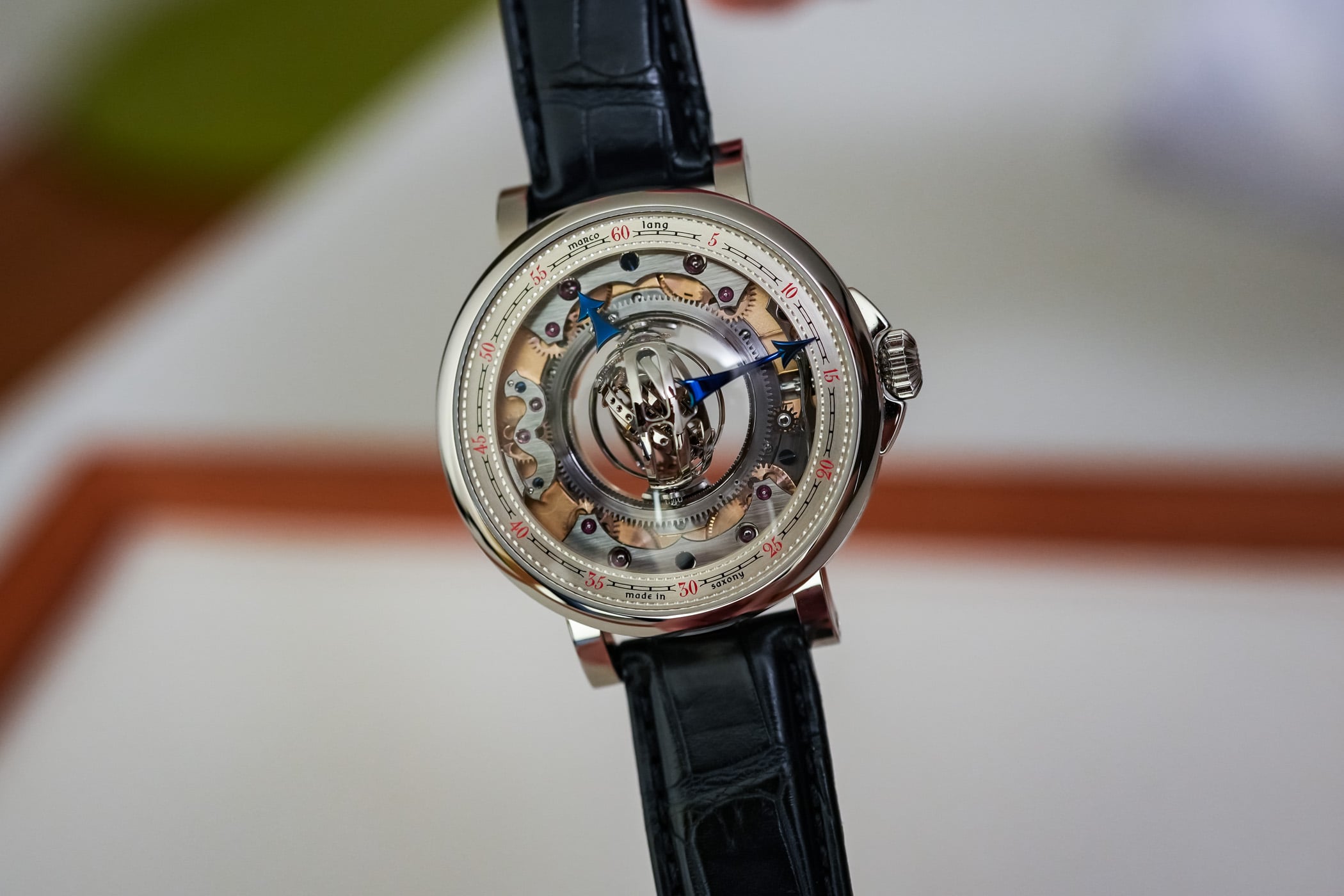
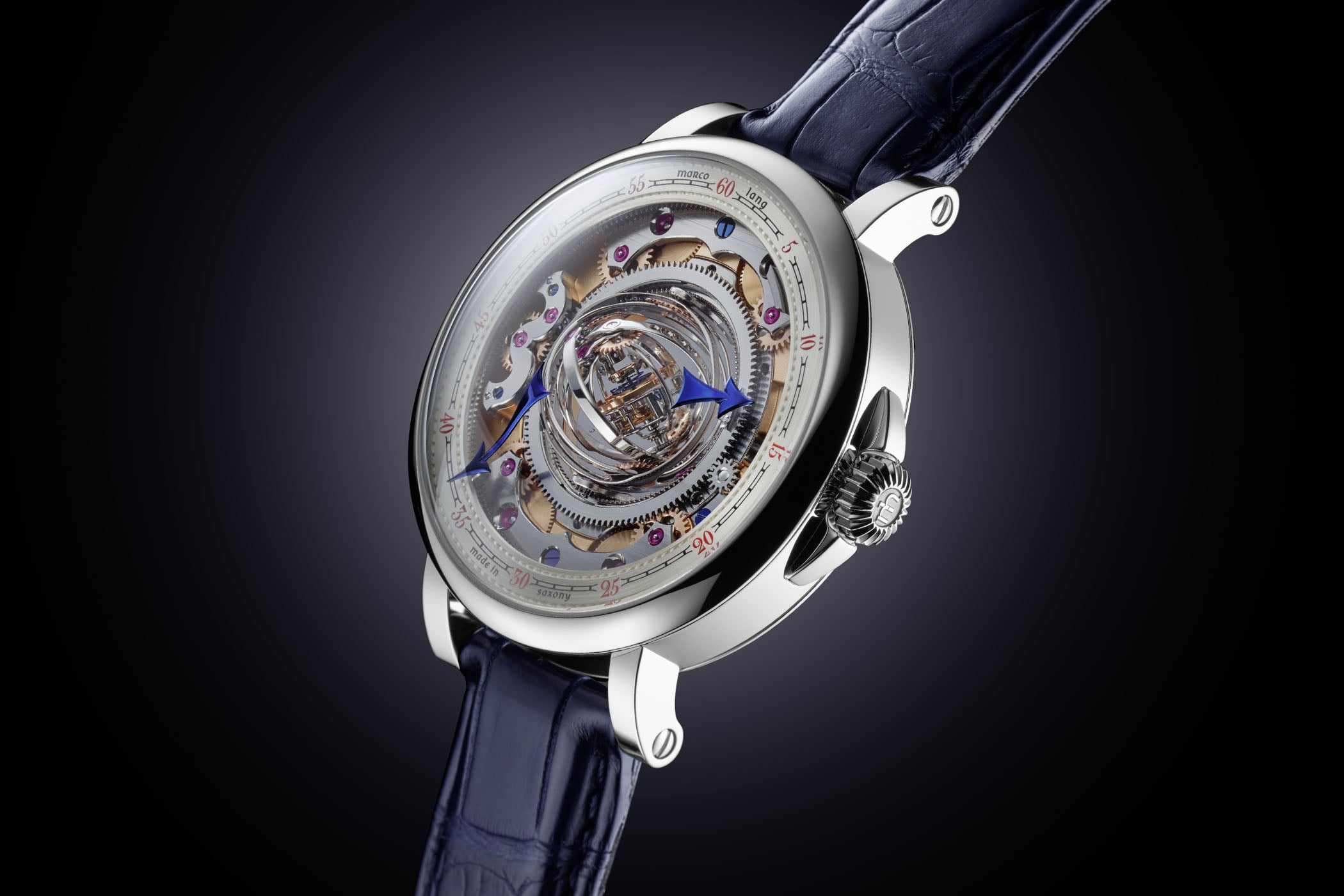
In approximately 2019, the brand went through an ownership change. Marco Lang left to start his own separate brand (Marco Lang Watches) and Swiss investors acquired Lang & Heyne; Mirko Heyne remained technical director. Under the new ownership the production volume has increased modestly while the house aesthetic has remained consistent. Retail runs from approximately €25,000 (Konrad three-hand) to €60,000 (Friedrich II perpetual calendar) and €150,000+ for the more complicated Georg and Moritz references. The brand remains a niche presence in the modern haute-horlogerie landscape, operating as a small, traditional counterpoint to the Swatch- and Richemont-owned Saxon brands.



Comments
No comments yet, be the first to weigh in.