 SJX Watches
Green Mercedes-AMG Petronas F1 Livery for the IWC Mark XX
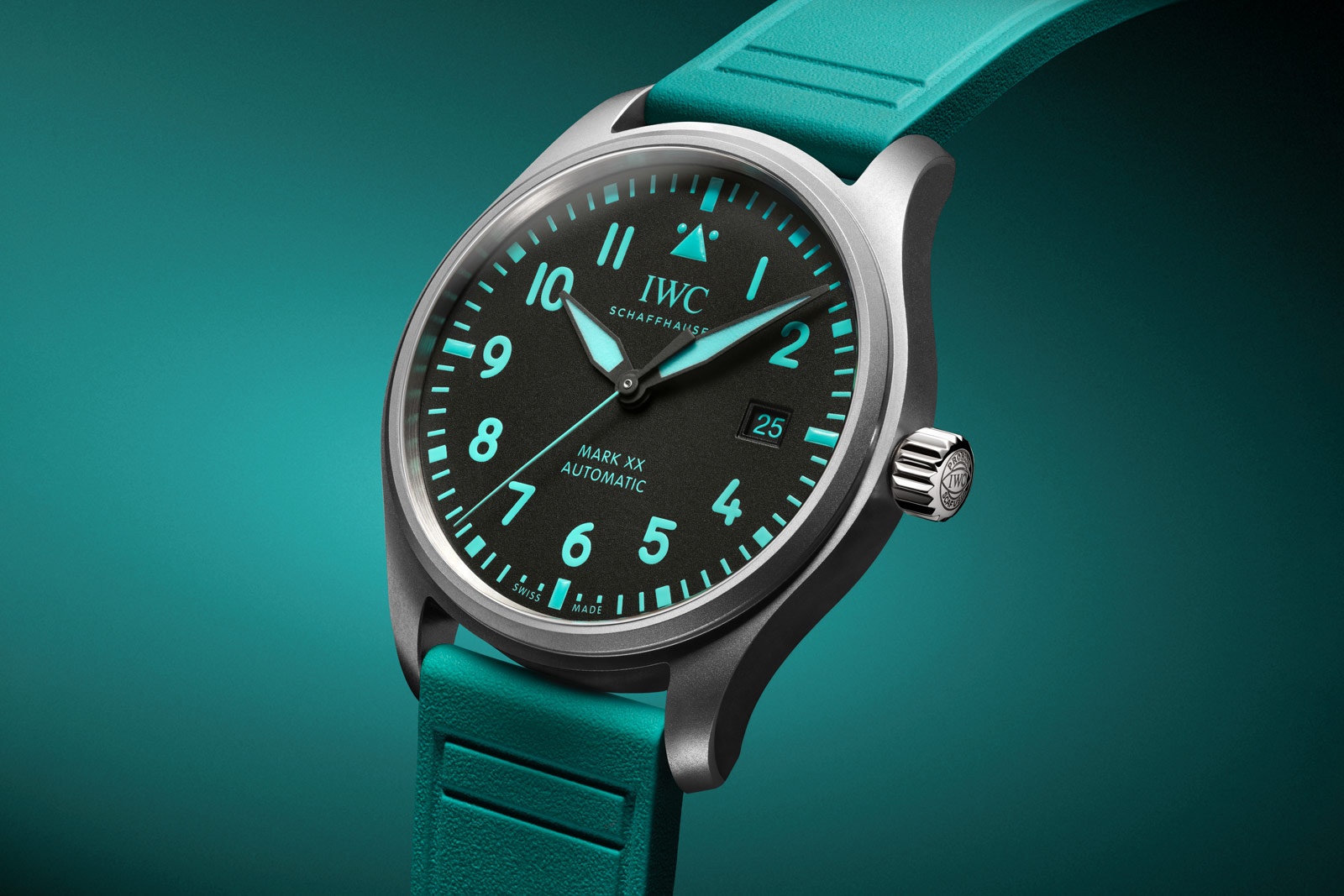
IWC’s latest timepiece for its Formula 1 partner is the Pilot’s Watch Mark XX Mercedes-AMG Petronas Formula One Team. A no-frills, entry-level aviator’s watch with a lightweight titanium case, the new Mark XX is dressed in the same “Petronas green” livery as the F1 team’s chronograph introduced two years ago. As the official team watch for the 2025 F1 season, the Mark XX will be worn by every member of the Mercedes-AMG team, from mechanics to strategists, while also being to the public. Initial thoughts With its Petronas green dial and strap, the new Mark XX is well-suited as a team watch for the F1 team. It’s an appealing twist on the traditional pilot’s watch in black and white, which can be a little bit too formulaic. The matte, blasted titanium case further adds to the appeal as it is both lightweight and utilitarian in appearance. The bold colourway may be too bright for some, especially as an everyday watch, but for those wanted a more restrained look, IWC still has the base model Mark XX in low-key colours. Surprisingly, the Mark XX Mercedes-AMG isn’t that much more expensive than the base model. It’s approximately US$850 more expensive than the standard stainless steel version, making the new Mark XX a fairly good buy in comparison. Petronas green The new Mark XX adopts the same colourway and case material found on the Mercedes-AMG chronograph of 2022. It features a 40 mm case entirely in sandblasted titanium, giving it a matte finish with a sub...





























Comments
No comments yet, be the first to weigh in.