Watch brandsWatch wikiWatch videosVariousWatch calendarSaved articles
PopularRolexOmegaPatek PhilippeAudemars PiguetTudorGrand SeikoCartierSeiko

Chronograph Watches · Page 37

Seiko Revives Retro Rotocall from Eighties Space Shuttle Era SJX Watches
Oct 16, 2025

Seiko Revives Retro Rotocall from Eighties Space Shuttle Era

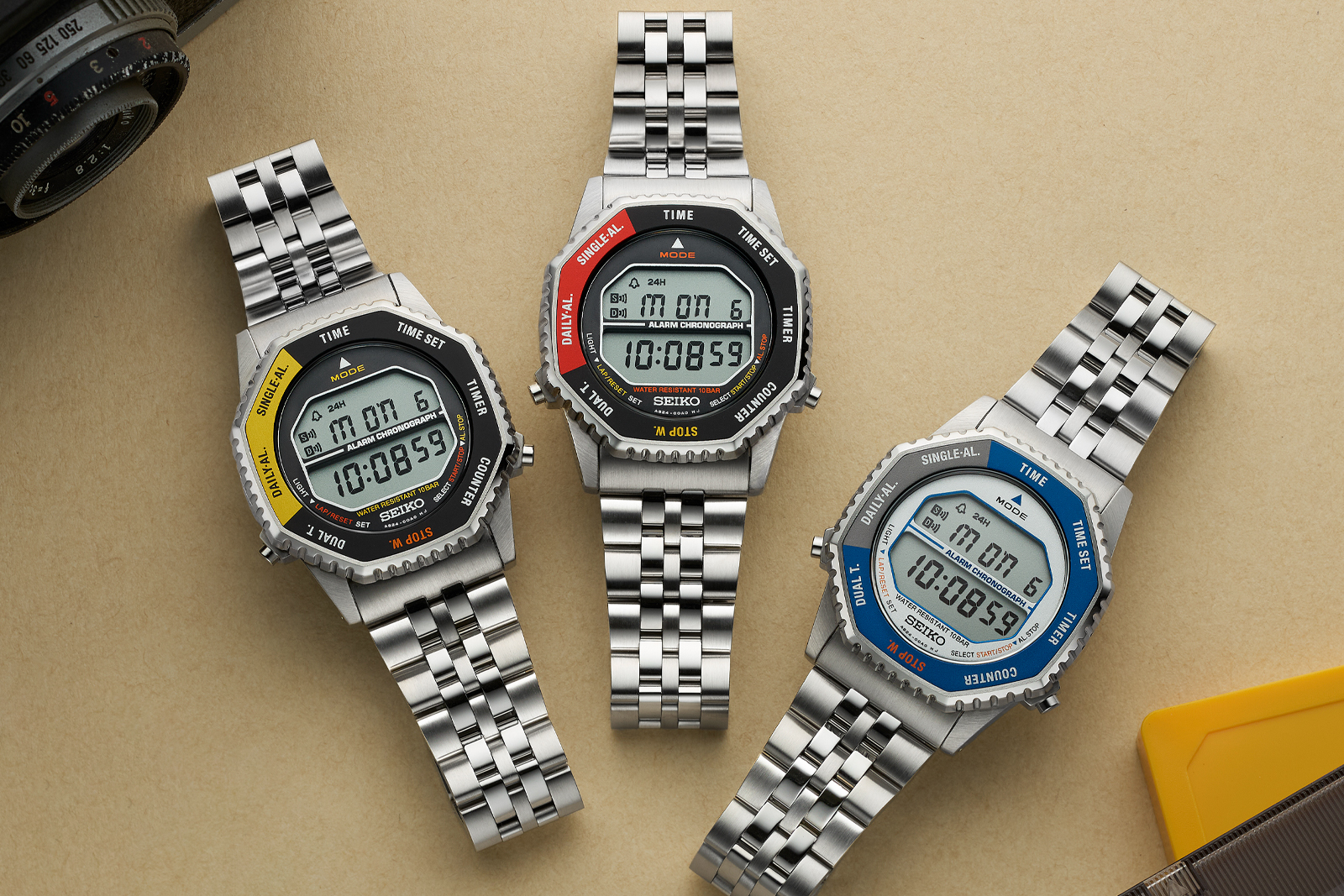
More Seiko watches have gone to space than any other brand, save for Omega and Casio, and Seiko brings back the most prolific of them all, the multi-function Rotocall. For the 2025 reissue, the brand has gone for authenticity over reinvention, retaining the original 37 mm case size and bezel-operated function selector, while making a concession for a more practical sapphire crystal. Named for its nifty rotating bezel, the vintage Rotocall was most frequently worn on NASA Space Shuttle missions. The remake is available in three colourways, plus two limited editions for the Japanese market, the reissue of this 1980s favourite delivers a heavy dose of nostalgia. Initial thoughts If the Speedmaster Professional is the “Moon Watch”, the Rotocall may as well be called the “Shuttle Watch”. NASA purportedly flight qualified the Rotocall around 1983 and, according to Robert Jackson, who maintains a database of watches used in space, Rotocalls crossed the Karman line nearly 200 times during the Space Shuttle program, which lasted until 2011. Today, vintage Rotocalls are quite desirable, and unlike NASA-issued Speedmasters, which were government property, astronauts paid for and were allowed to keep their Rotocalls. Sotheby’s sold Kathy Sullivan’s watch, which she took to space twice – and once to the seafloor in the Challenger Deep – for over US$20,000 a few years ago. The Rotocall may be the most faithful of Seiko’s recent reissues; it’s the same diameter – 37...

Zenith Chronomaster Sport Review: The Modern El Primero Teddy Baldassarre
Oct 15, 2025

Zenith Chronomaster Sport Review: The Modern El Primero

The Zenith Chronomaster Sport debuted back in 2021 and has evolved into one of the brand’s most compelling contemporary chronographs (and that’s saying a lot for Zenith). There was a lot of initial chatter about some similarities to the Rolex Daytona because the collection debuted with a panda and reverse panda dial model with ceramic bezel and, while the comparisons are certainly valid, it does warrant a reminder that the Daytona indeed used to be El Primero-powered. Earlier in 2025, Zenith went all out on the blue theme at this year’s Watches & Wonders in celebration of its 160th anniversary. The star of the show may have been the return of the Caliber 135 in the G.F.J. (see more on that one right here), but the supporting releases didn’t hold back either, boasting bright blue ceramic cases and bracelets. Together, this trio of watches comprise the Zenith 160th anniversary collection, touching on each of the cornerstones of the brand’s modern architecture. The watch I am going to focus on here is the Zenith Chronomaster Sport rendered nearly in its entirety in blue ceramic, showcasing a very different side of the brand’s most popular modern chronograph. Zenith Chronomaster Sport Context The Chronomaster collection has been around since 1994, building on the rather illustrious history of precision timing (outlined in more detail right here) that Zenith is known for. In 2021, Zenith found its modern stride with the release of the Chronomaster Sport with a blac...

Hands On: Petermann Bédat’s Reference 1825 Does More with Less SJX Watches
Oct 15, 2025

Hands On: Petermann Bédat’s Reference 1825 Does More with Less

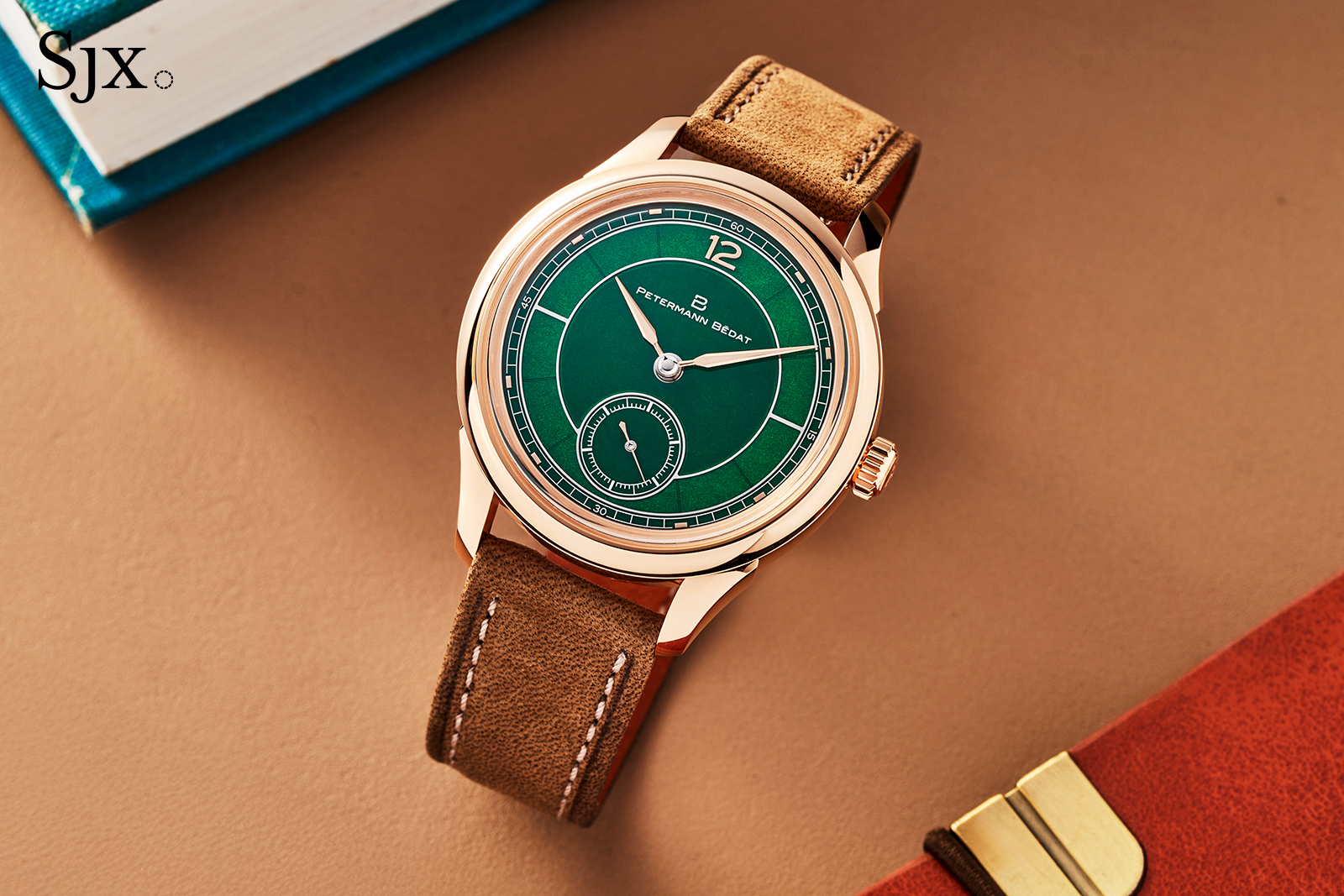
Petermann Bédat has just unveiled its third model, the Reference 1825, which arrives two years after the Reference 2941 Split-Seconds Chronograph. The brand’s simplest watch to date, the 1825 is three hands but far from basic. In fact, the 1825 illustrates the cliche that less is more. Founded by duo Gaël Petermann and Florian Bédat, the brand departs from current fashion with the 1825, which has a restrained aesthetic front and back, though the movement incorporates enough subtle flourishes to make it distinctive and distinguished. The proliferation of open-dial time-only watches with overwrought finishing makes the quiet presence of the 1825 stand out. The cal. 233 of the 1825 Initial thoughts The recent enthusiasm for independent watchmaking has tended to focus on time-only watches of a specific sort, with open dials, exposed movements, and lots of finishing techniques. Naturally, independent watchmakers and brands have delivered in response to that demand. In comparison, the 1825 is old school in style and form, almost plain in fact, but I like it precisely because of that. The 1825 is appealing on two levels. One is tangible – it is an appealing watch on the wrist and clearly executed to a high level. The other is philosophical – I applaud Petermann Bédat for not going with current fads. The 1825 isn’t imaginative or radical, it is simply a simple watch of high quality that feels like it was conceived and executed by sincere, competent watchmakers. All ele...

Omega’s Speedmaster Dark Side of the Moon Returns SJX Watches
Oct 14, 2025

Omega’s Speedmaster Dark Side of the Moon Returns

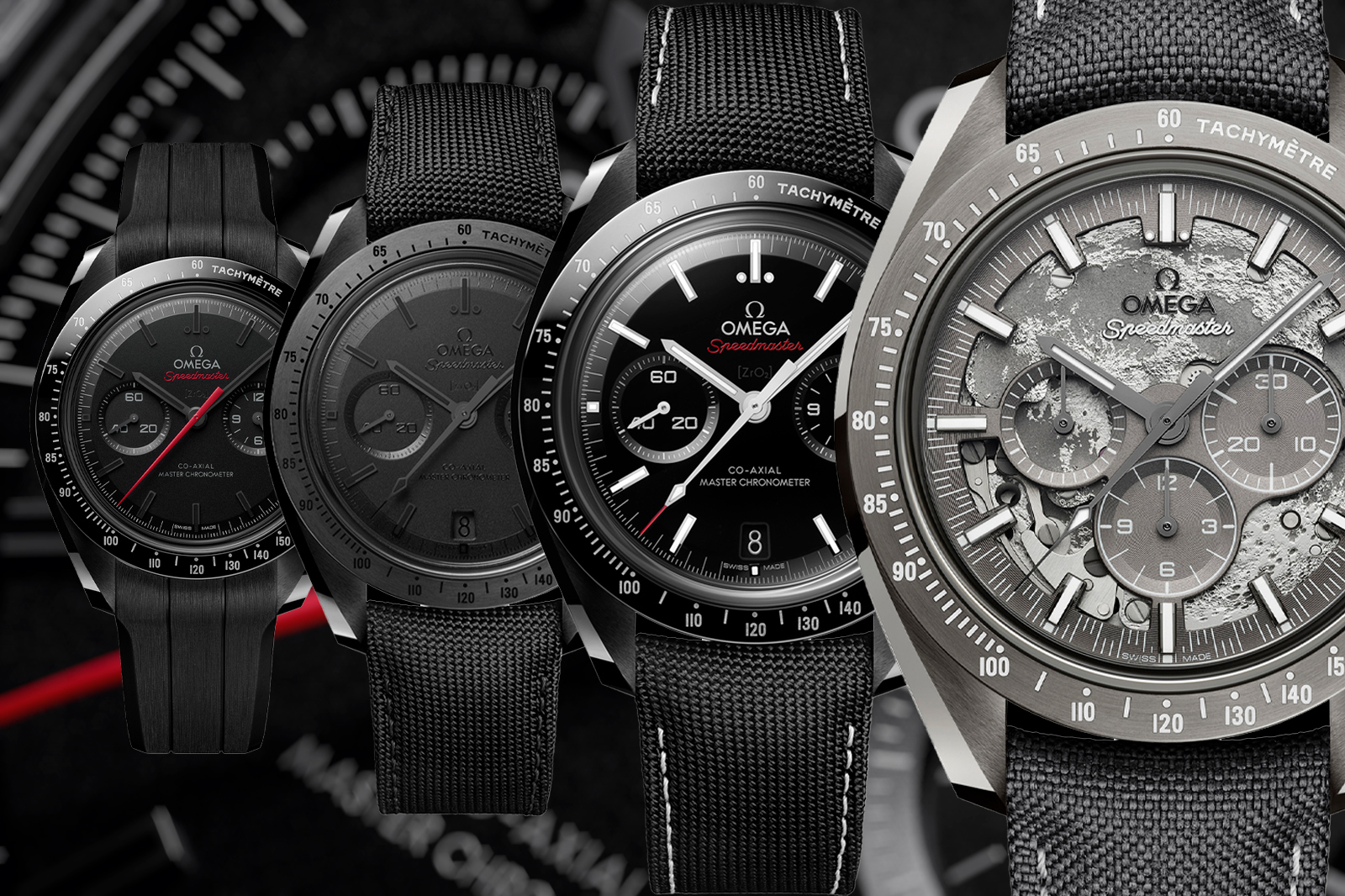
A hit when it was launched a dozen years ago – time does fly – the Speedmaster Dark Side of the Moon was the first-ever Speedmaster in ceramic. Now Omega has refined and reworked the concept – the case is now almost 1 mm thinner – while retaining the all-ceramic construction and distinctive aesthetic. The new Speedmaster Dark Side of the Moon (DSOTM) makes its debut in four variants. The first two stick closely to the original, right down to the same automatic cal. 9900 movement, but in a slimmer format. More notable is the manual-wind version containing the cal. 9908, the first DSOTM offering with this movement, making it even thinner. And it has no date to boot. Rounding out the quartet is the Speedmaster Grey Side of the Moon (GSOTM) that is also manual-wind but powered by the historically-based, Moonwatch-famous cal. 3861. This adopts the lunar-textured surface, front and back, first seen on the Apollo 8 edition. The first manual-wind DSOTM that has a black-and-red livery Initial thoughts Contemporary collectors are spoiled for choice when it comes to the Speedmaster, which is available in seemingly endless configurations. While that’s arguably a criticism, it demonstrates Omega’s industrial prowess, which enables the brand to deliver large volumes of watches that are objectively high quality and equipped with some of the industry’s best chronograph movements, without keeping customers waiting. Regardless of the shade of grey or black, the watches are ins...

Comments 4

  1. C. Almeida
    The framing here is frankly a bit off. A chronograph is hardly the most-engineered complication in Swiss watchmaking; that crown belongs to perpetual calendars and minute repeaters. That said, the automatic chronograph remains the most *accessible* complicated movement for volume producers, and that's a worthier claim. The 1969 reference is apt, though the real innovation happened years before.
    1. Ben W. replying to C. Almeida
      Fair correction on the engineering hierarchy. But I'd add: the "accessibility" angle gets muddied fast once you're actually trying to buy one. A Daytona or even a Tudor Chrono sits behind waitlists and AD games that make "accessible" feel like marketing speak. The movement's elegant, sure, but the secondary market lottery around these watches tells a different story about what buyers actually face.
  2. Reece
    thinking about getting my first chrono and this helped a lot. is a vintage automatic worth learning on or should i just grab something new first. also how much should i realistically spend.
    1. WristBuzz Team replying to Reece
      This all depends on your own feelings and what you like to spend. Pretty hard to answer imho.

Leave a comment

All comments are reviewed before they go live. Email is for our records only - it's never published.