 Two Broke Watch Snobs
Glashütte Original Found a Better Balance for Its Senator Chronograph Watch
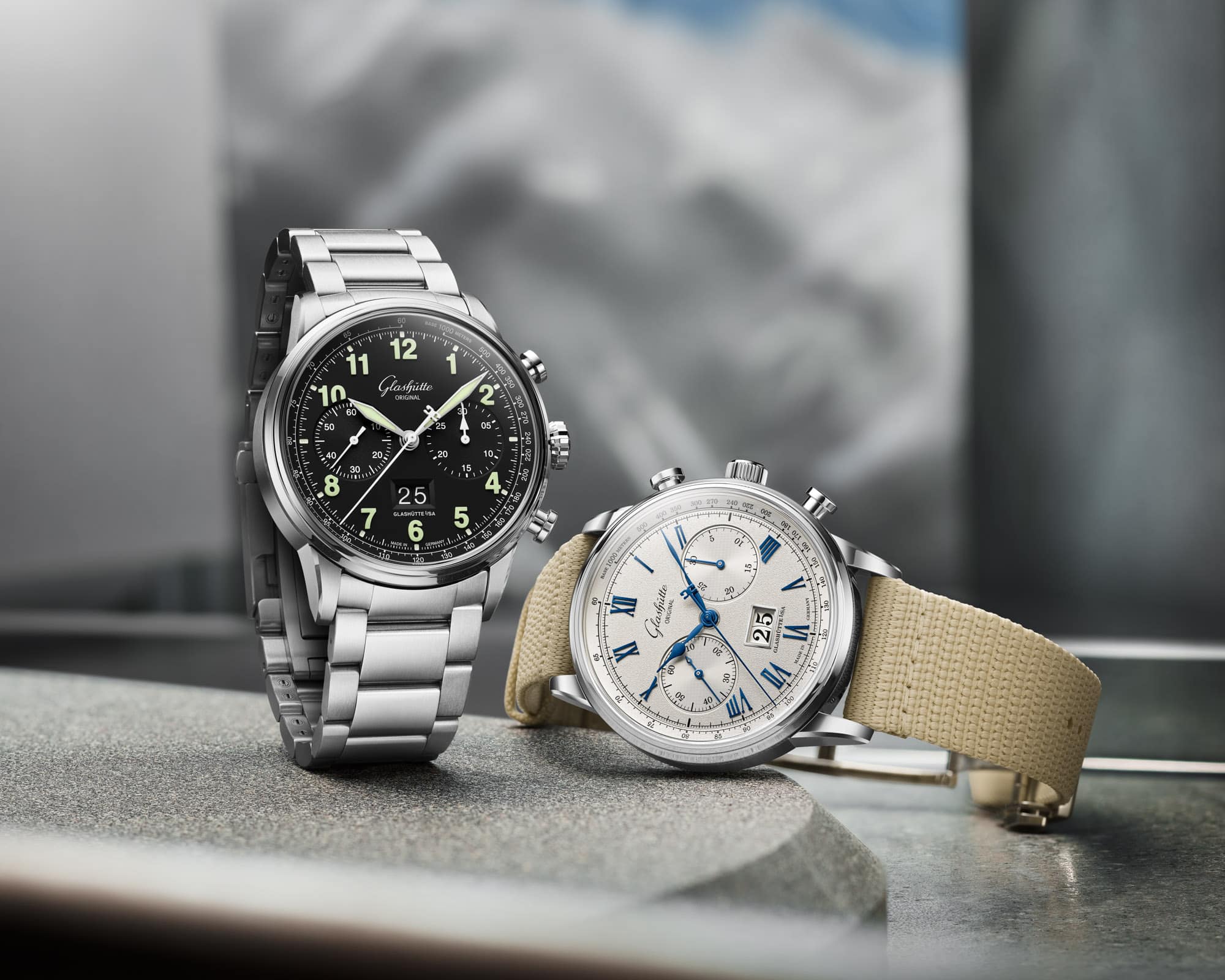
Glashütte Original simplifies its Senator Chronograph with a smaller case, cleaner layout, flyback movement, and two distinct designs.
Stopwatch on the wrist. From the 1969 automatic chronograph race through the modern in-house era, the chronograph is the most-engineered complication in volume Swiss watchmaking.
Photo: Revolution · Yesterday
A chronograph is a wristwatch with an integrated stopwatch: pushers at 2 and 4 o'clock start, stop, and reset a centre-mounted chronograph seconds hand, with elapsed minutes (and sometimes hours) accumulated on sub-dials. The genre is anchored by the Omega Speedmaster (1957), the Rolex Daytona (1963), the Heuer Carrera (1963), the Monaco (1969), and the Zenith El Primero (1969). See: chronograph wiki entry.
Chronograph watches pre-date the wristwatch (pocket-watch chronographs date to the 1820s with Louis Moinet) but the wrist-chronograph era opens with the Breitling 1934 patent for the two-pusher (start/stop separate from reset) layout, and crystallises around the Valjoux 72 column-wheel manual chronograph used by Heuer Carrera, Rolex Daytona, and dozens of mid-century Swiss makers.
The 1969 automatic chronograph race was the genre's defining moment: three competing development consortia announced the first automatic chronograph movement within months of each other. The Project 99 group (Heuer / Breitling / Hamilton-Buren / Dubois-Dépraz) produced the modular Cal. 11; Zenith produced the integrated high-beat El Primero; Seiko produced the in-house Cal. 6139.
The modern chronograph divides into three tiers. The Valjoux 7750 / ETA 7750 tier (CHF 2,000-8,000) is the volume workhorse used by every brand without an in-house chronograph. The in-house chronograph tier (Rolex Cal. 4130, Patek CH 29-535 PS, AP Cal. 4400, Heuer 02, El Primero) at CHF 15,000+ is the premium / heritage tier. The flyback / split-seconds / monopusher high-complication tier sits above. See also: flyback, monopusher, split seconds.
Two Broke Watch Snobs
Glashütte Original simplifies its Senator Chronograph with a smaller case, cleaner layout, flyback movement, and two distinct designs.
 WatchAdvice
I take IWC’s latest Le Petit Prince chronographs for a hands-on review to discover how two materials completely transform the same design. What We Love Eye-catching white ceramic case and deep-blue dial contrast Ceramic model is lightweight and comfortable to wear, despite its substantial dimensions Two distinct personalities across ceramic and steel What We Don’t Full white ceramic edition lacks everyday versatility Both models are still relatively thick on the wrist 46 hour power reserve is modest by modern watchmaking standards. Overall Rating: 8.6 / 10 Value For Money: 8.7/10 Design: 8.5/10 Wearability: 8.7/10 Build Quality: 8.5/10 To mark 20 years of its collaboration with the heirs of Antoine de Saint-Exupéry, IWC expands its Le Petit Prince lineup with new Pilot’s Watch Chronograph editions in stainless steel and white ceramic. This was one of IWC’s main themes for Watches & Wonders 2026, with a wide range of models carrying the signature Le Petit Prince design. There are few collections as closely connected to IWC’s modern identity as the Pilot’s Watch, which carries a design inspired by the functional appearance of cockpit instrumentation. The Pilot’s Watch Chronograph then combines this aviation-inspired design with one of IWC’s best-known mechanical strengths in watchmaking: chronographs. IWC Schaffhausen’s connection to the story of Le Petit Prince began in 2006, when the Swiss watchmaker started collaborating with the descendants of Fren...
 Worn & Wound
eBay Finds is back! This bi-weekly installment will feature a selection of watches currently listed on eBay that have caught the eye of editor Christoph McNeil (@vintagediver). If you come across any hidden gems on the ‘Bay drop us a note at info@wornandwound.com for potential inclusion. Vintage Bulova Starting off this week with a nice vintage Bulova dress watch. At first glance I thought it was an Accutron with the dial and hands, but it’s an automatic Bulova. The yellow gold fill case has a fancy etched bezel to go with the radial brushed dial. This gives the watch a low-key bling look that isn’t too loud. The case is in good shape, as is the dial and hands. This one is time only, no date window. The automatic Bulova caliber 11ALAC movement is clean and runs well per the seller. The watch comes on a handsome leather strap that really goes well. Great looking piece with a high quality movement that should be reasonably priced at hammer time. View auction here Vintage Omega Speedmaster Professional Here’s one that will not be easy on the wallet, but a vintage Omega Speedmaster is worth the money, it’s all that and a bag of chips. This example is from the late 1970s/early 1980s and is likely a ref 144.022, but don’t hold me to it as there are no pictures of the inside caseback or the movement. The iconic case looks unpolished with razor sharp edges on the bombe lugs. The tachymetre bezel is also in superb condition. The black dial looks original and super c...
 Hodinkee
I know we're all here for watches, but there's been so much killer music released in the last bit that it feels foolish not to at least note that, should you require some new jams, recent albums from Twisted Teens and Phoebe Bridgers are plenty deserving of attention, and if you haven't checked out the available tracks from the new Alabama Shakes, hoo boy. I hope you're all well as the days tick along. Scorekeeping last week's picks: the Lemania RAF monopusher sold for 2,000 GBP, and I can't find what the Goodwill UG Clapton ultimately went for, but I saw it cleared $24,000. From the dealers, the Alpina-Gruen sold. The Cartier Shutter and RAN monopusher both remain available. Strays You really like watches and are also a sophisticated connoisseur, and you need a new table lighter—to ignite your guests' cigars; what sort of host would you be otherwise—because someone made off with your last one? Here's a nice sterling Alfred Dunhill for you which, yes, has a watch in it as well because, again, you're sophisticated. Had there not been another watch in the same auction that seemed more interesting, this Omega 2998-4 would obviously have had a full write-up, but I'm also not sure what I would've written other than look at that thing. If you're up for a trio of watches, this lot's got a Tourneau "Top Gun," a solid gold Charles Nicolet, and a fowl-related Helbros for the hunter in your life; and while this Audemars Freres has a rough dial, Audemars Freres watches are uncommo...
 Hodinkee
Earlier in April, right before the kickoff of Watches and Wonders, Swiss independent Sylvain Pinaud announced his third major creation since the founding of his workshop in 2018. First came his Monopoussoir Chronograph, then arguably the more recognizable time-only Origine series. This third entry in the collection is the pragmatically named Sylvain Pinaud Tourbillon—any guesses what complication this watch holds? I kid, but the new watches are an absolute treat to see and handle in person. Even though the intense wave of new releases from dozens of brands in Geneva may have quickly steered the online conversation away from these new watches toward Jubilee dials and Nautilus desk clocks, these watches did not go unnoticed by collectors. Thirty of them, to be precise. The Sylvain Pinaud Tourbillon was announced in three limited editions of ten pieces each, priced at CHF 180,000, and all three variants sold out within days. But before we get to the new watches, you might be asking what the situation is with the watchmaker these days, given that every decently well-known high-end independent watchmaker seems never to struggle with demand. That's pretty much the case here, too. Long story short, Pinaud and his team of 8 produce around 25 watches per year, and the Origine series has been fully allocated through its planned run through 2027. Given the sell-out of the Tourbillon and the sunsetting of the Origine, it kind of sounds like there isn't much to offer a prospective ...
Revolution
 Time+Tide
Win a $100K Rolex Daytona for charity, discover Drake’s one-of-one Ice Gradient Daytona, and enter Mr Jones Watches’ design competition.
 Time+Tide
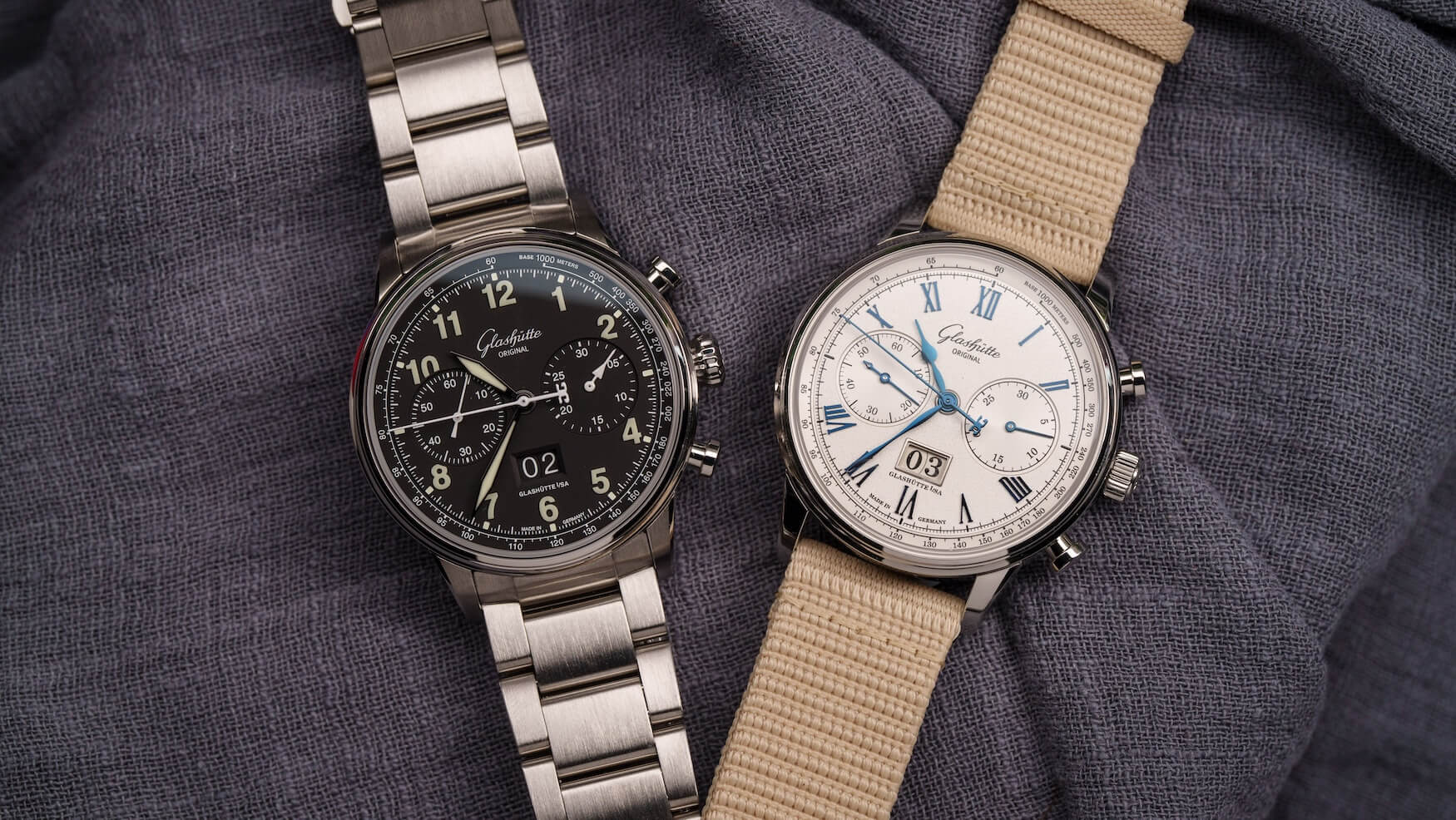
The new Glashütte Original Senator Chronograph and Senator Chronograph Navigator pay tribute to the history of German chronograph watches.
 Monochrome
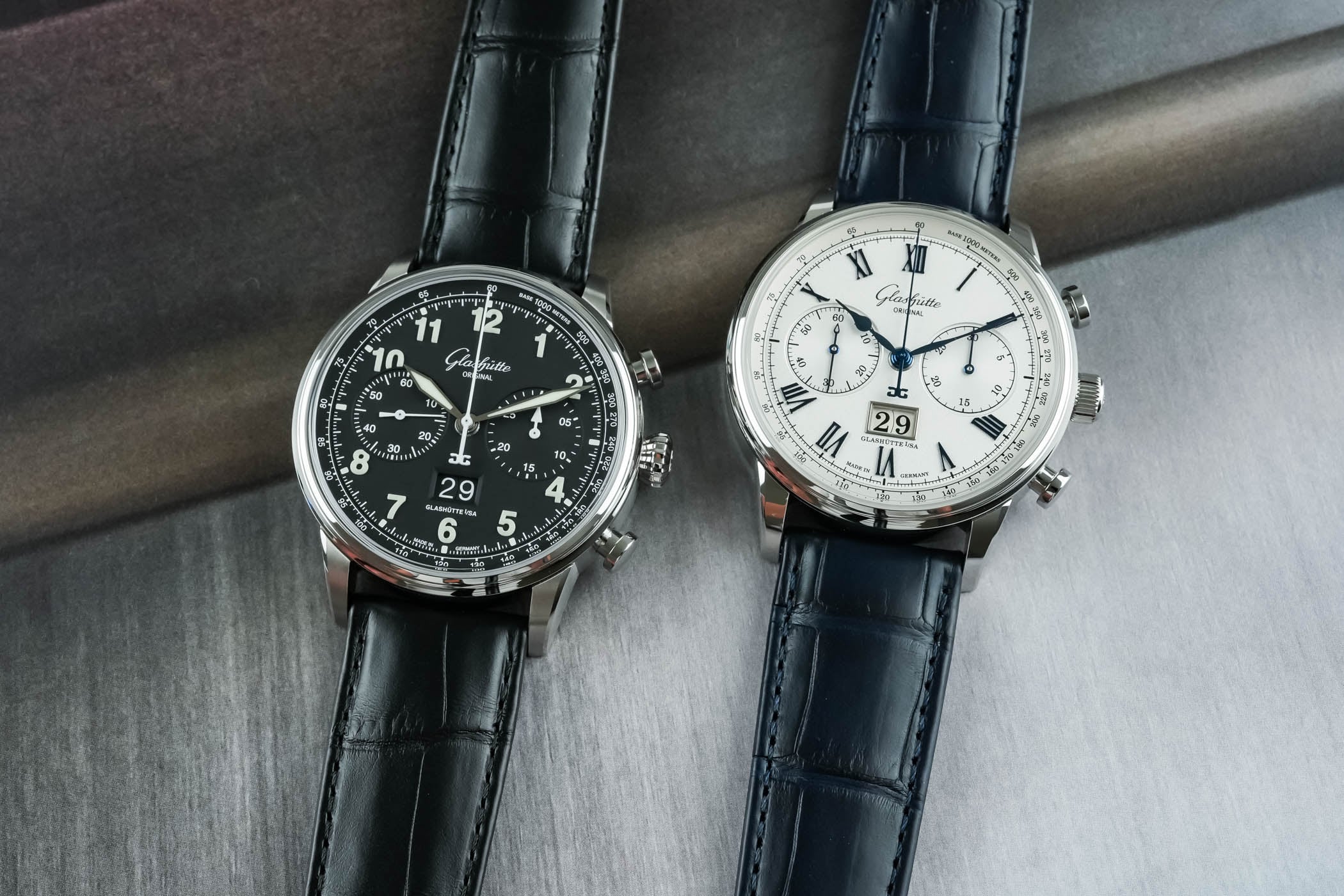
Glashütte Original has a long history with chronographs, going back more than 80 years to the development of wristwatches for short-time measurement in the Saxon watchmaking town. Among the important chapters in that history was the UROFA calibre 59, developed in the early 1940s as one of the first modern Glashütte wristwatch chronographs. The contemporary […]
 Teddy Baldassarre
One classic flieger, one maritime observer, both with in-house movements and the most versatile quick-change bracelets the brand has ever offered. More
 Hodinkee
What We Know Today, Glashütte Original introduces two new flyback chronographs, replacing the Senator Chronograph Panorama Date models currently in the collection. While both models fall under the brand's Senator line, the new Senator Chronograph and Senator Chronograph Navigator could not be more opposed in aesthetics and spirit. First is the new Senator Chronograph Navigator, which departs significantly from the Senator line's overarching classical design language. With only a few exceptions, you're most likely expecting to see at least a few Roman numerals on any Senator dial. But the Navigator takes the chronograph down a much more utilitarian route, with what I believe is the brand's only conventional tool-watch design outside the SeaQ dive watch lineup. The matte black dial features three-dimensional, solid, luminescent applied Arabic hour numerals, while the rest of the dial text is printed in white to provide sharp contrast and improve legibility. The large subdials for the running seconds and elapsed minutes are snailed in texture, while a recessed faceting frames the oversized Panorama Date at six o'clock. The sword hands here are filled with a generous proportion of Super-LumiNova, and the remaining hands are all finished in white lacquer. The Senator Chronograph, sans Navigator, streamlines the layout of the outgoing Senator Chronograph Panorama Date for a more conventional look while still feeling familiar. A galvanic silver dial in soft white holds solid-gol...
 Monochrome
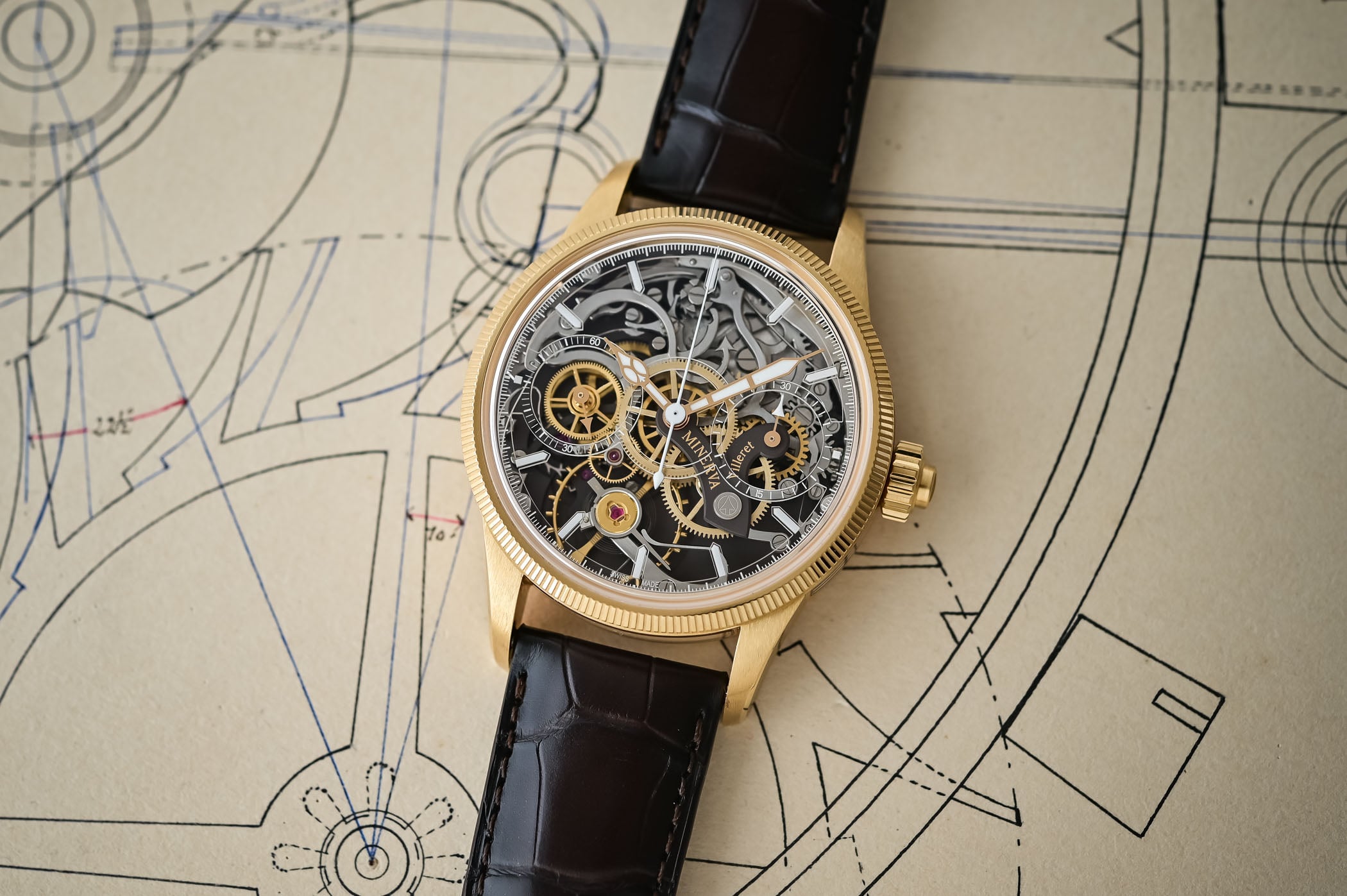
Minerva‘s Unveiled Chronograph series is an exercise in turning conventional watchmaking inside out. Instead of hiding the movement under the dial, which would require taking the watch off the wrist to admire its calibre through the display caseback, the manufacture reverses its architecture, making the chronograph mechanism and its distinctive hand-finished components the main attraction […]
 WatchRider
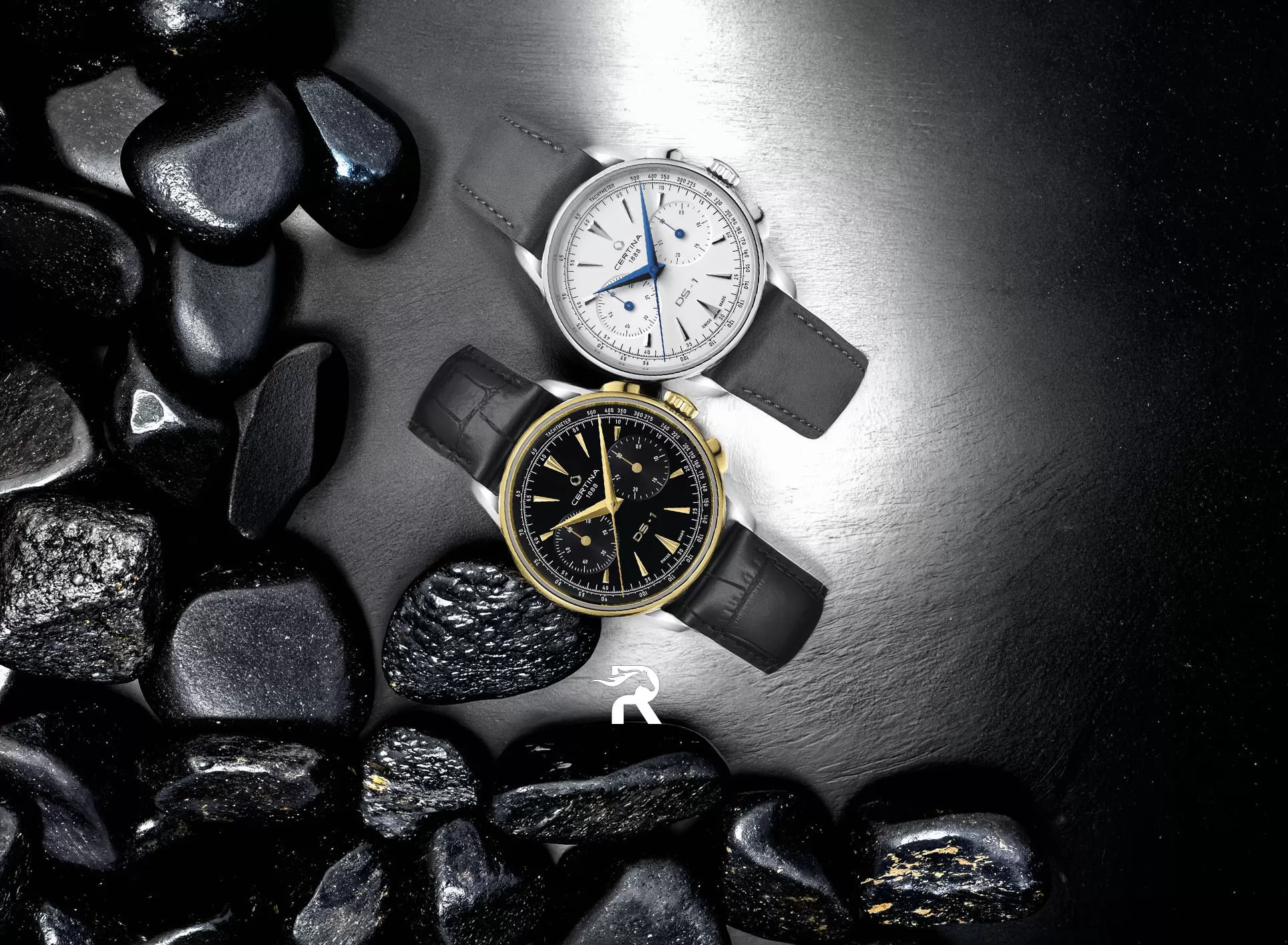
Over the years, I have added a few Certina watches to my collection. I enjoy wearing them because the brand consistently delivers timepieces that are well-made and nice to look at. Certina has a reputation for building solid, reliable watches, and my personal experience with them has confirmed this. Recently, they introduced two new models to their DS-1 Chronograph Automatic lineup: reference C029.462.16.011.00 and reference C029.462.26.051.00. I took some time to look closely at these releases to see what they offer. Both of these new chronographs share the same core foundation. They are housed in a 42-millimeter case made from 316L stainless steel. This size gives the watch a substantial presence on the wrist without being overly bulky. Inside both watches beats the Valjoux A05.231 automatic movement. This is a movement that features a silicon hairspring, which helps protect the watch from magnetic fields. It also provides a generous 68-hour power reserve. This means you can take the watch off on a Friday evening, and it will still be running on Monday morning. As part of Certina’s Double Security concept, both models are water-resistant up to 100 meters and feature a scratch-resistant sapphire crystal. Model C029.462.16.011.00: Clean and Classic Style The first model is the more traditional of the two. It features a crisp white dial set inside a polished silver-tone case. The dial layout is very clean, displaying the time, the date, and the chronograph sub-dials in a ...
 Monochrome
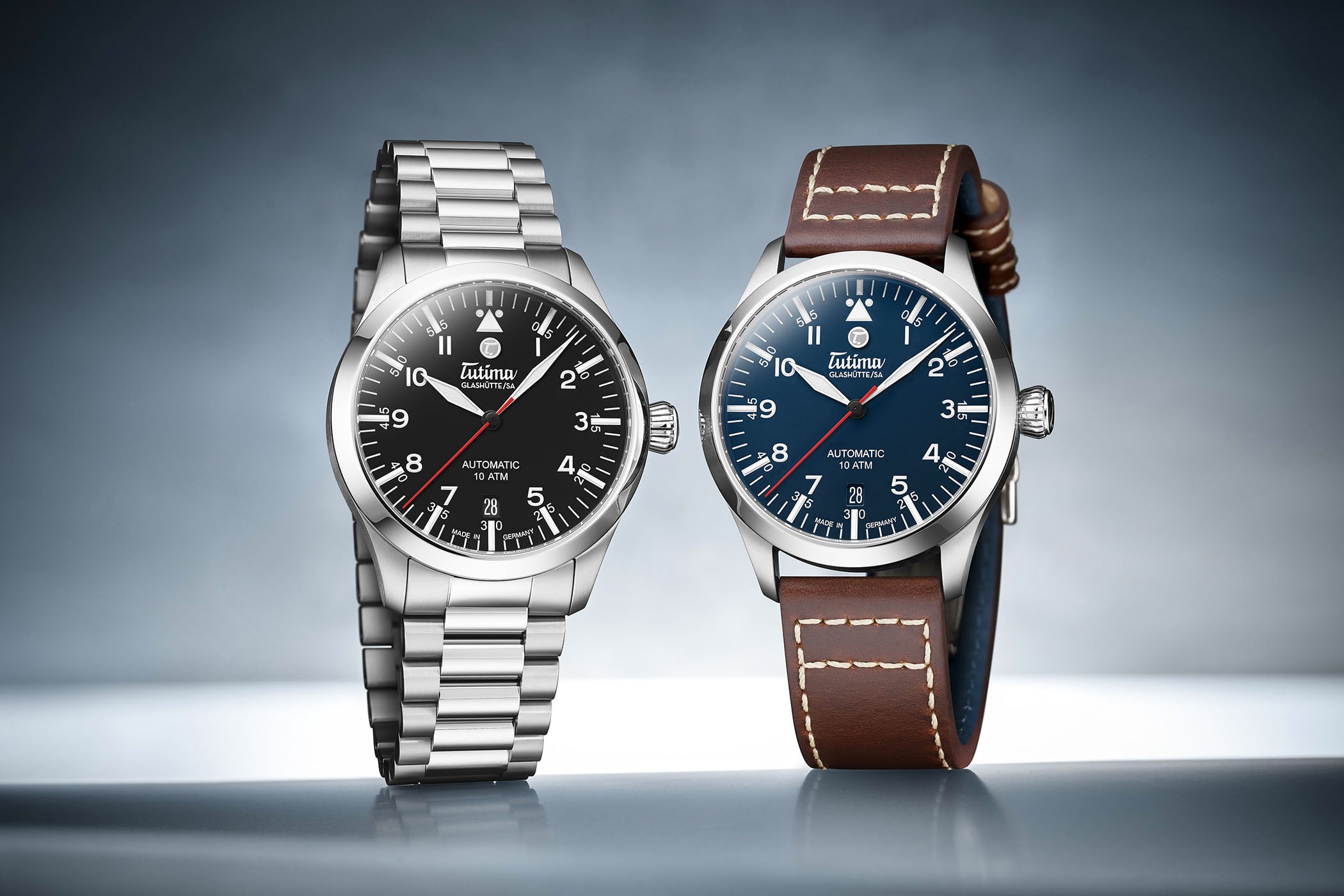
Tutima, based in Glashütte, earned its wings in the 1940s with its military and pilot’s watches and, in 1941, produced Germany’s first two-pusher flyback chronograph (later referred to as the Flieger). In 2019, Tutima released a contemporary, less tool-oriented, time-and-date take on the Flieger. The latest model to join the squadron is the Flieger T5, […]
 Monochrome
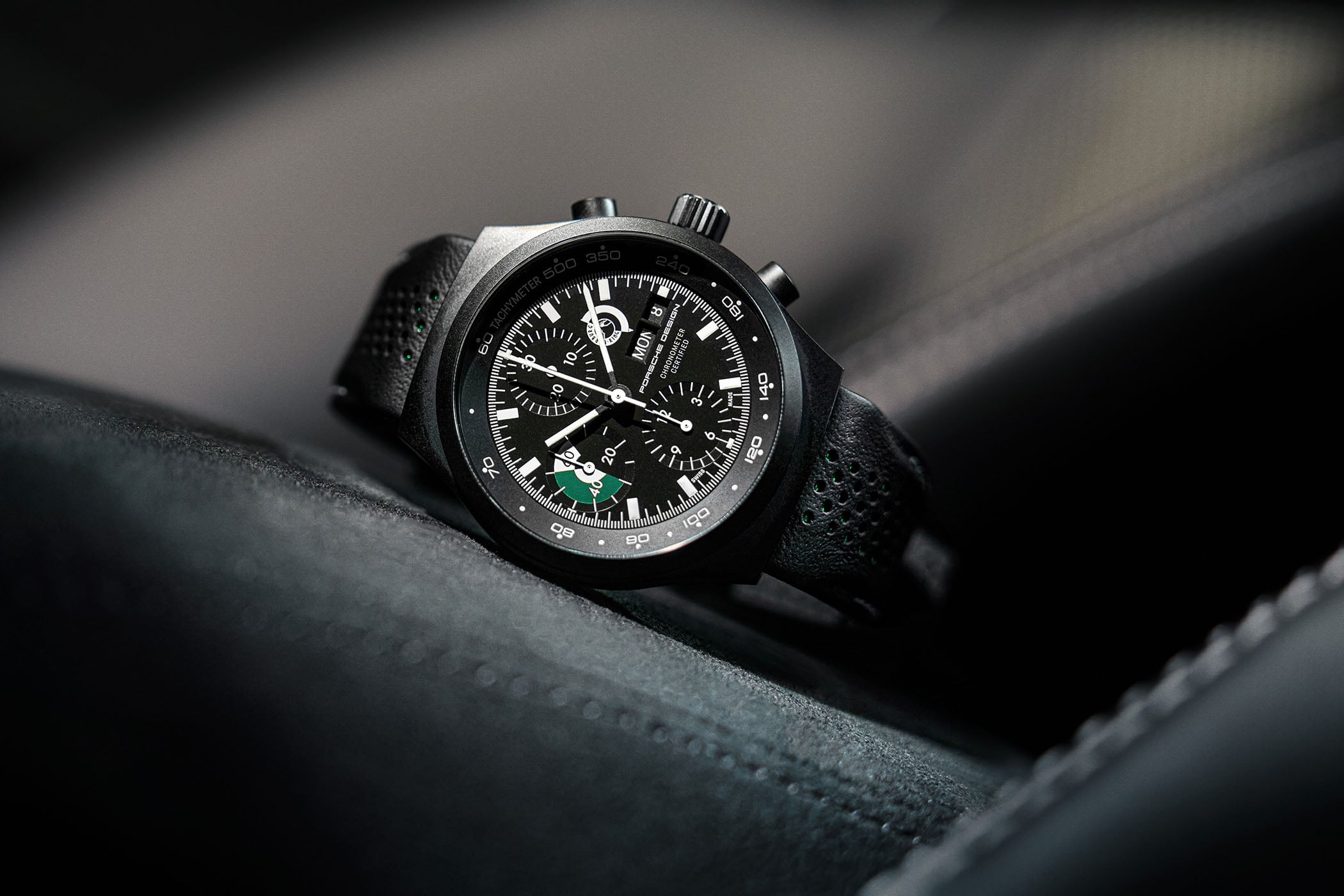
Few racing circuits are as well-known outside the car fan community and command the respect and mythology of the Nürburgring Nordschleife. For almost a century, it has served as the proving ground for racing drivers, manufacturers and performance cars, and few brands are more closely associated with it than Porsche. Beyond countless motorsport victories, every […]
 SJX Watches
The many shapes of Cartier were on full display at Cartier during Watches & Wonders, where the brand released the Privé Les Opus, a trio of platinum models with burgundy accents to mark the 10th anniversary of the brand’s Privé collection. The Crash Squelette is the only all-new model — with a new open-worked calibre — and the only limited edition. The Tank Normale and Tortue Chronographe Monopoussoir tread little new ground, but the platinum-and-burgundy livery is easy to like, and manages to be both distinctive and discreet. Initial thoughts Cartier occupies an enviable position in the luxury watch landscape, being the only brand among the top 10 luxury watchmakers (by revenue) with a sizable jewellery business. Perhaps for this reason, it’s also the only brand to achieve this level of success primarily on the basis of design, rather than technical innovation or haute horlogerie complications. The Opus trio proves why. Cartier earned its reputation as the “watchmaker of shapes” over more than a century, and today enjoys a rich back catalogue of designs. The three models chosen to represent the 10th anniversary of the brand’s high-end Privé line — the Tank Normale, the Crash, and the Tortue Monopoussoir — are among the fan favourites. The Tank Normale — especially on this bracelet — is one of my favourite Cartier models, offering a truly vintage look with modern build quality. Reflecting Cartier’s growth as an industrial watchmaker, each watch...
 Worn & Wound
If you’ve attended a recent Windup Watch Fair in Chicago, there’s a very good chance you’ve run into Doug LaViolette. Doug is the founder of the Brian LaViolette Scholarship Foundation, a Wisconsin based watch enthusiast, and honestly one of the nicer people you’ll encounter in this hobby. For years, the scholarship foundation named for his late son has raised money for over 1,200 scholarships for students across the United States and abroad, and now a new watch from Sheffield, a limited edition of just 95 pieces, will help in the cause. Before we get to the watch, it’s important to have some context and understand the story behind it. Brian LaViolette was given his first watch at the age of four. It was a Green Bay Packers themed watch, and it kicked off a fascination with watches and watch collecting that would last until his life was tragically cut short at the age of 15 in a swimming accident. The LaViolette family founded the scholarship foundation shortly after Brian’s death, and Doug’s own watch enthusiasm continues in earnest to this day. Sheffield is a natural choice as a collaborator for the LaViolette family. For starters, there’s some geographical proximity. Founder Jay Turkbas grew up in Minneapolis, and that is where his fascination with watches began. There is also some symmetry in the origins of Sheffield as we know it today. The original incarnation of Sheffield, a historically British brand, was the maker of the first watch Turkbas eve...
 WatchRider
I added the TAG Heuer Carrera Calibre 5 (Ref. WV211B.BA0787) to my collection back in 2019. Since then, I’ve been wearing it through various phases of daily life, travel and work. This review is not going to be filled with breathless hype or exaggerated claims about horological perfection. Instead, it is an honest, personal look at what it is actually like owning this specific Carrera. If you are considering buying one on the pre-owned market, this review is for you. And yes, we definitely need to talk about Inception. If you are short on time, here are the Pros and Cons The Pros: Timeless Dimensions: The 39mm case is extremely comfortable, versatile and avoids aging poorly with changing fashion trends. Exceptional Build Quality: Punches well above its price point with crisp case edges, alternating polished and brushed steel, dual sapphire crystals and a beautifully finished bracelet. Cinematic Pedigree: While it shouldn’t be the only reason to buy a watch, the connection to Inception adds a layer of enjoyable history to the piece. Reliable Movement: The Calibre 5 is a robust, well-known movement that will never be difficult or exorbitantly expensive to maintain. The Cons: Water Resistance: 50 meters with a push-pull crown restricts this watch to land-based activities. Lug Width: The 19mm lug width makes sourcing third-party straps slightly inconvenient. Lack of Clasp Adjustment: Achieving the perfect bracelet fit relies strictly on adding or removing h...
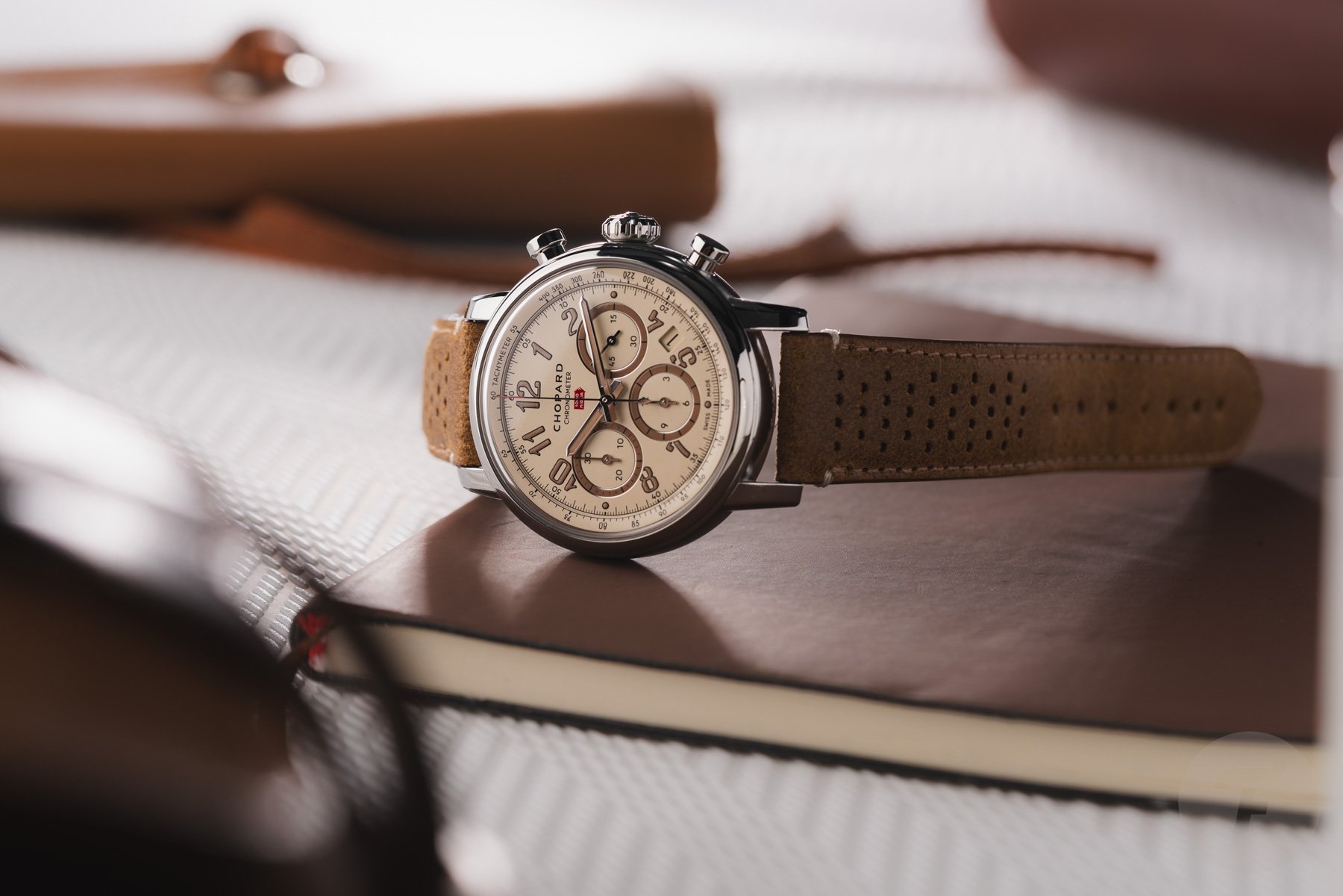 Fratello
The race might have finished, but the watch remains. The Chopard Mille Miglia Classic Chronograph Raticosa also looks good when you’re not behind the wheel of a Mercedes‑Benz 300 SL Gullwing storming the 968 meters-high Raticosa pass in the Tuscan-Emilian Apennines. This Lucent steel chronograph with its eggshell dial is an all-year, all-rounder that looks […] Visit Racing Heritage Reimagined: The Subtly-Charming Chopard Mille Miglia Classic Chronograph Raticosa to read the full article.
 SJX Watches
Episode 50 of the SJX Podcast rounds up recent reviews, including a review of a new book about Universal Genève chronographs, and the latest updates to long-running platforms from Breguet and Patek Philippe. The discussion also explores the intensifying competitive landscape in high-end watchmaking as big brands like Patek Philippe, Breguet, and A. Lange & Söhne close the gap with many artisanal independent brands. Listen now on Apple Podcasts, Spotify, and YouTube.
 WatchRider
The upcoming Casio MTP-E740-4AV and MTP-E740-2A1V are vintage-inspired watches launching soon for just £85. Proving that budget-friendly watches don’t have to be boring, these new releases feature a stunning see-through dial design that punches well above its price bracket. A Striking Translucent Dial Design The standout feature of the new MTP-E740 series is undoubtedly its dial. Drawing heavy inspiration from the classic 1970s Seiko Time Sonar, Casio has incorporated a transparent face that reveals the mechanical day and date wheels underneath. Usually, entry-level Casio day-date models hide this calendar mechanism behind a solid face. By exposing it, Casio gives these models a playful, layered, and premium look that is rarely seen at this price point. The Standout Models: Orange and Navy While the collection features several colors, two models steal the show: MTP-E740-4AV (Orange): if you want a watch that immediately catches the eye, the MTP-E740-4AV is the undisputed star of the collection. The bright orange colorway perfectly complements the retro-futuristic transparent dial, giving the watch a summery, high-energy feel. Orange dials have historically been associated with dive watches and motorsport chronographs, but putting it on an everyday stainless steel piece gives it a remarkably fresh vibe. The bright, vibrant orange dial is an absolute head-turner. It provides a bold contrast against the stainless steel case and makes the exposed cal...
 SJX Watches
Kintaro Hattori is considered the father of the Japanese watch and clock industry, having opened K. Hattori & Co. in Tokyo 145 years ago. Hattori’s humble store eventually evolved into an empire that made Seiko the largest watch manufacturer in the world during the 1980s. To mark the anniversary, Seiko has dressed six of its greatest hits in regal “Edo purple” livery. The standouts include the compass-bezel Alpinist ref. HBC006 built the take on the Japanese Alps, the luxe titanium-and-ceramic Astron Dual-Time Chronograph ref. HAB011, and the spacefaring Rotocall ref. HFL001. Seiko Prospex Alpinist HBC006 Last year, Seiko’s iconic green-and-gilt Alpinist turned 30; this year it turns purple. The Alpinist line dates back to 1959 but this case style launched in 1995, designed by Shigeo Sakai — the same designer responsible for the amusing inflatable Seiko Airpro. The green-and-gilt colourway inspired by Mr Sakai’s Mini Cooper became a sales success, defying conventional wisdom that green watches are niche products. I can’t predict if that will hold true for purple, but with 7,000 units Seiko seems to think it will. The colour is certainly eye-catching, which will help it stand out on social media and boost collectibility. The US$$900 price tag helps too, making it a good value considering its solid specifications. Upmarket details include a Diashield-protected stainless steel case, a sapphire crystal with sapphire date magnifier, an unexpected 200 m test depth,...
![Photo Report: Watch Spotting At The Hodinkee Happy Hour At One Vanderbilt [August 2026]](https://hodinkee.imgix.net/uploads/images/2bf19d83-0e7b-4ee6-a8be-e807e2e8af3c/HHHVandyClub.jpg?ixlib=rails-1.1.0&fm=jpg&q=55&auto=format&usm=12&w=2000) Hodinkee
Hodinkee
Earlier this week, we spiced things up a little by taking Hodinkee Happy Hour uptown to the Vandy Club. Before heading to the event space, guests arrived at the Watches of Switzerland One Vanderbilt showroom, where they were greeted by our Deputy Editor, Tim Jeffreys, and other members of the Hodinkee team. This gave several attendees the chance to be featured in a quick Wrist Check we filmed, which you can check out now on the Hodinkee Instagram. It was our first time hosting at One Vanderbilt, but the same energy and enthusiasm quickly filled the room (and outdoor terrace). Hors d'oeuvres—and plenty of watches—made the rounds as an evening of great conversation unfolded. Scroll through the photos below for a recap of the night. If you made it out, thanks for coming. For anyone who couldn't make it, be sure to keep an eye here on the site and on the Hodinkee Instagram for more information, as we will be announcing our next one soon! Left, Deputy Editor Tim Jeffreys admiring an attendee's 2002 Omega Seamaster Professional Chrono Diver. Zenith Chronometer Open 1969 Boutique Édition. A closer look. A 42mm Tudor Pelagos FXD Marine Nationale MN21 in titanium. A Rolex Oyster Precision Reference 6426. The Hermès H08 Limited Edition for Hodinkee. Left, Hodinkee Head of Video David Aujero chatting with chef Jayesh Kumar. From top to bottom: the Tudor Black Bay 58 Nike employee edition with a custom band and an Omega Speedmaster 50th Anniversary. A closer look at the Omega Sp...
 Worn & Wound
It wouldn’t be summer without a proper skin diver or regatta timer, or how about both? Roughly one year ago, we got the latest reimagining from Albishorn, giving us a mash up of two seafaring classics with the brand’s signature vintage-inspired spin. The result was the Marinagraph, originally offered in two colors, one with a sunburst black dial with lume-filled applied silver indices called the “Classic Racing” and one with a bolder sunburst Paraíba tourmaline green dial with lume-filled black indices called the “Paraíba Racing.” The Classic Racing variant got its own pops of color with green accents on the bezel along with a red strap highlighting the red accents seen across both versions in the chronograph hand, tide indicator, regatta timer, and model name printed beneath the brand name in retro script. Needless to say, the debut duo of Marinagraph Classics offered an audacious combination of styling and functionality. This summer, Albishorn presents another pair of colors to join the collection, this time with a slightly more classic and sober design, aptly named the Classic Fume and simply the Classic. As a refresher, the foundation of the Marinagraph design draws inspiration from the America’s Cup crews, in particular those in the race’s renaissance. The 1958 edition marked the race’s return after a long hiatus post-war, and one of the standout vessels was Columbia, the American yacht representing the New York Yacht Club. This vessel notably feat...
Question, suggestion, or just want to say hi? Drop a note.
Comments 4