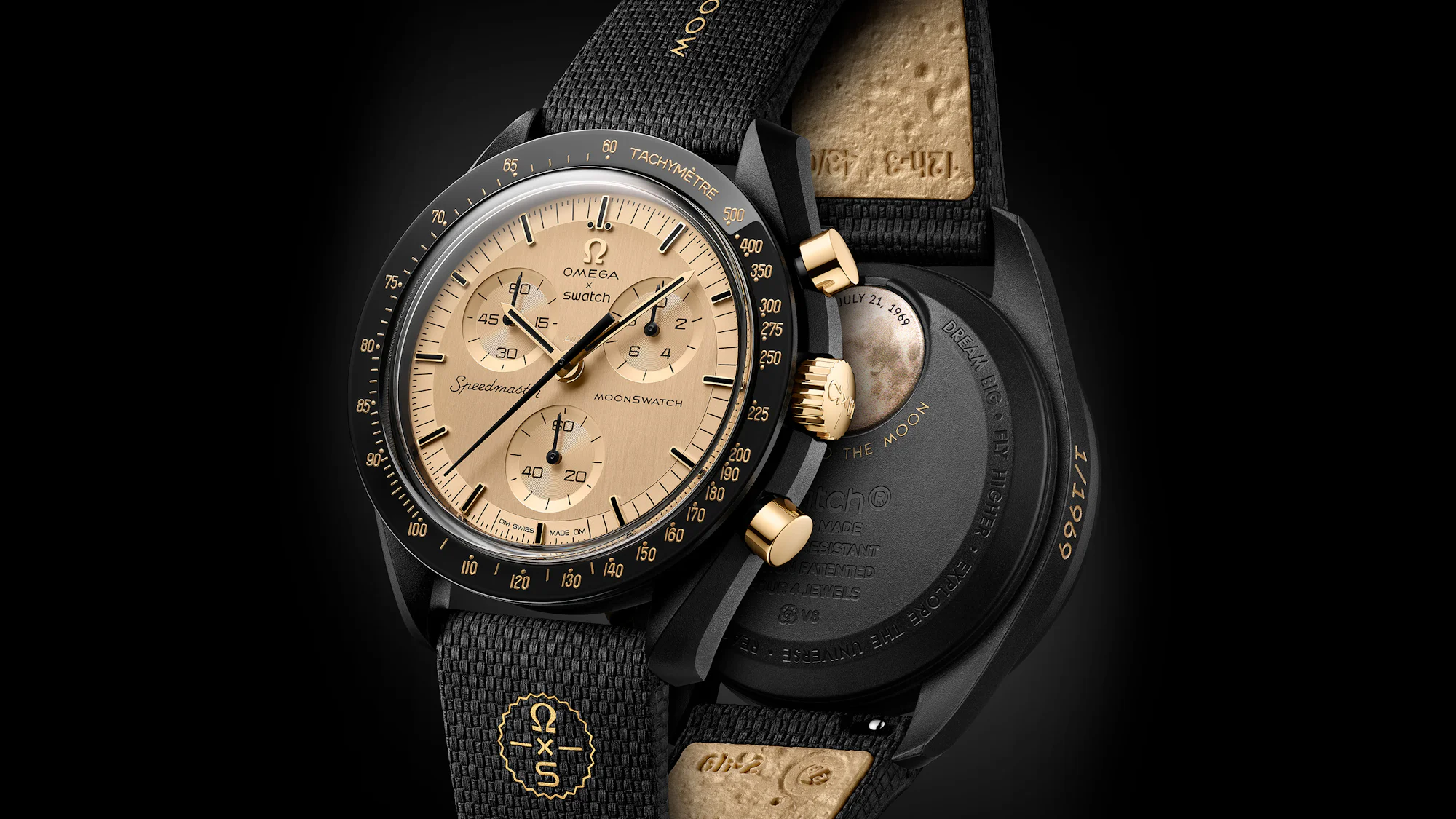
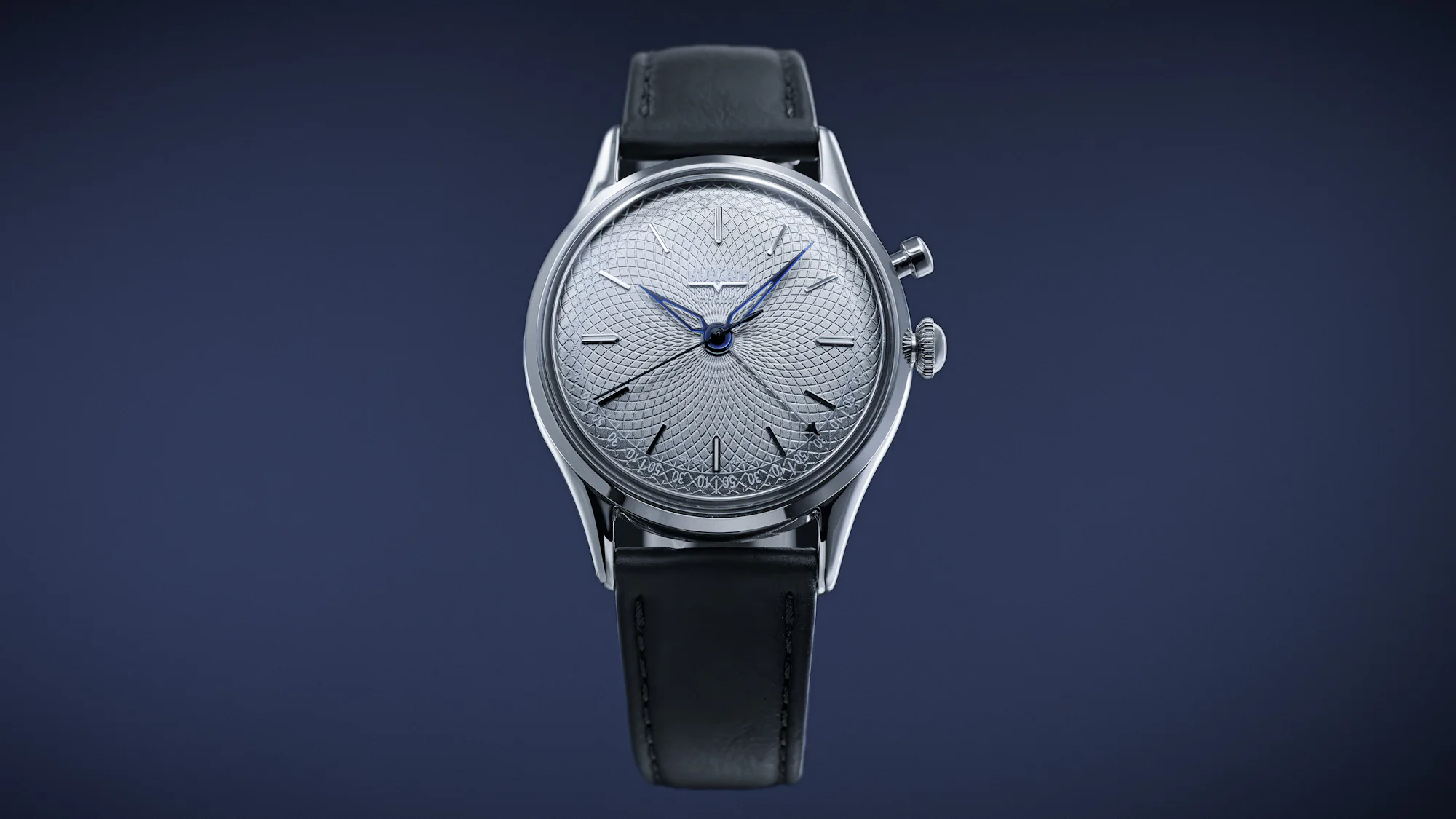
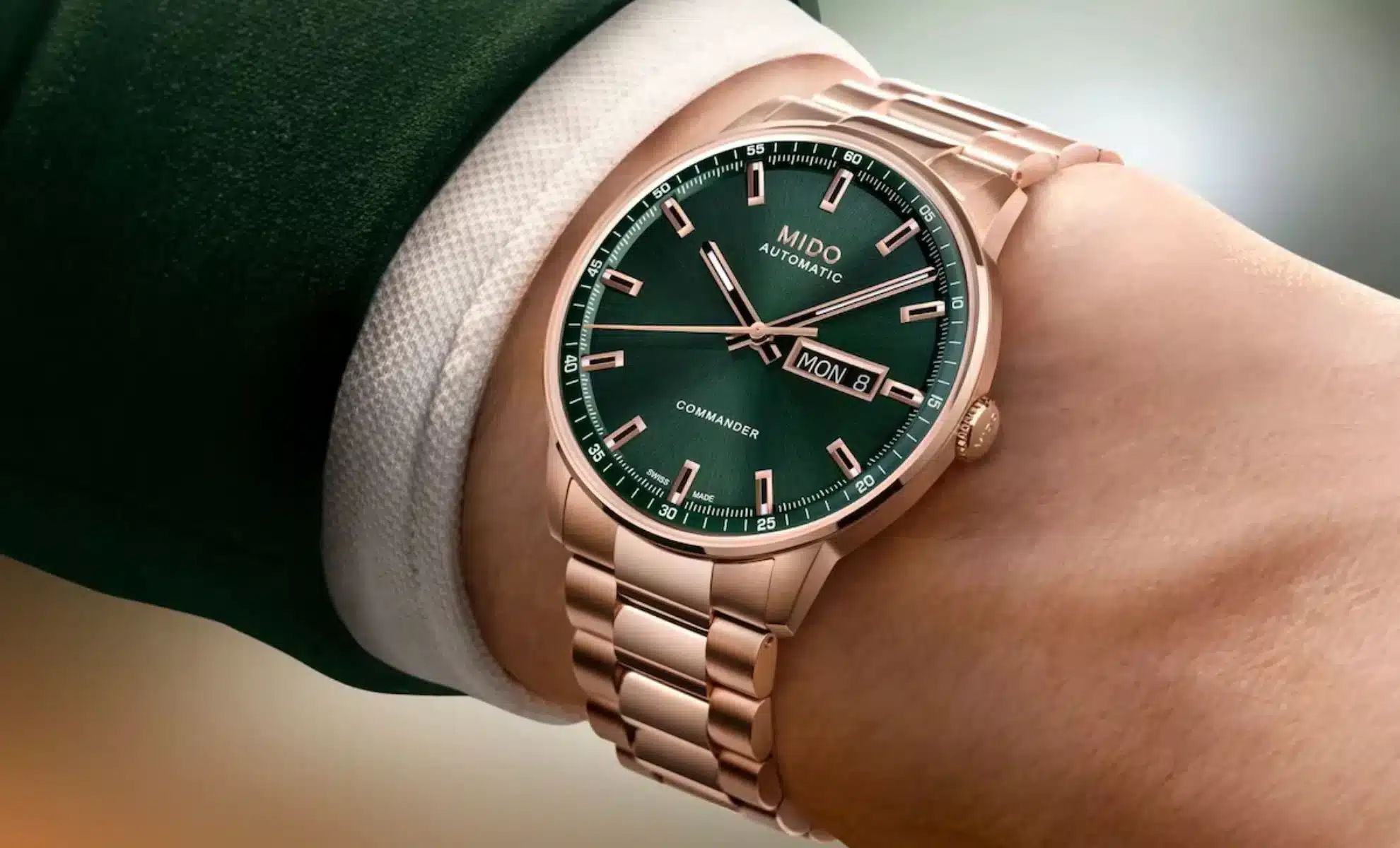
Baton indices are simple rectangular hour markers, typically thin and elongated (perpendicular to the radius of the dial, pointing outward toward the chapter ring). The cue is one of the simplest possible hour-marker shapes: a clean parallelogram with sharp or slightly-rounded corners, no engraving, no faceting (in the basic form). The shape contrasts with arabic numerals (numerical digits at each hour), roman numerals (Roman-numeral characters), diamond markers (jewel-set), and various specialised shapes (Mercedes-style triangles, lume pips).
Baton indices became the defining mid-century dress-watch hour marker. Vintage Patek Philippe Calatrava, Omega Constellation, Rolex Datejust, and the great majority of mid-century dress watches used baton indices to signal understated elegance. The cue gained currency as the Bauhaus / mid-century-modern design movement influenced watchmaking aesthetics; baton markers replaced more ornate Roman-numeral and Breguet-numeral indices on volume dress production.
"The baton index is the watch dial's neutral. Everything more elaborate is a choice; everything simpler is empty space."- Watch designer on hour-marker hierarchy
Applied vs printed: the applied baton (a machined gold or steel block bonded to the dial surface) is the premium-tier choice. Applied batons sit slightly proud of the dial surface, catch light at multiple angles, and require precise placement at each hour position. Printed batons (lacquer printed flat on the dial) are visually flatter and signal entry-tier execution; the cost difference is significant (applied batons add CHF 200-500 to a dial; printed are essentially free at production scale).
Faceted batons are a premium variant: applied batons with multiple polished surfaces (typically a flat top and two angled sides). The faceting catches light dynamically and signals haute-horlogerie execution; Patek Calatrava, AP Royal Oak, and modern Rolex Datejust applied batons typically use 3-4 polished facets.
Modern usage: baton indices are the default choice for minimalist modern designs. Nomos Glashütte uses extreme-minimalist baton indices on its Tangente, Orion, and Club references; modern Patek 5227 and 5196 retain classical applied batons; modern Rolex Datejust uses faceted applied batons; microbrand dress and sport watches default to baton indices for design-language simplicity.




Comments 1