
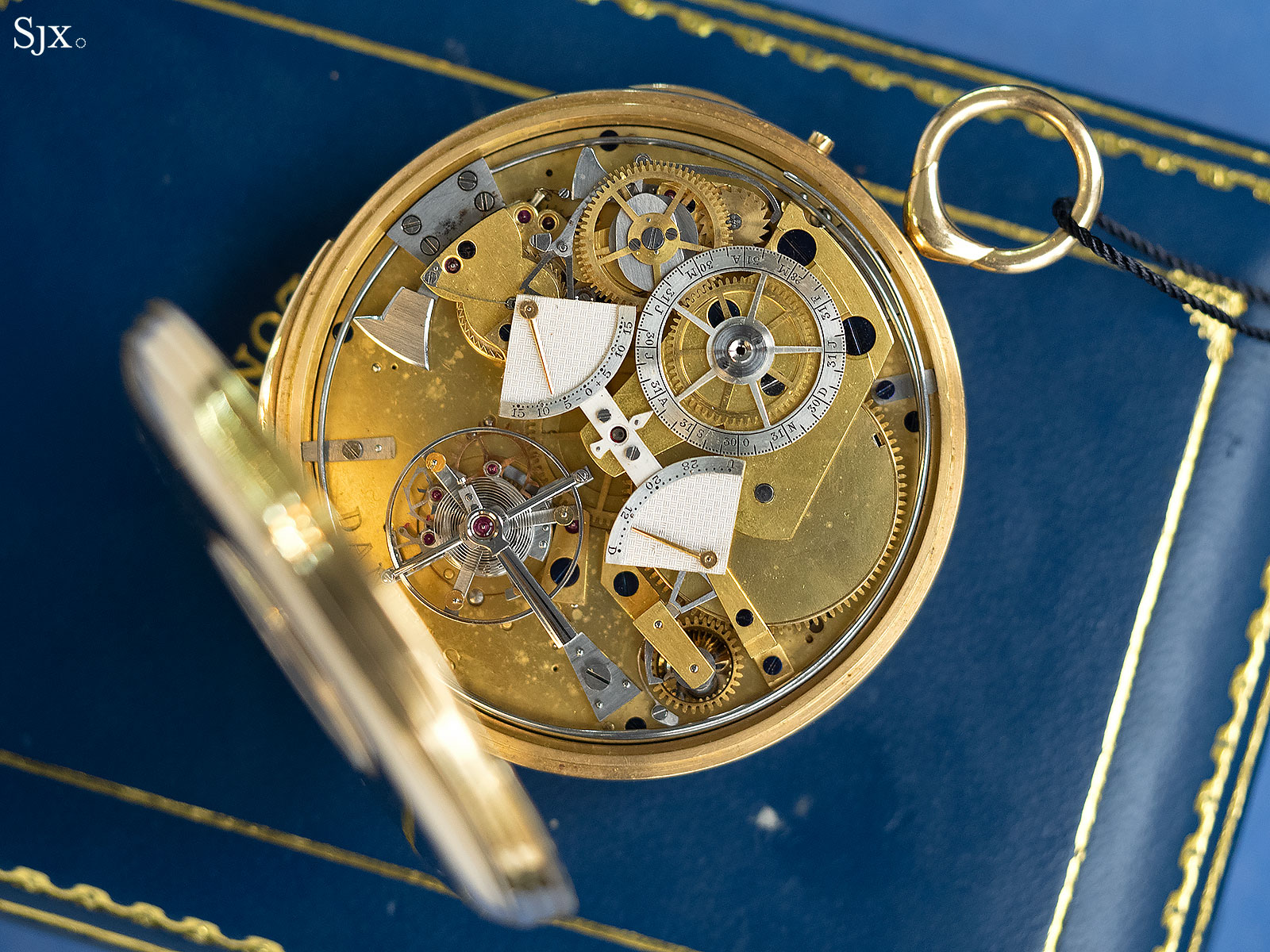
Watch movement components (bridges, levers, screw heads, click springs) need a finish for both aesthetic and functional reasons. The aesthetic standard sets the brand tier; the functional requirement is that mating surfaces between moving parts be smooth enough not to introduce friction. The hierarchy of finishes runs roughly: perlage (circular grain pattern; standard mid-tier finish), côtes de Genève (Geneva stripes; premium decorative), anglage (hand-bevelled mirror chamfers along edges), and black polish (mirror-flat surface across the whole component). Black polish is the rarest and most labour-intensive of these.
The physical principle is that a polished surface flat to within a fraction of a wavelength of visible light (~50-100 nanometres) acts as a specular reflector: incident light bounces at the same angle as the angle of incidence, with no scattering. A black-polished steel surface viewed at the specular angle reflects the light source brilliantly (mirror-like); from any other angle, with no diffuse reflection, the surface appears jet black. This dual appearance is the signature of correct black polish; an incorrectly polished surface shows a grey shimmer at off-angles rather than true black.
"The black is the silence between the reflections. CNC machines can grind a surface flat; only a hand can grind it truly silent."- Watchmaker on poli noir technique
The technique is hand-finishing on a tin or zinc plate with successively finer abrasive pastes (diamond pastes from ~5 micron down to sub-1 micron). The component is held against the plate by hand and moved in figure-8 patterns to maintain flatness; pressure must be even across the surface and at the correct angle. 30-60 minutes per small component is typical for a skilled finisher; an experienced black-polisher works perhaps 5-10 components per day. The process cannot be reliably automated: CNC-finished mirror surfaces are flat at the macro level but show fine machine-tool scoring at the molecular level, producing a grey rather than black off-angle appearance.
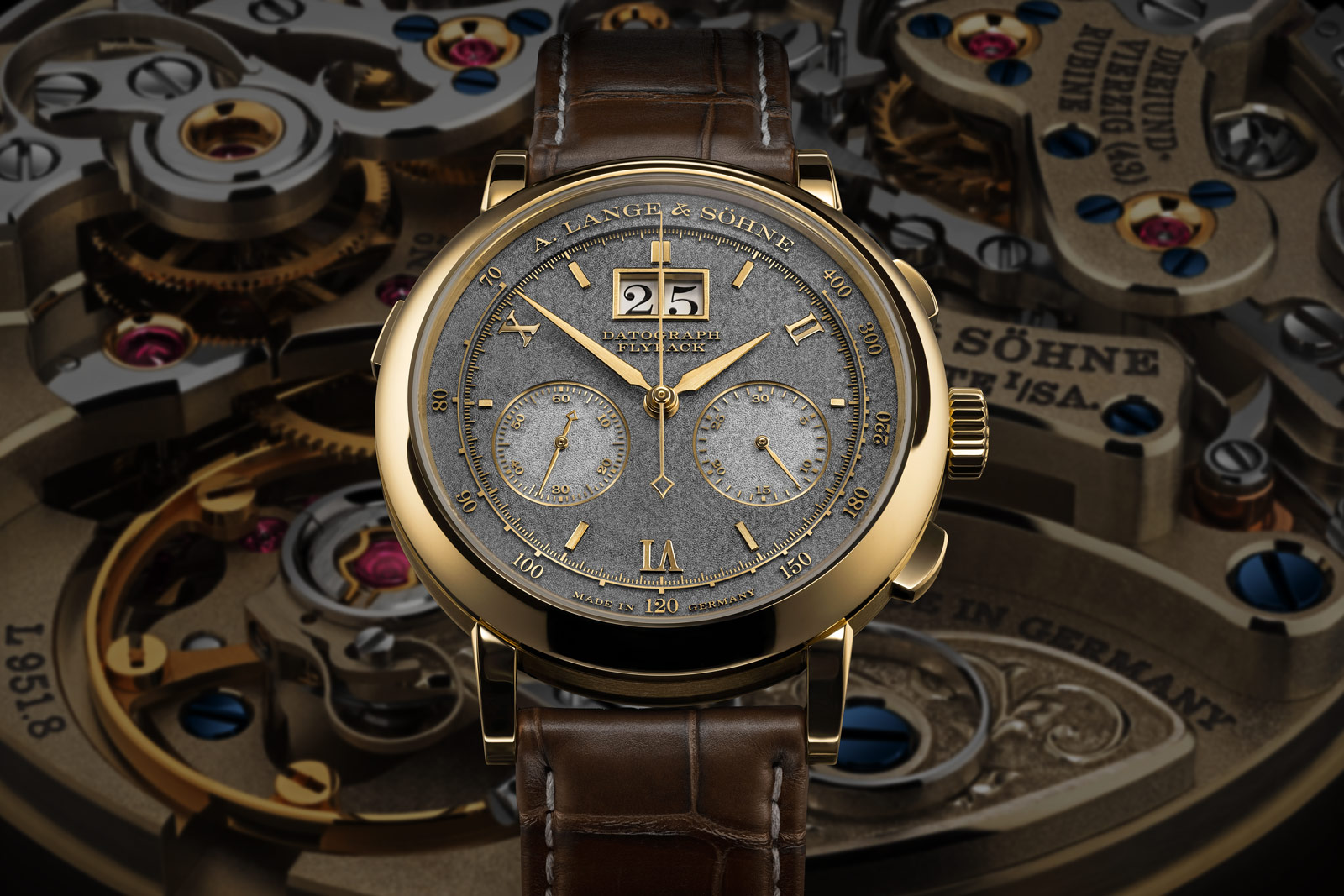
Black polish is required by the Geneva Seal (the Genevan canton's movement-finishing certification) for visible steel screws and selected lever surfaces. It is required by the Patek Philippe Seal across screw heads, click springs, and the chamfered edges of selected bridges. AP's Royal Oak modern in-house calibres (Cal. 4302, 7121) require black polish on screws and certain lever surfaces. A. Lange & Söhne applies black polish to selected lever and bridge surfaces across all manufacture calibres. Independent watchmakers including Philippe Dufour (whose Simplicity finishing is the modern reference standard) and Kari Voutilainen apply black polish to nearly every visible component; their movements are functionally museum-piece-grade hand-finished.
The economic cost of black polish is considerable. A movement with 10-20 black-polished components requires 5-10 hours of skilled hand-finishing per movement just for this single technique; finisher labour is at the top of the watchmaking pay scale; the per-watch cost of black polish alone can be CHF 500-2,000 in production. This is why black polish is restricted to the top 1-2% of the watch industry by price: only manufactures where the per-watch margin justifies the labour cost can afford it at scale. Mid-tier brands (most volume Swiss watches) skip black polish entirely; CNC-finished lever surfaces are visually adequate at the price tier.
For collectors, black polish is the strongest visible signal of haute-horlogerie hand-finishing. Examining a movement under loupe at oblique angles to verify true black polish (vs grey-shimmer machine finish) is a standard authentication technique. Brands that claim "haute horlogerie" finishing without delivering black polish on visible components are typically marketing rather than executing the standard; the visual test is unforgiving. Movements by Dufour, Voutilainen, Akrivia, FP Journe, and the Patek Grand Complication grades represent the modern reference standard.


Comments 2