
The Dirty Dozen is collector vocabulary for the group of twelve Swiss watchmakers commissioned by the British Ministry of Defence (MoD) in 1944 to supply wristwatches for British Army, Royal Air Force, and Royal Navy combat issue under a unified specification: W.W.W. standing for Wrist. Watch. Waterproof. The MoD's requirement document, drafted in the Defence Standards Office, called for "a wristwatch suitable for general military duty in field conditions" with specifications drawn from analysis of failures of earlier WWI trench watches and 1930s issue. The dozen contracted makers all delivered to the same baseline spec; the watches are visually distinct (each maker has its own dial layout and case finishing) but mechanically and operationally interchangeable.
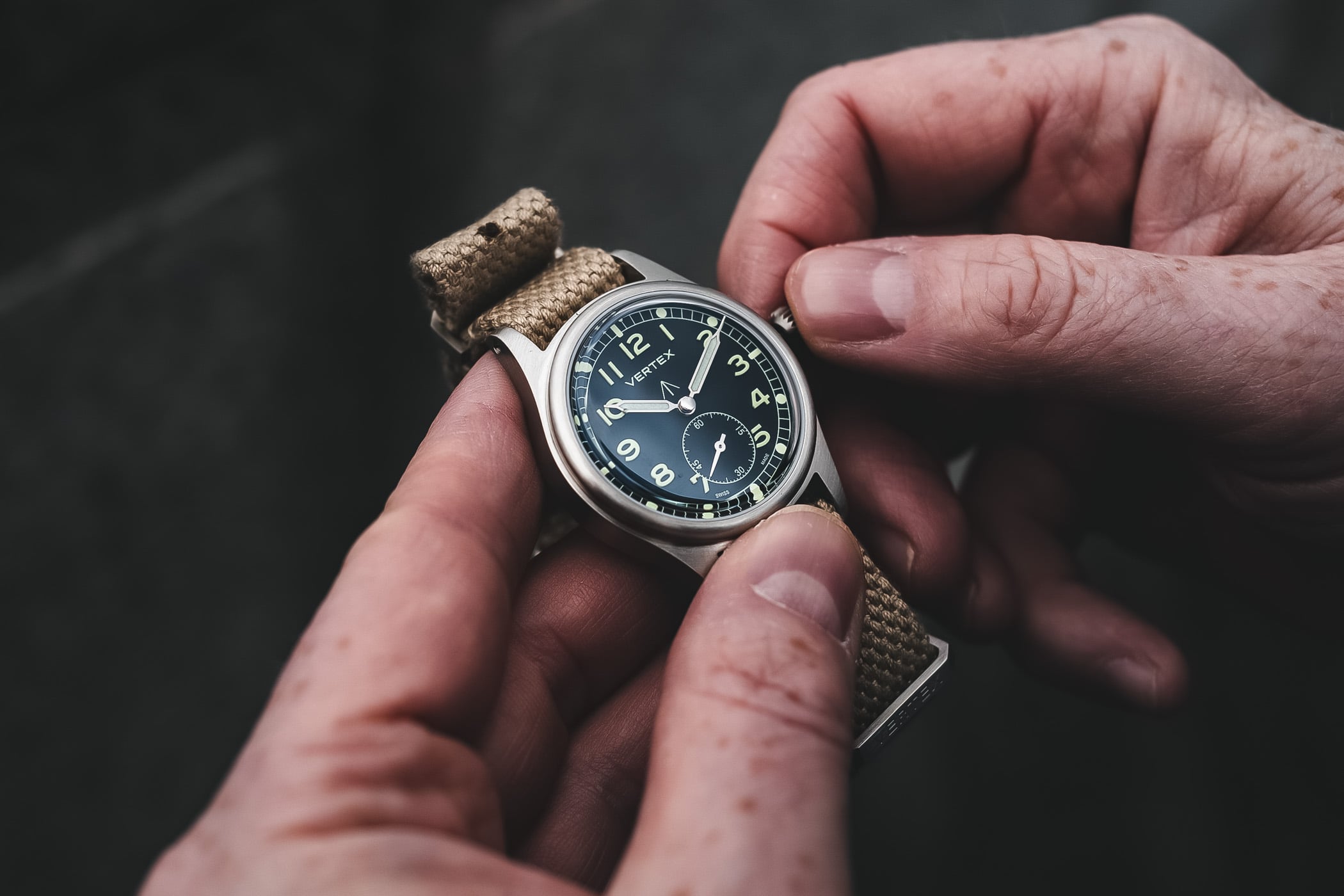
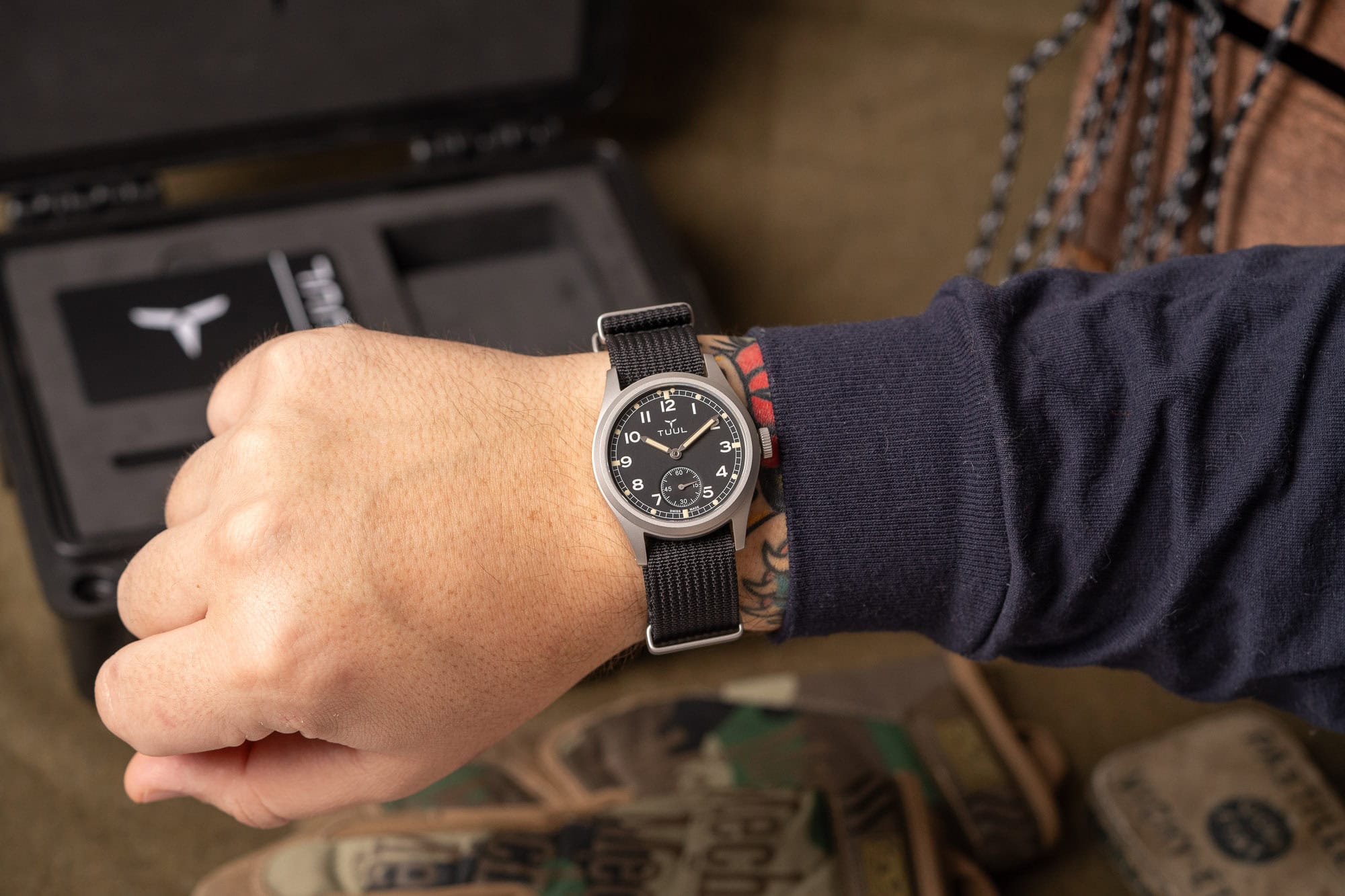
The shared W.W.W. specification: 40 mm steel case (later models 35-37 mm), 30 metre water resistance, 17-jewel hand-wound movement with hacking seconds, black dial with luminous baton hour markers (radium painted), luminous baton minute and hour hands, railway-track minute scale, small subsidiary seconds dial at 6 (most makers; some used central seconds), fixed spring bars (no removable bars; this prevented strap-loss in combat conditions), and the broad arrow military mark stamped on the dial face and case back identifying the watch as MoD-issued.
"The Dirty Dozen is the only set of watches in collecting that you assemble like a war medal collection: each one separately, each documented, the complete set greater than the sum of its parts."- Phillips Watches Dirty Dozen sale catalogue note
The twelve contracted makers, with approximate production numbers: Buren (~11,000), Cyma (~20,000), Eterna (~5,000), Grana (~1,000-1,500), IWC (~6,000), Jaeger-LeCoultre (~10,000), Lemania (~6,000), Longines (~6,000), Omega (~25,000), Record (~25,000), Timor (~13,500), and Vertex (~15,000). The Grana production was the smallest by far (the firm went through a 1944 management crisis mid-contract), making Grana W.W.W. examples the rarest and most expensive of the dozen at auction; a Grana W.W.W. typically sells for £25,000-£60,000 vs £4,000-£10,000 for the more common makers.
The watches were issued to British forces from late 1944 through the post-war period; many remained in service through the 1950s and into the 1960s. After demobilisation, large numbers were sold off through MoD surplus channels at low prices (£2-£5 in 1950s money) and entered civilian use; this is why so many survived to be collected today. The watches were produced to be expendable and were generally treated that way in service.
The collector tradition of "the Dirty Dozen" emerged in the 1990s as the watch enthusiast community formalised vintage-watch collecting categories. Assembling a complete set of all twelve W.W.W. watches in original condition, with intact dials, broad-arrow markings, and matching service paperwork, became a recognised collector achievement; the most-cited modern reference is the auction-house-vetted Phillips "Dirty Dozen Complete Set" sales, with full sets selling at £100,000-£250,000+ at the top end. Phillips, Christie's, and specialist auctioneers like Bonhams hold occasional themed sales for the category.
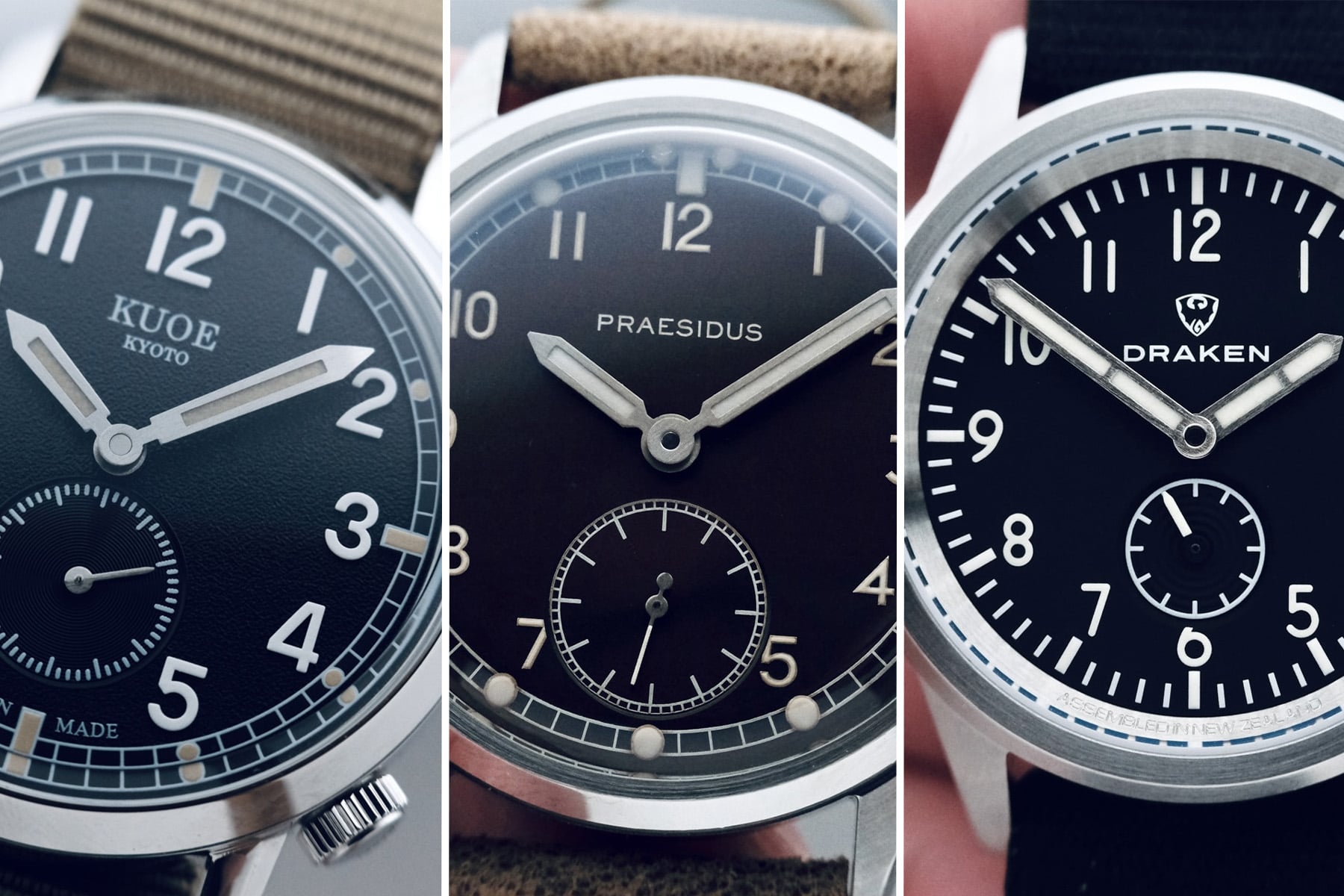
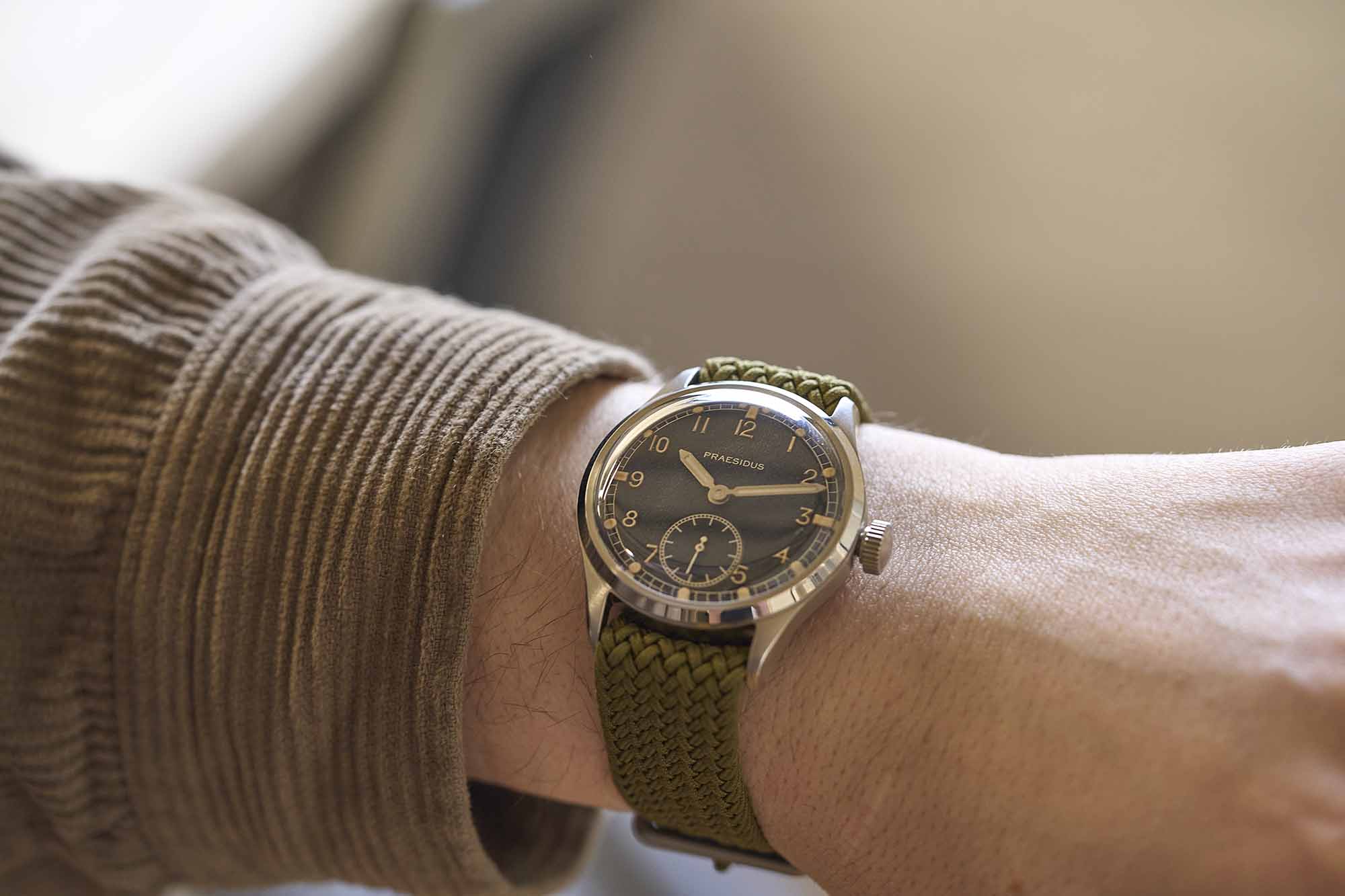
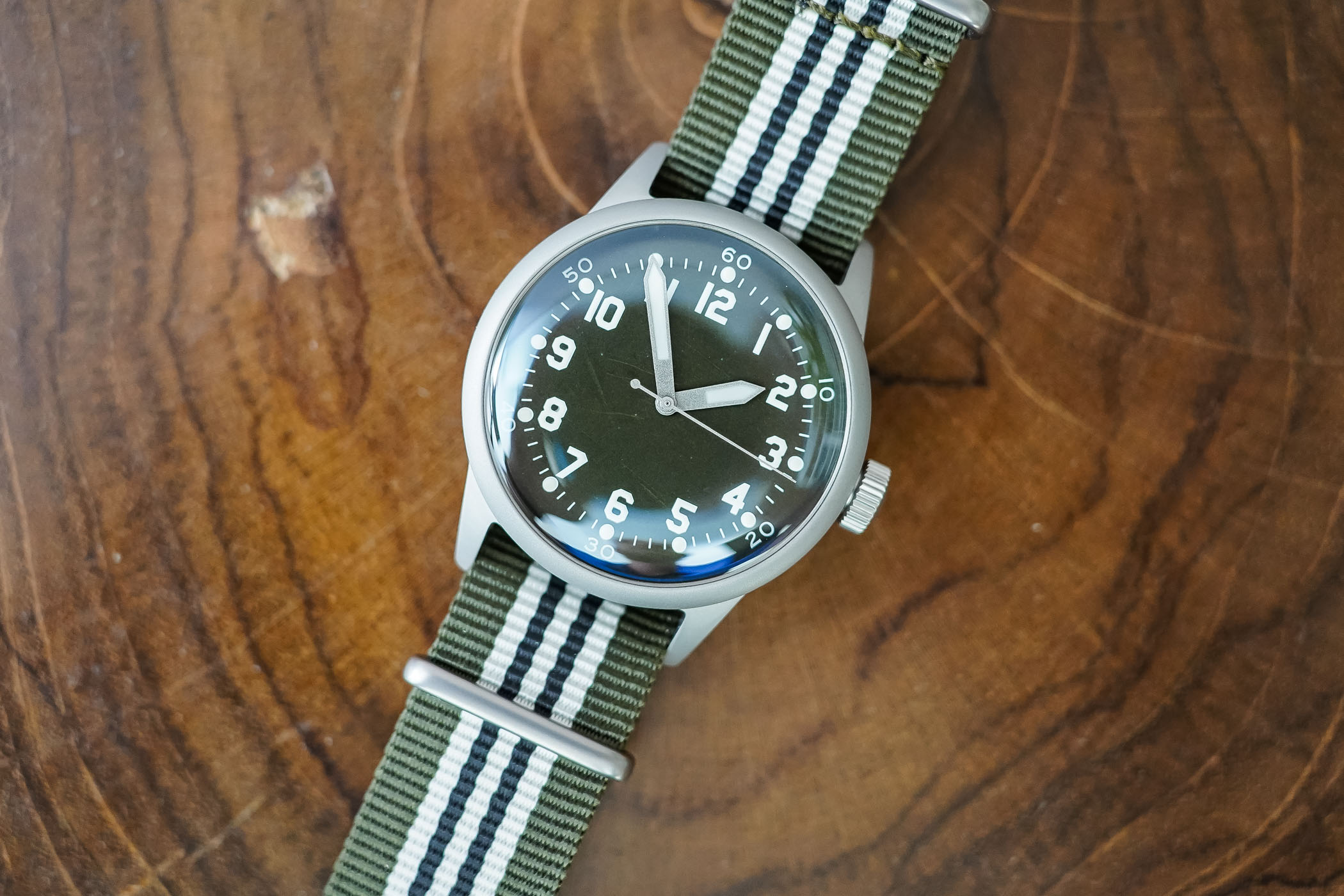
The Dirty Dozen also seeded a modern reissue tradition. Vertex revived its W.W.W. M100 in 2016 (led by Don Cochrane, great-grandson of the original Vertex partner). Timor reissued its Heritage Field in 2020. Marathon Watches (Canadian/Swiss) holds the modern equivalent active military supply contract and produces the GPM (General Purpose Mechanical) under MIL-PRF-46374G. The Dirty Dozen specification, robust 38-40 mm steel field watch, hacking seconds, lume hands and indices, fixed bars, simple matt dial, is now the canonical field watch template that civilian brands like Hamilton Khaki, Vaer, Praesidus, and Sangin reference.


Comments 1