
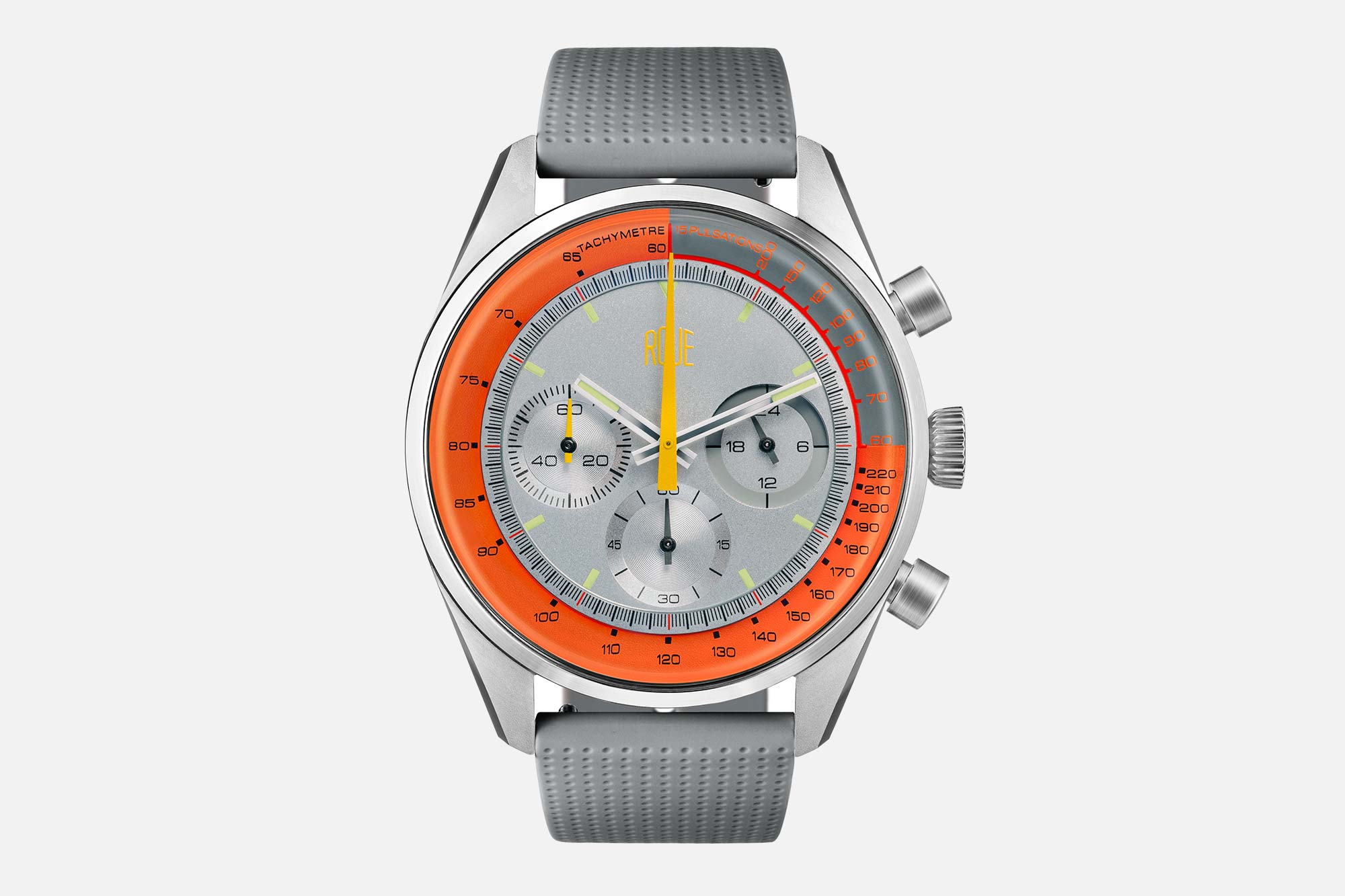
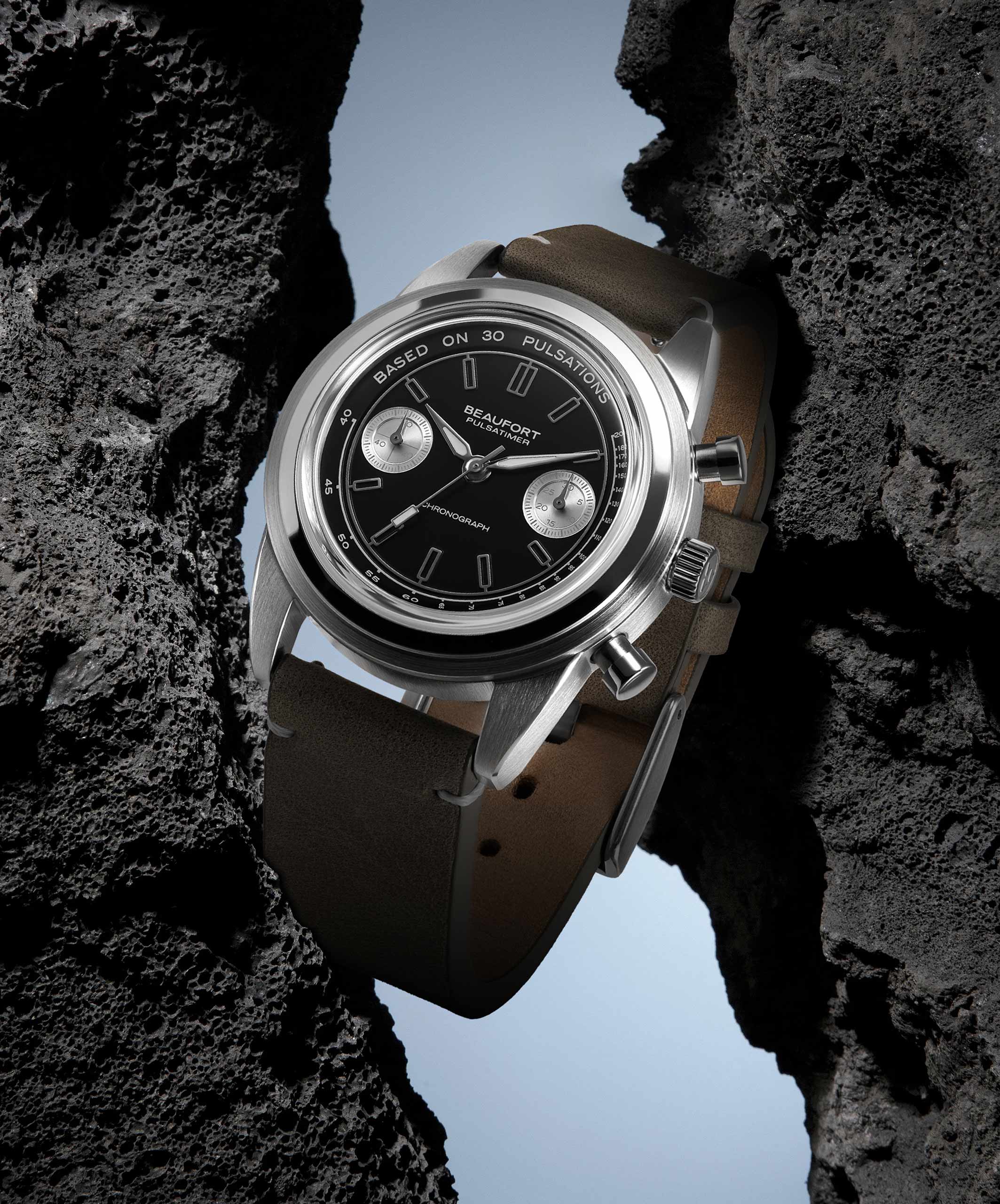
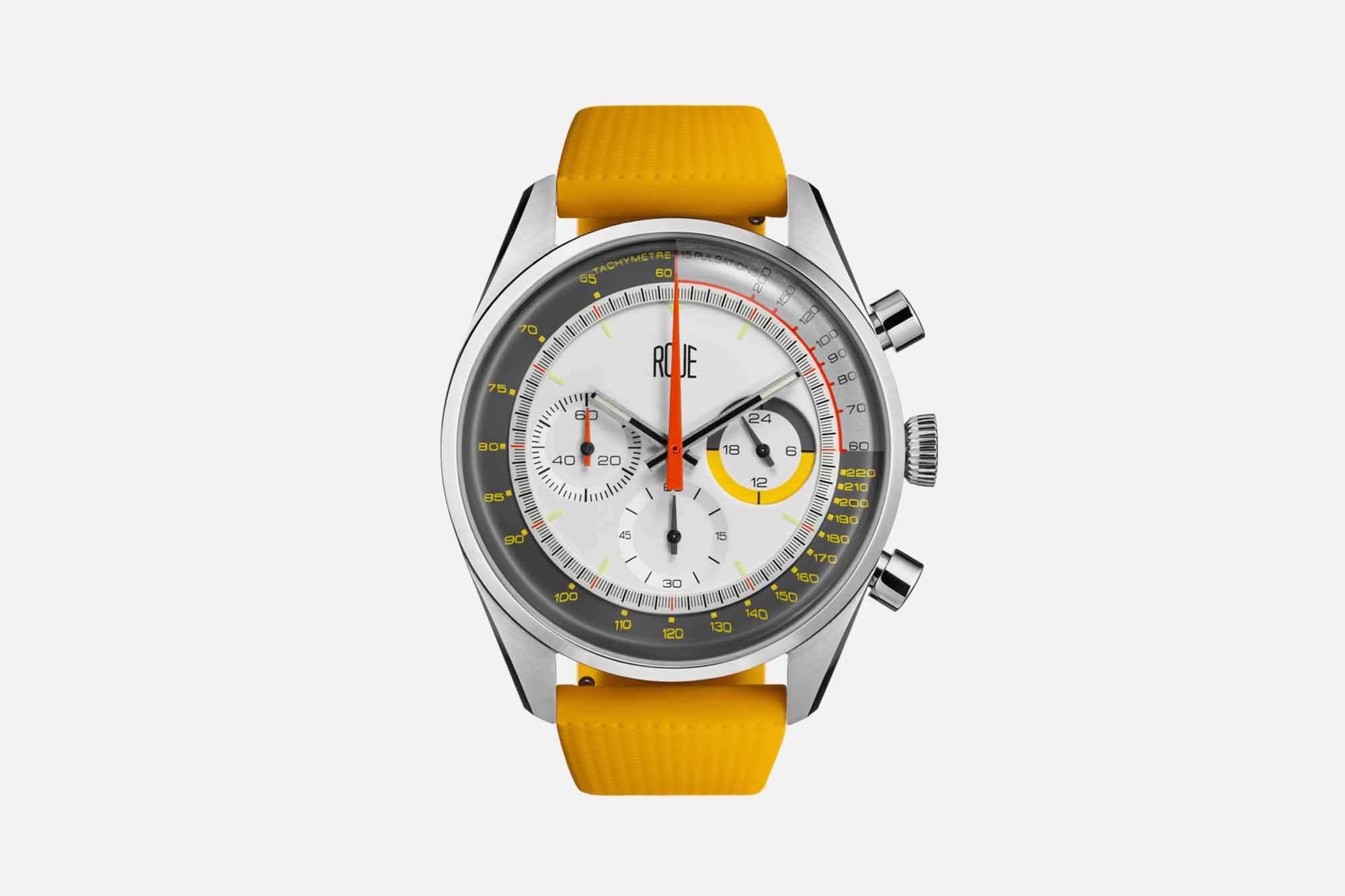
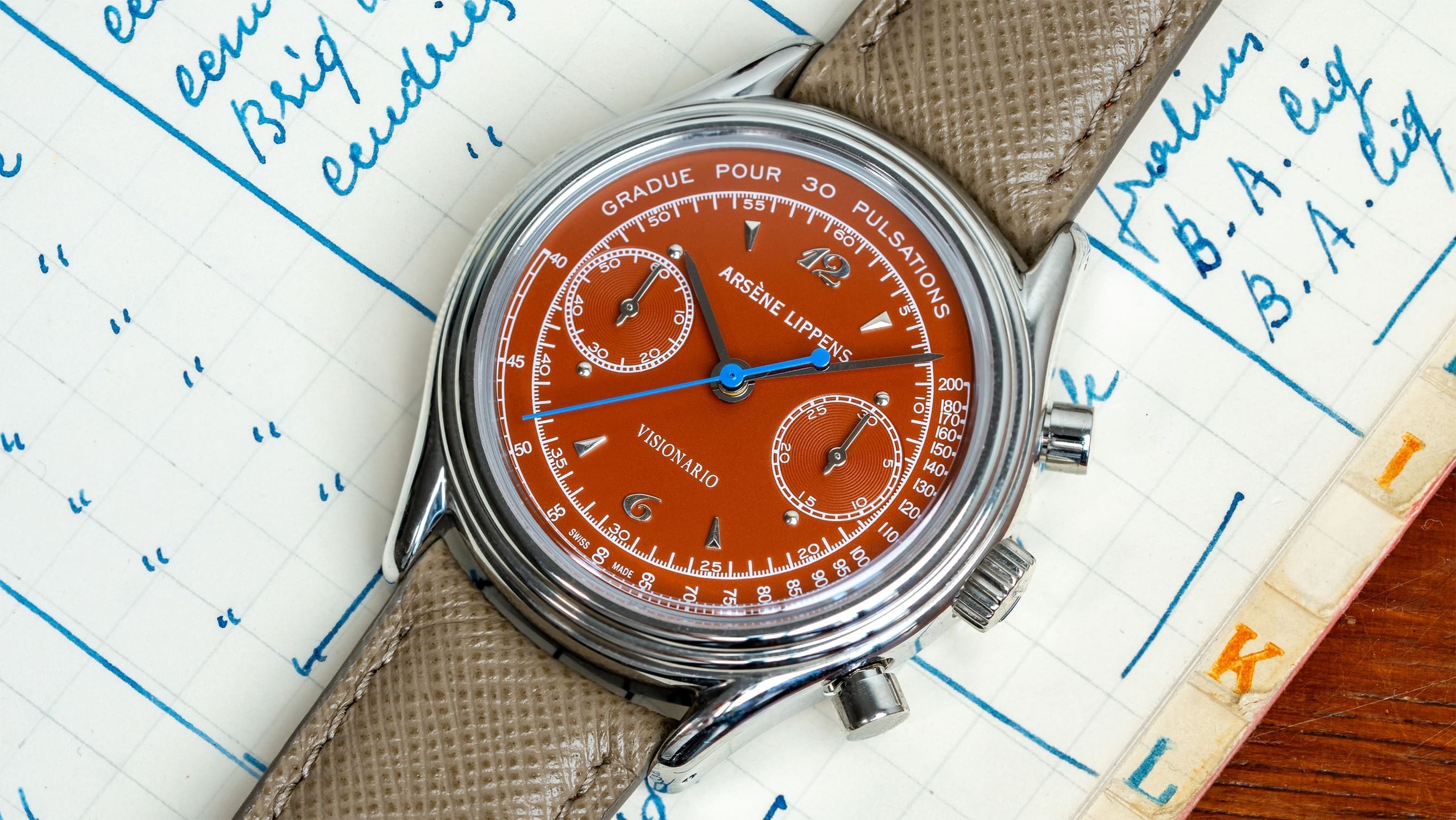
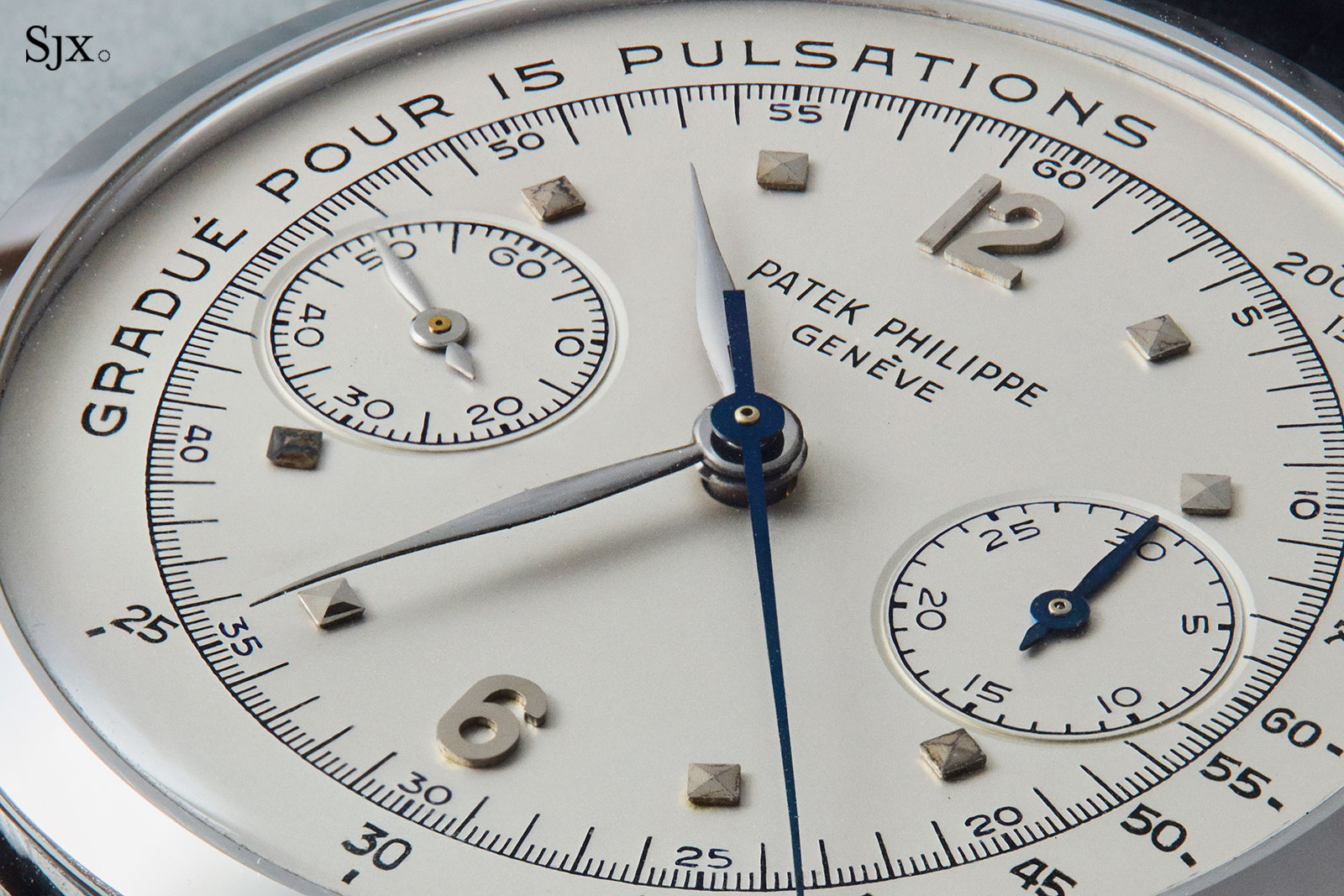
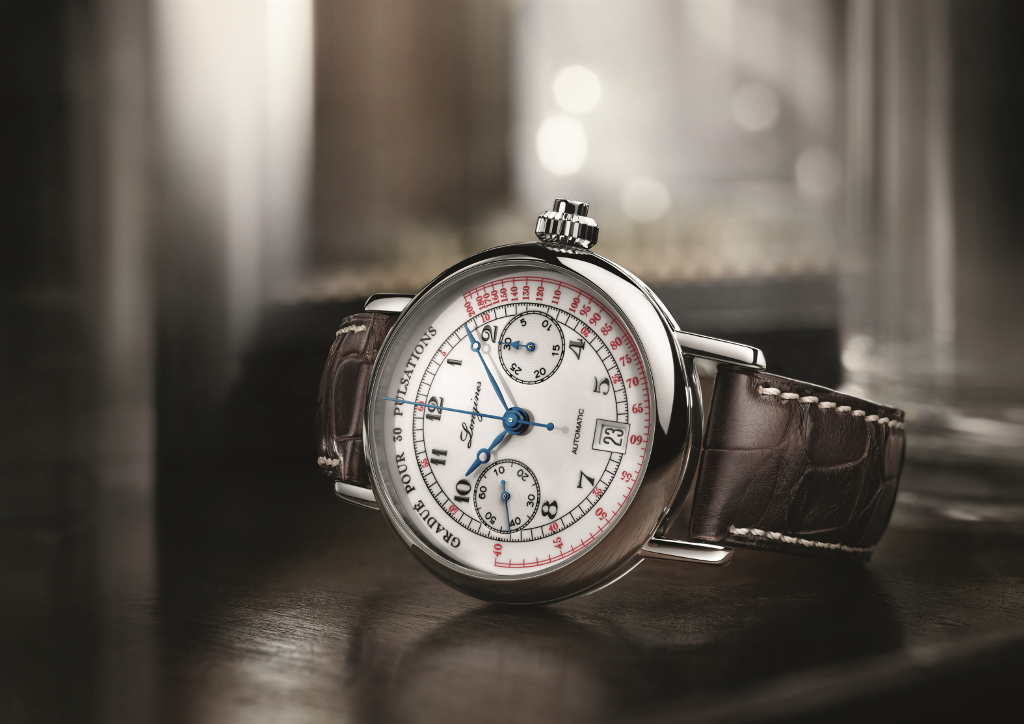
Pulsometer scale is a chronograph dial scale designed to read a patient's heart rate (beats per minute) directly from the chronograph seconds hand position after counting a fixed number of pulse beats. The scale exists in two main calibrations: "Graduations pour 15 pulsations" (calibrated to 15 beats) and "for 30 pulsations" (calibrated to 30 beats). The 30-beat version is more commonly seen because the longer counting period reduces measurement error; the 15-beat version is faster but less precise.
In practical use: the doctor places fingers on the patient's carotid, radial, or femoral pulse, presses chronograph start on the first felt beat, silently counts "one, two, three..." through to 15 (or 30, depending on calibration), and presses chronograph stop on the final beat. The chronograph seconds hand then points to a number on the pulsometer scale that directly indicates beats per minute. For example, if 30 beats took 25 seconds, the seconds hand stops at 25; the pulsometer scale at the 25-second position reads "72" (BPM). The scale eliminates mental arithmetic, allowing the doctor to focus on the patient and write the BPM directly into the chart.
"A pulsometer chronograph was the first wearable medical instrument: not a stopwatch a doctor used, but a watch a doctor was. The wrist was the chart-side tool."- Hodinkee Reference Points, on doctor's watches
The pulsometer was developed in the 1920s-30s for use by physicians and military medics who needed quick, accurate pulse measurements during examinations and combat triage. The scale was widely used on medical wristwatches from Longines, Universal Genève, Lemania, Heuer, and various smaller Swiss and German makers. The Longines 13ZN doctor's variant of the 1930s and the Universal Genève Compax with pulsometer scale (1940s) are the canonical vintage references; original-condition examples sell for $5,000-$25,000 at auction depending on maker, condition, and provenance.
A typical pulsometer chronograph dial pairs the pulsometer scale (in red printing on the inner dial track) with a tachymeter (in black on the outer track) and sometimes a telemeter as well. The scales coexist because each measures a different physical quantity (BPM, speed, distance) using the same chronograph seconds hand; a triple-scale chronograph can be used as a multi-purpose timing instrument by a doctor, race-spotter, or artillery observer. Some pulsometer scales appear on rotating bezels rather than printed on the dial; the bezel variant allows BPM reading without timer use.
The format declined from the 1960s onward as electronic pulse oximeters and digital monitors replaced manual pulse-counting in clinical practice. Modern emergency-medical timing of pulse rates is done with electronic equipment, not chronograph wristwatches. The scale therefore exists today primarily as a vintage chronograph design cue, identifying the watch as a "doctor's watch" or as a tribute to mid-century medical chronographs.
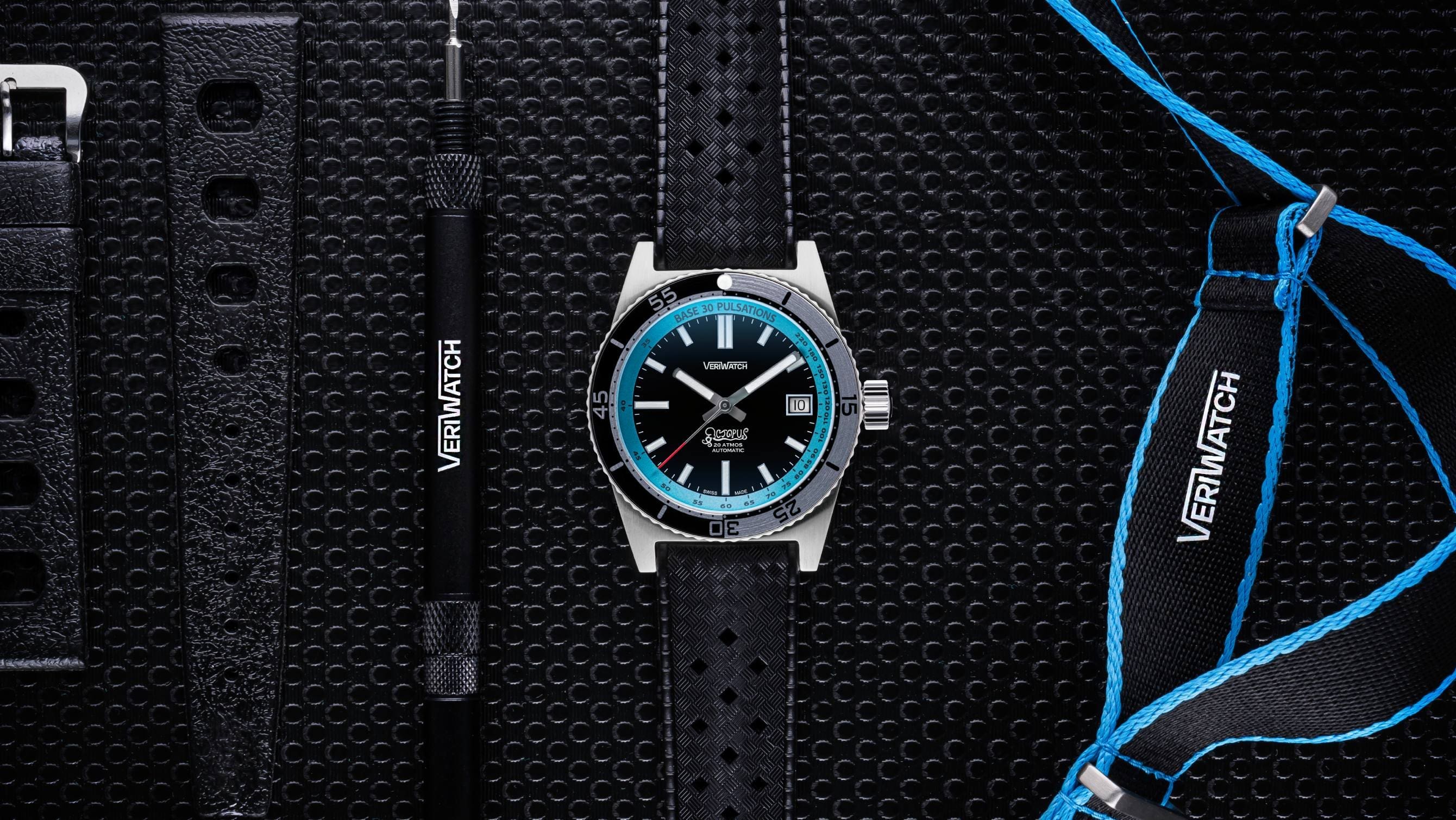
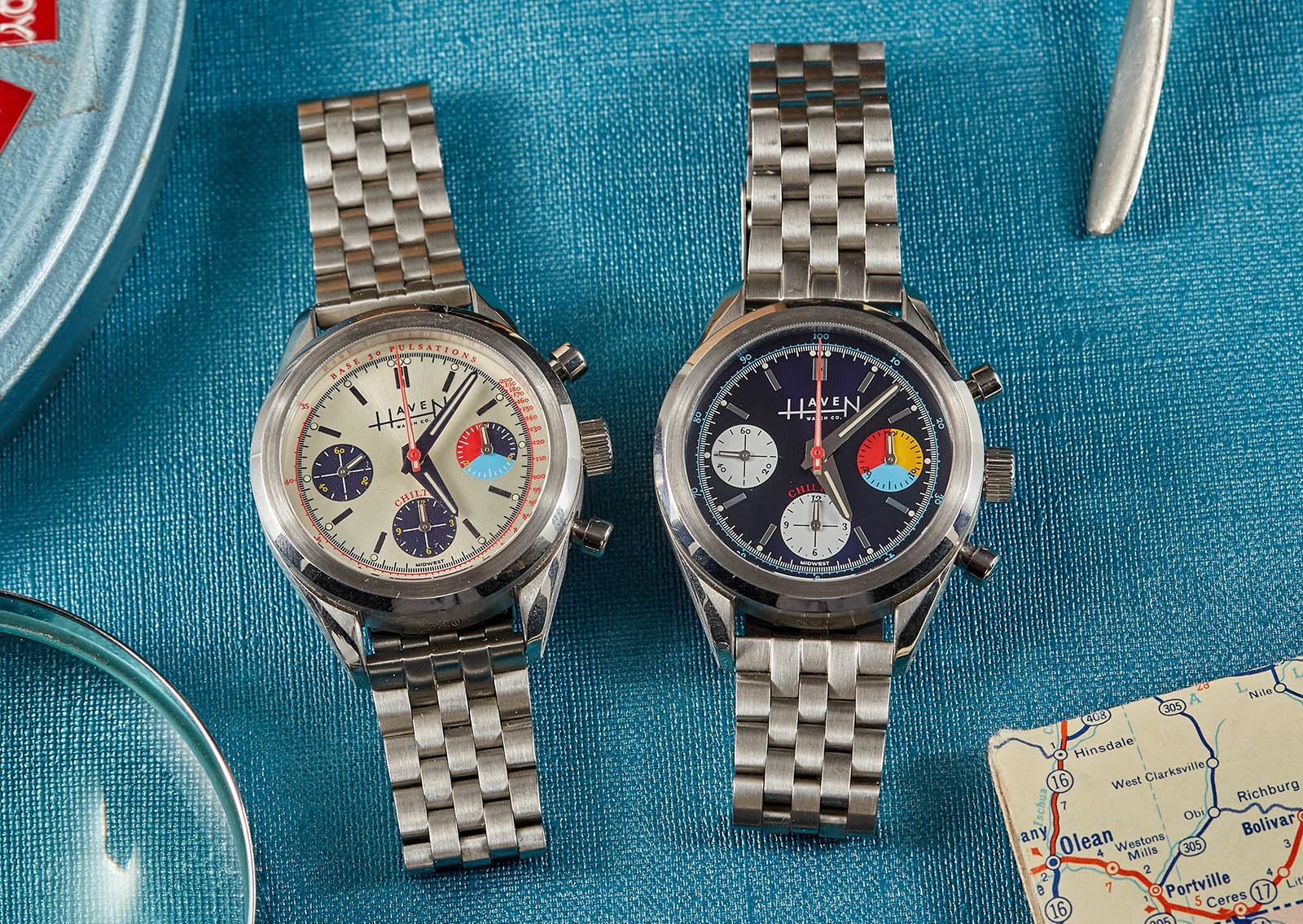
Modern pulsometer revival watches: Longines Heritage Pulsometer (the canonical modern reissue), Junghans Meister Pulsometer, Hanhart 1882 Pulsometer, Vacheron Constantin Historiques Cornes de Vache (with pulsometer variant), F.P. Journe Centigraphe Souverain (rare commission with pulsometer), and various microbrand pieces from Praesidus, Vario, Boldr, and others. The format is rare on modern luxury sports chronographs (which use tachymeter); it appears almost exclusively on vintage-themed dressy chronographs.


Comments 1