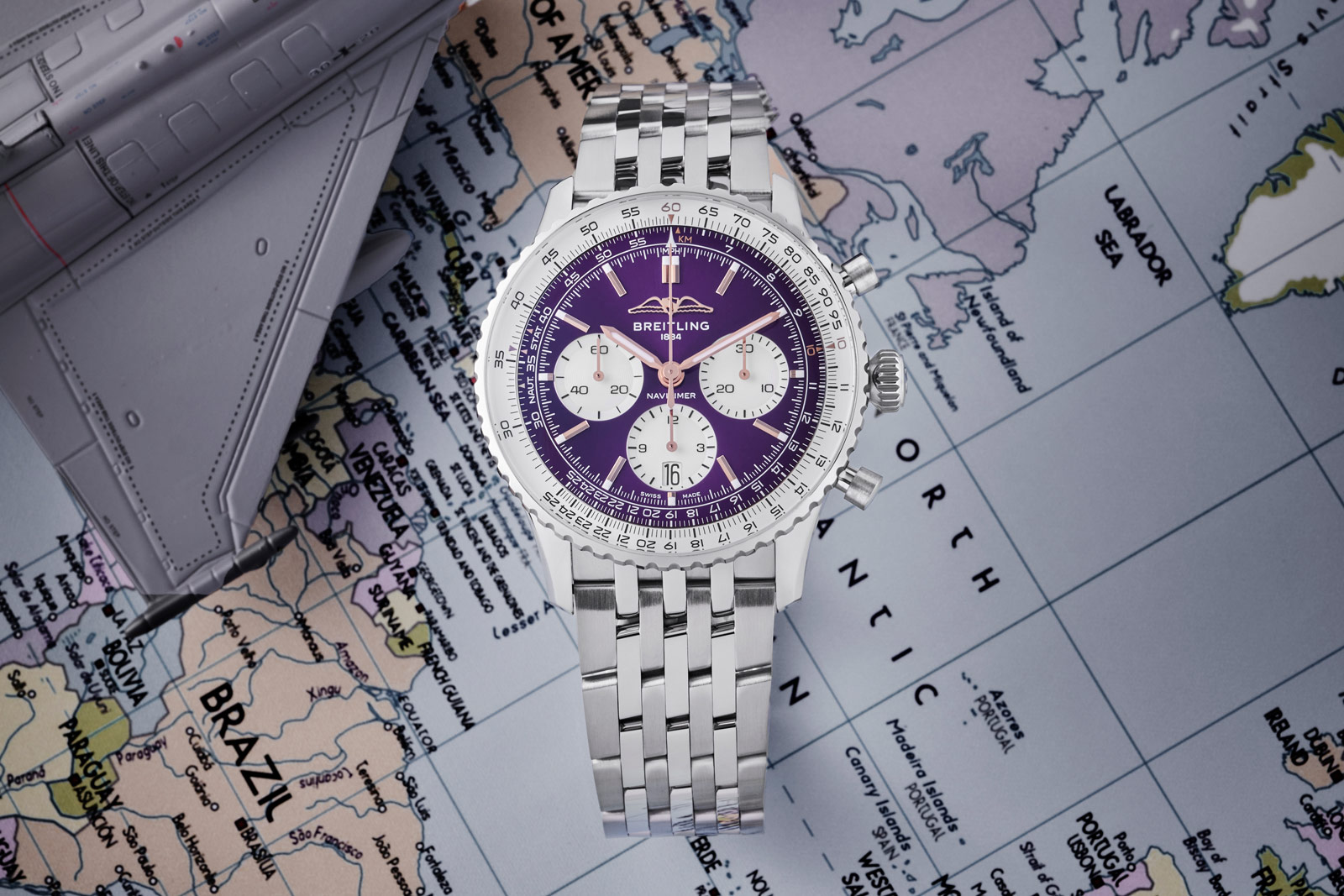
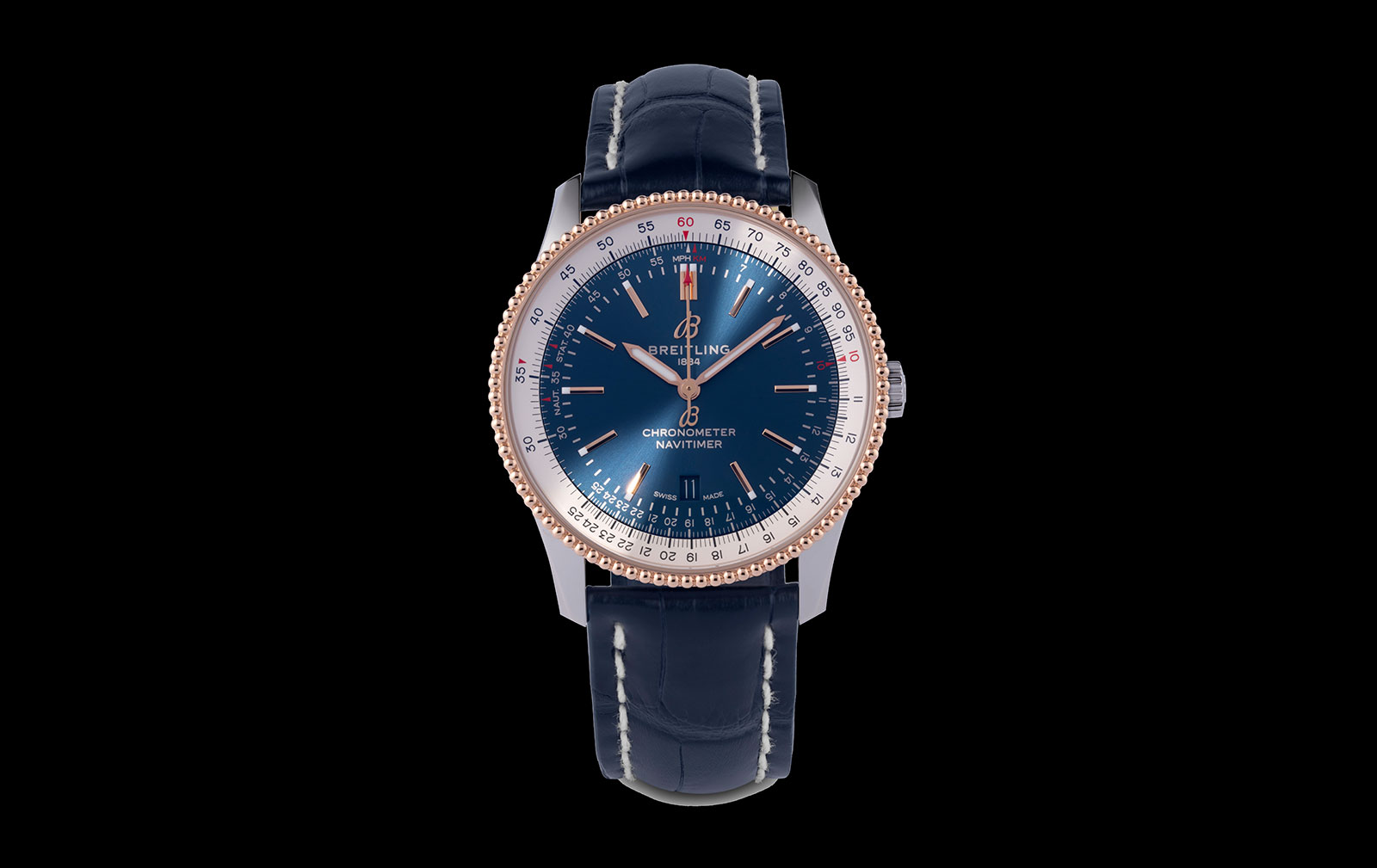
A slide rule bezel brings the principle of the analog slide rule, a logarithmic calculation device used widely from the 17th century until the electronic calculator era, into a watch bezel. The bezel has two logarithmic scales: an outer fixed scale and an inner rotating scale. When the inner scale rotates against the outer, multiplication and division become equivalent to addition or subtraction of logarithms; the user reads the answer where the relevant numbers align. The result is a wristwatch that, in addition to telling time, can perform calculations on the wrist without needing a separate device.
The format was introduced by Breitling on the Navitimer in 1952, designed in collaboration with the Aircraft Owners and Pilots Association (AOPA) to give private pilots a flight-calculation tool on the wrist. The original Navitimer ref. 806 had a circular slide rule on the rotating bezel calibrated for: fuel consumption (gallons/hour vs total fuel and time), true airspeed (indicated airspeed corrected for altitude and temperature), ground speed (true airspeed corrected for headwind/tailwind), climb and descent rates, fuel range (ground speed × fuel-time), distance/time conversions, and unit conversions (nautical to statute miles, knots to mph, gallons to litres).
"The slide rule bezel was the watch industry's answer to a question that GPS eventually answered better. The watch is now the redundant tool the pilot doesn't need. But there is still poetry in flying with a 1952 calculator on your wrist."- Hodinkee Reference Points, Navitimer 70th anniversary essay
The Navitimer was an immediate success in private aviation: pilots flying Cessnas, Pipers, and similar General Aviation aircraft used the slide rule for in-flight planning, fuel-management calculations, and emergency divert decisions. The watch was carried into space when John Glenn wore a Breitling Navitimer Cosmonaute (a 24-hour-dial Navitimer variant) on the Mercury-Atlas 7 "Aurora 7" mission on 24 May 1962; this was the first wristwatch worn by an American astronaut and used the slide-rule bezel for orbital calculations. The Cosmonaute reference is still produced; the slide rule on it is calibrated for 24-hour rather than 12-hour use.
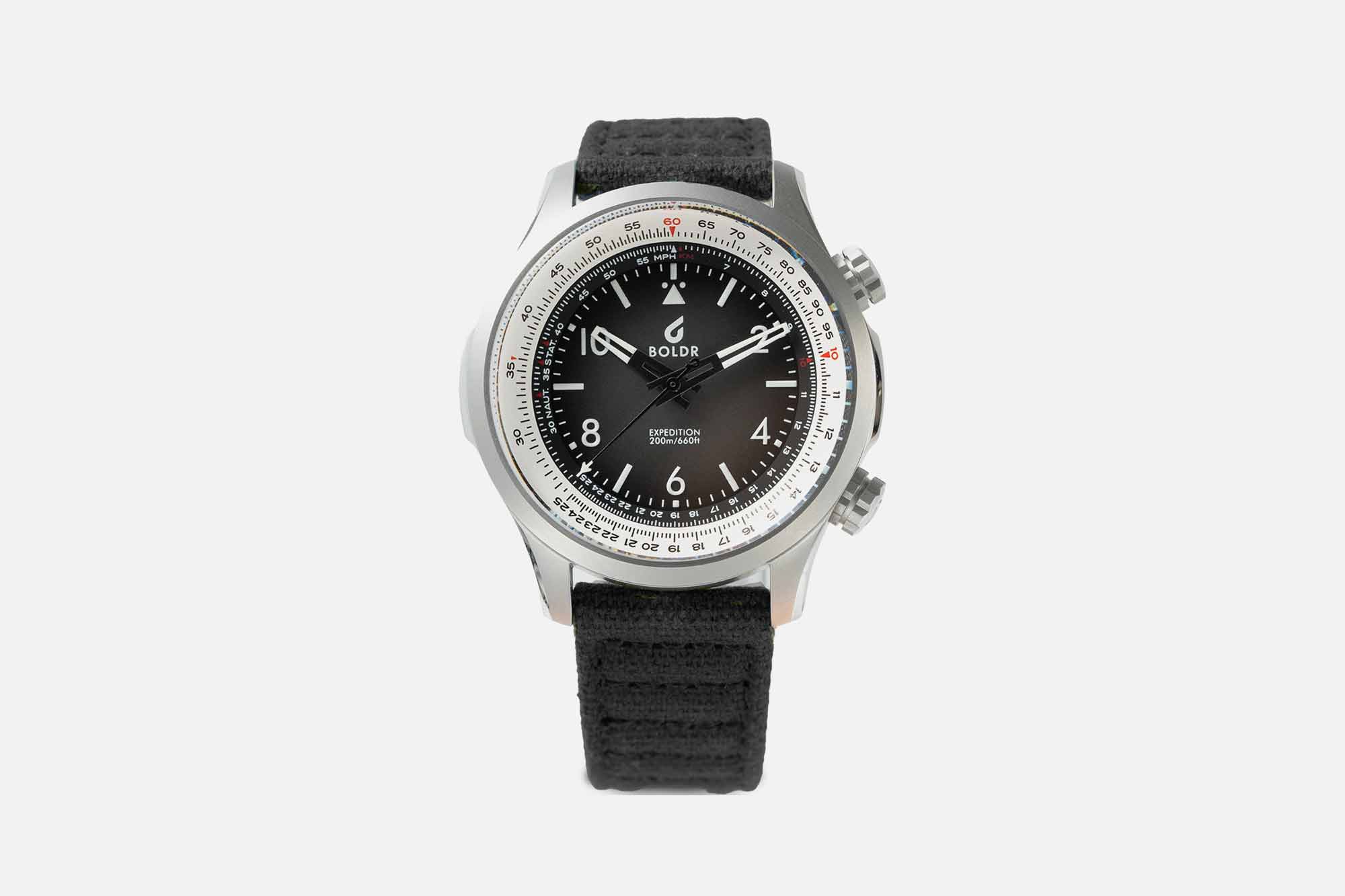
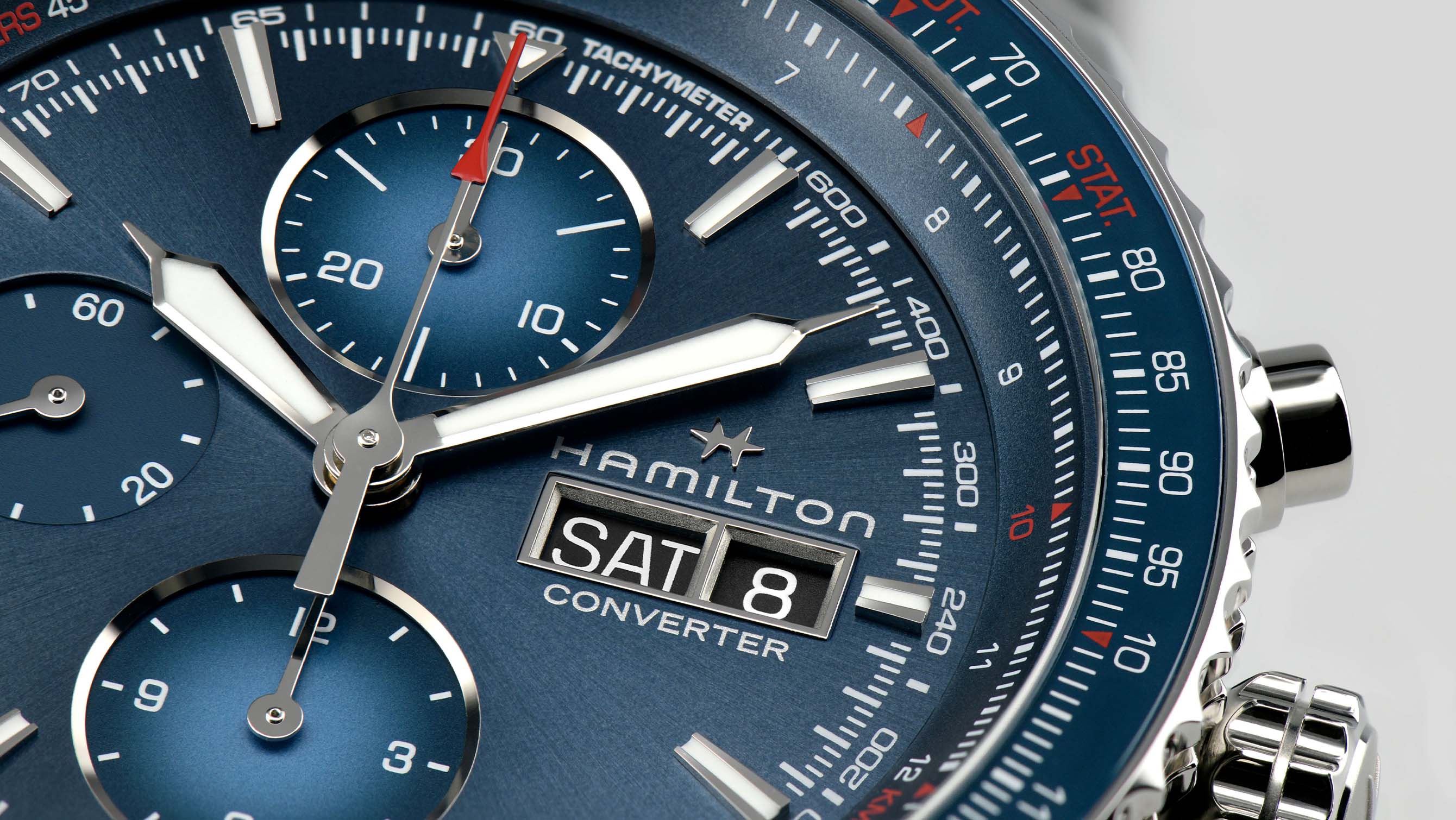
The slide rule was widely copied and adopted by other pilot-watch makers. Citizen Promaster Skyhawk series uses an electronic slide-rule combined with quartz timing; Seiko Flightmaster SNA411 uses a printed slide-rule bezel with quartz movement; Casio CA-53W "calculator watches" use a digital approach to the same problem; modern microbrand pilots from Stowa Flieger Slide Rule, Hamilton Khaki Pilot, Bulova Lunar Pilot, and others include slide-rule variants. The format is now a recognised pilot-watch sub-category alongside B-Uhr, Type 20, and Mark XI lineages.
Practical use today: GPS, electronic flight instruments, and tablet-based flight planners (ForeFlight, Garmin Pilot) have made the slide-rule bezel functionally redundant for modern aviation. A 2024 General Aviation pilot has more accurate fuel and navigation calculations available from their iPad than from any chronograph bezel. The slide rule on a modern Navitimer is therefore primarily a design and heritage signal rather than a functional tool. That said, it remains still functional: a current Navitimer slide rule does work and can be used as a backup calculation device if electronic equipment fails. Pilot training programs sometimes still teach the slide-rule basics as a "what to do if your tablet dies" exercise.
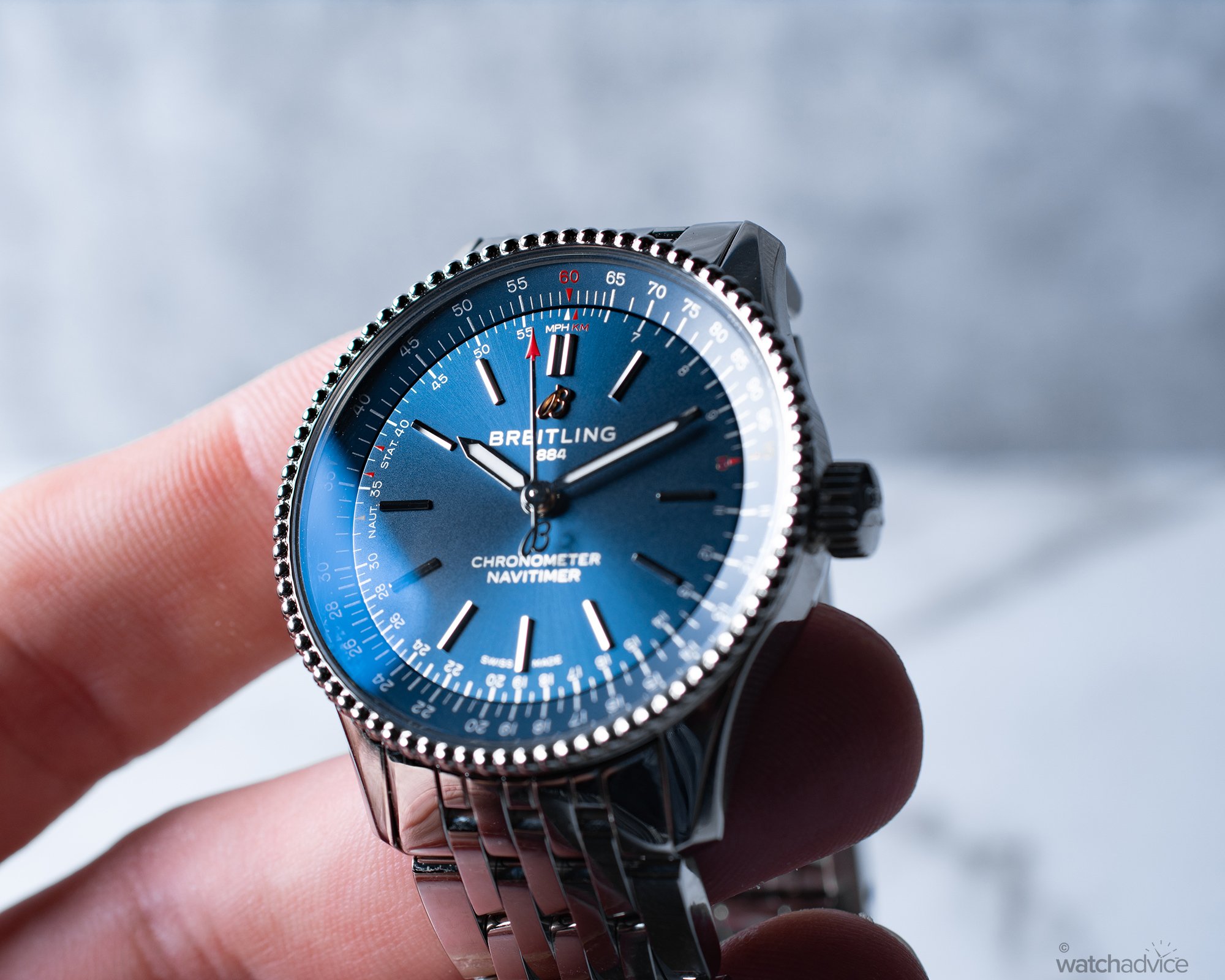
In modern collector vocabulary, the Navitimer slide rule is one of the most-recognised pilot-watch dial features. The visual signature, dense concentric scales of small numbers around the periphery of the dial, is unmistakable and is widely cited as one of the most "complete" looking watch dials in mainstream production. Breitling has expanded the Navitimer line to include three-hand variants, GMT versions, and chronograph configurations, but the slide rule remains on essentially every Navitimer reference 72 years after its 1952 launch.





Comments 2