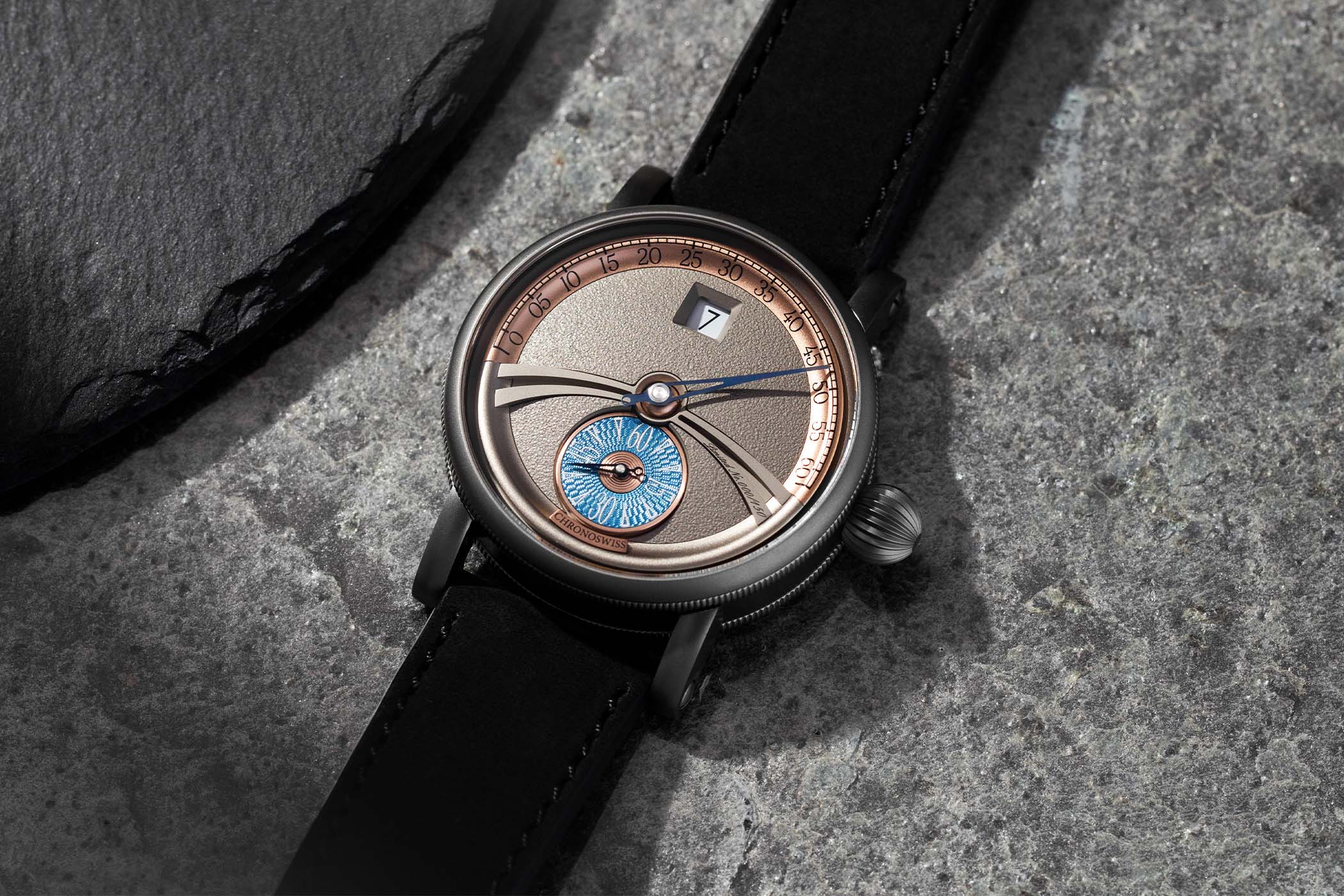
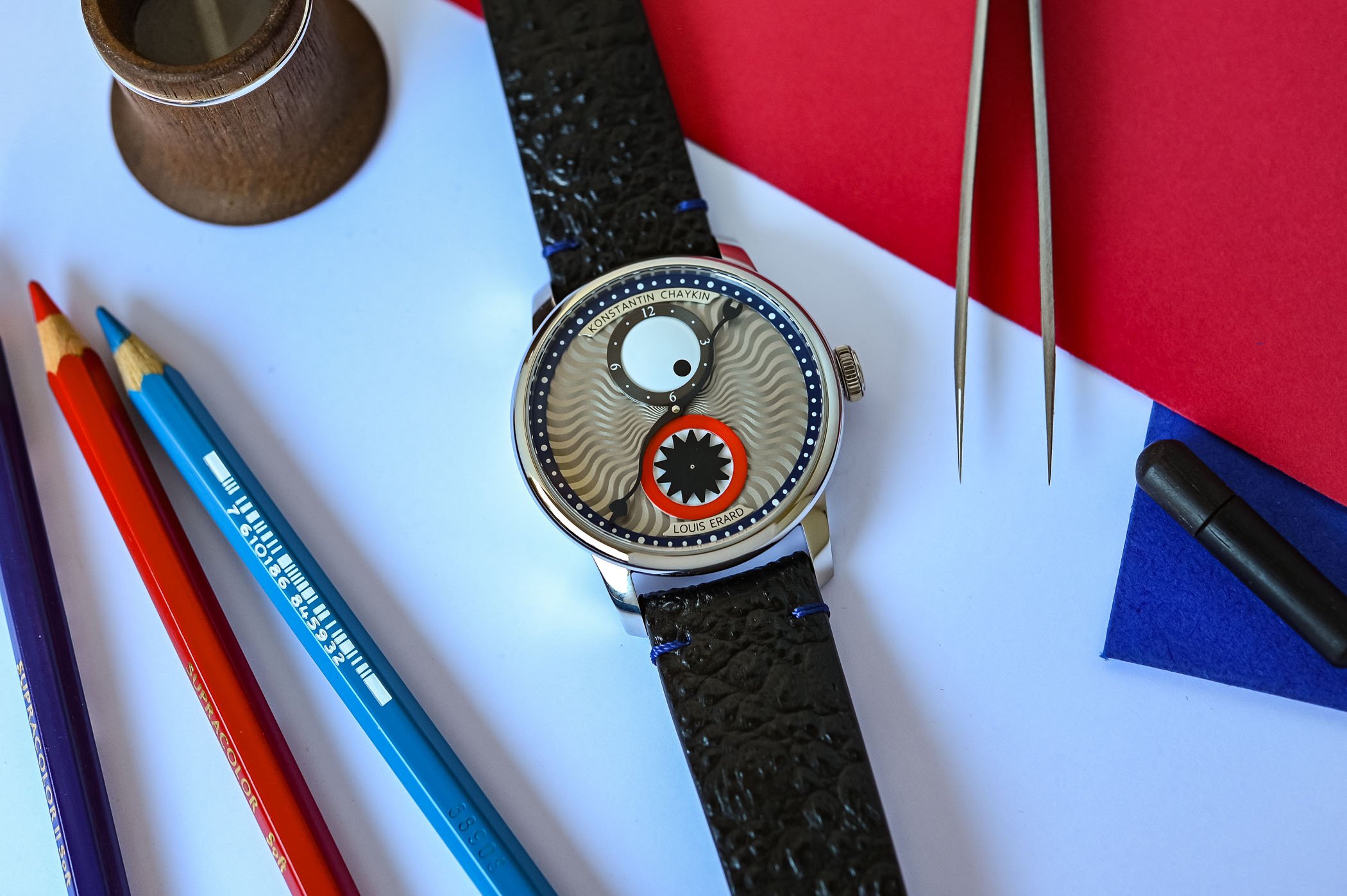
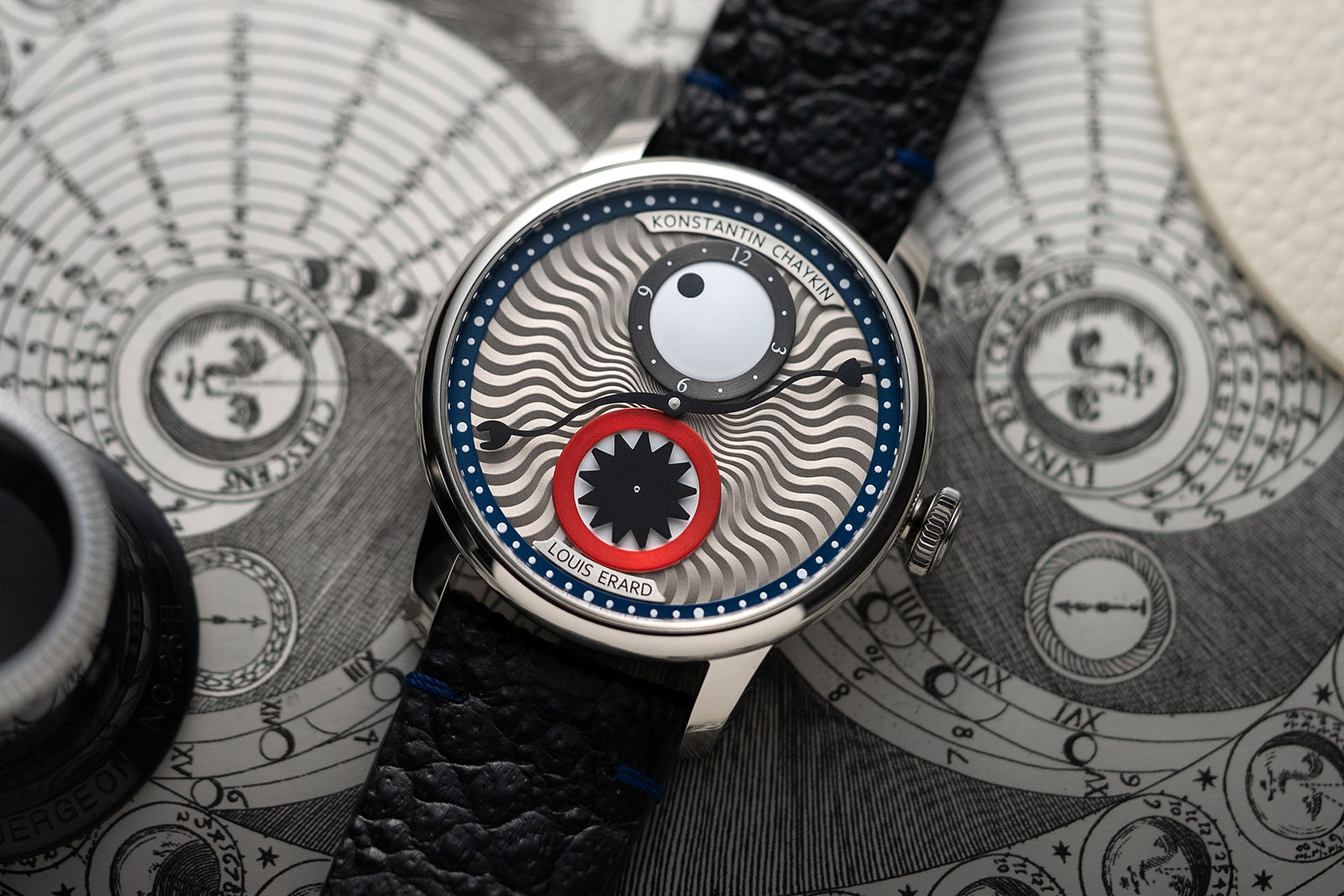
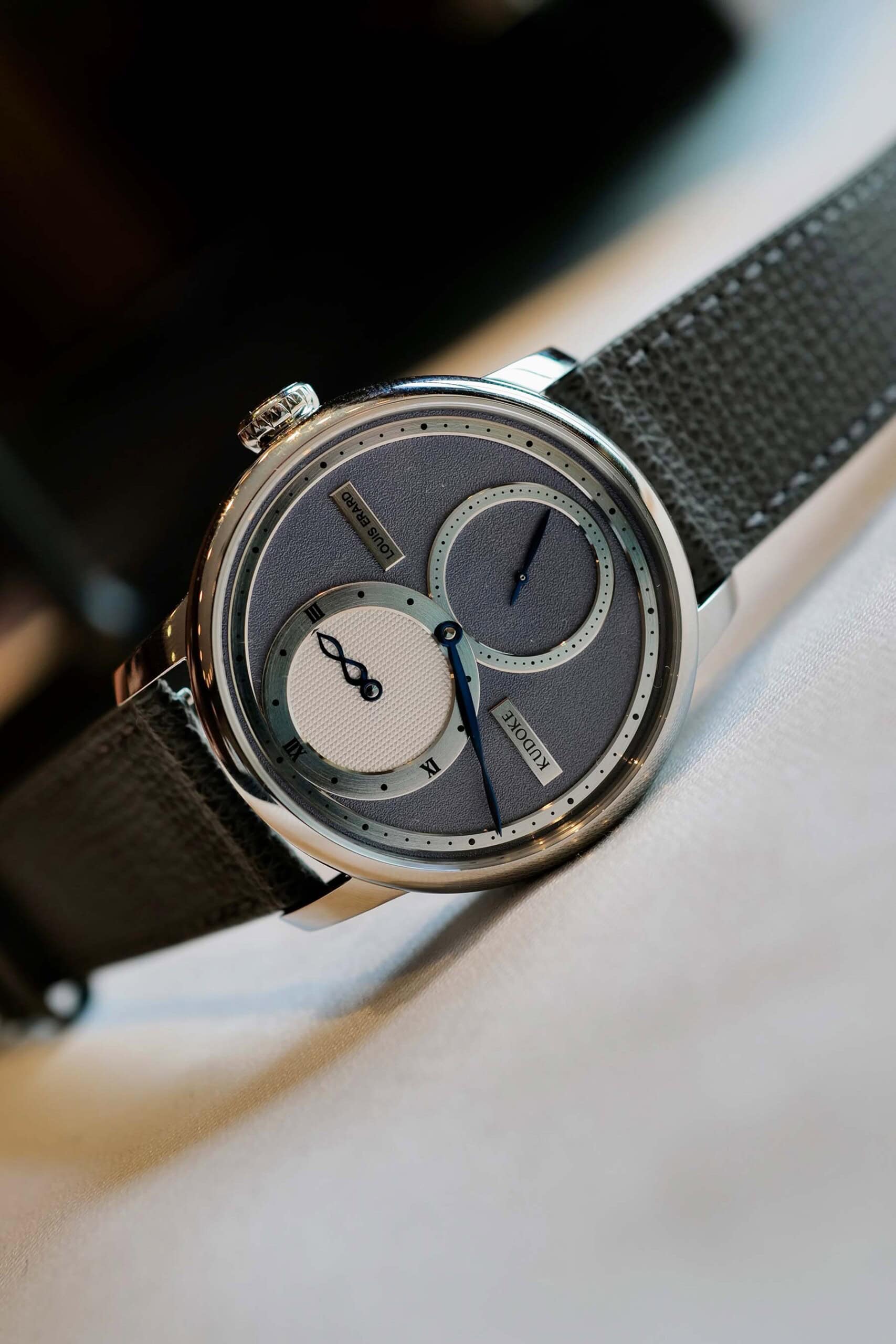
A regulator dial is a watch (or clock) display layout in which the hours, minutes, and seconds are placed on three separate sub-dials rather than radiating from a common centre. The most common layout: a large central minute hand sweeping the main dial, a smaller hour sub-dial at 12 o'clock, and a sub-second register at 6 o'clock. Some variants place the hour at 12 and the second at 9, or invert the layout, but the principle is consistent: each unit of time gets its own dedicated dial, eliminating the visual overlap of three hands sharing a centre point.
The layout originated in 18th-century precision reference clocks, the so-called "regulator clocks" that watchmakers used to set their own production. A regulator clock was the master timepiece in a watchmaking workshop; every watch leaving the shop was synchronised to the regulator. Because the regulator was the precision reference, accuracy was paramount, and the three-sub-dial layout was preferred for two reasons. First, it eliminated parallax error: a hand directly over its own scale gives a less ambiguous reading than three hands stacked over a single concentric scale. Second, the sweep of a large minute hand made minute-precision setting easier; setting two normal-sized hands to the regulator's minute was less precise than aligning to the regulator's big sweep. Most major 18th-century clockmakers (Berthoud, Le Roy, Breguet) produced regulator clocks for serious laboratories, observatories, and workshops.
"The minute hand sweeps the dial; the hour clicks forward in its own small window; the seconds spin in their dedicated register. Everything has its place. That is what a regulator dial means."- Watchmaking commentary on the regulator layout
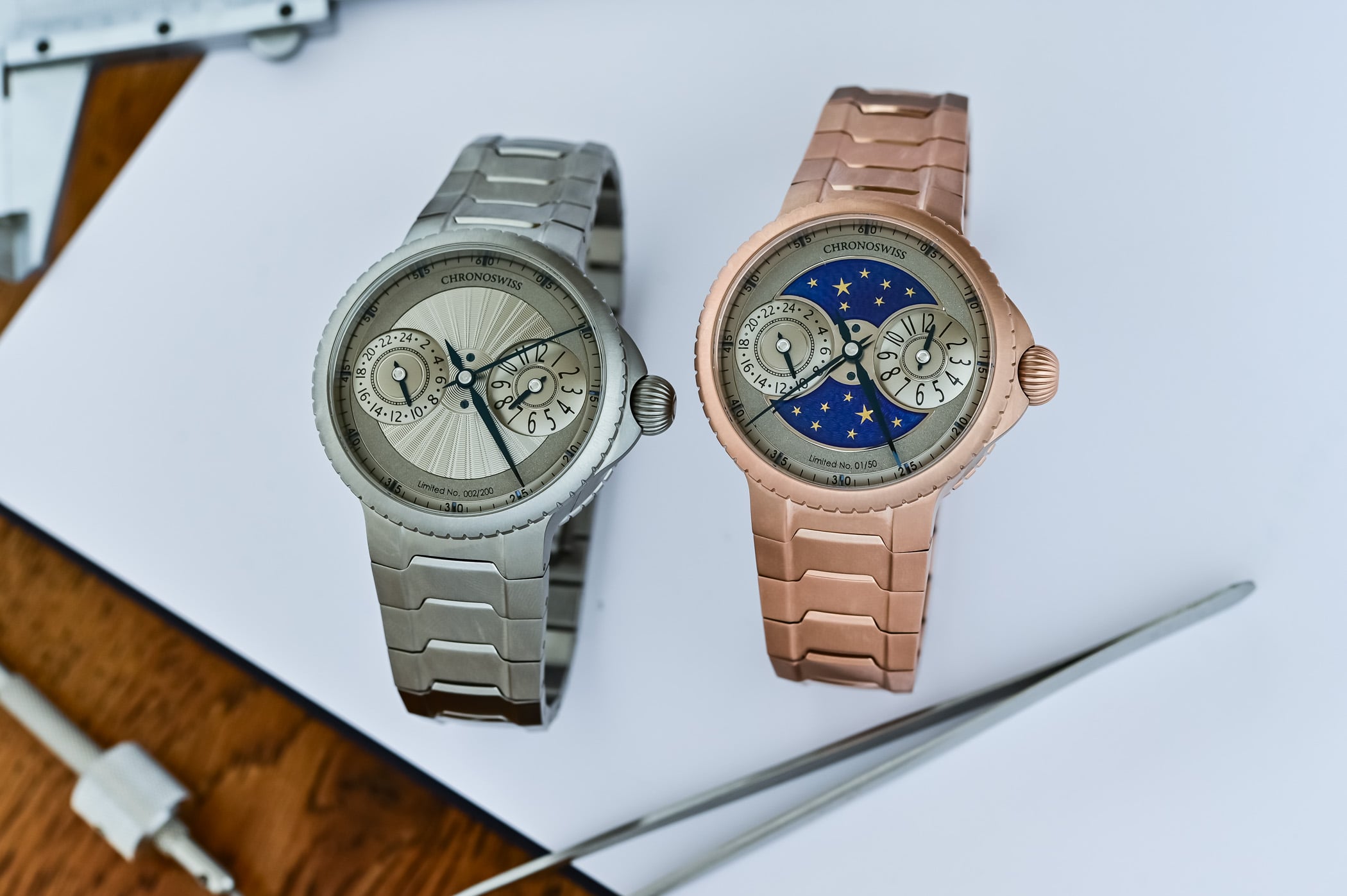
In wristwatch form, the regulator dial was almost entirely absent through the 19th and most of the 20th century. The first serial-production regulator wristwatch was the Chronoswiss Régulateur, launched in 1988 by Gerd-Rüdiger Lang. Lang's motivation was both aesthetic and historical: the regulator dial was an elegant, unusual layout that immediately signalled "horological precision" in a way conventional dials did not. The Chronoswiss Régulateur ref. CH 1223 became one of the brand's signature pieces and the reference that introduced the regulator layout to modern collectors.
After Chronoswiss, the layout spread to mainstream haute-horlogerie. A. Lange & Söhne's Richard Lange Jumping Seconds (2010) and Richard Lange Tourbillon "Pour le Mérite" (2013) use the regulator layout, with the typography and finishing referencing 18th-century pocket-chronometer dials. IWC's Pilot's Watch Doppelchronograph regulator, Audemars Piguet Jules Audemars Régulateur, Cartier Tortue Regulator, and selected Glashütte Original Senator references all use regulator dials. Patek Philippe's ref. 5450P Annual Calendar Regulator (2011) was one of Patek's few regulator references; auction-grade vintage Patek regulator pocket watches sit at six-figure values.
On modern wristwatches the regulator layout is essentially aesthetic and historical rather than functionally precision-driven; modern COSC chronometer tolerances are tight enough that parallax error in a conventional three-hand dial is well below practical reading thresholds. The regulator layout sells today on visual differentiation and haute-horlogerie heritage signalling; it makes a watch immediately readable as "a serious watch" without requiring complications. Chronoswiss, A. Lange, and selected Glashütte Original references all use the design as a brand-signature feature.
For collectors, a regulator-dial wristwatch is a clear positioning statement: it signals "German haute horlogerie heritage" (Lange, Glashütte Original, Chronoswiss) or "haute-horlogerie precision-watch reference" (Patek, Vacheron, Audemars Piguet limited editions). Pricing: vintage 18th-century regulator clocks at five to seven figures depending on maker; vintage pocket-watch regulators at six figures for top names; modern wristwatch regulators from ~CHF 15,000 (Chronoswiss base) through CHF 100,000+ (Lange Richard Lange Tourbillon).



Comments 1