
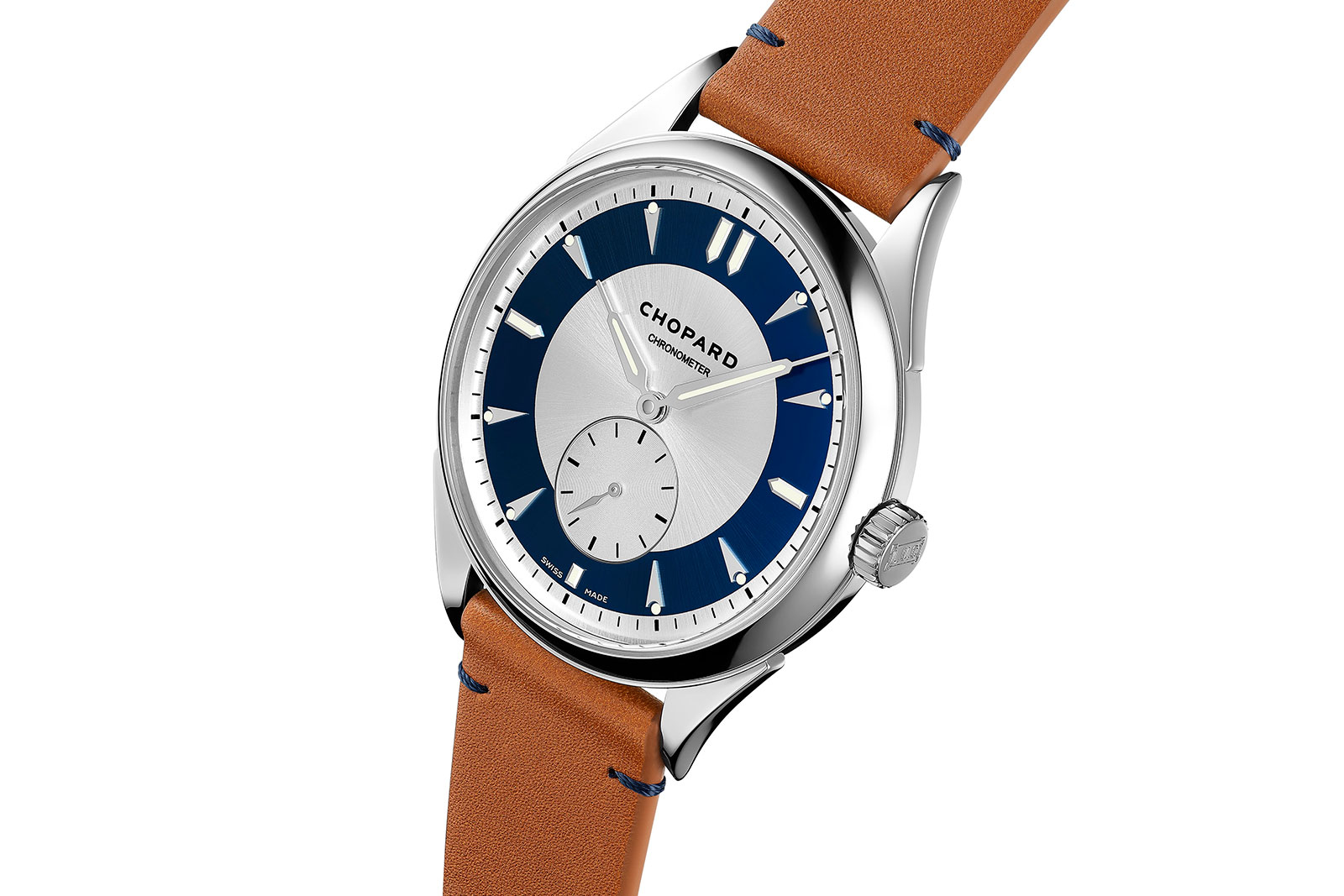
In post-WWII aviation watch design, the requirement was a hand that read clearly at cockpit instrument distance (typically 30-40cm from the pilot's eye, with peripheral vision rather than focused reading). Conventional dauphine or sword hands have wide flat surfaces that catch ambient light unevenly and can be hard to track in low cockpit lighting; a hand needed a strong directional point with sufficient lume area for night reading. The syringe shape emerged as the design answer: a long thin shaft (less light-catching mass than a wide blade), a sharp triangular tip (clear directional point), and a slight bulb near the base (reading reference back to the dial centre).
The IWC Mark XI, launched in 1948 for the British Royal Air Force under the 6B/346 specification, codified the syringe hand at the centre of modern pilot-watch design. The Mark XI dial is famously austere (matt black, large arabic numerals, minimal print), and the syringe hour and minute hands are central to the visual identity. The hands are nickel-plated silvery white with tritium lume fill in the central thin shaft; the seconds hand is a long thin needle. The Mark XI is the canonical reference pilot watch of the post-war era; production ran 1948-1981 and the watch is in continuous demand at vintage auction.
"The dial says nothing. The hands say pilot watch. That has been the IWC Mark XI rule since 1948."- Watch designer on IWC Mark XI heritage
IWC has retained syringe hands across the modern Mark XII (1994) through Mark XX (2022) and in the Big Pilot family; the hands have evolved subtly (modern Super-LumiNova vs vintage tritium; slightly varied shaft proportions) but the basic geometry is unchanged. The syringe is the strongest single brand-recognition cue for IWC Pilot watches; a stripped-dial reference can be identified as IWC at glance simply from the hand geometry. Longines Heritage pilot references and various microbrand pilot pieces use syringe hands explicitly citing the IWC Mark XI lineage.
The name "syringe" is informal collector vocabulary that emerged in the 1990s vintage-watch enthusiast community; in formal Swiss watchmaking terminology the hand is called feuille (French for "leaf", referring to the slim leaf-shape of the shaft) or obus (French for "artillery shell", referring to the streamlined profile). German watchmaking uses Stabzeiger (rod hand) for related shapes. The "syringe" term has become dominant in English collector usage because of the explicit visual association with hypodermic needles.
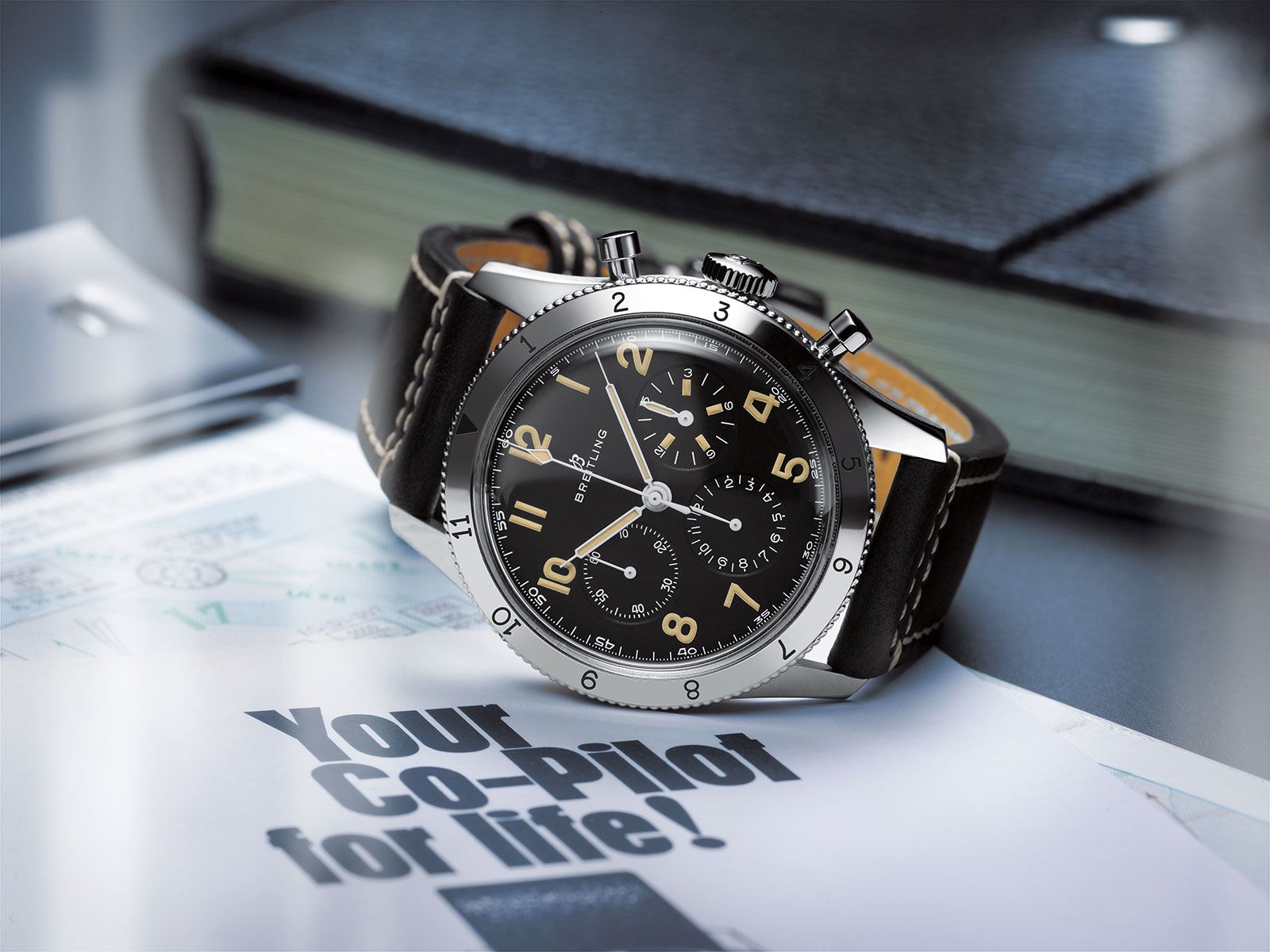
The syringe hand is almost exclusively a pilot-watch cue. It rarely appears on dress watches (dauphine and Breguet hands dominate that segment); it never appears on dive watches (which use Mercedes or sword shapes for higher lume area); and it does not appear on chronographs in any standard form (chronograph sub-counters use specialised geometries). When a syringe hand appears on a watch, the design intent is unambiguously aviation-coded.
For buyers, the syringe hand is one of the strongest identity cues in modern watchmaking. An IWC Mark XX (2022) and a vintage IWC Mark XI (1955) read as the same family at a glance because of the hand geometry; this lineage continuity is part of the brand's positioning. Microbrand pilot watches using syringe hands explicitly cite this heritage; the cue communicates "this is a pilot watch" before any other dial element registers. As with snowflake hands for divers, syringe hands for pilots are a category-defining design language.


Comments 1