There's a strange unspoken rule among watch people that the beach is where their best watch comes off. The reasoning makes some sense - sunscreen creeps under bezel inserts, salt accelerates gasket wear, sand finds its way into pushers - but the rule is wrong. You should be wearing a watch at the beach. The right one is more durable than your phone, more useful than a dive computer for casual swimming, and the patina from a season of beach use is the kind of provenance you can't fake.
What disqualifies a watch from beach duty: leather strap (gone after one summer), exposed crown without a screw-down (sand and salt kill the gasket), a chronograph or GMT pusher (extra ingress points), and any aluminium bezel insert (scratches the moment it touches sand grit). What qualifies it: 200m+ water resistance, screw-down crown, ceramic or steel bezel, rubber or NATO strap. Lume helps for after-dark beach walks.
The other consideration is replaceability. The beach is where watches die. A swell can rip a strap, a kid can swap your watch out at the bar for theirs, the rip current that took your sunglasses can take your watch too. So while we'd happily wear a Submariner at the beach (it was designed for this), we'd happily wear a Seiko SKX too - and the SKX has the advantage that if it ends up at the bottom of the Mediterranean, the financial loss is recoverable in a single dinner.
What also matters: comfort under sunscreen. A steel bracelet collects sunscreen in every link and gets sticky; rubber straps clean instantly under fresh water. So our defaults below are rubber-strap configurations with steel cases. The five picks span €60 to €4,000 - cover whichever beach you're going to.
Seiko
SRPK39 / vintage SKX007 - 42mm - automatic
The cheapest beach watch in the world that you'd genuinely keep wearing.
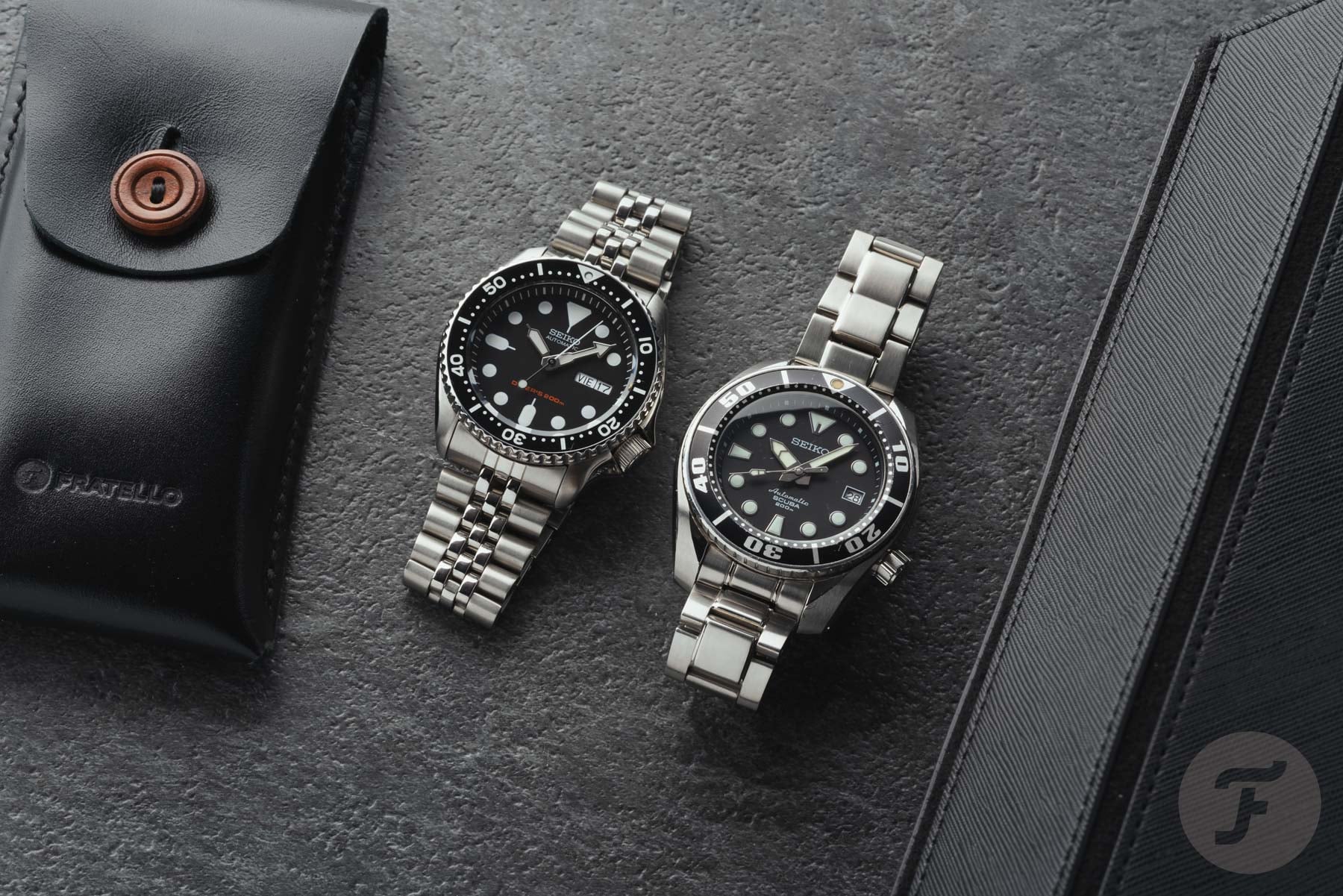
The Seiko SKX007 (discontinued but plentiful on the used market for ~€250) is the cheapest watch with a real horological cult following. 200m water resistance, screw-down crown, ceramic-feeling Hardlex crystal, the 7S26 automatic. The modern equivalent is the Prospex SRPK39 at €500 - same brief, slightly nicer movement (4R36), updated dial. Either one on the rubber strap is a beach default. Salt water won't bother either; sand in the bezel rinses out under a tap. Lume is excellent for after-dark beach walks. If you only own one beach watch in your life, this is allowed to be it.
Doxa
Sub 300T Searambler
840.10.021.10 - 42.5mm - automatic
The orange-dial dive watch that earns its place in salt water.
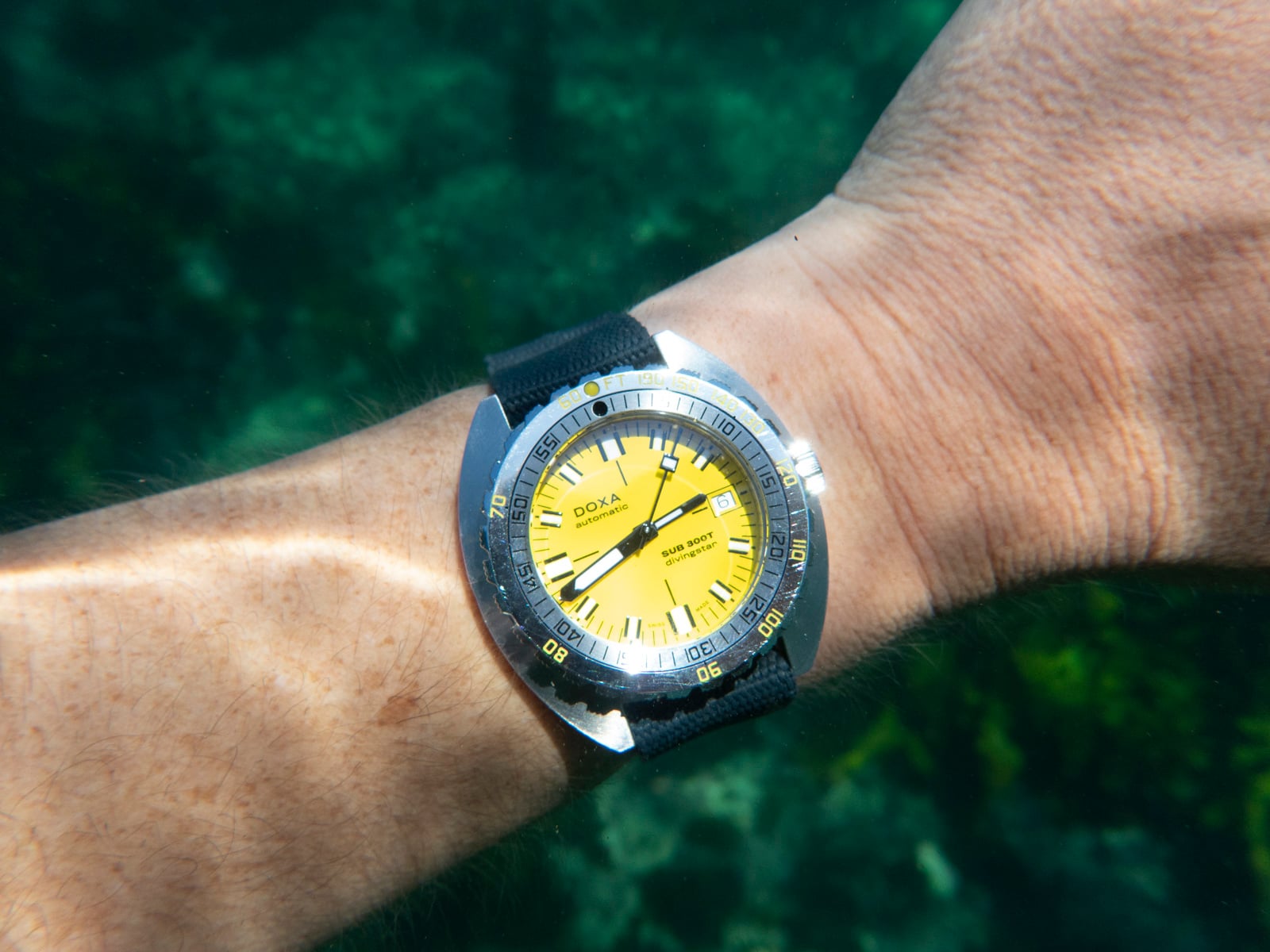
The Doxa Sub 300T is the watch Jacques Cousteau wore - that's not marketing, the original Sub-class started showing up on his crew's wrists in the late 1960s. The modern Sub 300T has 1,200m water resistance (over-engineered for the brief), a unidirectional bezel with a no-deco scale, and the famous orange (or silver, or yellow) dial that's the most legible underwater of any production watch. Around €2,200. The cushion case is unusual on the wrist but reads as deliberate; the steel beads-of-rice bracelet handles sunscreen better than most.
Casio G-Shock
GWF-D1000 - 56.7×52.6mm - solar quartz
The watch you wear when you're already snorkelling.
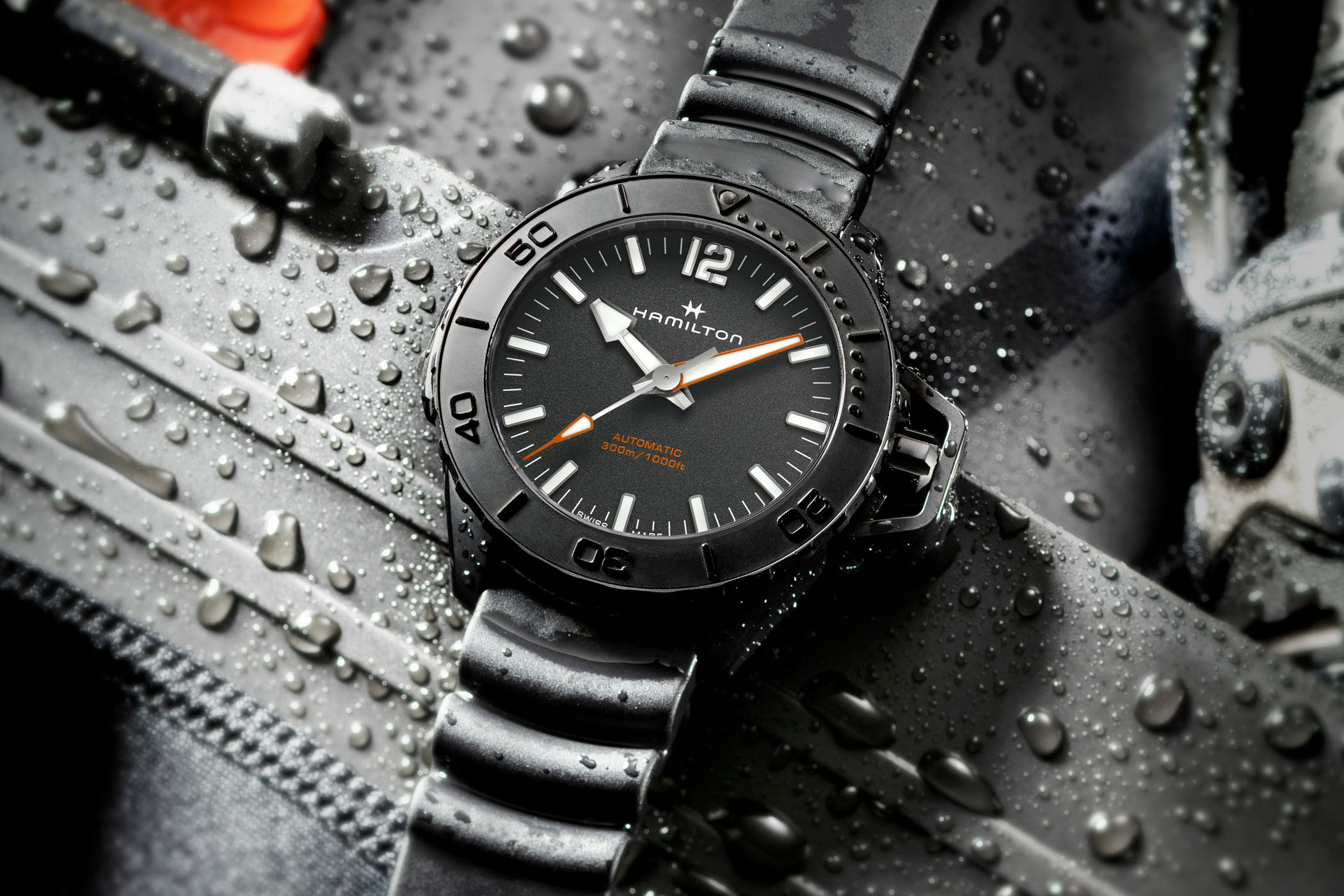
The Frogman is G-Shock's ISO 6425-certified dive watch - 200m water resistance, depth sensor, dive log, multi-band atomic timekeeping. Around €600. The case is large (52mm) but the resin construction means it weighs almost nothing on the wrist. The depth sensor isn't a gimmick; it's the same kind of feature an actual dive computer has, and it's functional for spear-fishing or recreational dives. As a beach-day watch it's overkill, which is exactly the point - the harder you go on it, the more comfortable you'll be that nothing is going to break.
Citizen
BN0150-28E - 44mm - solar quartz
Solar-charged dive quartz at €250. There is no excuse not to own one.

The Citizen Promaster Diver is the most under-priced dive watch in production. 200m water resistance, screw-down crown, unidirectional bezel, solar-quartz movement (no battery changes ever), bright lume, polyurethane strap. €250. It's also Eco-Drive certified, which means it'll keep ticking off ambient light at the bottom of a beach bag for months. We'd happily wear one as the only beach watch we owned for the next decade.
Unimatic
Modello Uno U1S Classic
U1S - 41.5mm - automatic
The Italian indie that designs around the dive-watch silhouette and sells it for half the dive-watch price.
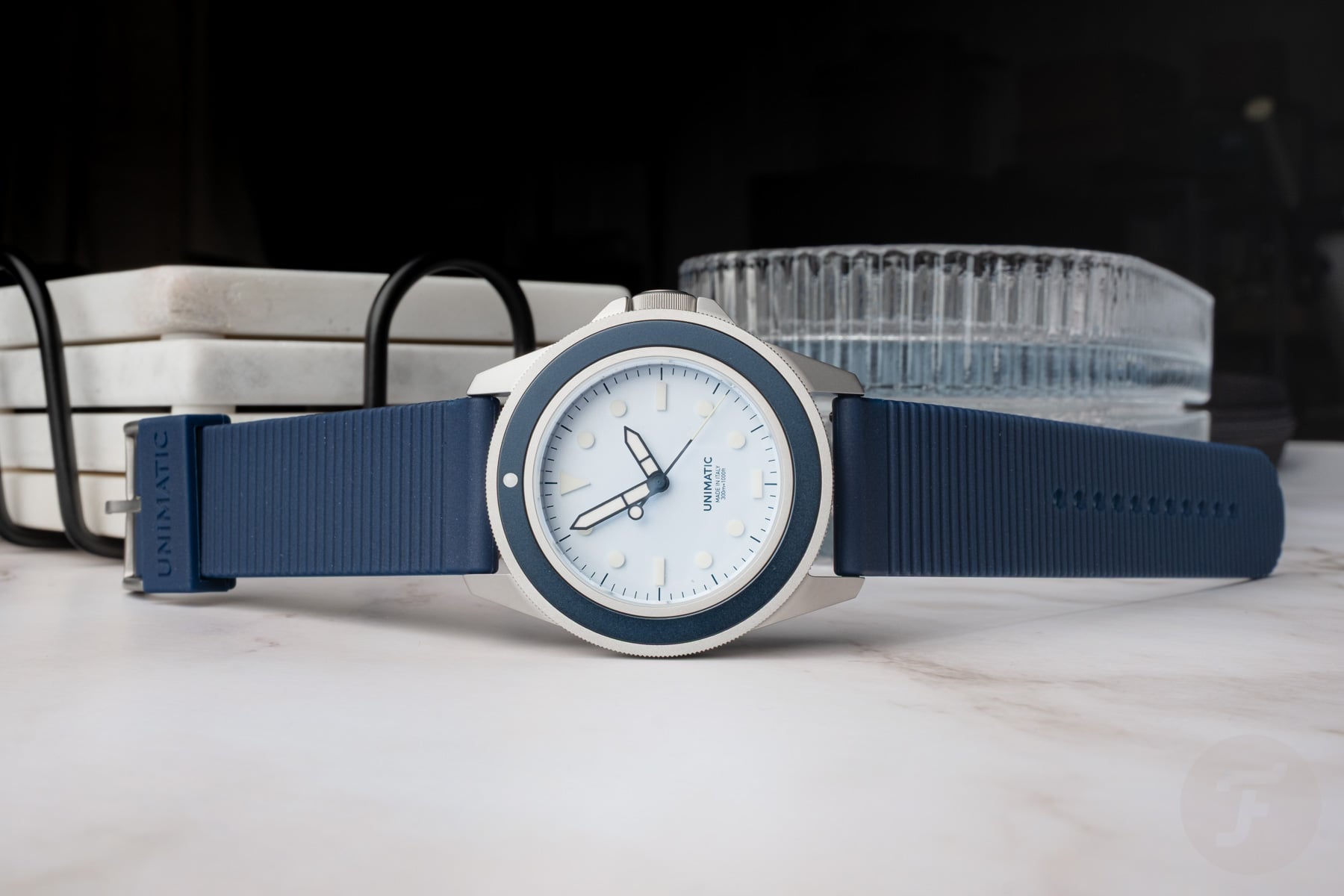
Unimatic is a Milan-based design studio that makes dive watches in small batches. The Modello Uno U1S Classic has the universal-dive-watch shape (the bezel-and-Mercedes-hands silhouette without the brand baggage), a 41.5mm bead-blasted case, 300m water resistance, and a Seiko NH35 movement. Around €700. On a NATO it's a vacation watch. Unimatic's designs lean industrial and minimalist, which suits the beach context - no marketing on the dial, no logo larger than necessary, just the function.
A note on what NOT to wear
Don't wear a vintage anything to the beach. Don't wear a leather strap. Don't wear a watch with an aluminium bezel insert (the sand grits will scratch it). Don't take an Apple Watch in the surf for more than a quick swim - the speaker grille flooding kills the haptics for weeks. And don't, under any circumstance, take an unserviced dive watch you bought 'as-is' on Chrono24 for a swim. The gaskets are the part the previous owner skipped service on.
Frequently asked questions
What watch survives a full day at the beach?
A Seiko Prospex SRPK39, Doxa Sub 300T or G-Shock Frogman GWF-D1000 all handle salt, sand, sunscreen and immersion without a service appointment after. All three are ISO 6425 rated to at least 200m and use gaskets designed for repeated exposure to seawater.
Can I take a Rolex Submariner to the beach?
Technically yes: the Submariner is rated to 300m and the gaskets are made for it. Practically, salt and sand accelerate bracelet wear, and a 12,500 euro watch on a public beach invites trouble. Most owners bring a 300 euro Seiko or G-Shock instead and keep the Sub at home.
Do I need to rinse the watch after swimming in salt water?
Yes. Rinse under freshwater for a minute after every ocean dip, whether it's a Seiko SKX or a Rolex. Salt crystals sit in the bracelet links and between the case and bezel and eat gaskets over months. Twenty seconds of tap water fixes it.
Is a G-Shock overkill for the beach?
No, it's arguably the perfect beach watch. The G-Shock Frogman is 200m rated, resin cased, tide- and moon-phase capable, and if it disappears in the sand you're out roughly 300 euro. That's the equation most watch people land on for beach days.
Comments 26