What it is
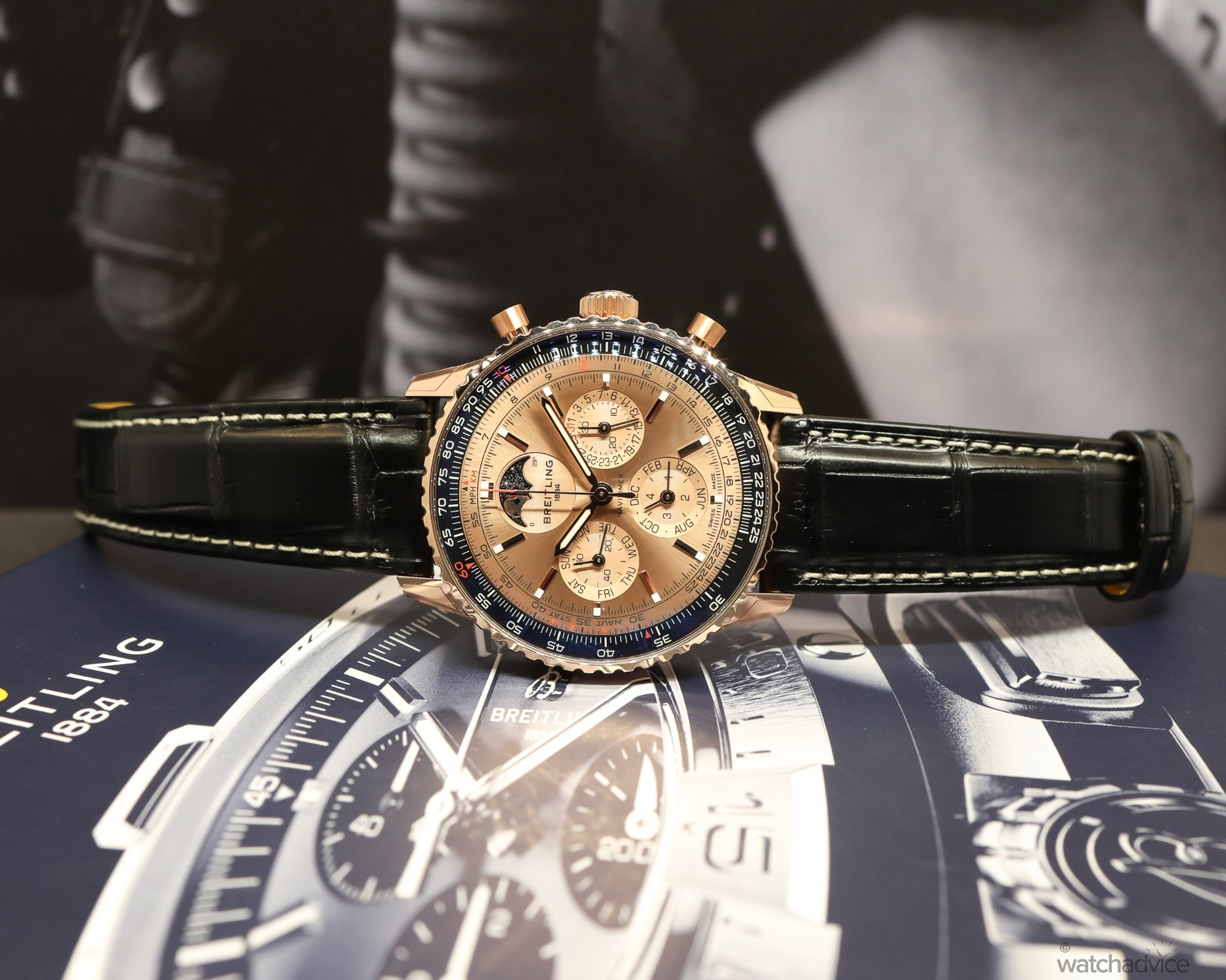
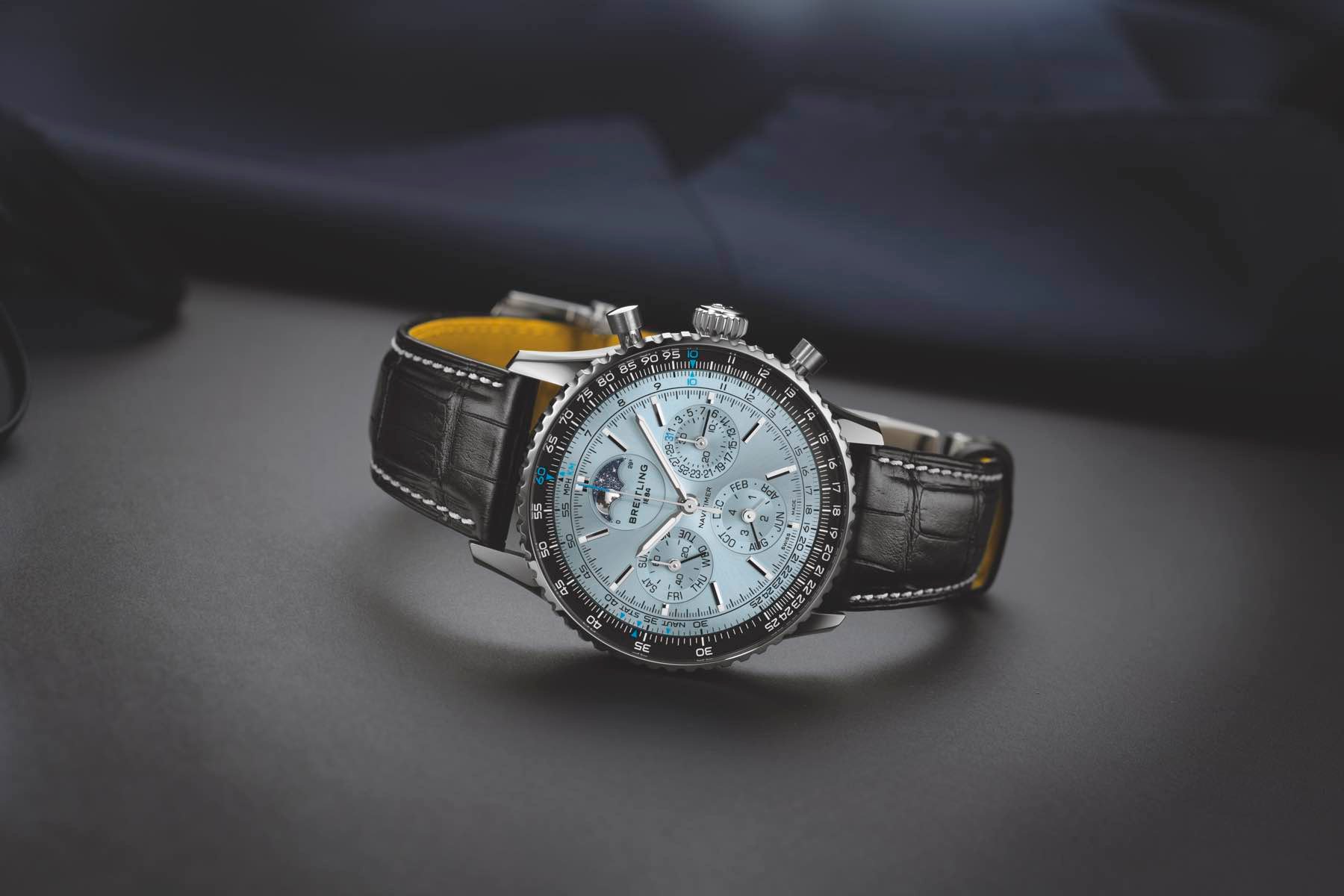
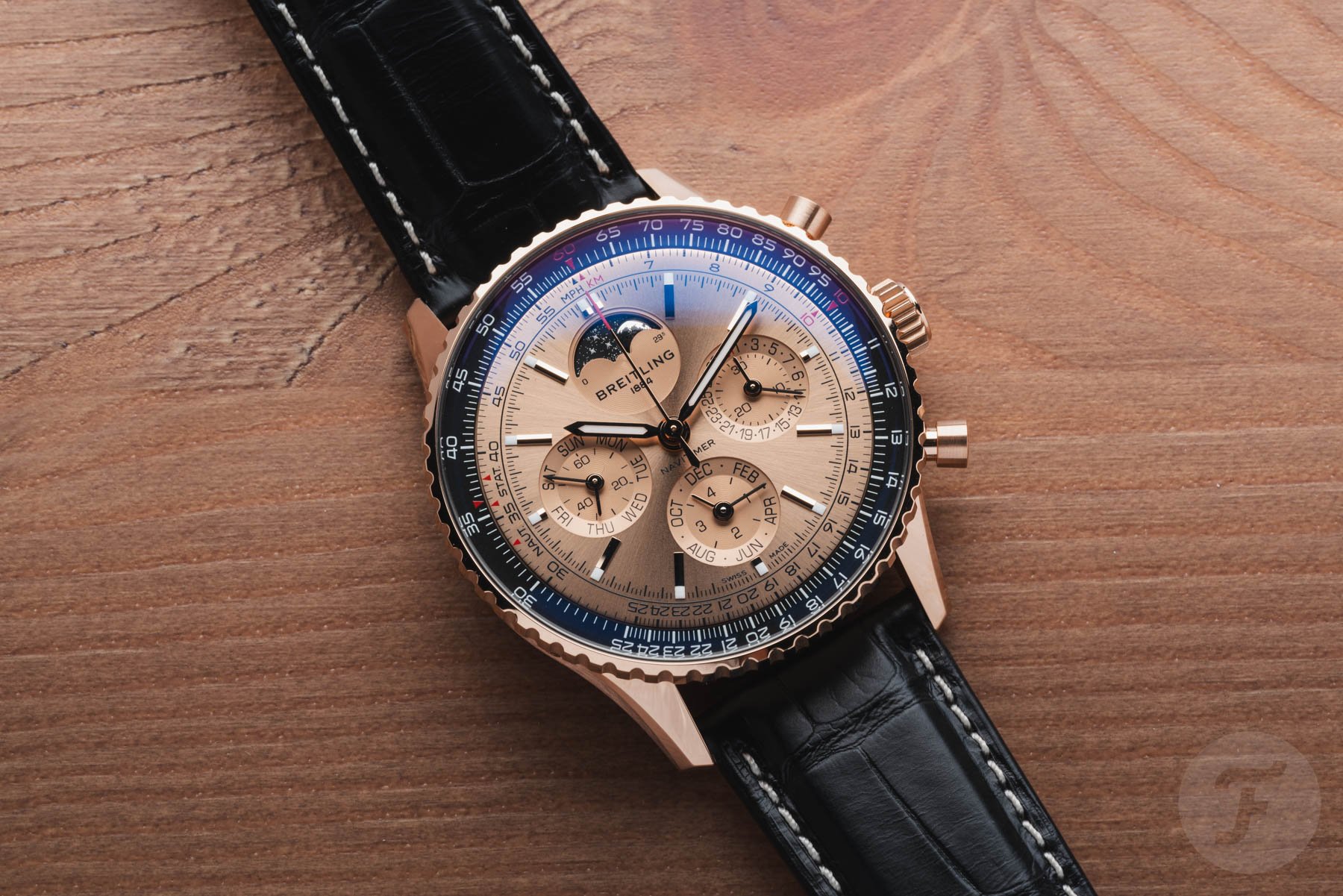
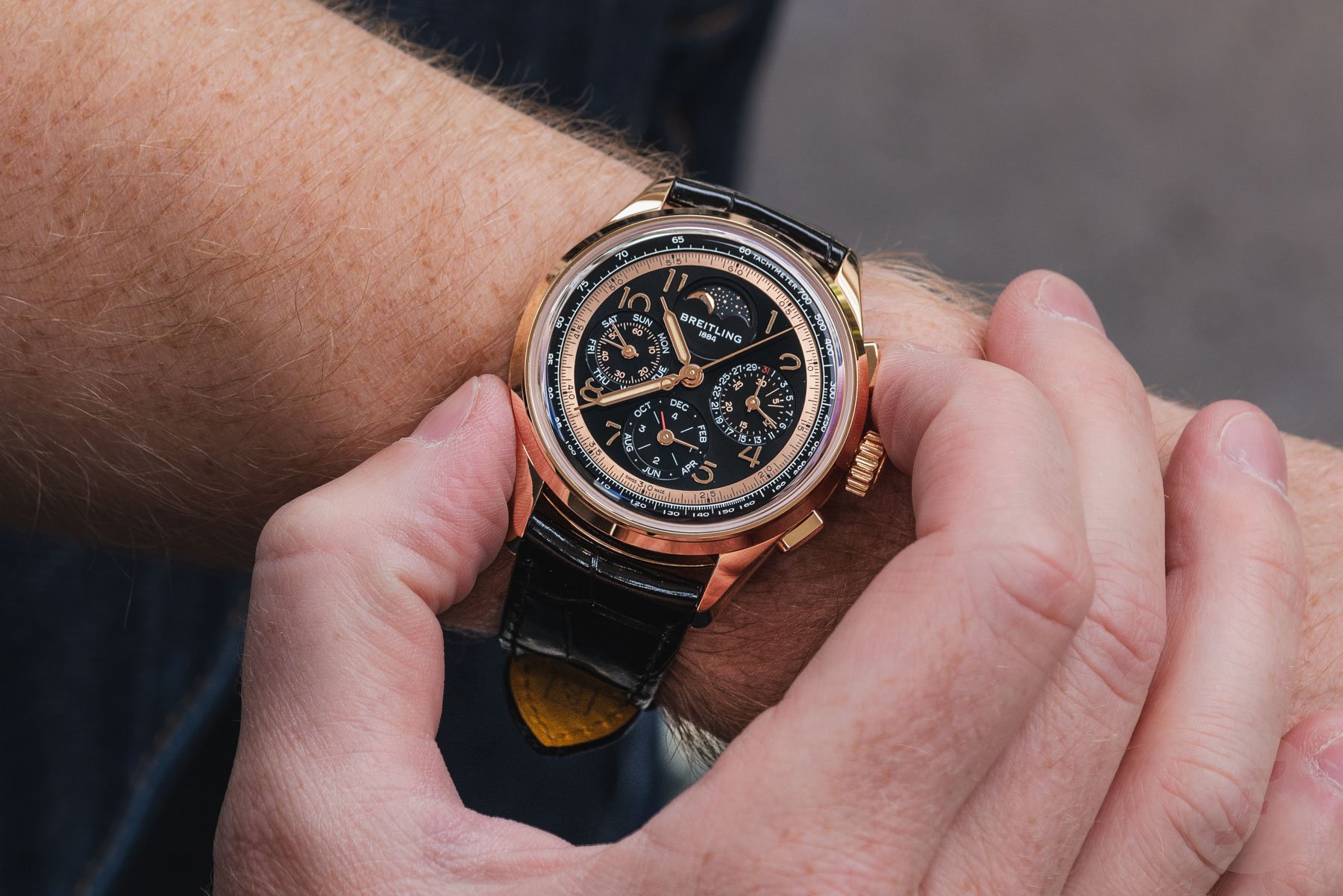
The Breitling B19 is the in-house perpetual calendar chronograph caliber, launched in 2021 with the new Premier B19 Datora reference. The B19 is the B01 chronograph architecture (column-wheel + vertical clutch + 70-hour reserve) with a perpetual calendar module added: day, date, month, leap year all auto-adjust through the year and through every leap-year cycle, requiring no correction until 1 March 2100 (when the Gregorian calendar skips a leap day for the century non-divisible-by-400 rule). The watch combines the chronograph indication with annual / perpetual calendar reading on a single dial.
"Datora" and the historical lineage
Datora is a Breitling product name with deep heritage: the original Datora was a 1940s reference with a triple calendar (day-date-month) and chronograph in the same watch, marketed as a "complete calendar" piece. The 2021 Premier B19 Datora revives the name with a modern perpetual calendar (more sophisticated than the original's triple calendar) and modern Breitling chronograph architecture. The reference signals Breitling's move into the haute-horlogerie tier alongside its more workman-like Chronomat / Navitimer offerings.
What it costs
The Premier B19 Datora retails around USD 30,000-40,000 in steel, USD 50,000-70,000 in precious metal. For context, a Patek 5270 perpetual chronograph (in-house Cal. 29-535 PS Q) starts around USD 200,000; a Audemars Piguet Royal Oak Perpetual Chronograph runs USD 130,000+. The Breitling B19 Datora delivers similar mechanical content (perpetual + chronograph) at roughly 1/5 to 1/4 the price. The trade-offs: brand cachet (Patek and AP outweigh Breitling), finishing tier (Patek finishing is hand-bevelled to a higher standard), and resale (Patek perpetuals hold value; Breitling Datora is more variable).
How "perpetual chronograph" works
A perpetual calendar mechanism tracks the day, date, month, and leap year automatically using a series of cam-driven wheels and snail cams that "know" the length of every month and the 4-year leap-year cycle. A perpetual chronograph adds a stopwatch on top: the chronograph mechanism measures elapsed time independently of the watch's timekeeping and calendar. The combination is mechanically demanding because the calendar wheels must advance correctly even when the date is set by hand, and the chronograph mechanism must not interfere with the calendar drive. The B19 manages this in a 30 mm diameter movement architecture, which is a meaningful engineering achievement.
The pricing context: in-house perpetual chronos
In 2026 the modern in-house perpetual chronograph market is dominated by:
Patek 5270 (Cal. 29-535 PS Q) at USD 200k+, AP Royal Oak Perpetual Chronograph at USD 130k+, Lange Datograph Perpetual at USD 250k+, IWC Da Vinci Perpetual Chronograph at USD 30-40k (older ref. 3750 design, now discontinued). The Breitling B19 Datora at USD 30-40k is the modern entry point to the category; for buyers wanting the perpetual + chronograph combination at a serious in-house movement, the Datora is the value-tier option.
Service notes
Service for a B19-equipped watch runs USD 2,500-4,000 at Breitling, with a 2-year warranty. Service interval: 5-7 years, tighter than simpler movements because of the perpetual calendar mechanism's sensitivity to lubrication. Service is brand-only for the foreseeable future; the perpetual calendar parts are bespoke and not aftermarket-sourceable. The watch returns regulated to within COSC spec (-4/+6 sec/day) across all positions, and the perpetual calendar is verified through the next-month-end transition.

Comments 1