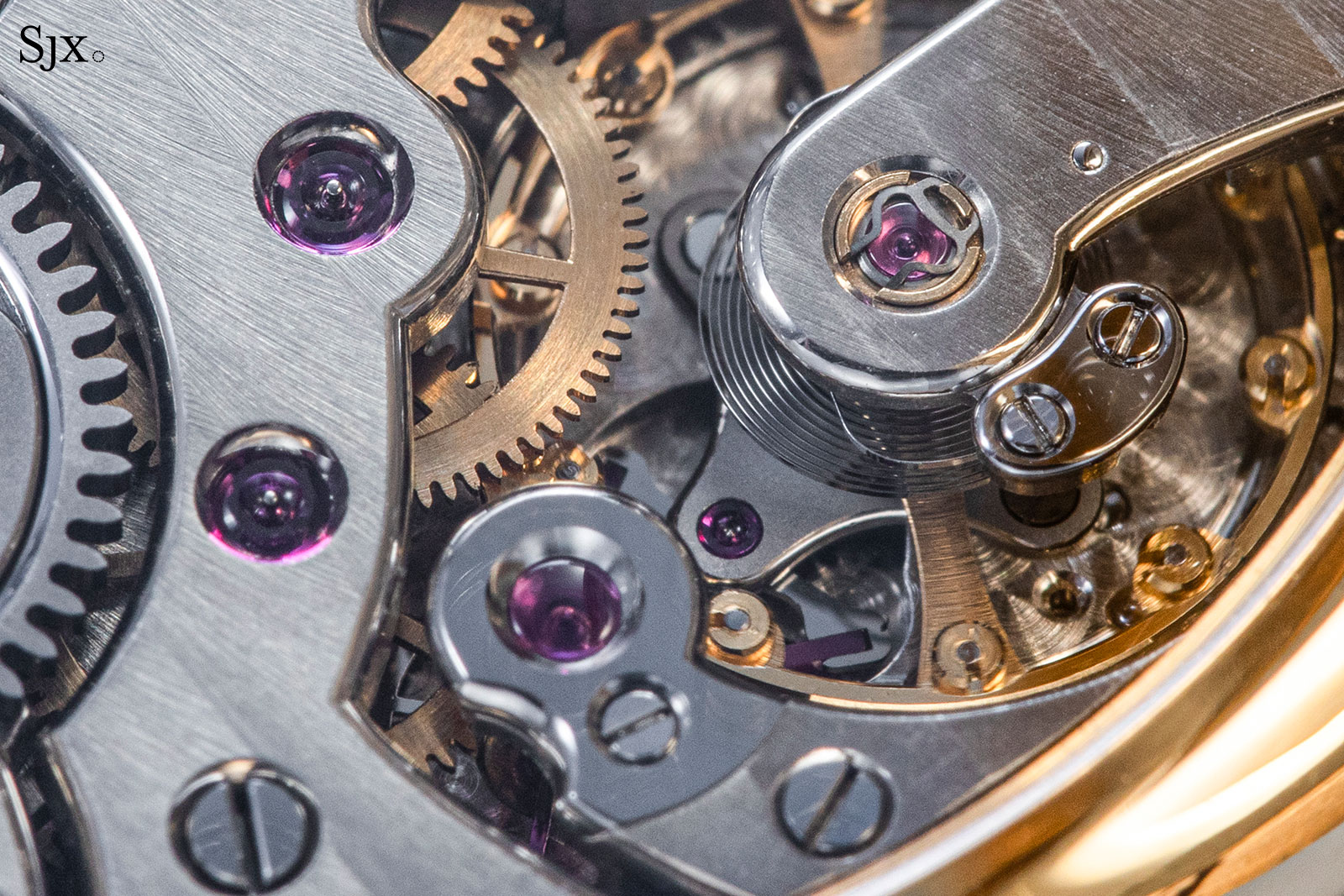
A balance wheel's rate (how fast it oscillates) is determined by two factors: the active length of the hairspring and the moment of inertia of the balance (its mass distribution). The simpler approach to regulation, used on entry and mid-tier movements, fixes the balance and varies the hairspring length: an index lever ("regulator") pinches the hairspring near its outer attachment, sliding back and forth to shorten (faster rate) or lengthen (slower rate) the active spring. This is cheap to manufacture and quick to adjust but has known stability issues: temperature changes can shift the index slightly, and the pinch point introduces a small isochronism error.
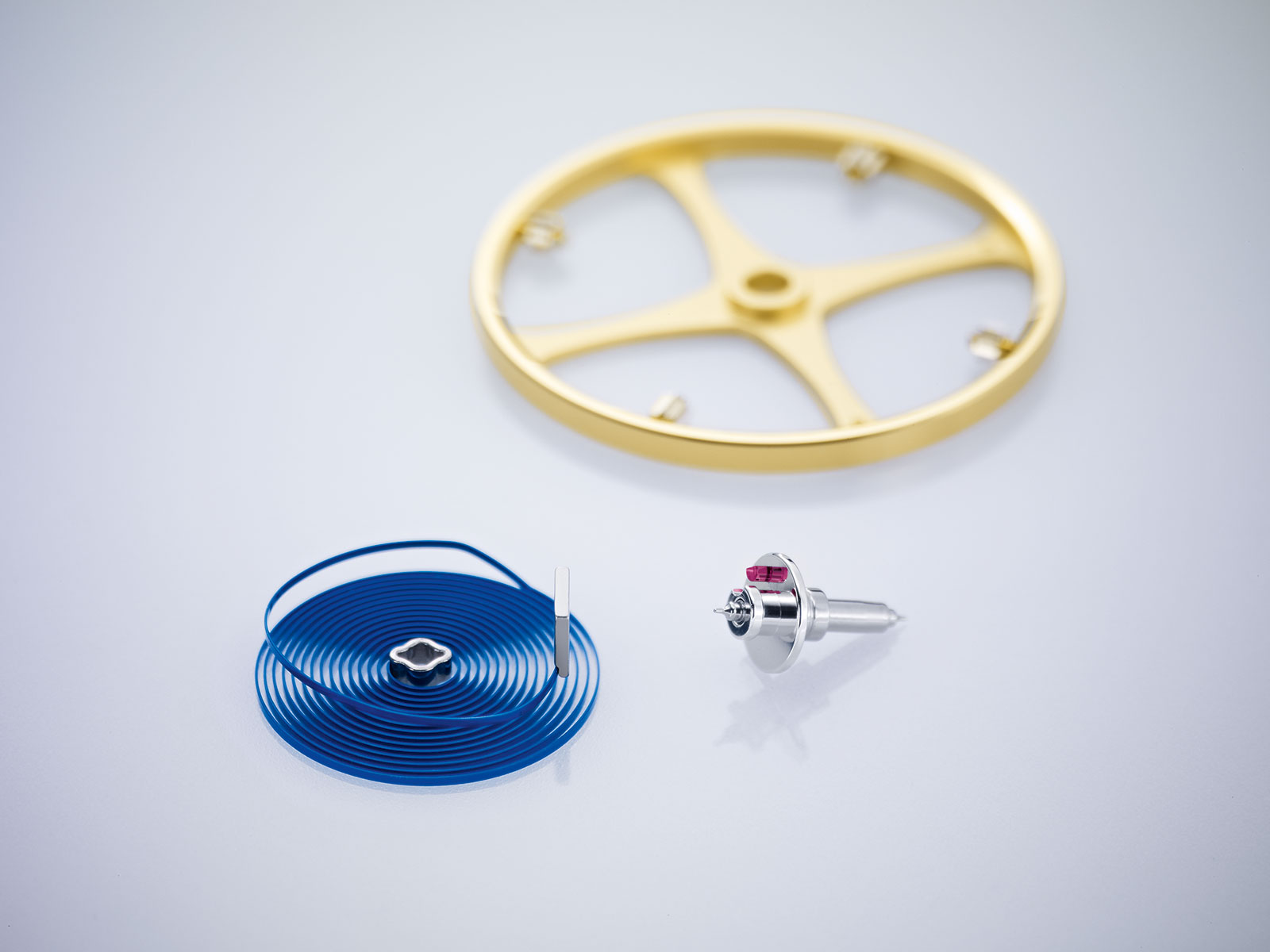
The free-sprung approach reverses the geometry: the hairspring runs without a regulator pin over its full natural length, and rate is adjusted by changing the moment of inertia of the balance wheel itself. Tiny eccentric weights or threaded screws on the balance rim are turned in (toward the centre, lower inertia, faster rate) or out (higher inertia, slower rate). The hairspring is unconstrained over its full length; isochronism (consistency of rate across amplitudes) improves; the system is less sensitive to temperature and shock.
"The regulator is convenient. The free-sprung balance is correct. Every haute-horlogerie maison eventually arrives at the same answer."- Modern watchmaker on movement regulation
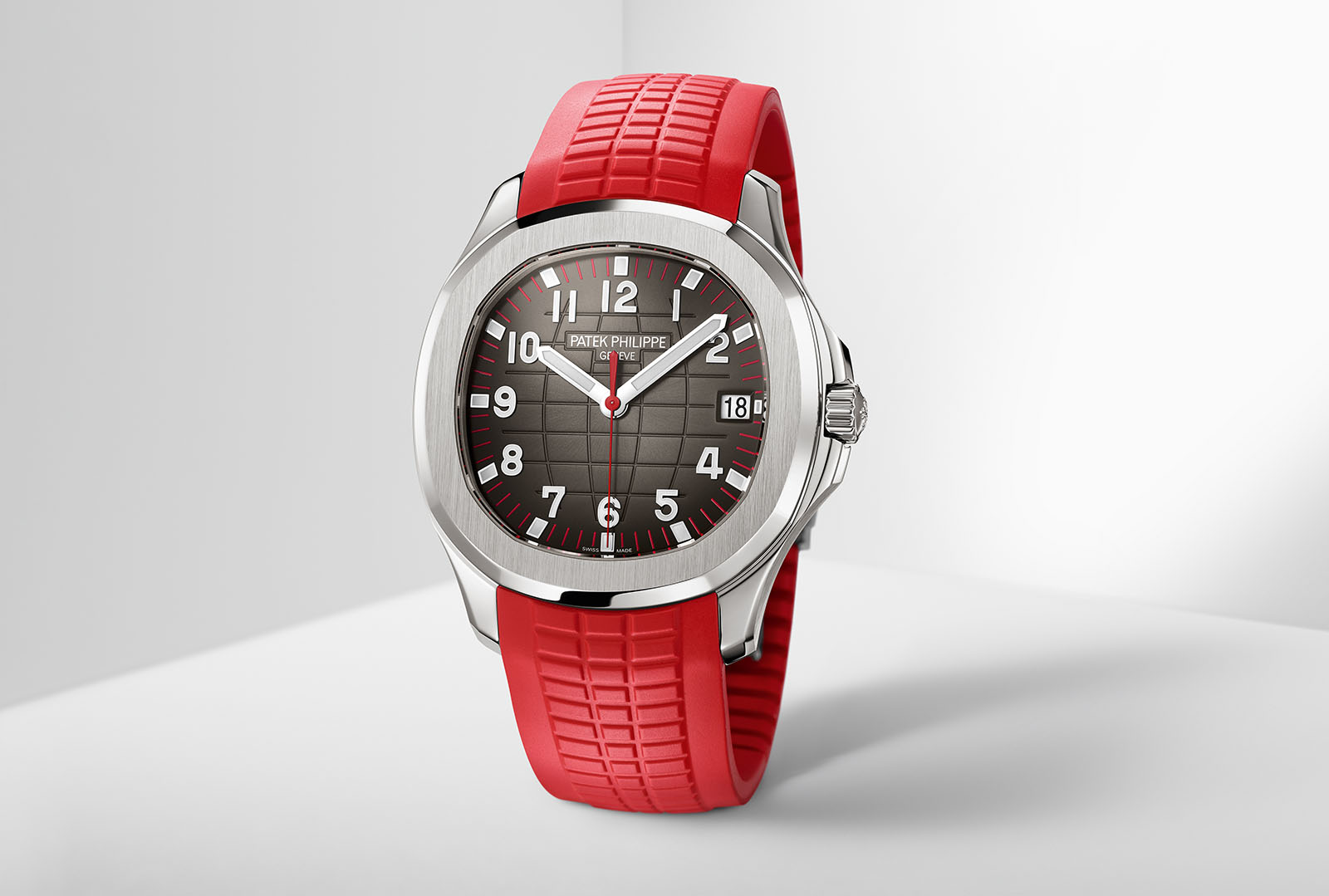
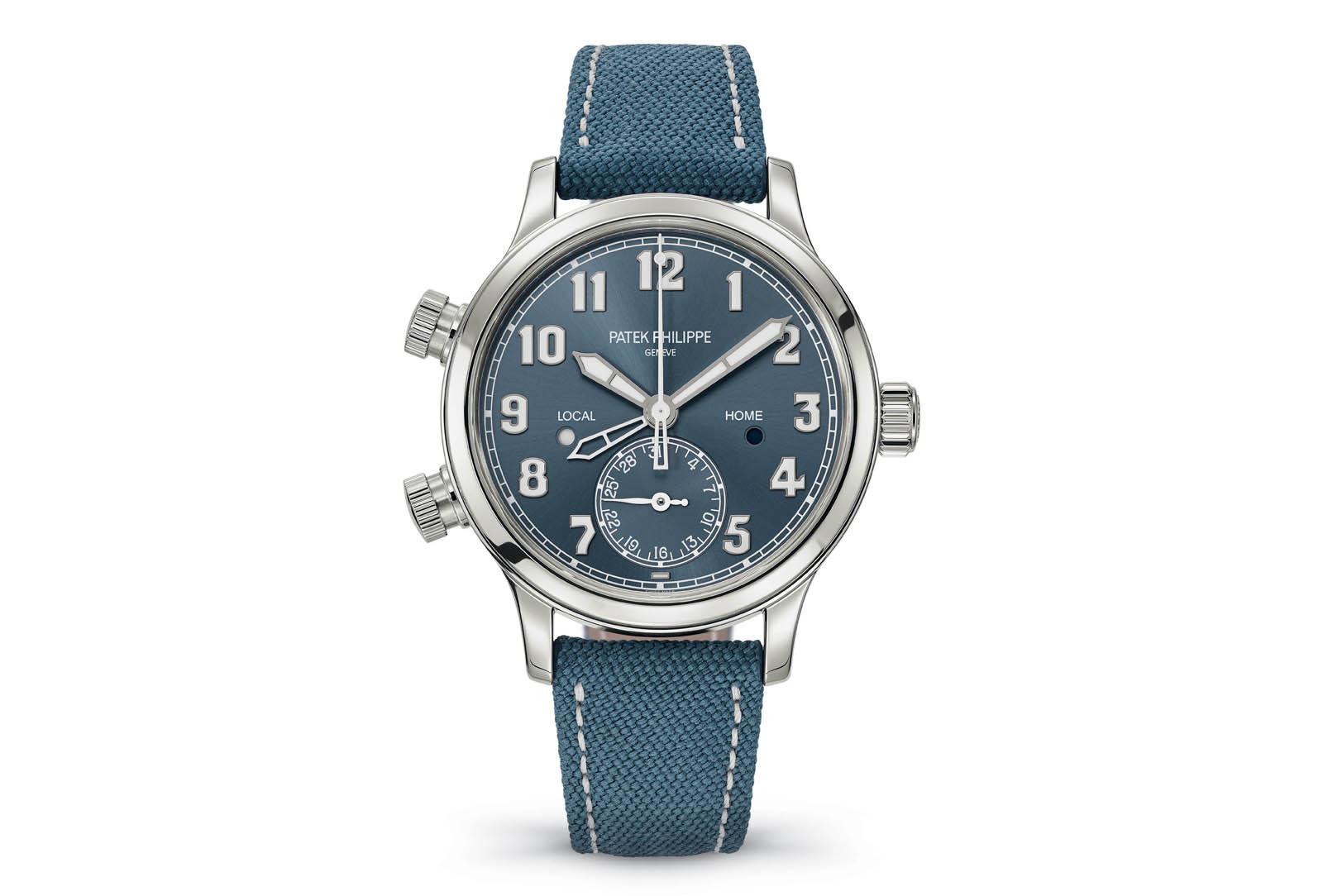
Patek Philippe's Gyromax was patented in 1949 by Patek's then-chief watchmaker. Eight tiny eccentric weights ("gyromax masses") sit on the balance rim; turning each adjusts the balance's effective inertia in a fine-grained way. The Gyromax remains standard across the Patek catalogue; it is the technical signature of any movement bearing the Patek Philippe Seal. Rolex's Microstella system was introduced in 1957 with the Cal. 1530 and industrialised at scale by 1965: four small star-shaped weights on the balance rim, adjusted with a precision tool. Modern Rolex (Cal. 3135, 3235, 4131) all use Microstella regulation as part of the Superlative Chronometer certification.
The practical regulation flow for a free-sprung balance is more demanding. A watchmaker uses a timegrapher to measure the rate in multiple positions; the balance is then adjusted by turning the small weights (Gyromax masses, Microstella stars) in fractions of a turn until the rate is centred. Index regulation by contrast is a single-knob adjustment that takes seconds but produces less stable results. The per-watch service cost for a free-sprung manufacture is meaningfully higher; this is reflected in the brand's premium positioning.
Modern haute-horlogerie maisons have largely converged on free-sprung. A. Lange & Söhne uses an in-house free-sprung balance with poising weights across all manufacture calibres; Audemars Piguet, Vacheron Constantin, Jaeger-LeCoultre, and Breguet all default to free-sprung on premium calibres. Mid-tier and entry calibres (ETA 2824, Sellita SW200, modern Hamilton, Tissot) typically retain the index-regulator approach for cost; the trade-off in performance is small enough not to justify the manufacturing premium at the consumer-watch tier.
For buyers, the practical signal: any modern Rolex, Patek Philippe, AP, JLC, Lange, Vacheron, or Breguet calibre will be free-sprung; entry to mid-tier brands using Sellita or ETA bases will not. The marketing language around "in-house manufacture" frequently mentions free-sprung balance as a selling point; it is one of the few visible technical markers of premium movement engineering. The system has no impact on user experience but signals the calibre's position in the tier hierarchy.
Comments 1