Watch brandsWatch wikiWatch videosVariousWatch calendarSaved articles
PopularRolexOmegaPatek PhilippeAudemars PiguetTudorGrand SeikoCartierSeikoIWCTAG HeuerBreitlingJaeger-LeCoultreA. Lange & SohneZenith
WristBuzzWatch WikiFrequency / Beat Rate (vph, Hz)
βš™ Movement Β· vph / Hz Β· The Tick of a Watch

Frequency / Beat Rate (vph, Hz)

How fast a balance wheel oscillates: the trade-off between time resolution and component wear that defines every mechanical movement.

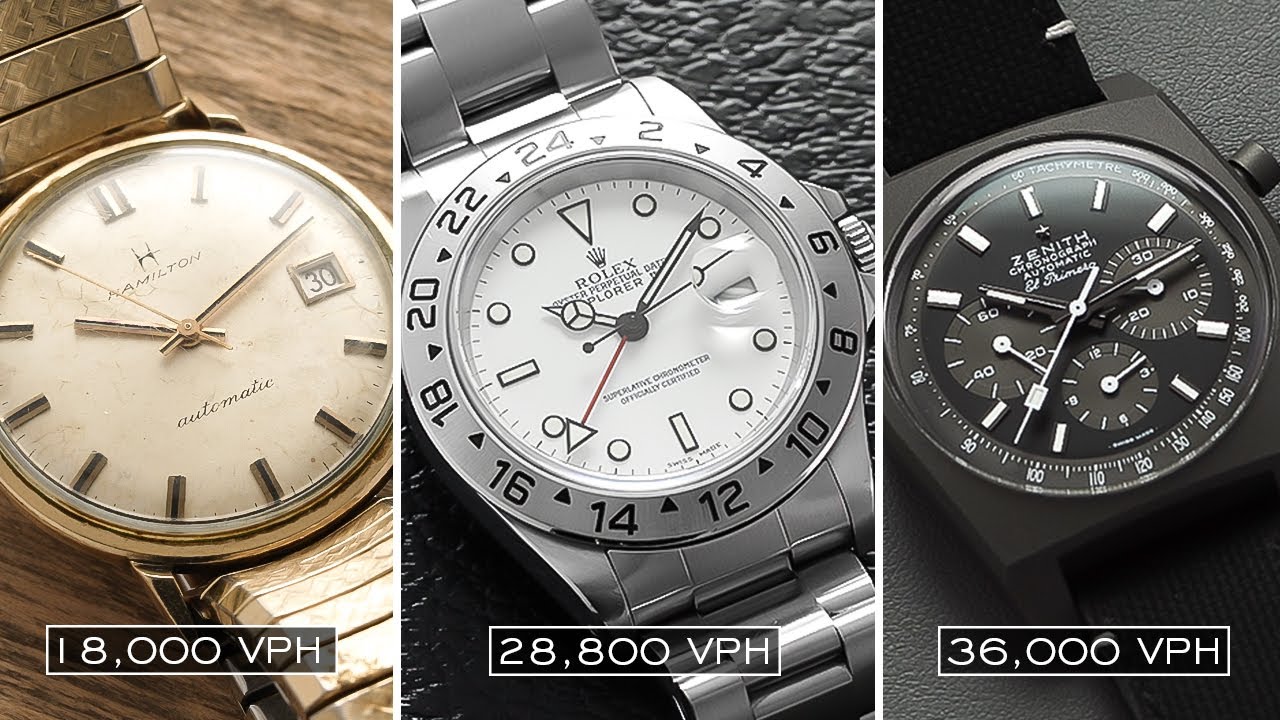
A mechanical watch's frequency (also beat rate) is how fast the balance wheel oscillates, expressed as vph (vibrations per hour) or Hz (cycles per second; 1 Hz = 7,200 vph because each cycle is 2 vibrations). The Swiss industry settled on 21,600 vph (3 Hz) and 28,800 vph (4 Hz) as the modern standards; 36,000 vph (5 Hz) is the high-frequency ceiling pioneered by the Zenith El Primero in 1969 and unmatched at scale outside Zenith. Higher frequency improves time resolution and shock-stability but accelerates component wear; the 4 Hz standard is the durable industry compromise.

Common modern28,800 vph / 4 Hz (industry default)
Lower-tier21,600 vph / 3 Hz (vintage and dress)
Older standard18,000 vph / 2.5 Hz (pre-1970s)
High frequency36,000 vph / 5 Hz (Zenith El Primero, 1969)
Sub-1 Hz8 Hz, 10 Hz: experimental (TAG Mikrograph, AP Code 11.59 RD#3)
Trade-offHigher Hz = finer time resolution + faster wear
WristBuzz Articles31
Frequency / Beat Rate (vph, Hz)

Photo: Teddy Baldassarre · Oct 22, 2025

4 HzIndustry Default
5 HzEl Primero
vphVibrations/hour
HzCycles/second
31WristBuzz Articles

The Frequency / Beat Rate (vph, Hz) Story

The balance wheel oscillates back and forth like a tiny pendulum; each oscillation is counted by the escapement as the watch's base time unit. A "vibration" is one half-oscillation (the wheel swinging in one direction); a "cycle" is one full back-and-forth (two vibrations). The two unit systems map directly: 1 Hz = 7,200 vph, 4 Hz = 28,800 vph, 5 Hz = 36,000 vph. The two terms are interchangeable in modern technical specifications.

The industry standard frequencies evolved through the 20th century. Pre-1970 most Swiss movements ran at 18,000 vph (2.5 Hz); the slower beat reduced wear on the escapement and was acceptable for the precision standards of the era. Through the 1960s-70s the industry shifted to 21,600 vph (3 Hz) as a balance between precision and durability; this was the rate of the original ETA 2824 and the Valjoux 7750. In the 1980s-90s the modern 28,800 vph (4 Hz) standard emerged with revised ETA 2824-2 and the broader Swiss volume tier; this is now the industry default.

"Four Hertz is the speed at which a Swiss watch can keep time, survive a wrist, and last seven years between services. Five Hertz buys you a tenth of a second."- Watchmaker on the industry frequency standard

The 5 Hz / 36,000 vph high-frequency ceiling was pioneered by Zenith with the El Primero in 1969, the world's first automatic chronograph. The 5 Hz beat allows the chronograph to time to 1/10 second (the second hand sweeps 10 ticks per second instead of 8). The El Primero is the only commercial 5 Hz movement at scale; competing high-frequency programmes (Grand Seiko 9SA5 at 5 Hz, Breguet 5827 at 5 Hz) are smaller in volume. Modern Zenith Defy 21 (1/100 second) and Defy Inventor (18 Hz) are experimental further extensions.

The frequency vs durability trade-off is fundamental. Higher frequency means more impacts per second on the escapement components (pallets, escape wheel teeth); lubricants degrade faster, jewels wear faster, and the service interval shortens. 4 Hz is the industry compromise: fine enough resolution (1/8 second) for any consumer-grade chronograph, slow enough wear for typical 5-7 year service intervals. The 5 Hz El Primero requires somewhat more frequent service than a 4 Hz movement; modern improvements in materials (silicon escapements, ceramic ball-bearings) have largely closed this gap.

Lower-frequency dress watches exist at the bottom of the range. The Patek Philippe Cal. 215 PS hand-wound runs at 21,600 vph; many vintage pieces run at 18,000 vph. Slower beat is sometimes a marketing-positive in vintage-inspired pieces (the "tick" is more audible and visually slower); the lower beat also extends component life. Automatic watches with low beats include several vintage-style modern pieces (Bremont, Ressence Type 1) at 28,800 vph but with deliberately old-style aesthetics.

For buyers, the practical guide: most modern Swiss watches run at 28,800 vph / 4 Hz and this is the default. 21,600 vph / 3 Hz on a modern movement signals an older calibre family or a deliberately vintage-inspired build. 5 Hz / 36,000 vph on a chronograph signals an El Primero or a high-spec Grand Seiko. 2.5 Hz is rare in modern production. The frequency is engraved on most modern caseback markings (e.g., "28,800 A/h", "4 Hz", "21,600 vph").

Notable Frequency Choices

Default Β· Modern Swiss
28,800 vph / 4 Hz
ETA 2824-2, <a href="/watch-calibers/sellita-sw200/">Sellita SW200</a>

The industry default. ETA 2824-2, Sellita SW200, Rolex Cal. 3235, Omega Cal. 8800/8900, Tudor MT5602.

Industry Default
1969 Β· Zenith
El Primero (5 Hz)
36,000 vph

The first and only commercial high-frequency calibre at scale. Times to 1/10 second.

High Frequency
2020 Β· Grand Seiko
9SA5 (5 Hz)
36,000 vph

Modern Grand Seiko high-beat with dual-impulse escapement. Smaller production volume than El Primero but technical peer.

Grand Seiko HF
Vintage Β· Patek Philippe
Cal. 215 PS (3 Hz)
21,600 vph

Patek Philippe ultra-thin hand-wound. Lower beat preserves component life and slim profile.

Dress Slow Beat
2017 Β· Zenith
Defy 21 (1/100 second)
50 Hz secondary

Defy 21 chronograph: 5 Hz primary balance + 50 Hz secondary chronograph train for 1/100 second timing.

Experimental

Latest Frequency / Beat Rate (vph, Hz) News

Hodinkee
Introducing: Naoya Hida & Co.'s 2026 Slate Of Releases, Including Two Brand-New Models And Their First Porcelain Dial
4 days ago
Hodinkee
Introducing: The New Chopard L.U.C. Chopard Strike One In Titanium (Live Pics)
Apr 20, 2026
SJX Watches
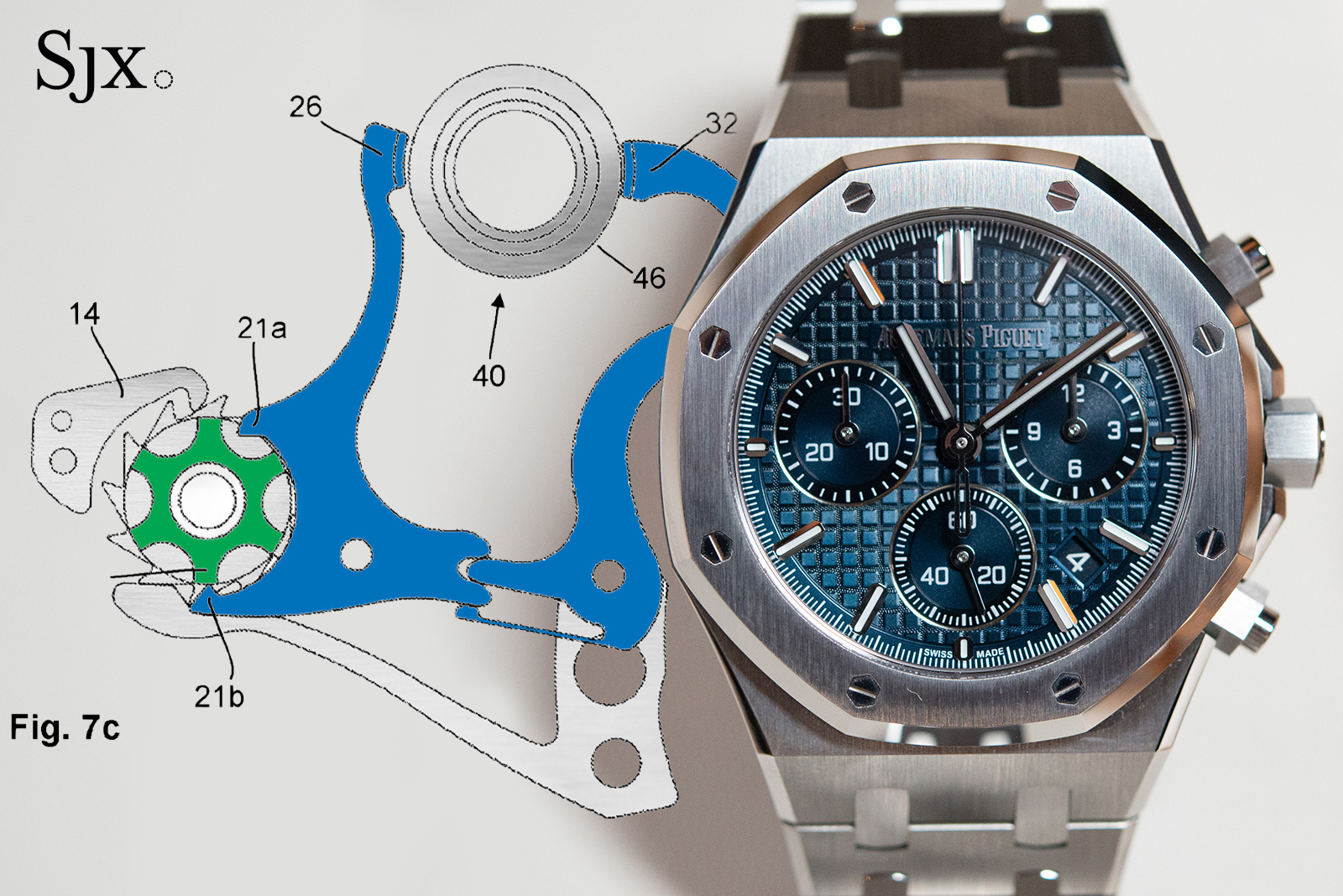
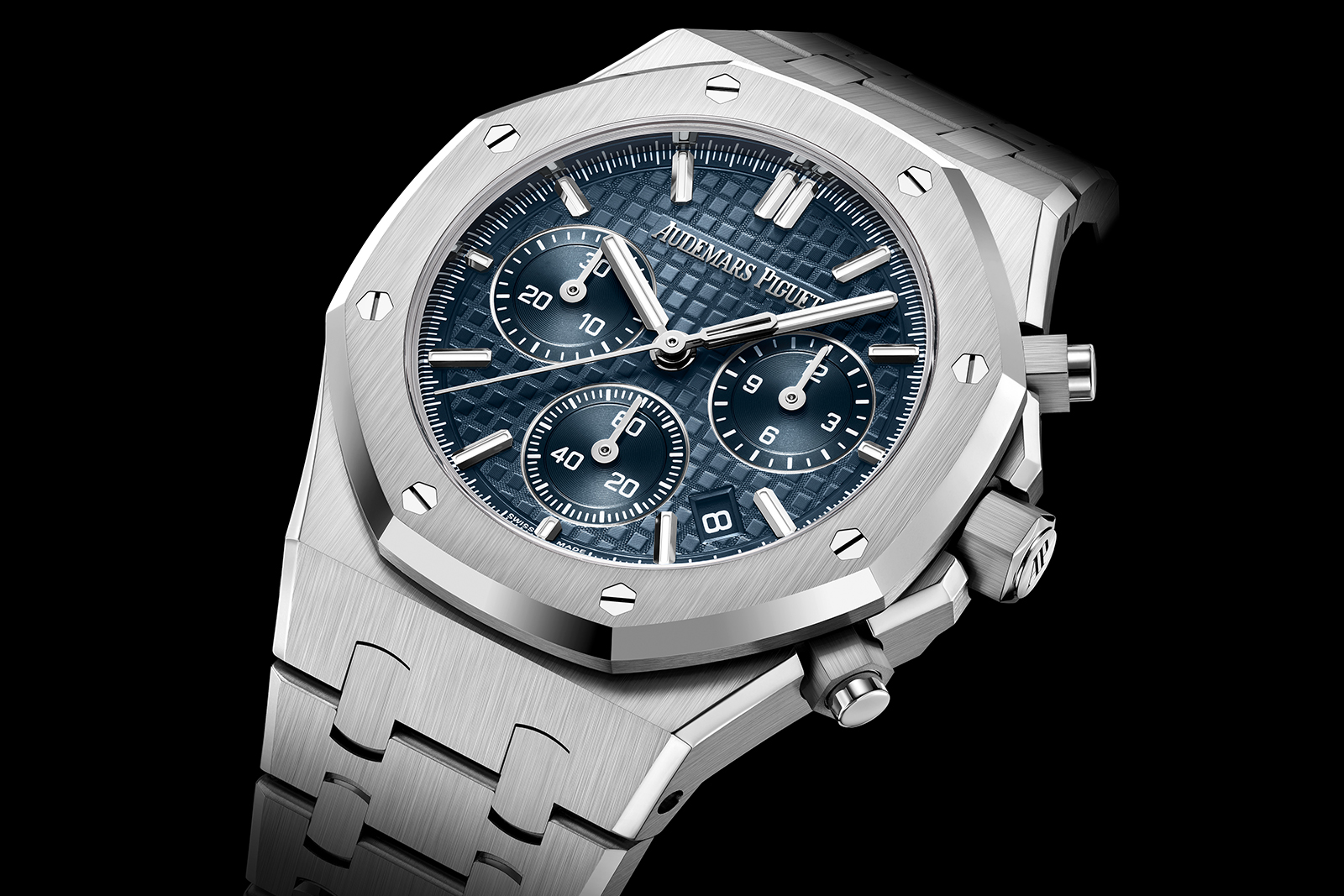
Hands On: Audemars Piguet Royal Oak Chronograph 38 mm
Feb 13, 2026
SJX Watches
Audemars Piguet Upgrades the Royal Oak Chronograph 38 mm
Feb 4, 2026
WatchAdvice
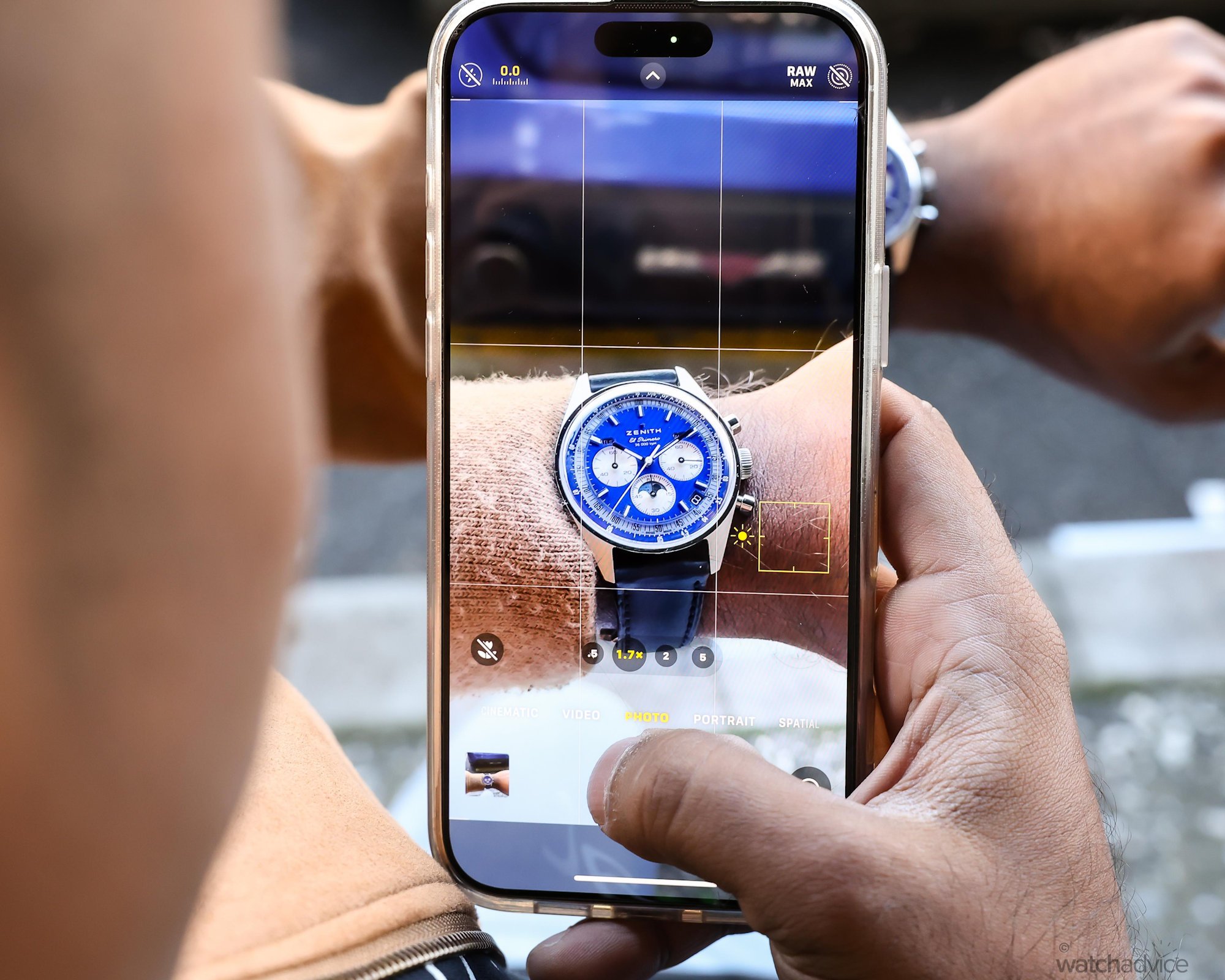
Review: The Zenith Chronomaster Original Triple Calendar In Lapis Lazuli
Oct 31, 2025
Teddy Baldassarre
Watch Beat Rate Comparison 18,000, 21,600, 25,200, 28,800, 36,000, & S
Oct 22, 2025
Teddy Baldassarre
What is a Rehaut on a Watch Dial?
Sep 18, 2025
Teddy Baldassarre
Editors' Picks: Our Favorite Watches & Wonders 2025 Releases
Apr 9, 2025
Worn & Wound
Christopher Ward Responds to Customer Feedback and Adds a 38mm Version of The Twelve to the Permanent Collection
Feb 20, 2025
Fratello
Introducing: The Longines Ultra-Chron Carbon
Jan 1, 2025
Worn & Wound
Hands-On: the Orion Sylph
Dec 23, 2024
Worn & Wound
The Bell & Ross BR-X5 Gets the Iridescent Treatment
Oct 14, 2024
View all 31 articles

Learn More