Hiking is one of the few activities where a wristwatch is genuinely more useful than a phone: gloved finger on a glass screen with cold hands at altitude is a cursed user experience, and a glance at the wrist takes a fraction of a second. The right watch carries elapsed time on a bezel, sunrise / sunset prediction, and either a real altimeter or a movement reliable enough that you trust the time when the phone has died.
Two schools of thought. Mechanical/quartz tool watch: a sub-€2,000 field or pilot with a unidirectional bezel, lume good enough to read at the dawn start of a long day, and a strap that breathes (NATO, fabric, or vented rubber). Smart sport watch: a Garmin or Casio Pro Trek with altimeter, GPS track, and a battery that survives a multi-day route. The two answer different questions: the first is for the hiker who wants a watch they'll wear off-trail too; the second is for the hiker whose trips justify the spec.
Cold matters more than people think. Mechanical movements lose accuracy below about -10°C as lubricants thicken; quartz drifts too. Above 3,500m the same becomes worse. For shoulder-season alpine work the smart sport watches genuinely outperform mechanicals, which is why we've included two on this list. For everything else - trails up to about 2,500m, summer day-hikes, multi-day backpacking - a robust mechanical or solar quartz is enough and more pleasant to wear at camp.
What works for hiking: 40-44mm case (smaller and you can't read it under cloud cover; larger and it catches on pack straps), screw-down crown (rain), 100m+ water resistance (river crossings, sweat), nylon or rubber strap (wet leather is a problem), and either lume or a backlight. What doesn't: dress watches, leather straps for anything more than a day-hike, Apple Watch for trips longer than a day (battery), and any chronograph you'd be sad to scratch.
Sinn
856 Compass / 856 B-Uhr
856 - 40mm - automatic
The German pilot watch that stops mattering whether the conditions are easy.

The Sinn 856 is built around a magnetic-field-protected case (Sinn's Magnetic Field Protection spec is rated to 80,000 A/m), tegimented hardened steel that resists scratching, and Sellita SW300-1 movement. 40mm and 11mm thick fits cleanly under a long-sleeve base layer. Around €2,300. The 856 B-Uhr variant adds a flieger-style dial for legibility; the Compass dial adds an inner compass scale on the dial flange. Either is correct hiking equipment - magnetic protection matters around metal trekking poles and any modern electronic gear. Lume is excellent.
Casio G-Shock
GG-B100 - 53.1×55.8mm - quartz with sensors
ABC sensors on a watch that's bombproof and weighs nothing.
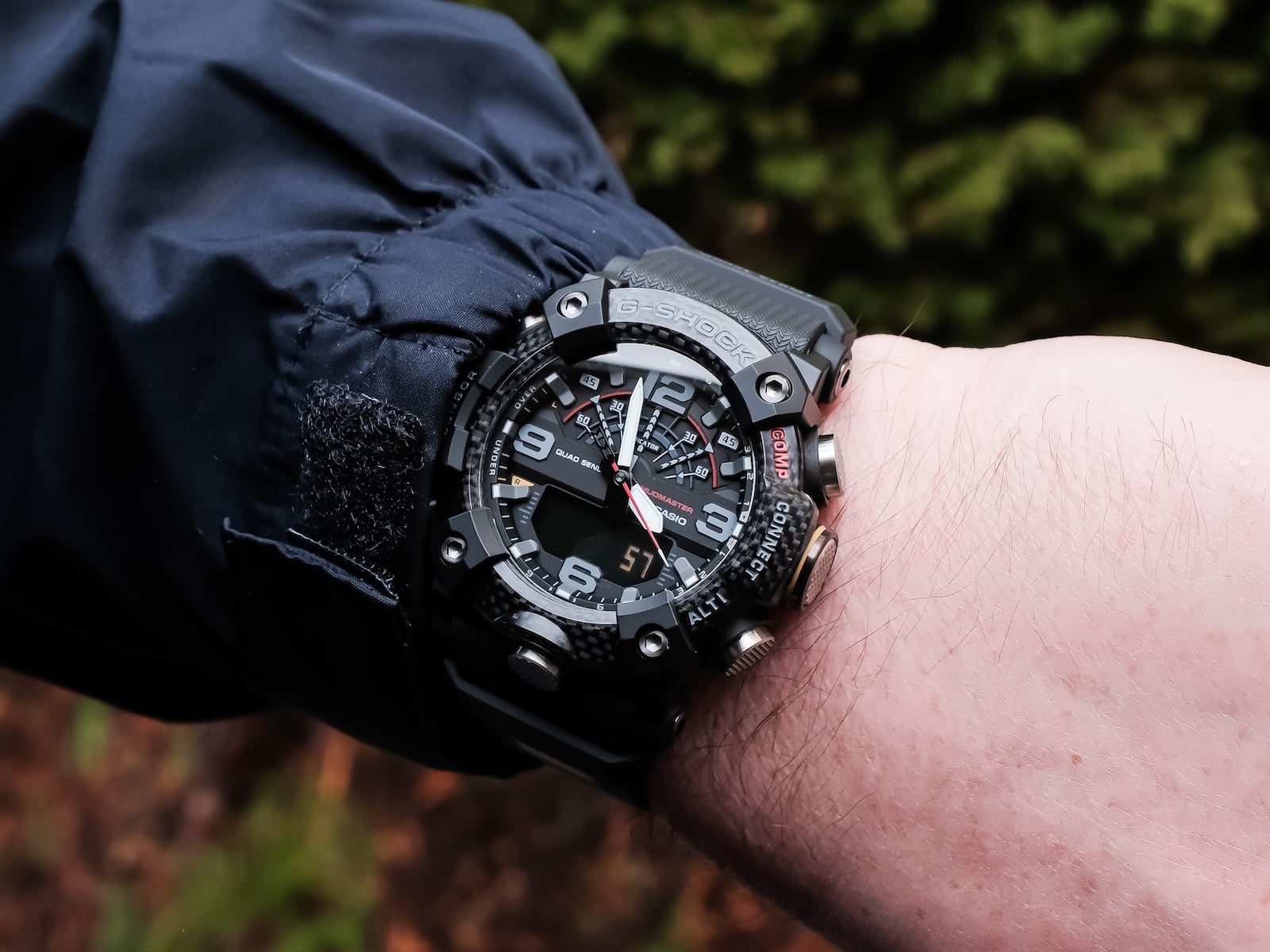
The Mudmaster has the full Triple Sensor array (altimeter, barometer, compass, plus thermometer), is shock-resistant to G-Shock spec, and 200m water resistant. Around €330. The 'mud-resist' construction is real - all crowns and pushers are gasketed against grit ingress, which matters on long backcountry trips where everything ends up grimy. The dial reads with a backlight at night and a polarised LCD by day. Bluetooth syncs with the Casio app for waypoint logging, but the standalone sensors work fine offline. The GG-B100 is the Mudmaster sweet-spot - smaller than the GWG-2000, less expensive than the Mudmaster Tough Solar variants.
Hamilton
H70455533 - 38mm - automatic
The 80-hour-reserve mechanical you can leave in a pack overnight.
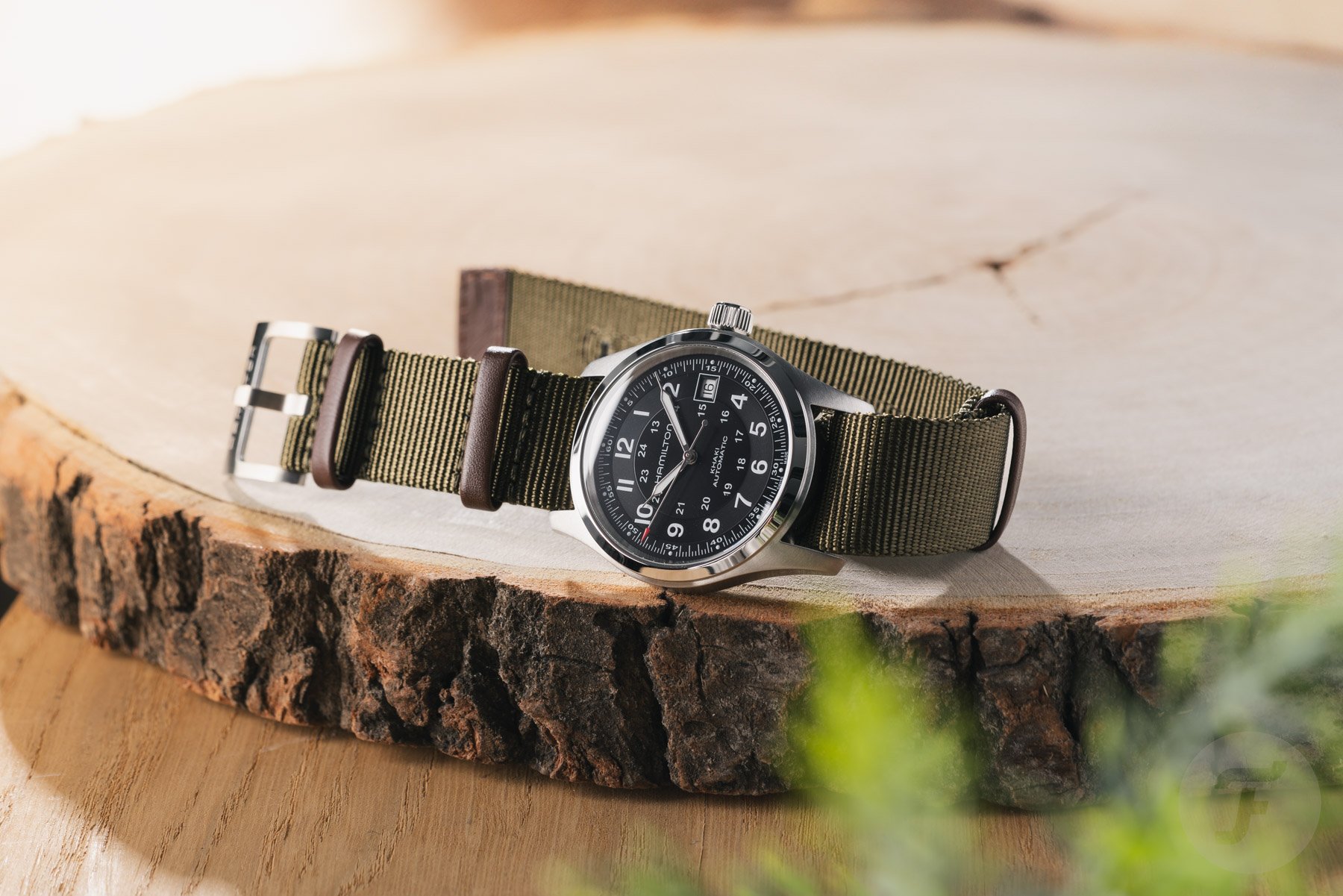
The Khaki Field Automatic 38 has the H-10 movement with 80-hour power reserve, which is enough that you can take it off and put it in a pack overnight at camp without it stopping. 38mm fits most wrists and reads fine under a base layer cuff. Around €700. Sandwich dial with white Arabic numerals on a black field, brushed steel case, on a green NATO it's the canonical day-hike watch. We chose the 38mm version over the 42mm because the smaller case sits more comfortably under a pack strap on long carries.
Marathon
GSAR Government
WW194006 - 41mm - automatic
The MIL-spec watch the actual military issues to mountain rescue.
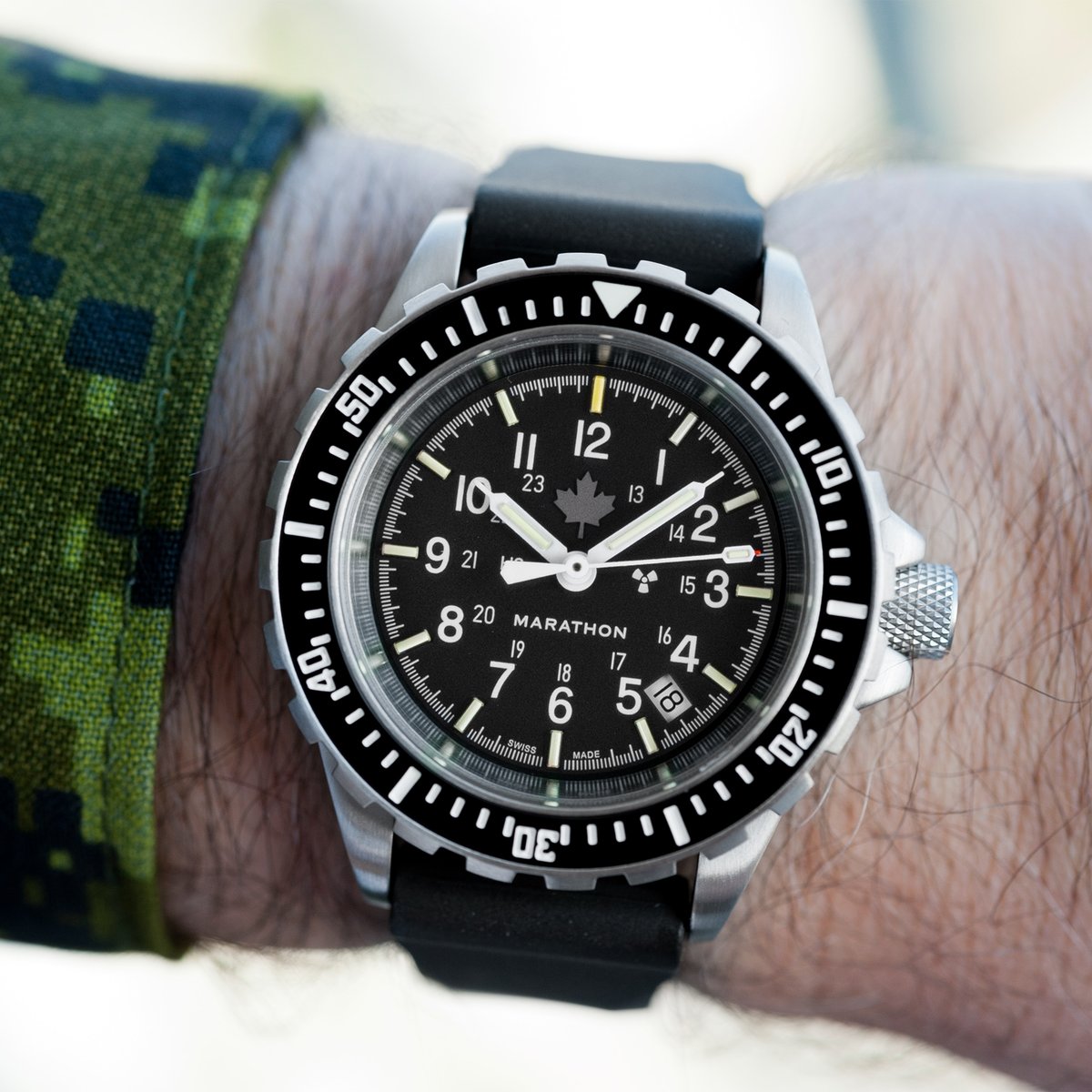
Marathon's GSAR is issued to the Canadian and US militaries for search-and-rescue use - that's not marketing, the procurement contracts are public. ETA 2824-2 movement, 300m water resistance, hardened steel case, MaraGlo tritium tubes (lume that lasts 25 years without recharging). Around €1,400. 41mm steel case on a fabric strap; the tritium tubes mean you don't need to charge the lume by sun before a dawn start. As a hiking watch this is the right answer for shoulder-season multi-day trips where you genuinely depend on the watch.
Garmin
Instinct 2X Solar
Instinct 2X Solar - 50mm - smart-sport quartz
The smart-sport watch with the battery life of a tool watch.

The Instinct 2X Solar is Garmin's solar-charged ruggedised tracker - GPS, altimeter, barometer, compass, multi-day battery (the solar variant in low-power modes runs for months). Around €450. It's the answer when the trip justifies a smart watch - multi-day backpacking, alpine climbing, anything where GPS-tracked elevation profile and waypoint navigation matter. The 50mm case is large but the build is shock-tested to MIL-STD-810. We don't generally recommend smart watches in this series, but for genuinely backcountry use the Instinct earns its space on the wrist.
A note on what NOT to wear
Don't take a leather strap up a mountain - it'll be wet on day one and ruined by day three. Don't take any chronograph with exposed pushers (sand and grit eventually get in). Don't take an Apple Watch on a multi-day trip; the battery doesn't survive overnight without a power bank, which defeats the purpose. And don't take a vintage piece up to altitude - the gaskets are old, water gets in, the cold service-revisits are expensive.
Frequently asked questions
What watch is best for hiking?
It depends on what you want back from the wrist. A Garmin Instinct 2X Solar or Casio G-Shock Mudmaster GG-B100 give altimeter, barometer, compass and days of battery. A Sinn 856 gives you a proper mechanical companion. Most serious hikers we know run one of each.
Can I hike with a mechanical watch?
A Hamilton Khaki Field Automatic 38mm, Sinn 856 or Rolex Explorer 36 all handle trail impact fine. Just wind before you go, since crown access under gloves is bad. The mechanical watch won't tell you altitude, but it will still be running when the ABC watch needs a charge.
Is a Garmin Fenix worth it over a G-Shock?
For a weekend hiker, no: the G-Shock Mudmaster at 350 euro gives you 90% of what you need for a fraction of the Fenix's 900 euro. For thru-hikers, the Fenix mapping, GPS breadcrumb and multi-week solar battery become worth the delta. It's a use-case answer, not a brand answer.
Do I need 200m water resistance for hiking?
100m is enough for rain, stream crossings and swims in an alpine lake. The Sinn 856 at 200m or Marathon GSAR at 300m are overkill for trail use but don't cost you anything on the wrist. What you actually want is impact resistance and a lume you can read at dawn.
Comments 24