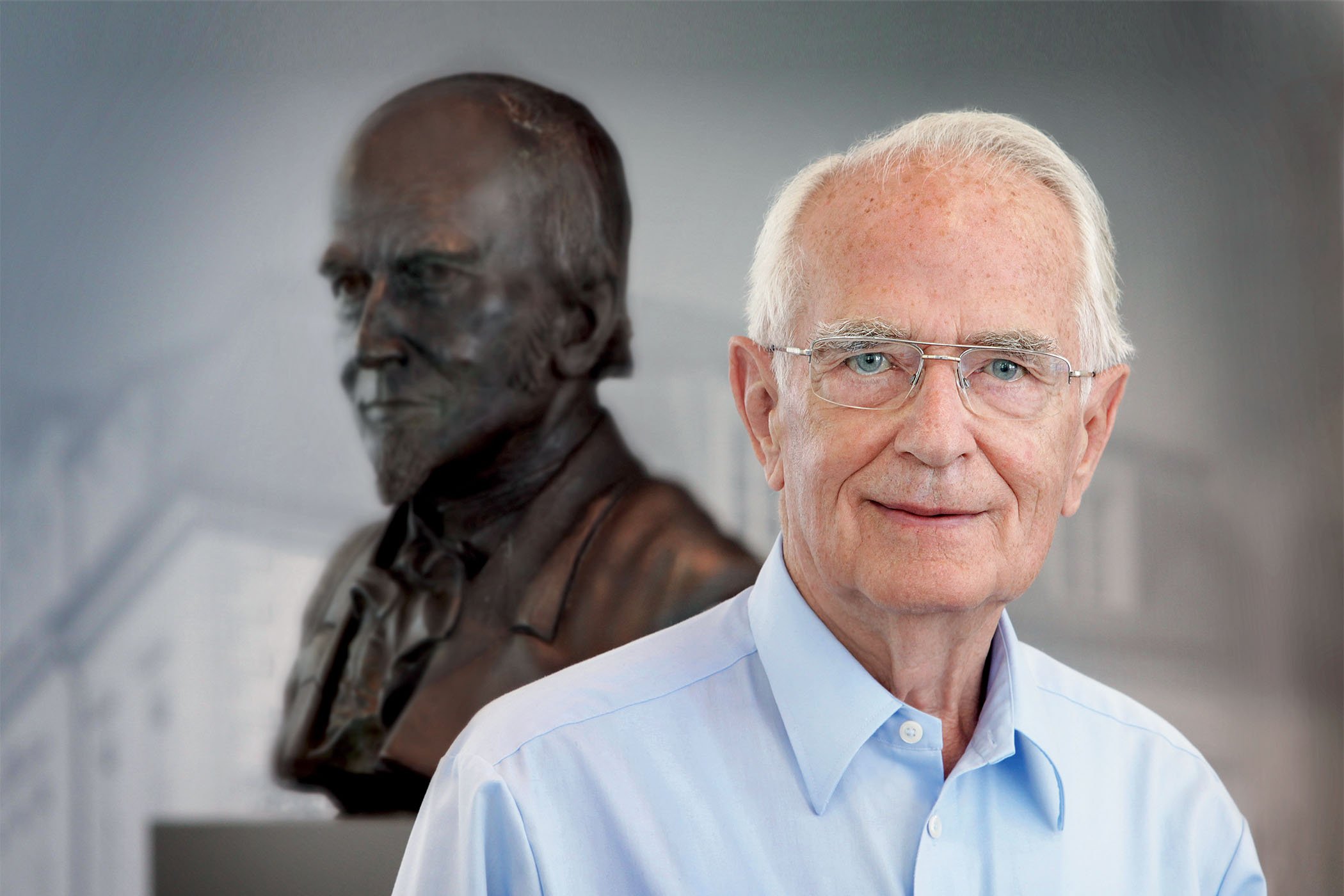
The original A. Lange & Söhne was founded by Ferdinand Adolph Lange in Glashütte, Saxony on 7 December 1845 as a school for high-precision watchmaking backed by the Saxon Royal Government. Ferdinand Adolph established the technical conventions that became distinctively German: three-quarter plate construction, untreated German silver (Neusilber) bridges, gold chatons on the bridges holding the jewels, screwed gold settings, hand-engraved balance cocks, and swan-neck regulators. The firm produced about 7,000 pocket watches through the 19th and early 20th centuries, supplying the Saxon court, German royalty, the Tsar of Russia, and the Sultan of Brunei.
In March 1948, the East German Soviet Military Administration in Saxony expropriated A. Lange & Söhne and the other Glashütte firms, consolidating them into the state-owned VEB Glashütter Uhrenbetriebe (GUB). The Lange family was barred from returning to Glashütte; Walter Lange (then 24) and his cousin Otto Lange escaped to West Germany. The original Lange brand was dormant for 42 years; the Glashütte firm operated under GUB making mass-market quartz and mechanical watches under various names. Walter Lange spent the post-war decades working in West German watchmaking and various trades; he never returned to Glashütte while the German Democratic Republic existed.
"For 42 years I waited to come back. The first thing we did was register the company on the same date Ferdinand Adolph signed the founding charter. The same day, 145 years later."- Walter Lange, on the 7 December 1990 founding
German reunification on 3 October 1990 made return possible. Walter Lange travelled to Glashütte for the first time since 1948 in October 1990; he was 66 years old. The technical and commercial restart required investment, market access, and watchmaking know-how that Walter alone could not provide. Through introductions in the Swiss watch industry he was connected to Günter Blümlein, the German executive then leading the LMH (Les Manufactures Horlogères) consortium that managed IWC, Jaeger-LeCoultre, and Audemars Piguet brand activities for an investor consortium.
The new firm Lange Uhren GmbH was registered on 7 December 1990, exactly 145 years to the day after Ferdinand Adolph's 1845 founding. Walter Lange held a minority interest as founder-CEO; LMH (eventually backed by Mannesmann and others) held the majority financial position; Blümlein chaired the supervisory board. The first four years (1990-94) were spent in movement development: hiring watchmakers, restoring the original Glashütte villa as a manufactory, designing four wholly new in-house calibres, and engaging Reinhard Meis (Glashütte historian and former GUB watchmaker) to research and document the original Lange technical traditions for accurate revival.
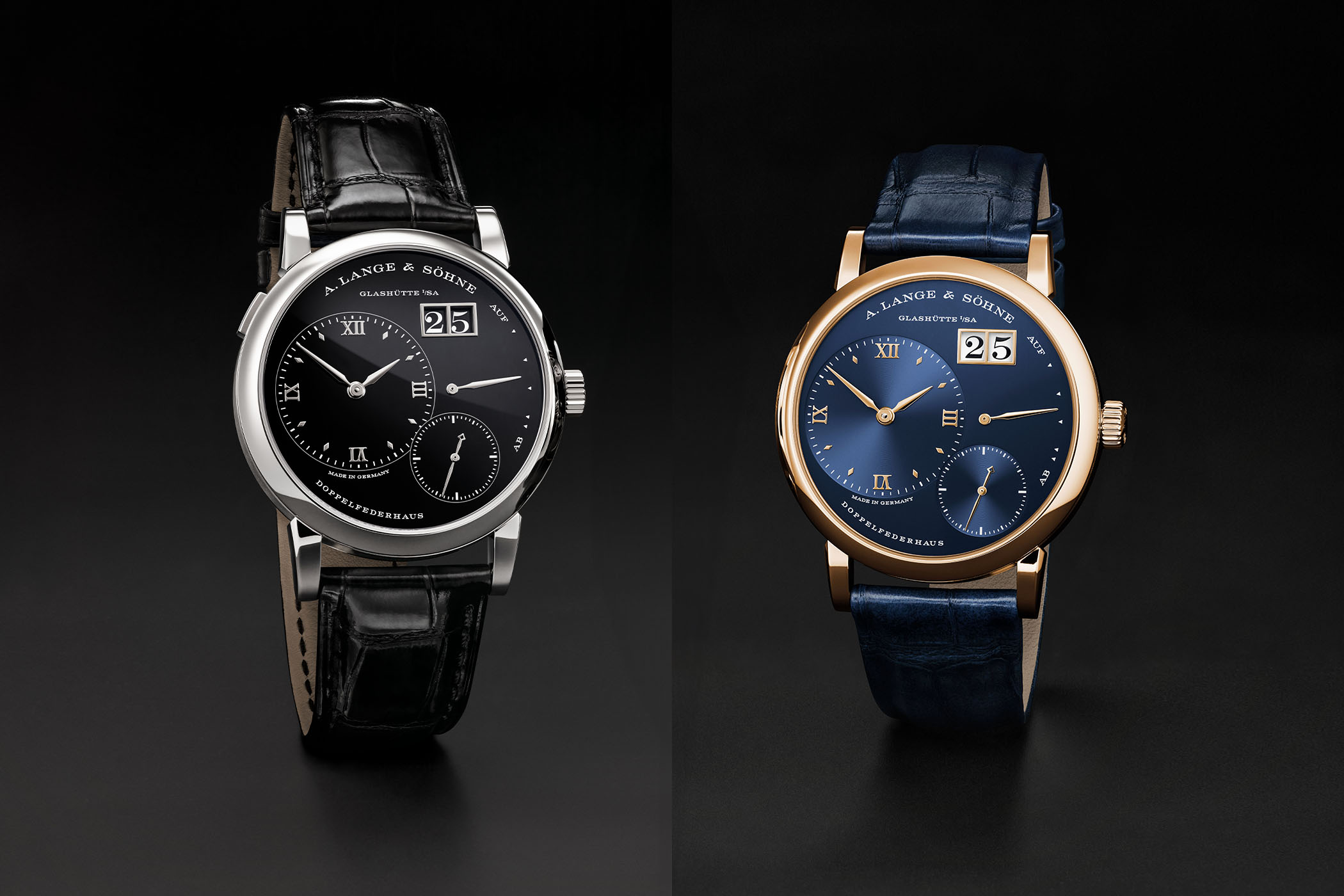
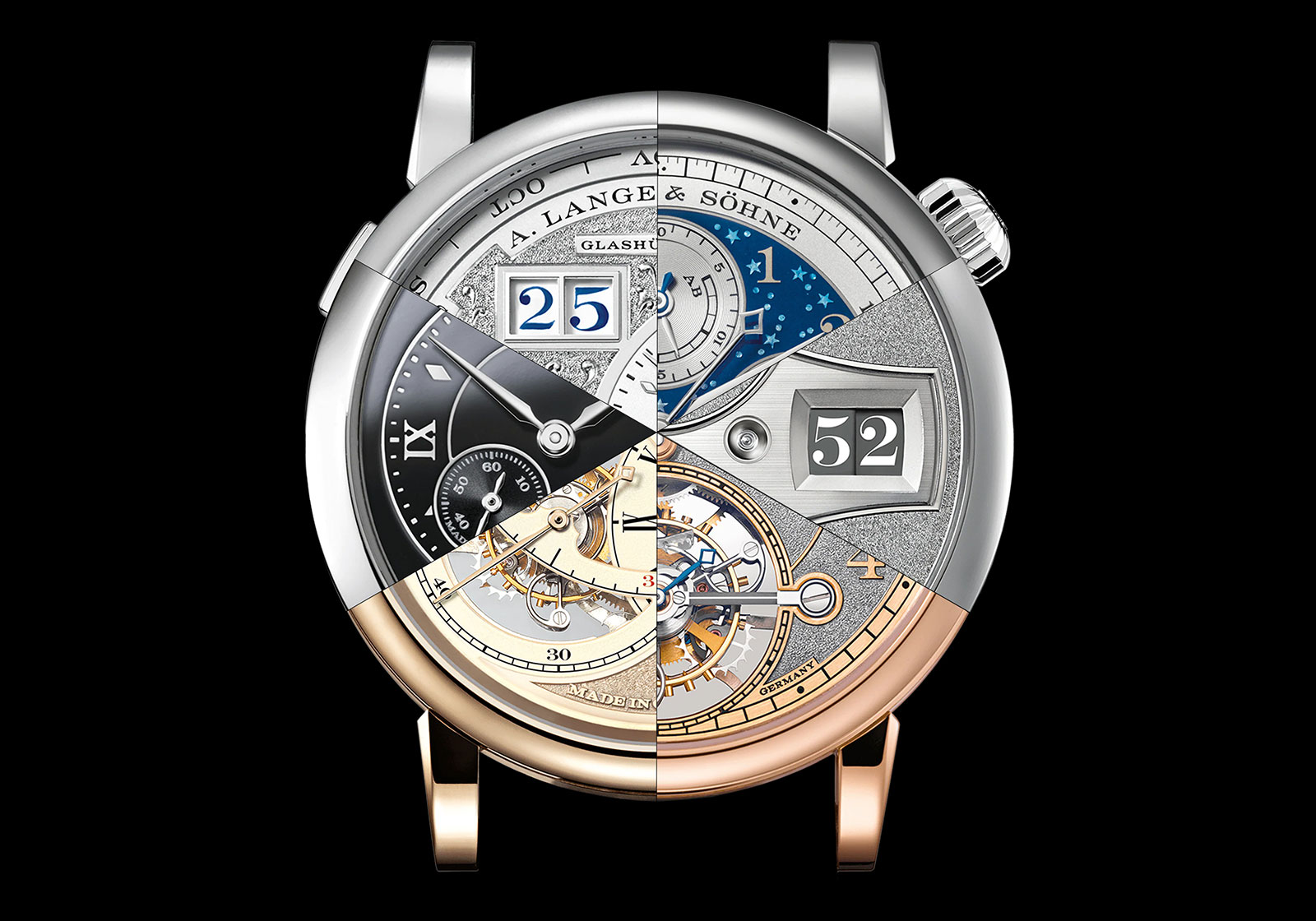
The first collection was unveiled on 24 October 1994 at the Hotel Adlon in Berlin (then still under reconstruction after reunification). Four references launched simultaneously: the Lange 1 (asymmetric off-centre dial with outsize date, the visual identity that became the brand's signature), the Saxonia (clean three-hander), the Arkade (rectangular dress watch), and the Tourbillon "Pour le Mérite" (with a chain-and-fusee constant-force mechanism, then unprecedented in modern wristwatchmaking). Each piece showcased the German Lange tradition: three-quarter plate, German silver, gold chatons with blued screws, hand-engraved balance cock. The collection sold out almost immediately; production through 1995-96 ran at approximately 500 watches per year.
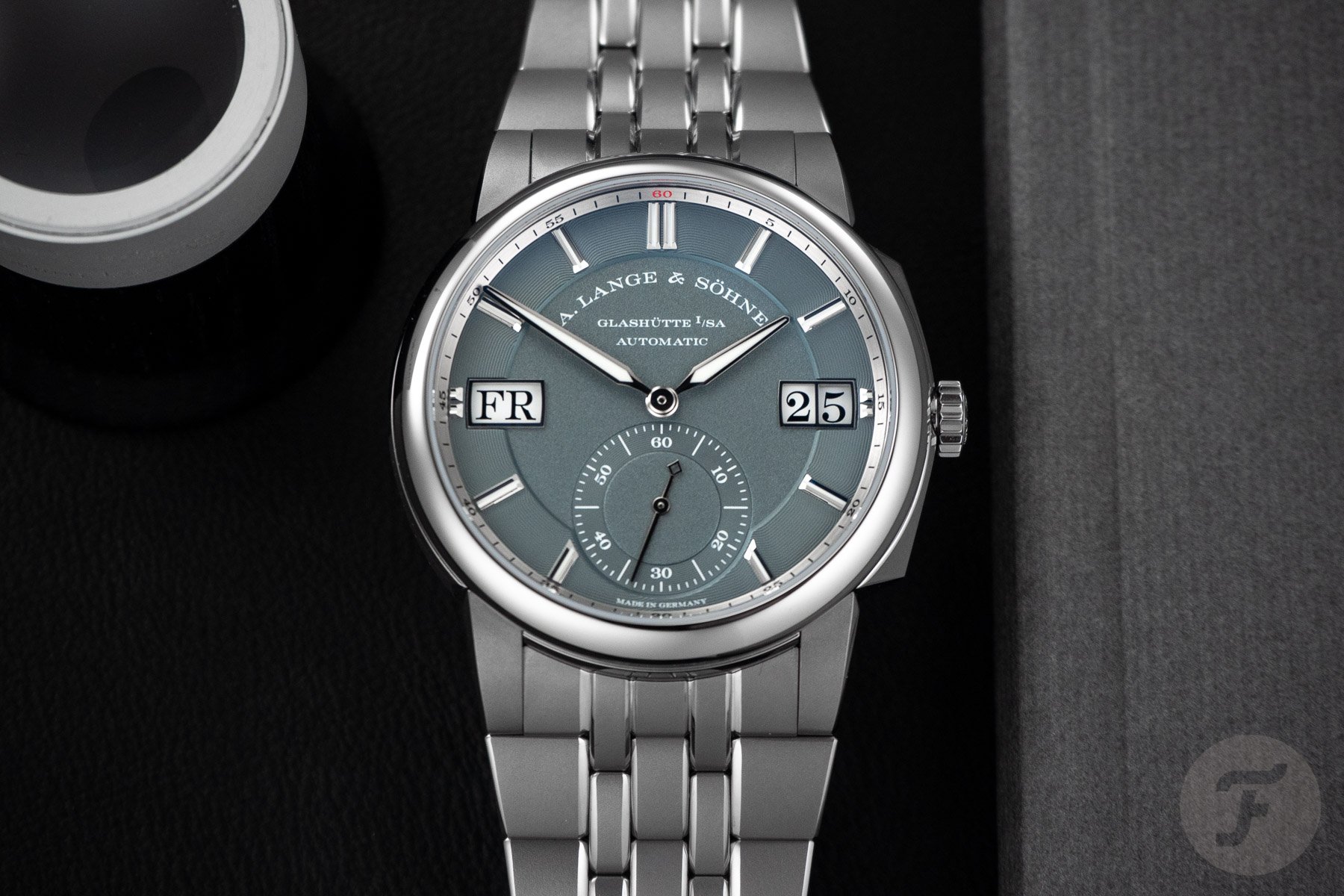
In 2000 the Richemont group acquired LMH (rebranded Maisons d'Horlogerie); A. Lange & Söhne joined IWC, JLC, and Vacheron Constantin as a Richemont luxury brand. Annual production has grown to approximately 5,000-6,000 watches per year, still very small by Swiss luxury standards. The brand has launched roughly 50+ in-house calibres since 1994 (Datograph 2003, Zeitwerk 2009, Triple Split 2018, Odysseus 2019), each a major in-house engineering project. Walter Lange retired from active management around 2010; he died on 17 January 2017, aged 92. The firm today is universally recognised as one of the top-three modern haute-horlogerie houses alongside Patek Philippe and Audemars Piguet.





Comments 1