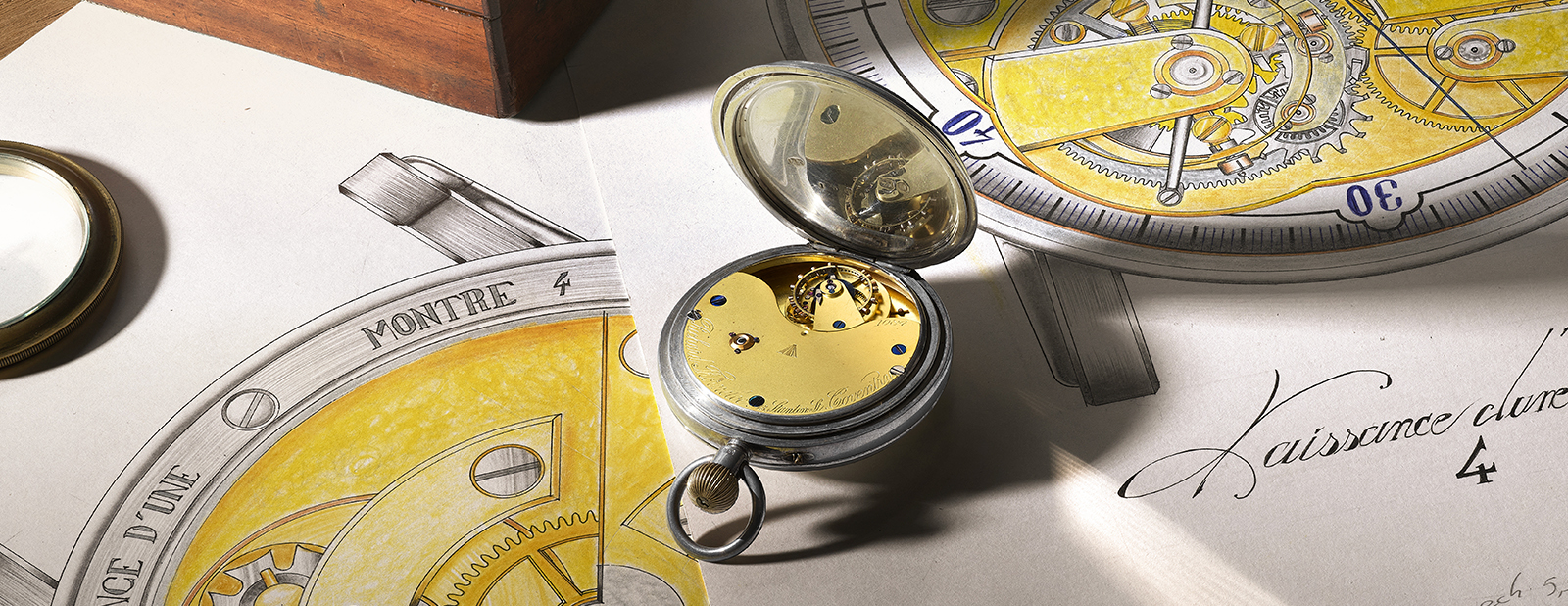
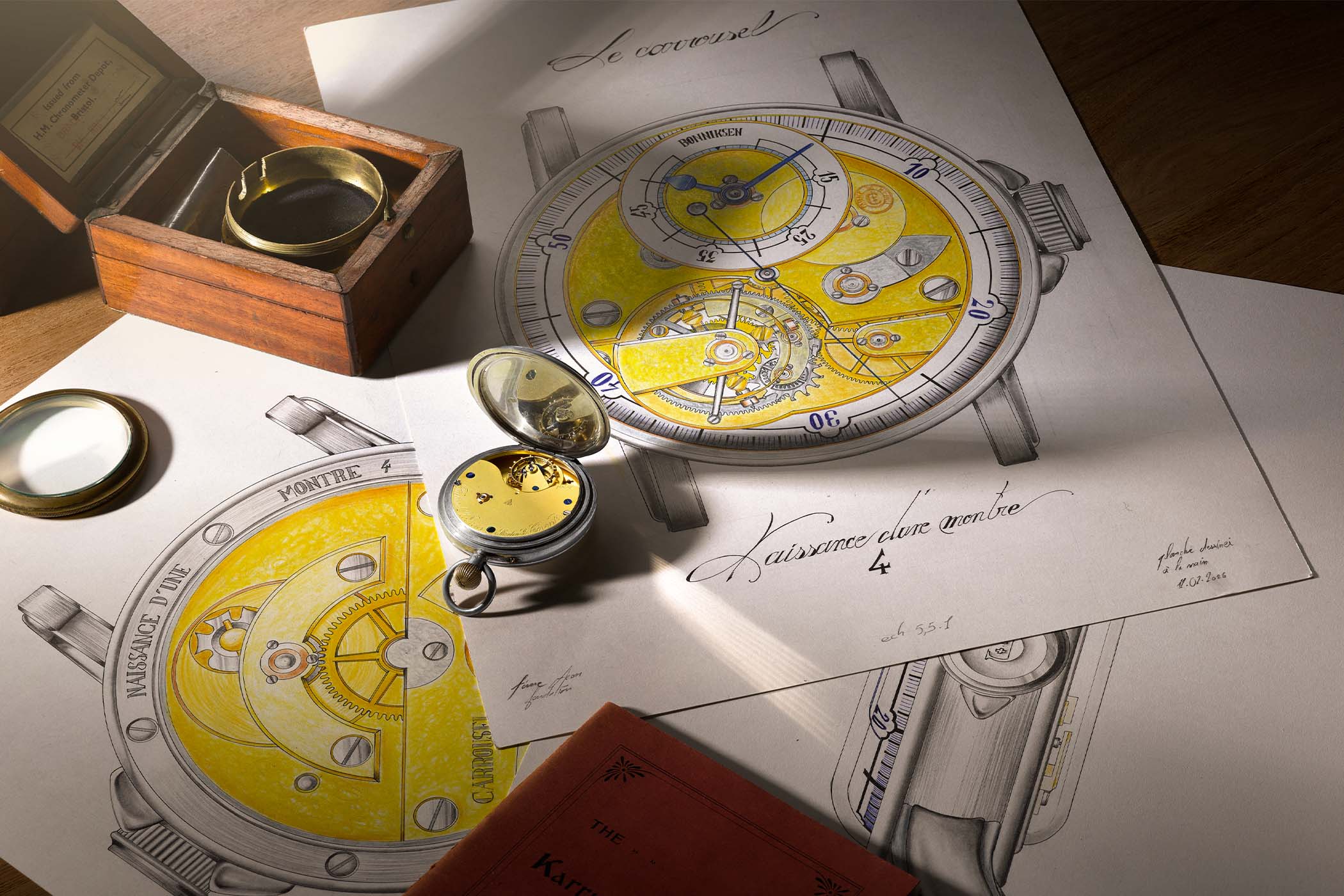
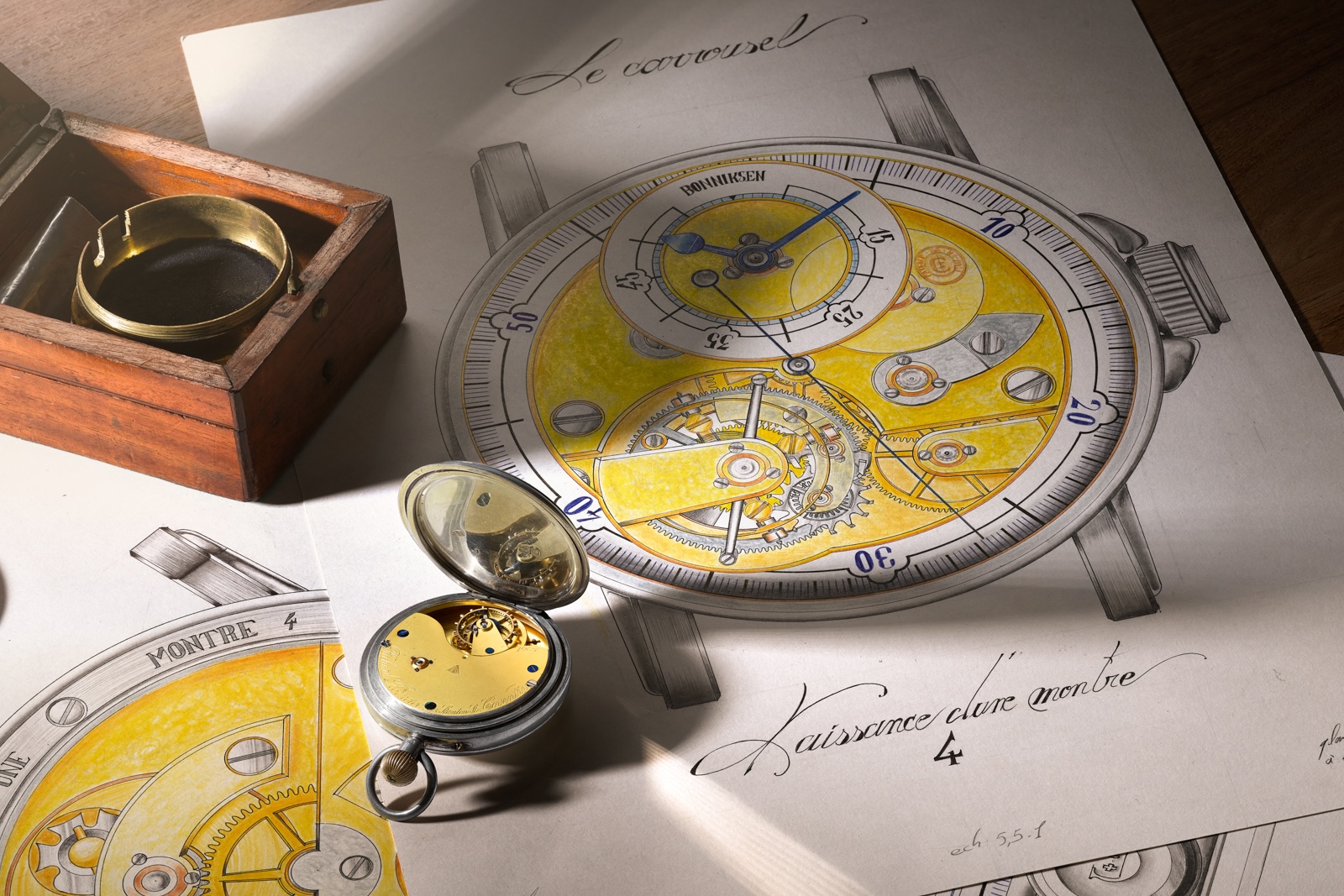
The carrousel is a precision escapement complication patented by the Danish-British watchmaker Bahne Bonniksen in British patent 21,421 of 1892. Conceptually it serves the same purpose as a tourbillon: to average out positional rate errors caused by gravity's effect on the balance wheel when the watch is held vertically. Mechanically the two devices are different. The tourbillon rotates the entire escapement (escape wheel + lever + balance) on a single axis, typically once per minute; the carriage drives the seconds hand directly. The carrousel rotates the escape wheel on one axis (driven by the third wheel) and the balance + lever on a separate, much slower axis (driven by the fourth wheel via a gear train).
The architectural difference matters because of where the energy comes from. In a tourbillon, all of the rotational energy must come through the carriage: the carriage must drive both the escapement and rotate itself, all from a single fourth-wheel gear engagement. The construction is mechanically demanding and famously expensive. In a carrousel, the rotation is driven through two independent gear-train paths: the third wheel drives the escape wheel directly, while the fourth wheel drives the carrousel platform via a separate gear chain. The carrousel platform thus does not have to "carry" the entire escapement's drive load, which simplifies the gearing and reduces the precision tolerances required for stable operation.
"The carrousel does what the tourbillon does, with two axes instead of one. It is the working-class precision complication; cheaper to make, almost as accurate, and almost forgotten."- Watchmaking commentary on the Bonniksen carrousel
Bonniksen designed the carrousel specifically as a cheaper-to-make alternative to the tourbillon. By the 1890s the tourbillon had become an exclusively haute-horlogerie complication, made by perhaps three or four Swiss workshops at extraordinary prices. Bonniksen, who had emigrated from Denmark to Coventry, England in 1879 to work in the British watchmaking industry, saw a market gap for a precision wristwatch that achieved tourbillon-like rate performance at British-pocket-watch-grade pricing. His own carrousel pocket watches sold for roughly one-quarter the price of a Swiss tourbillon and won several Kew Observatory chronometer trials in the early 1900s. Major British manufacturers, including Karrusel & Sons, Vener, and selected Charles Frodsham pieces, used Bonniksen-licensed carrousel mechanisms.
The carrousel essentially disappeared from watchmaking between roughly 1930 and 2005. The interwar period killed the British precision-pocket-watch industry; the 1969 quartz crisis ended what was left of mechanical complication-watch demand for half a generation. When haute-horlogerie revived in the 1990s, the tourbillon re-established itself as the dominant precision-display complication on prestige and marketing grounds; the carrousel, despite its mechanical merits, had no modern manufacturer behind it. Bonniksen's patents had long since expired, but the historical trail had gone cold.
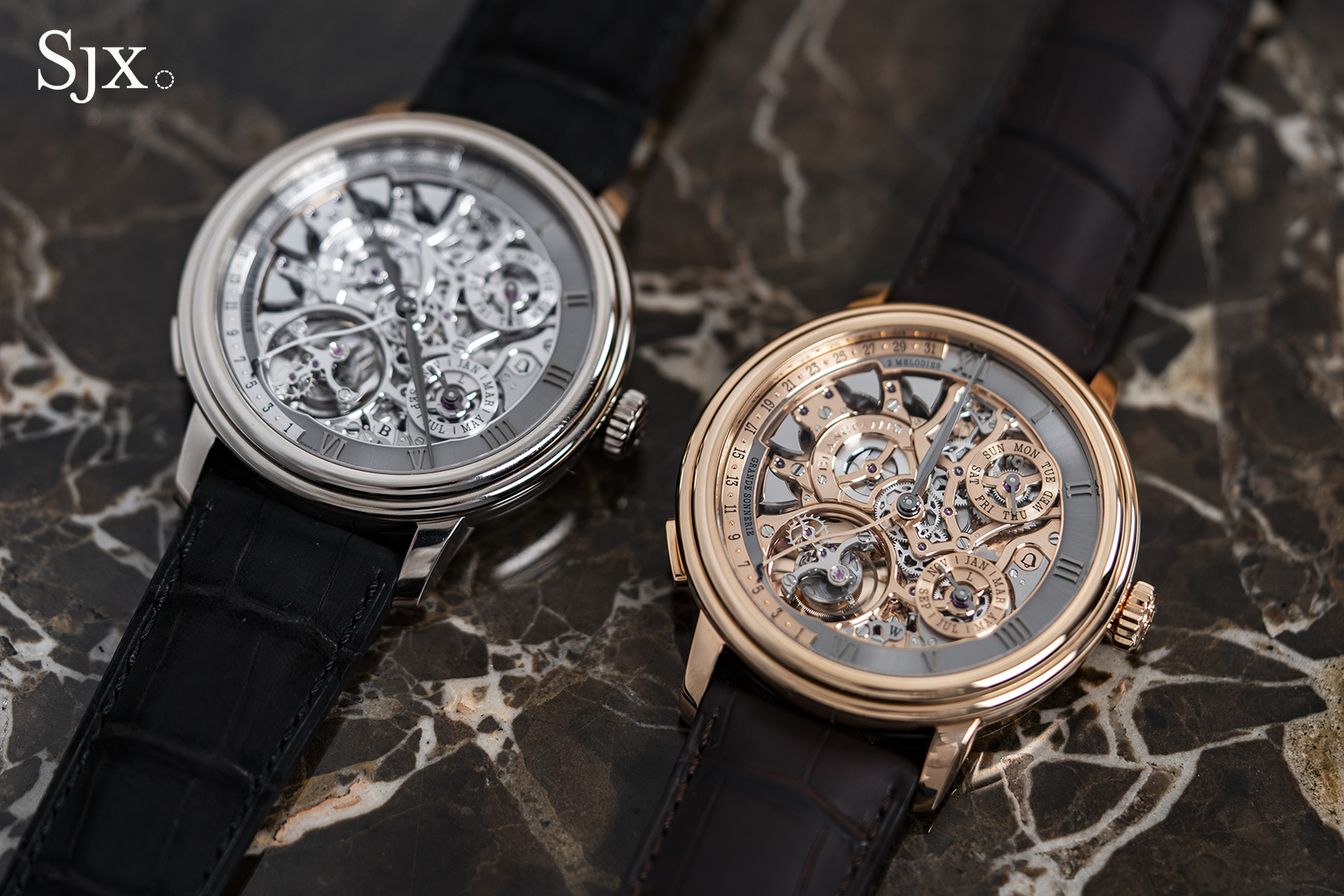
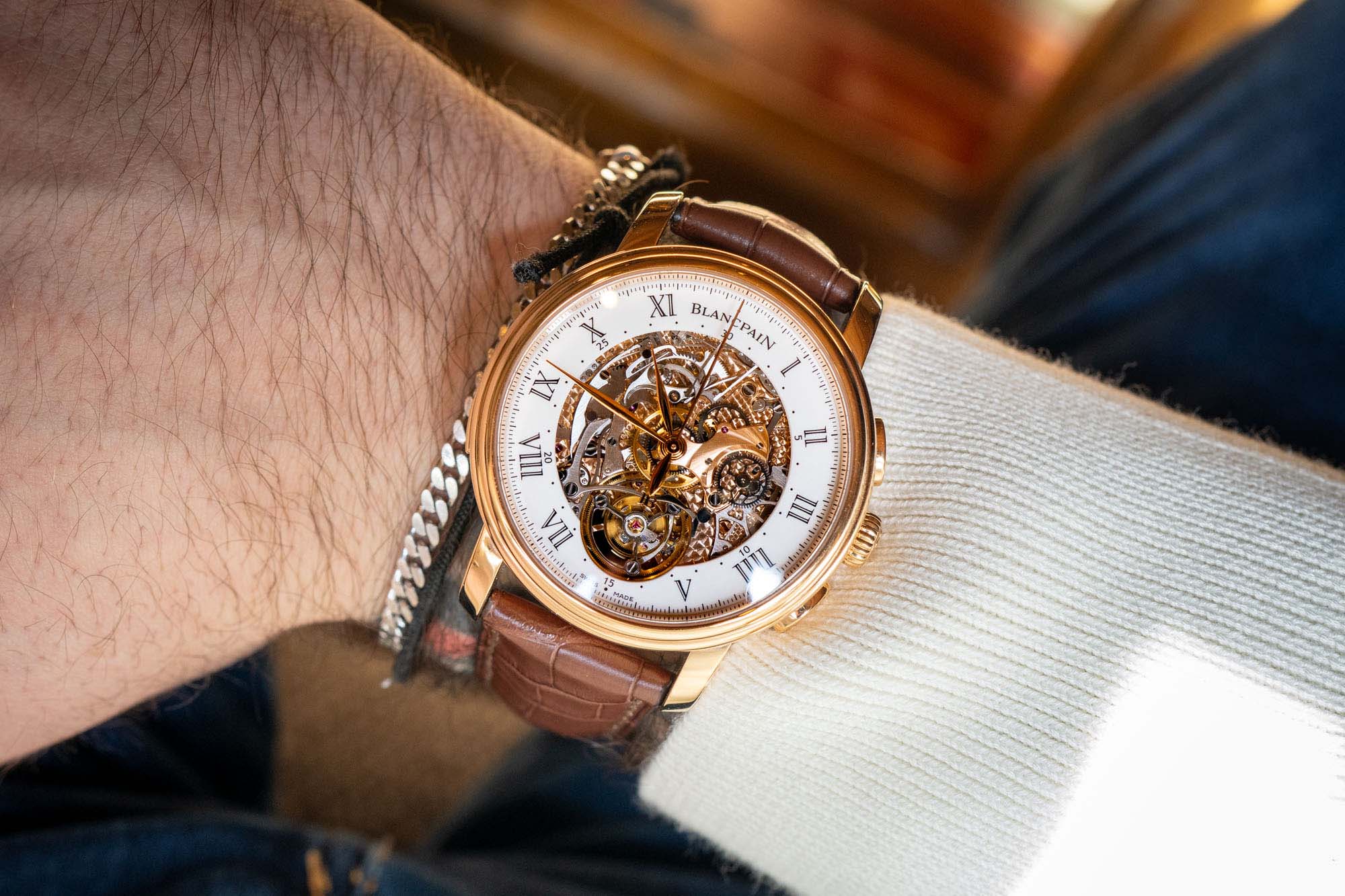
The modern carrousel revival began with Blancpain in 2008. Blancpain's technical director Marc Hayek (Nicolas Hayek's grandson) decided that the brand's "Six Masterpieces" complication strategy needed a precision-display alternative to the tourbillon, and the carrousel was the historical answer. The Blancpain Carrousel Volant Une Minute (2008) reintroduced the architecture in a wristwatch case for the first time in nearly 80 years, with a flying carrousel (no upper bridge), a 1-minute escape-wheel rotation, and a separate ~50-minute carrousel carriage rotation. The piece won the Geneva Grand Prix Watchmaking award in 2009. Blancpain followed with a Carrousel + Tourbillon piece (2013) showing both complications in the same movement.
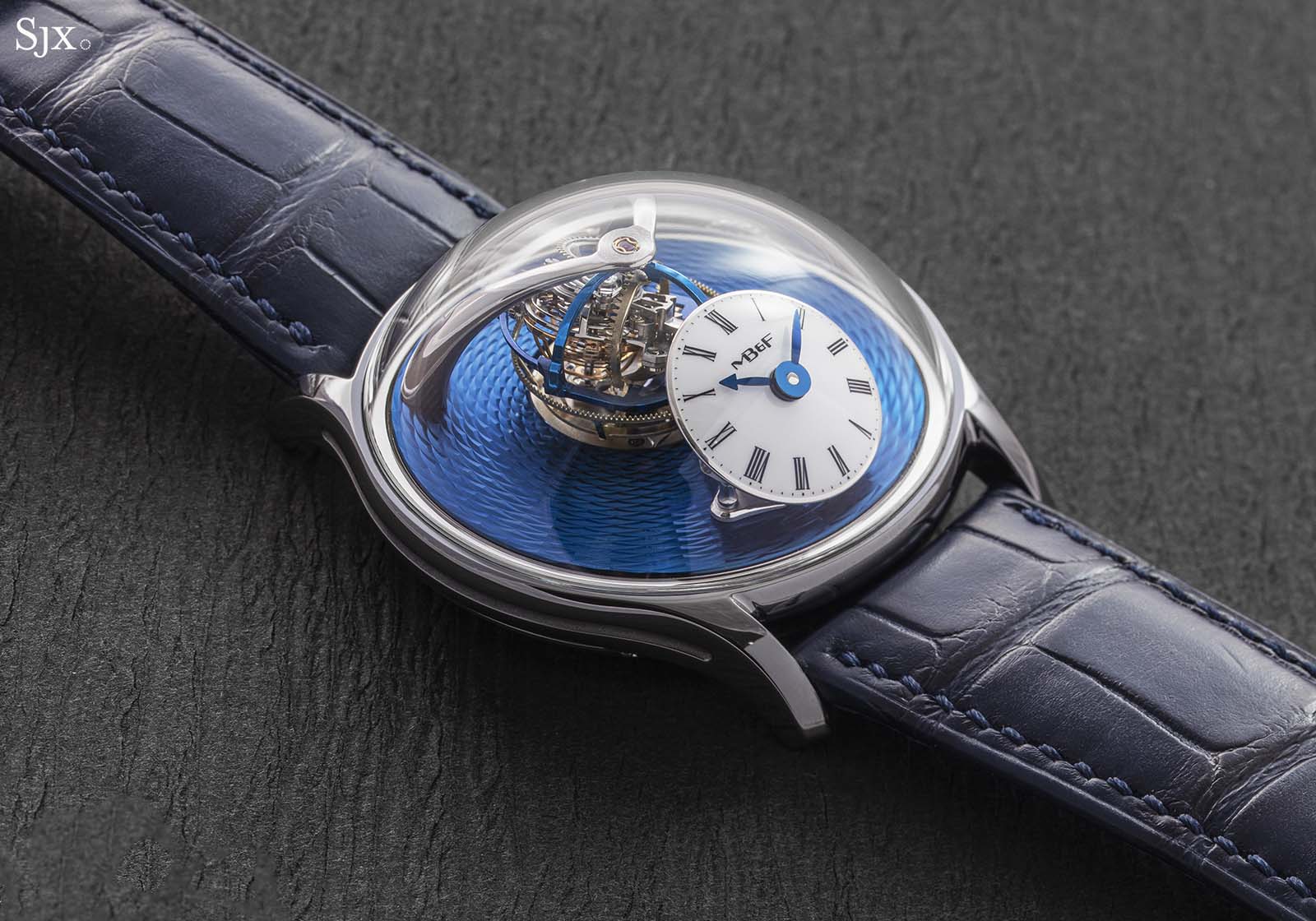
Other modern carrousel pieces are rare. Christophe Claret, Greubel Forsey (the Carrousel Differential is in development), and a few independent watchmakers have produced carrousel calibers. Audemars Piguet has not made a carrousel; Patek and Rolex have not. The complication remains a Blancpain-and-independents specialty, with annual worldwide production probably under 50 wristwatches. For collectors, a carrousel wristwatch is an unusual choice: the visual effect at the dial is similar to a tourbillon (a rotating cage in a cutout), but the mechanism inside is meaningfully different and represents a distinct historical lineage from the tourbillon's 1801 Breguet origin.


Comments 2