
Polymethyl methacrylate (PMMA) is a transparent thermoplastic synthesised in 1928 and commercialised through the 1930s as Plexiglas (Röhm GmbH, Germany), Perspex (ICI, UK), Lucite (DuPont, USA), and Acrylite (various). The material has excellent optical clarity, is approximately half the weight of glass, and is essentially shatterproof: under impact, acrylic cracks but holds together rather than disintegrating into sharp fragments. These properties made it the obvious choice for watch crystals in the post-WWII era as the watch industry shifted from trench-watch hinged metal grills to integral crystal-over-dial construction.
From approximately 1945 through 1980, acrylic was the industry-standard watch crystal material across the Swiss, Japanese, and American watchmaking volume. Vintage Rolex Submariners through the 1970s, vintage Omega Speedmasters, all vintage Dirty Dozen military watches, and the entire civilian volume tier used acrylic crystals. The material was cheap to produce in volume, safe (no sharp fragments under impact), and field-repairable: a watchmaker could polish out scratches with a buffing wheel in minutes; an owner with Polywatch (a light abrasive paste) could polish minor scratches at home.
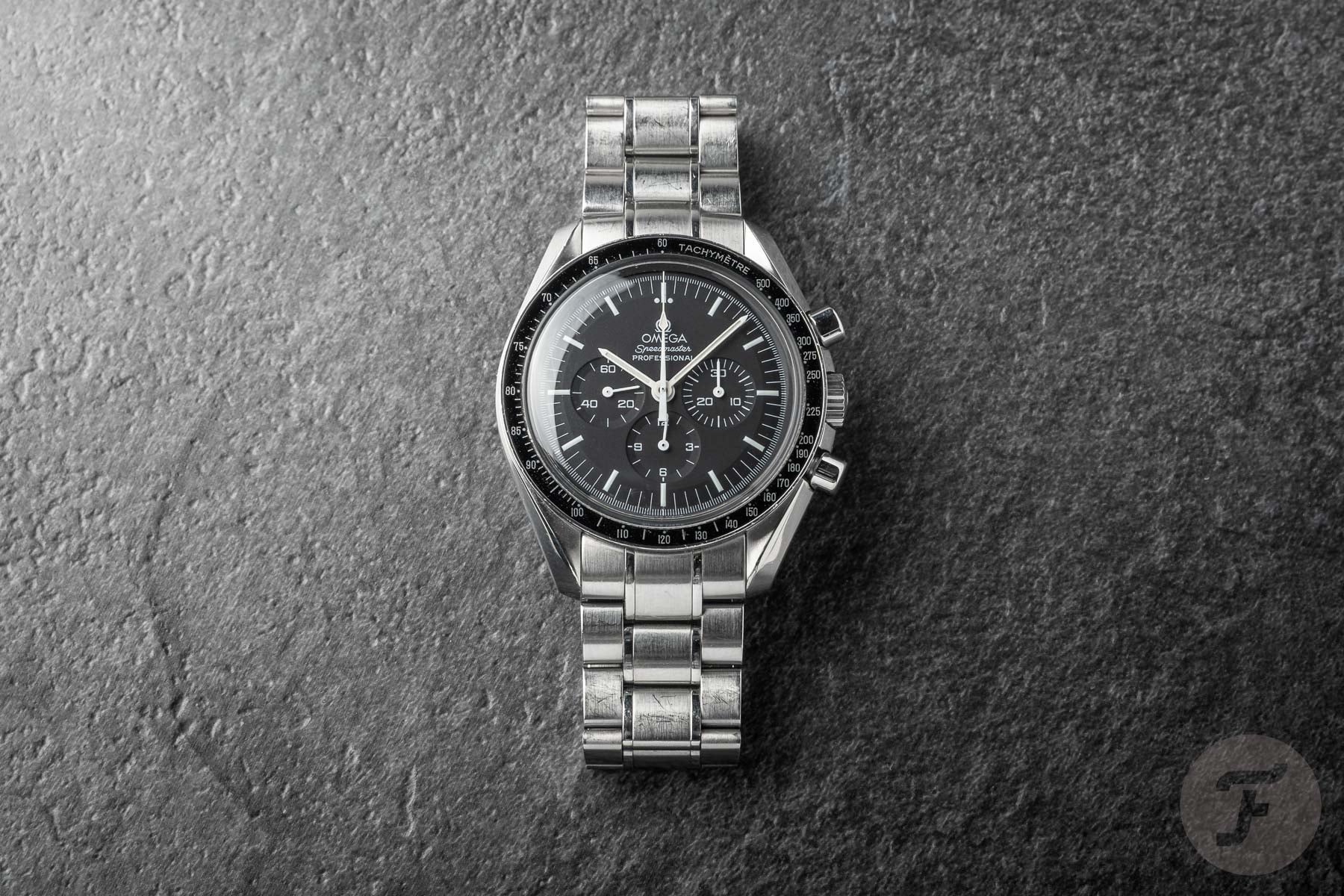
"NASA tested every crystal we offered. The sapphires shattered. The acrylic cracked but held. They flew the acrylic to the Moon, and we have not changed it since."- Omega technical commentary on the Speedmaster crystal
The material has a distinctive visual signature. Acrylic's refractive index is around 1.49 (vs glass 1.52, sapphire 1.76); the lower refractive index combined with a typical domed-acrylic profile creates a slight "liquid" optical effect: dial and hands viewed at angle appear to swim or curve slightly. This is part of the vintage aesthetic that modern reissues seek to reproduce. Acrylic also warms colour slightly (light passing through has a marginal yellow shift), giving black dials a "velvet" quality. Sapphire crystal, by contrast, is optically near-perfect and gives a cooler, sharper dial appearance.
In 1980, Rolex began phasing acrylic out in favour of sapphire crystal; by 1985 most premium Swiss watches had moved to sapphire. The reasons were practical: sapphire is 20-30x harder than acrylic (Mohs 9 vs Mohs 3), so it does not scratch from normal-wear contact (key in pocket, doorframe brush). Buyers had increasingly come to expect scratch-free crystals; acrylic's requirement for periodic polishing was perceived as a maintenance issue. Through the 1990s and 2000s, acrylic became vintage-only in mass production.
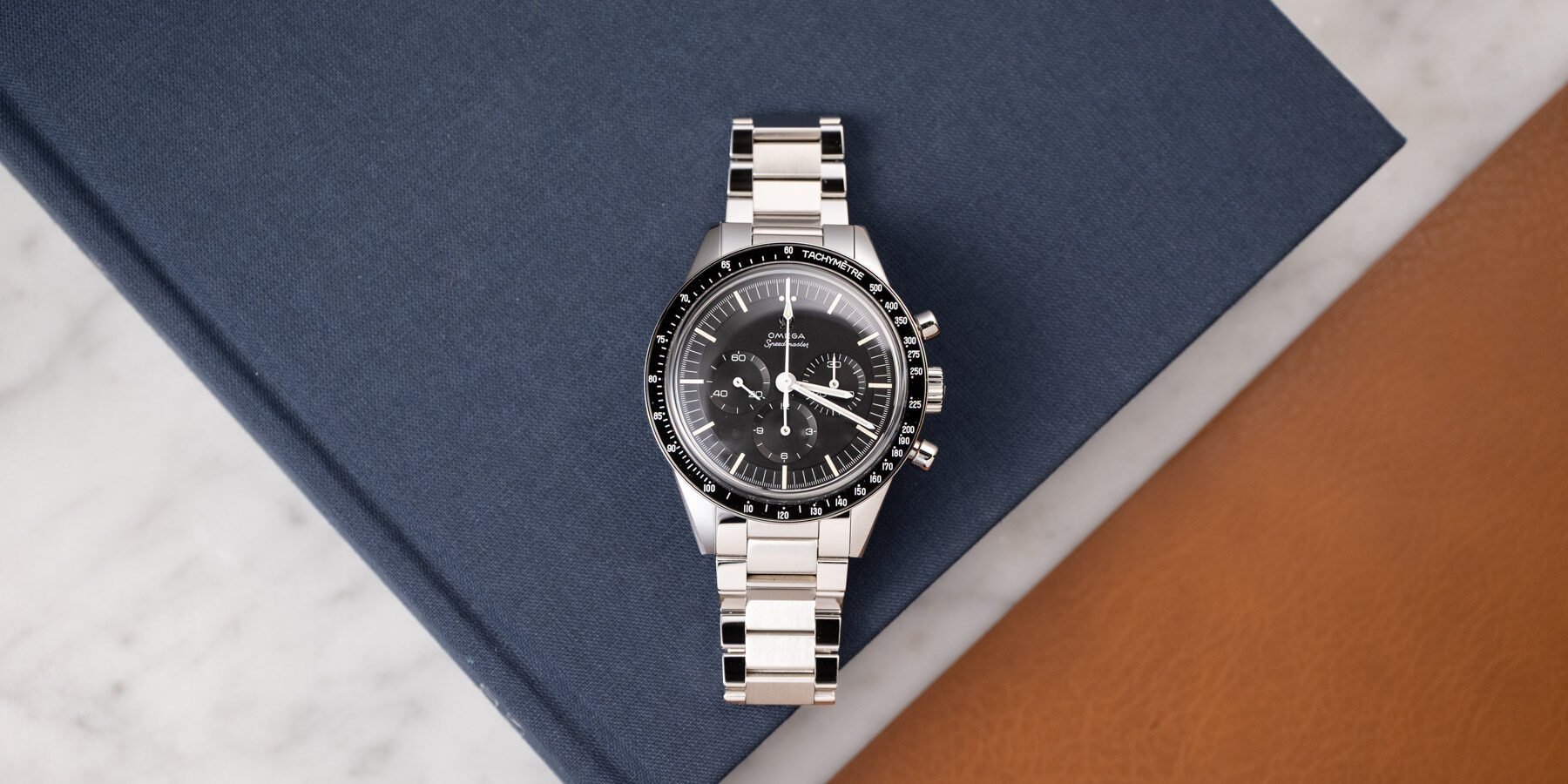
A small number of modern flagship watches retain acrylic by deliberate choice. The most famous is the Omega Speedmaster Professional Moonwatch ref. 3570.50 and modern equivalents: NASA flight-qualified the watch in 1 March 1965 with an acrylic crystal because sapphire would have shattered in the Mercury / Apollo zero-G impact tests; subsequent Speedmaster Pro Moonwatches have retained acrylic for "NASA spec" authenticity. Omega refers to the Speedmaster's acrylic as "Hesalite", a trade name that does not carry over to other brands. Other modern acrylic-crystal references include Longines Heritage models, several vintage-style Seiko reissues, and the Baltic HMS, MR01, and other heritage-aesthetic microbrand pieces.
For buyers, the practical guide: an acrylic crystal is not a problem. Light scratches polish out at home in 60 seconds with Polywatch; deep scratches typically require a watchmaker (~CHF 50-100 service). The crystal will outlast multiple sapphire crystals over a watch lifetime because it can be reconditioned indefinitely. The "vintage warmth" of acrylic is a positive aesthetic for collectors of heritage-style pieces. The single risk is cracking under hard impact (vs sapphire shattering, also a risk); both materials require routine care.





Comments 1