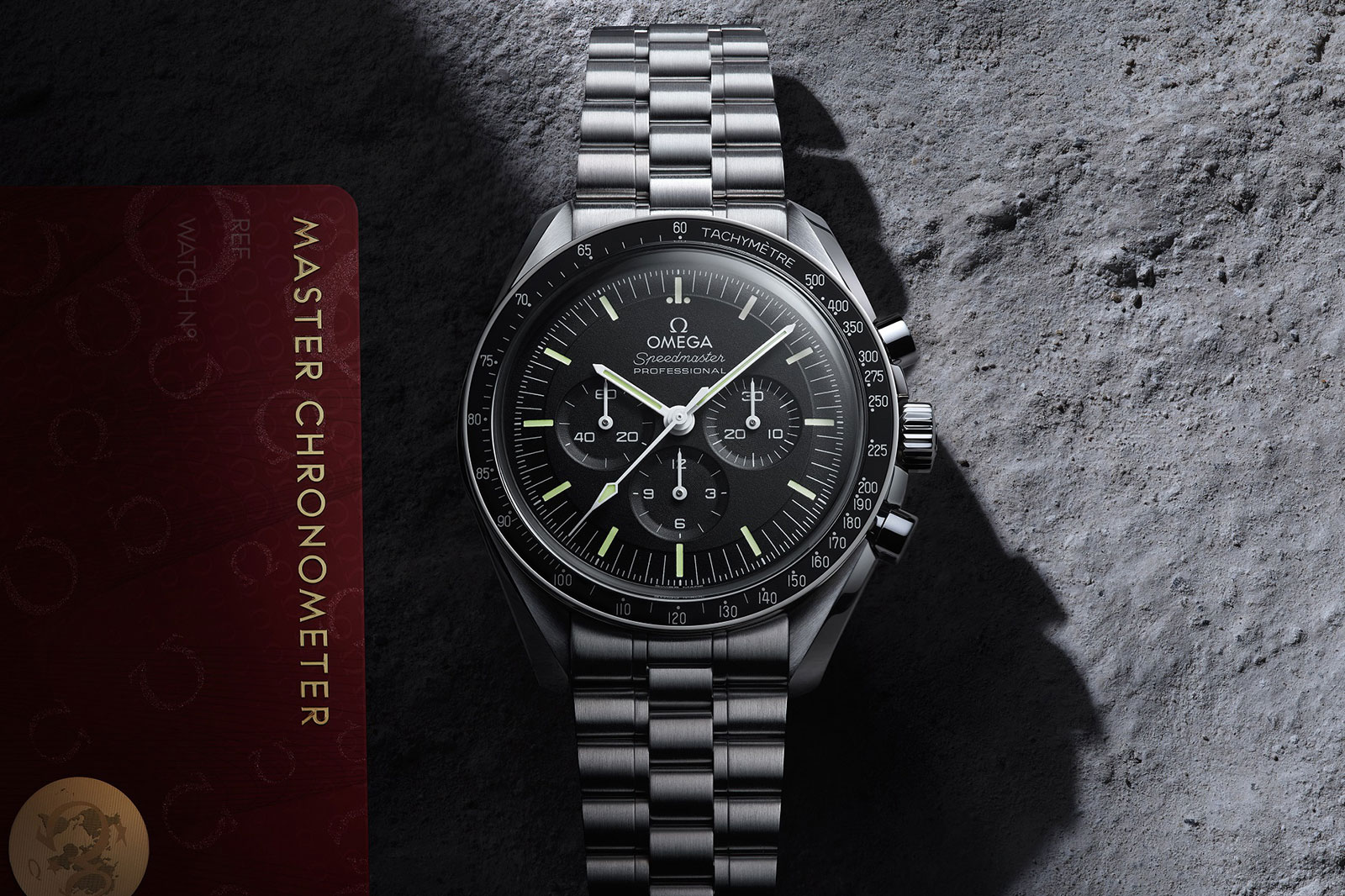
Hesalite is the trademarked Omega name for a polished acrylic plastic watch crystal, specifically polymethyl methacrylate (PMMA), the material commonly known as plexiglass or plexi. The same material is sold by Bayer as Plexiglas and by Arkema as Altuglas. In watchmaking, "hesalite" is essentially shorthand for "the acrylic crystal we still put on the Speedmaster Moonwatch", though it has a longer history: acrylic crystals were the watch industry standard from the late 1930s through the 1970s, before synthetic sapphire replaced them on virtually every modern watch.
The case for sapphire over acrylic is straightforward: sapphire is Mohs hardness 9, hesalite is Mohs hardness 3. Sapphire essentially does not scratch under normal wear; hesalite picks up small scratches from dust, fingernails, and casual contact. By the 1980s, every major Swiss manufacturer had moved its mainline catalogues to sapphire. Rolex made the switch around 1979 across the Submariner, GMT-Master, and Datejust lines; Patek Philippe, Audemars Piguet, and Vacheron Constantin were already on sapphire for premium pieces by the early 1970s.
"The hesalite cracks and stays. The sapphire shatters and floats. In a depressurised cabin, those are very different outcomes. NASA chose the one that stayed."- NASA flight-qualification commentary on the Speedmaster crystal
The Omega Speedmaster Professional, however, retained hesalite specifically for one reason: NASA. When NASA flight-qualified the Speedmaster on 1 March 1965 for crewed spaceflight, the qualification testing included a shatter test. NASA was concerned that a sapphire crystal cracking in the cabin during a depressurisation event would produce sharp shards in microgravity, a serious safety hazard. Acrylic, by contrast, cracks but does not shatter; if it fails, the pieces stay roughly in place rather than dispersing. NASA's preference for the Speedmaster's acrylic crystal continued through every Apollo mission and the Skylab/ISS programmes, and Omega has retained hesalite on the modern Speedmaster Moonwatch Professional ref. 310.30.42.50.01.001 as a deliberate continuity link to the original NASA-qualified watch.
Hesalite has three characteristics that differentiate it from sapphire on the wrist. First, warmth and clarity under indoor light: hesalite has a slightly lower refractive index than sapphire, with no anti-reflective coating, giving the dial a "warmer" presentation that many vintage-watch enthusiasts prefer. Second, shock and drop survival: a hesalite crystal that takes a hard knock will craze or crack but stay in place; a sapphire under the same impact may chatter the case and dial. Third, field repair: small scratches polish out in 30 seconds with a tube of Polywatch (a mild abrasive paste), no service centre visit needed. A scratched sapphire requires factory replacement.
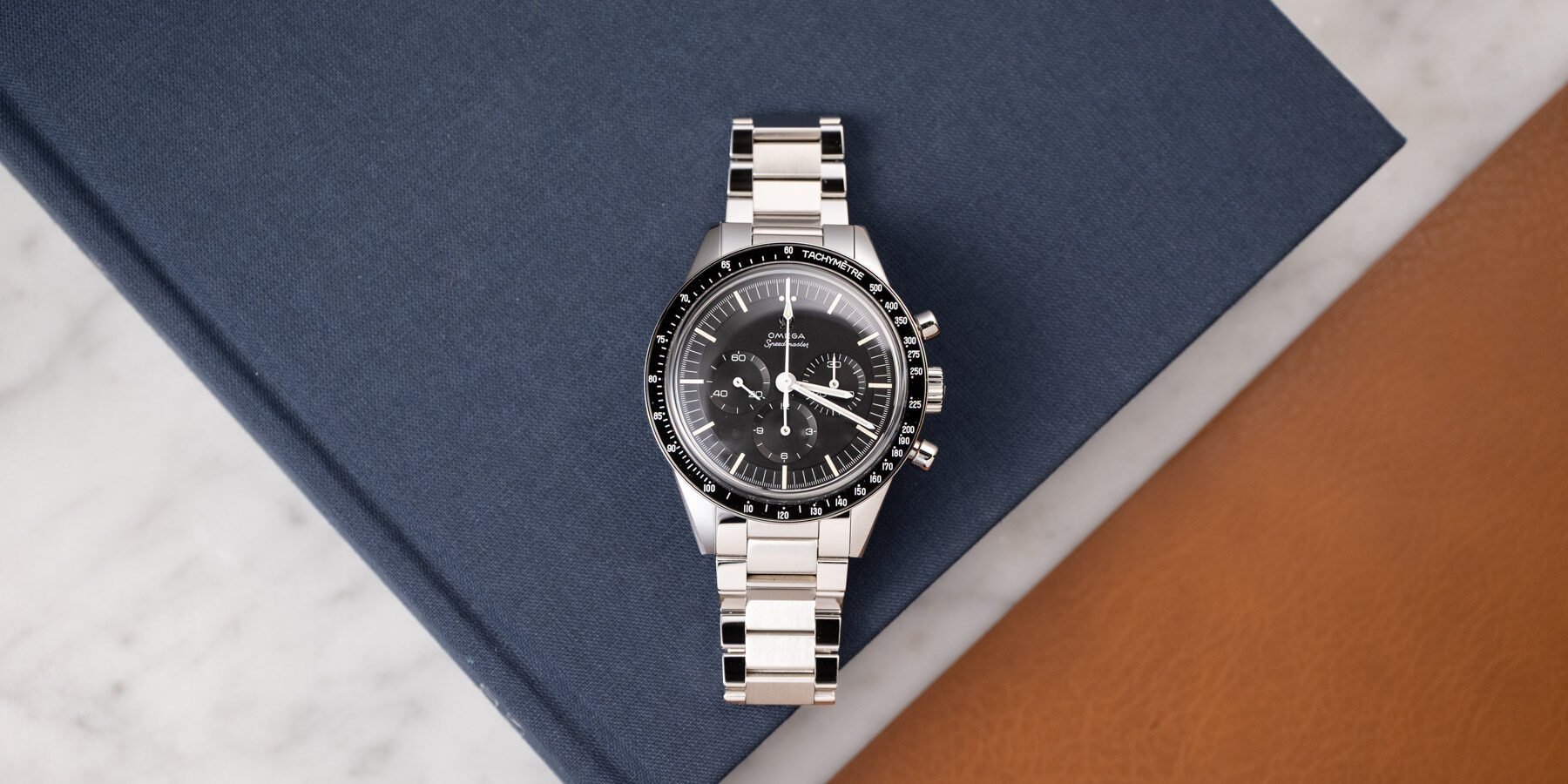
On the modern Speedmaster Moonwatch, the hesalite version (ref. 310.30.42.50.01.001) is sold alongside a sapphire version (ref. 310.30.42.50.01.002, with sapphire crystal and exhibition caseback). The two reference styles are functionally similar; NASA still flight-qualifies the hesalite version specifically for crewed spaceflight (re-qualified 2022 for the Artemis programme), which is why the hesalite Speedmaster carries the "Moonwatch" certification and the sapphire variant does not. Vintage Speedmasters (CK 2915 through ST 145.012) all wear hesalite as original equipment.
Outside Omega, hesalite remains in production on a smaller number of heritage and military-style watches: Seiko's 5 Sport heritage references, certain Hamilton Khaki Field models, Vostok Amphibia divers, and most vintage-style microbrand pieces. The market positioning is no longer "the cheap option" (acrylic was), but "the deliberate vintage choice". The Speedmaster Moonwatch is the canonical modern hesalite watch; for collectors it is part of the watch's identity rather than a cost-saving feature.



Comments 2